Artwork
Evening (La viellee)
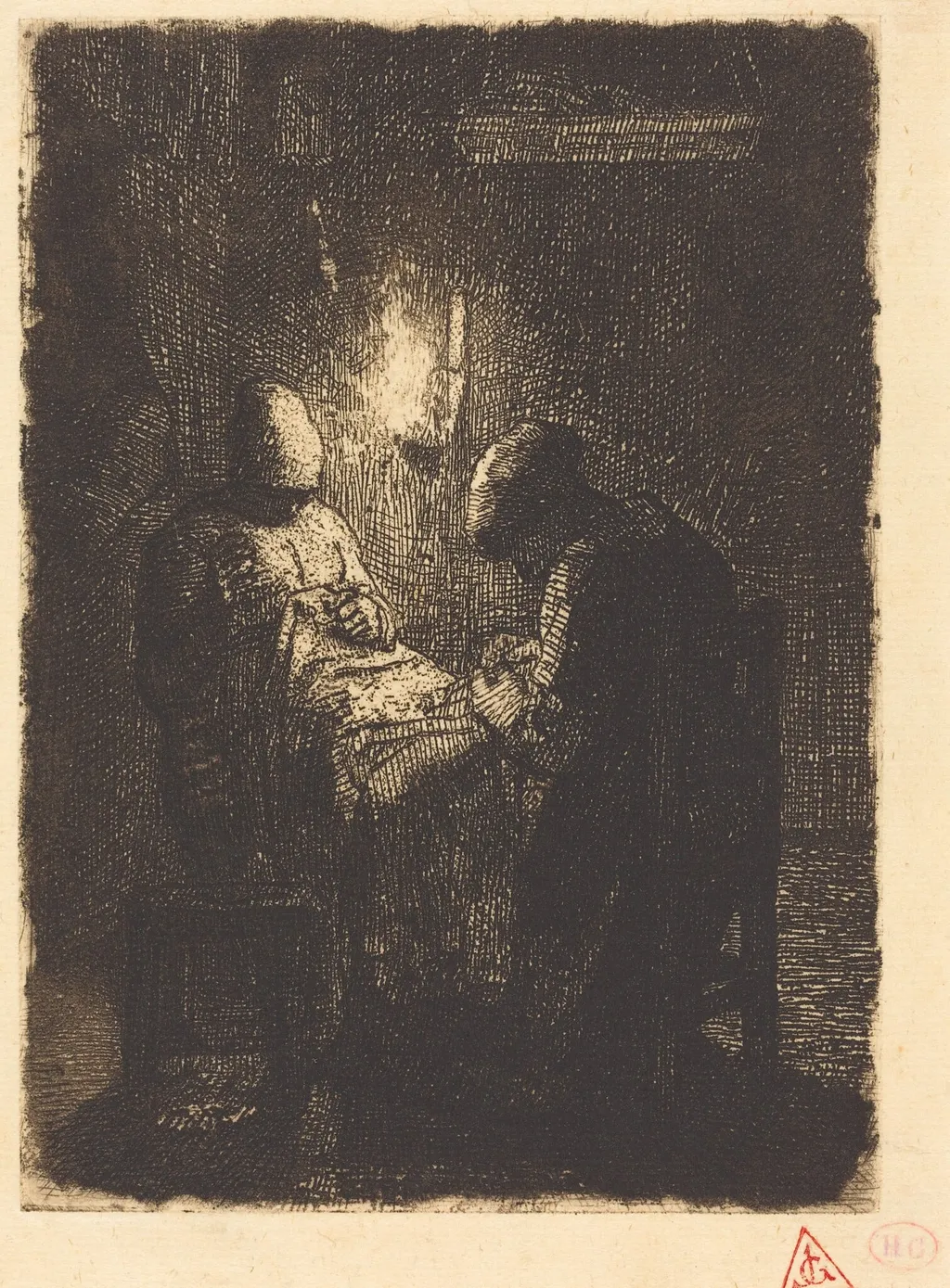
Evening (La viellee) is an ink print by the Impressionist artist Jean François Millet. It dates from 1856 and is held in the collection of the National Gallery of Art.
About this work
Overview
Though Millet is often associated with large-scale oil paintings, this work exemplifies his significant engagement with printmaking.
Created in 1856, *Evening (La viellee)* is an etching with burnishing on laid paper by Jean-François Millet. Though Millet is often associated with large-scale oil paintings, this work exemplifies his significant engagement with printmaking. The technique allowed him to explore light, form, and mood with subtlety, translating his interest in rural life into a medium suited for intimate, tonal expression.
Subject & Meaning
The print depicts two indistinct figures in a dim, enclosed space—one bent forward, cradling a bundle, the other standing nearby. Their postures suggest exhaustion or quiet care, evoking the unglamorous rhythms of peasant life. Millet avoids narrative clarity, instead emphasizing stillness and solitude, reinforcing his commitment to portraying the dignity of ordinary labor without sentimentality.
Technique & Style
Millet employed etching with burnishing to achieve a range of tonal effects. The dark, textured background contrasts with smoothed, luminous areas on the figures, creating a sense of soft illumination emerging from shadow. Burnishing selectively erased ink, producing subtle gradations that mimic the dim glow of twilight, enhancing the quiet, introspective mood of the scene.
History & Provenance
This print was made during Millet’s most active period in printmaking, shortly after his rise to prominence within the Barbizon circle. While few records detail its early ownership, it aligns with a broader 1850s trend among Realist artists to use prints for wider dissemination of socially conscious imagery, reaching audiences beyond the traditional art market.
Context
In mid-19th-century France, rural life was undergoing rapid change due to industrialization and urban migration. Millet’s prints like *Evening* countered idealized pastoral imagery by focusing on the physical and emotional weight of peasant existence. His work resonated with contemporary debates about social observation and the moral value of honest labor.
Legacy
Though less celebrated than his paintings, Millet’s etchings influenced later generations of printmakers who sought to convey social realism through tonal nuance rather than detail. *Evening* remains a quiet example of how printmaking could serve as a vehicle for empathetic observation, preserving the dignity of marginalized lives through understated technique.
Artist & collection
Artist
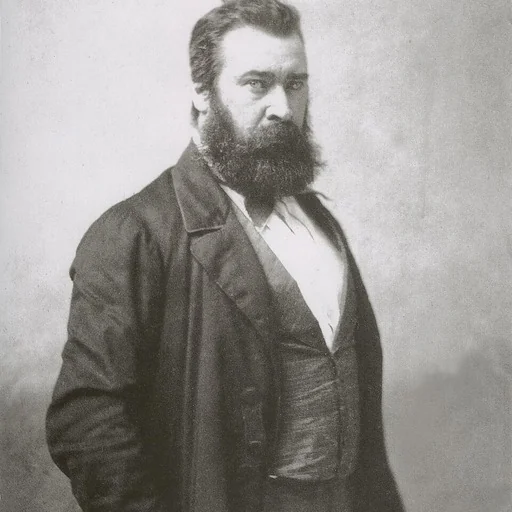
Jean-François Millet (French pronunciation: ; 4 October 1814 – 20 January 1875) was a French painter and one of the founders of the Barbizon school in rural France.

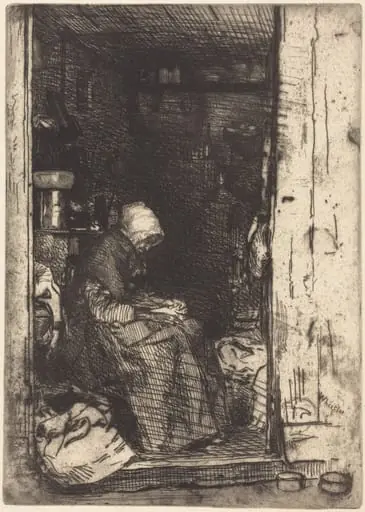 La Vieille aux Loques
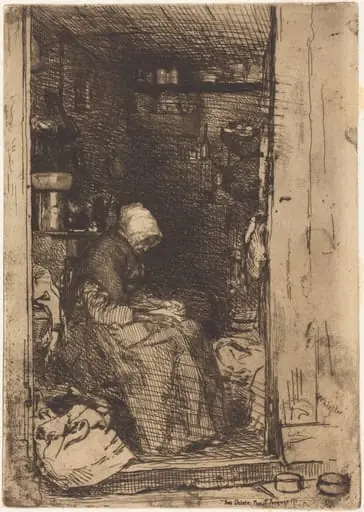 La Vieille aux Loques
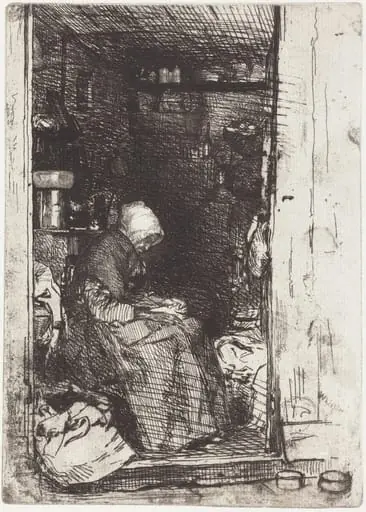 La Vieille aux Loques
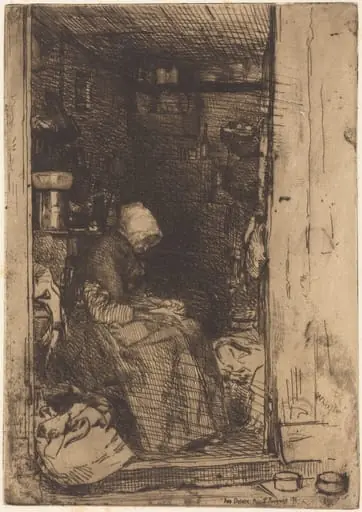 La Vieille aux Loques
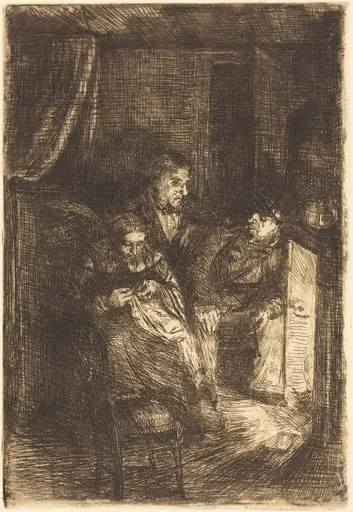 The Hearth (Le foyer)
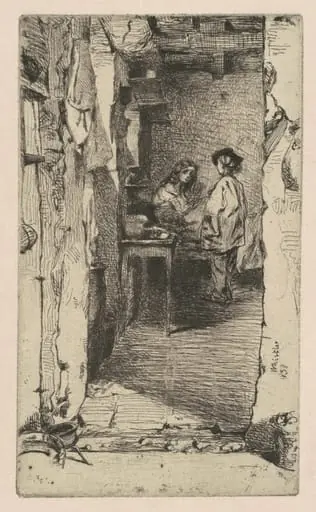 Rag Pickers, Quartier Mouffetard, Paris
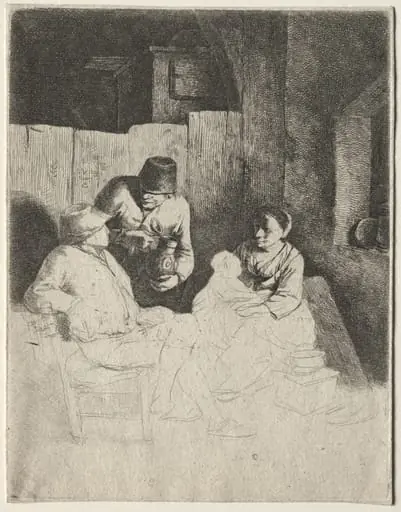 The Mother Seated in an Inn
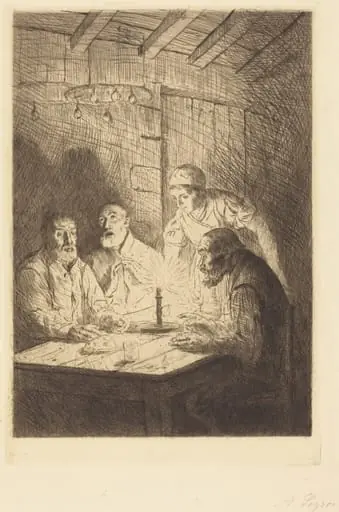 Supper of the Poor (Le souper chez misere)
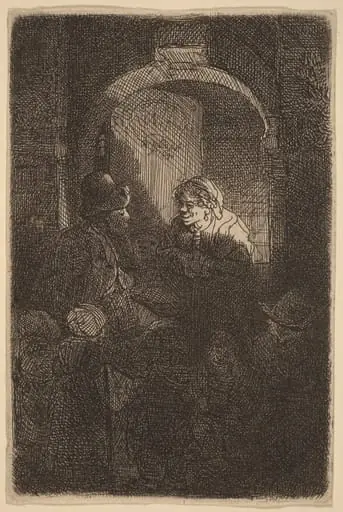 Woman at a Door Hatch Talking to a Man and Children (The Schoolmaster)
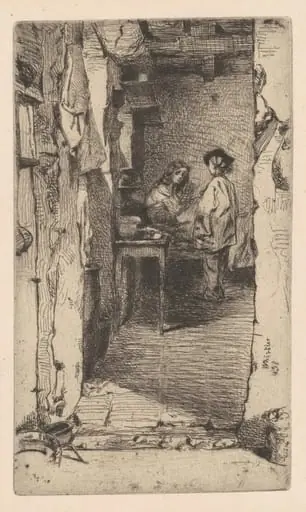 Rag Pickers, Quartier Mouffetard, Paris
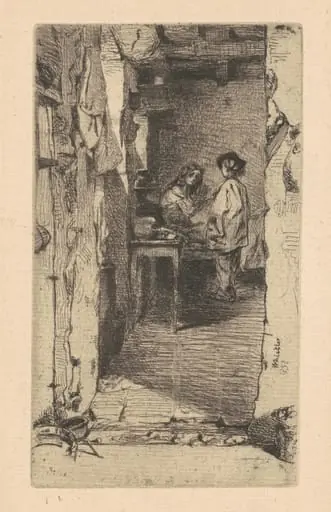 Rag Pickers, Quartier Mouffetard, Paris
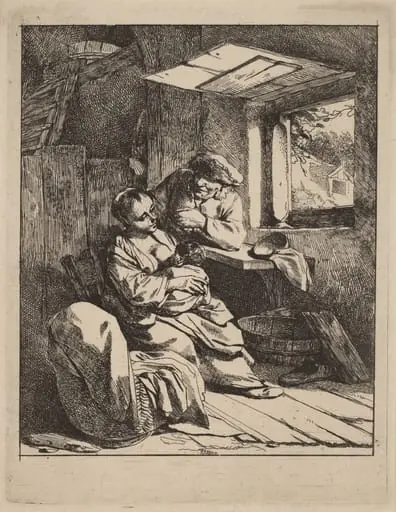 The Young Mother