Artwork
Woman at a Door Hatch Talking to a Man and Children (The Schoolmaster)
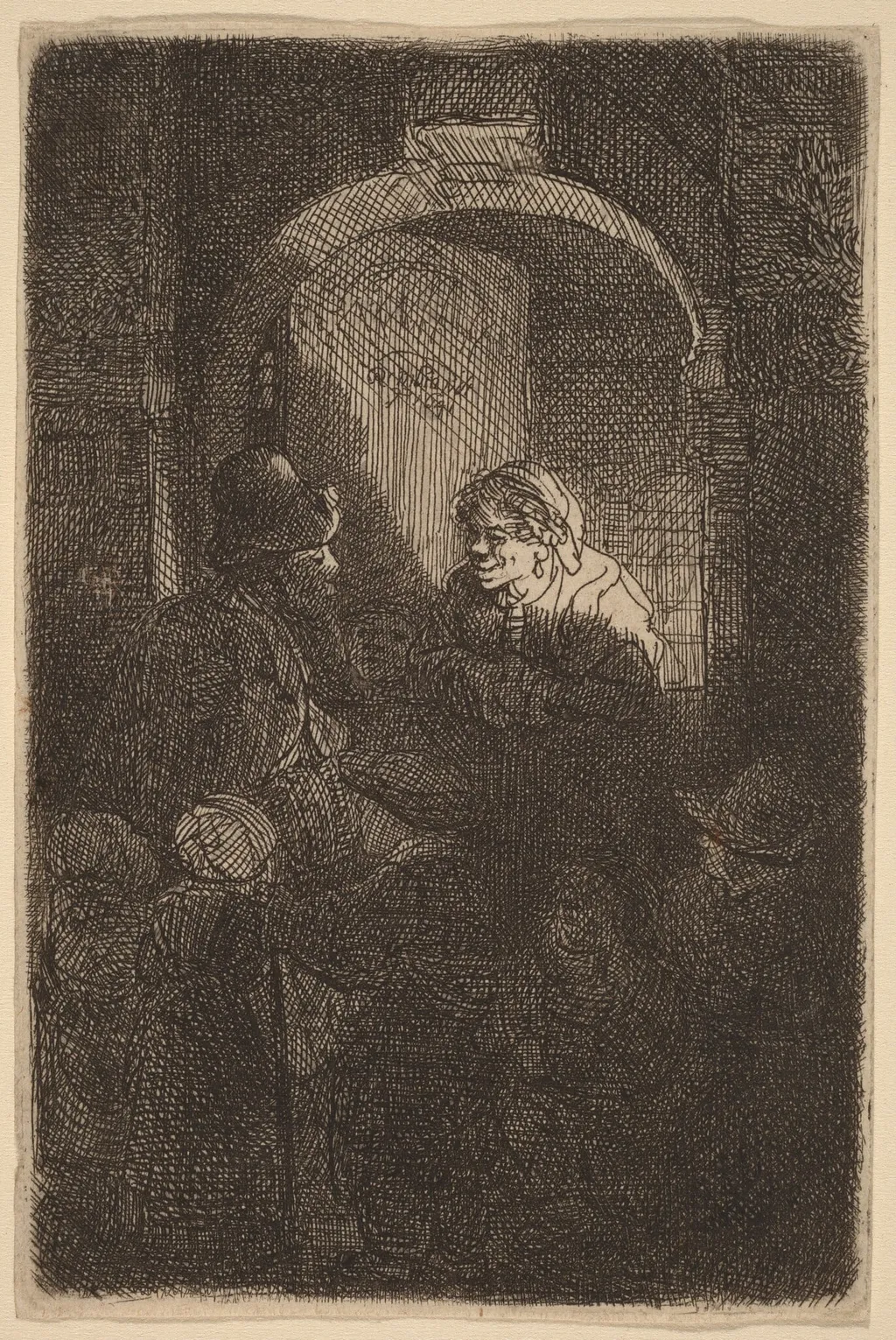
Woman at a Door Hatch Talking to a Man and Children (The Schoolmaster) is an ink print by the Baroque artist Rembrandt. It dates from 1641 and is held in the collection of the National Gallery of Art.
About this work
Overview
Created in 1641, this etching by Rembrandt van Rijn captures a quiet domestic moment at a doorway. The scene, titled The Schoolmaster, depicts a woman engaged in conversation with a man and two children through a small opening in the door. Rendered in fine linear strokes, the work reflects Rembrandt’s interest in ordinary human interactions rather than grand historical or religious themes.
Subject & Meaning
The title, though later assigned, hints at the man’s possible role as an educator, grounding the scene in the social fabric of 17th-century Dutch life.
The figures suggest a moment of daily exchange—perhaps a parent or caregiver speaking with a teacher or community figure. The woman’s modest attire and the man’s hat imply social roles without overt status markers. The children, partially visible, add a sense of intimacy and routine. The title, though later assigned, hints at the man’s possible role as an educator, grounding the scene in the social fabric of 17th-century Dutch life.
Technique & Style
Rembrandt employed etching to achieve subtle tonal variations, using fine lines and varied ink pressure to model form and depth. The interplay of light and shadow defines the figures and architectural elements, drawing attention to the doorway as a threshold between private and public space. His loose, expressive lines convey movement and texture without excessive detail, emphasizing atmosphere over precision.
History & Provenance
The print was made during Rembrandt’s Amsterdam years, a period rich in etching experimentation. It circulated widely among collectors and artists, contributing to his reputation as a master of the medium. Early impressions survive in major European collections, with later states showing minor revisions to the figures and background, indicating Rembrandt’s ongoing engagement with the composition.
Context
In 1640s Amsterdam, domestic scenes gained prominence in art as civic pride and middle-class values flourished. Rembrandt’s focus on unidealized, intimate moments aligned with broader cultural shifts toward realism. This etching reflects a growing interest in the moral and emotional dimensions of everyday life, distinct from the mythological or biblical subjects favored by contemporaries.
Legacy
The work influenced later generations of printmakers through its emotional restraint and technical nuance. Its emphasis on ordinary subjects helped legitimize domestic life as worthy of artistic attention. Though not widely exhibited today, it remains a key example of Rembrandt’s ability to convey human connection through minimal means, shaping the evolution of narrative printmaking.
Artist & collection
Artist
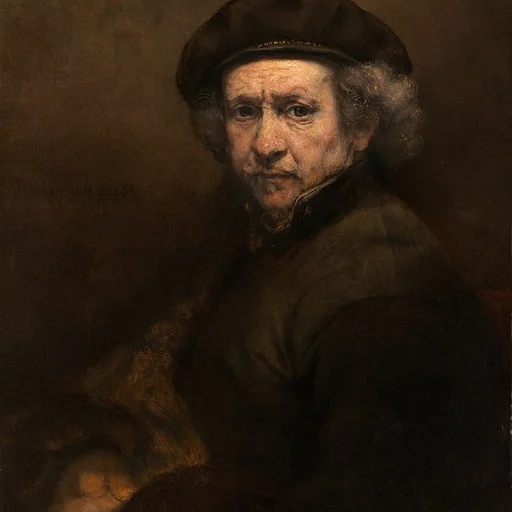
Rembrandt Harmenszoon van Rijn (15 July 1606 – 4 October 1669), known mononymously as Rembrandt, was a Dutch Golden Age painter, printmaker, and draughtsman.

 The Young Innkeeper
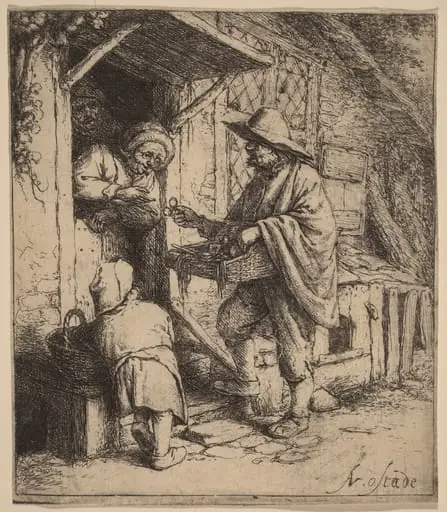 Street Vendor Selling Spectacles at the Door
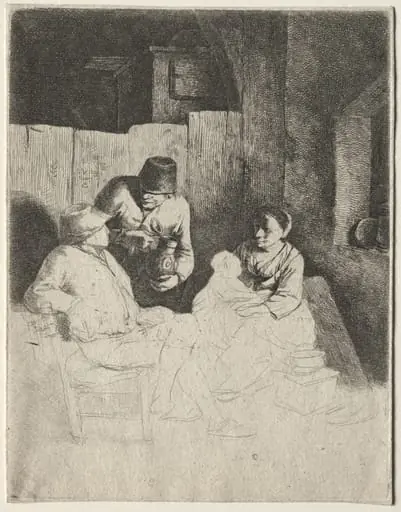 The Mother Seated in an Inn
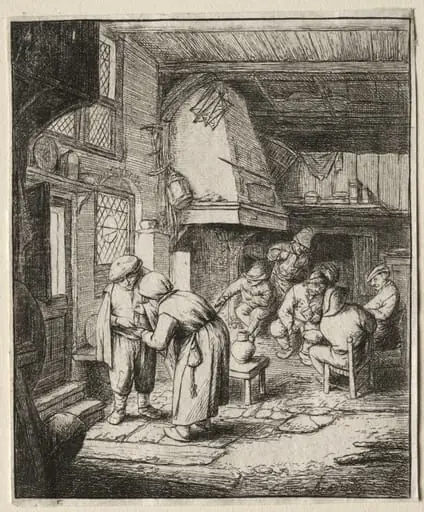 Peasant Settling his Debt
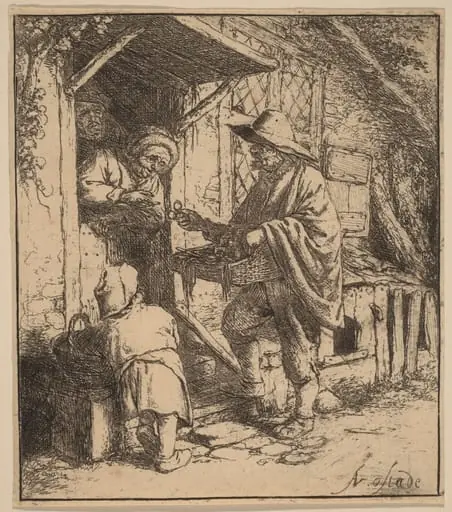 Street Vendor Selling Spectacles at the Door
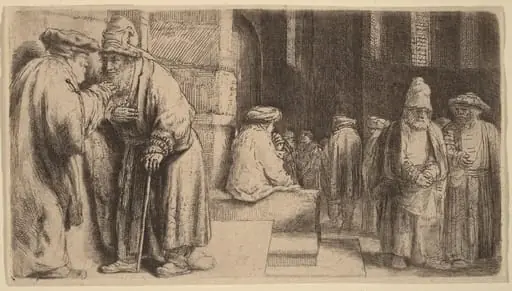 Jews in the Synagogue
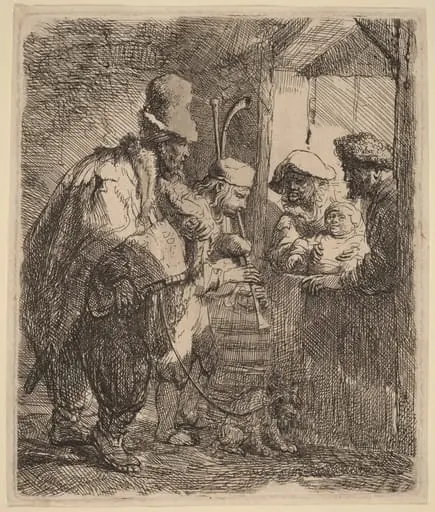 The Strolling Musicians
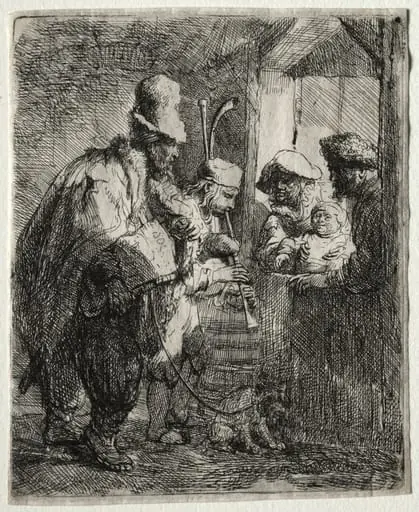 The Strolling Musicians
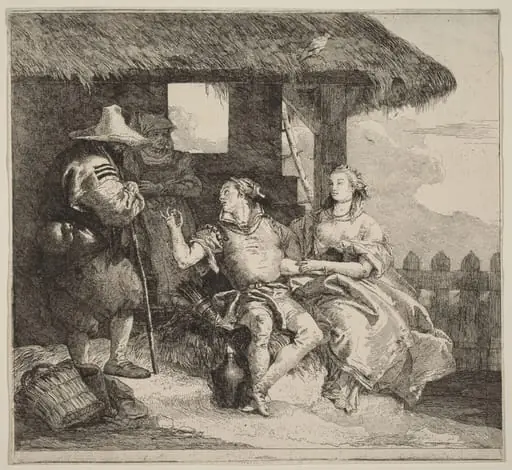 The Marriage of Angelica and Medoro
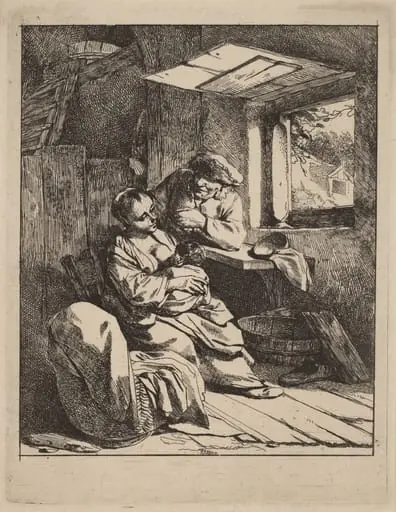 The Young Mother
 The Hearth (Le foyer)
 Beggar Man and Beggar Woman Conversing