Artwork
Shepherd Returning with His Flock
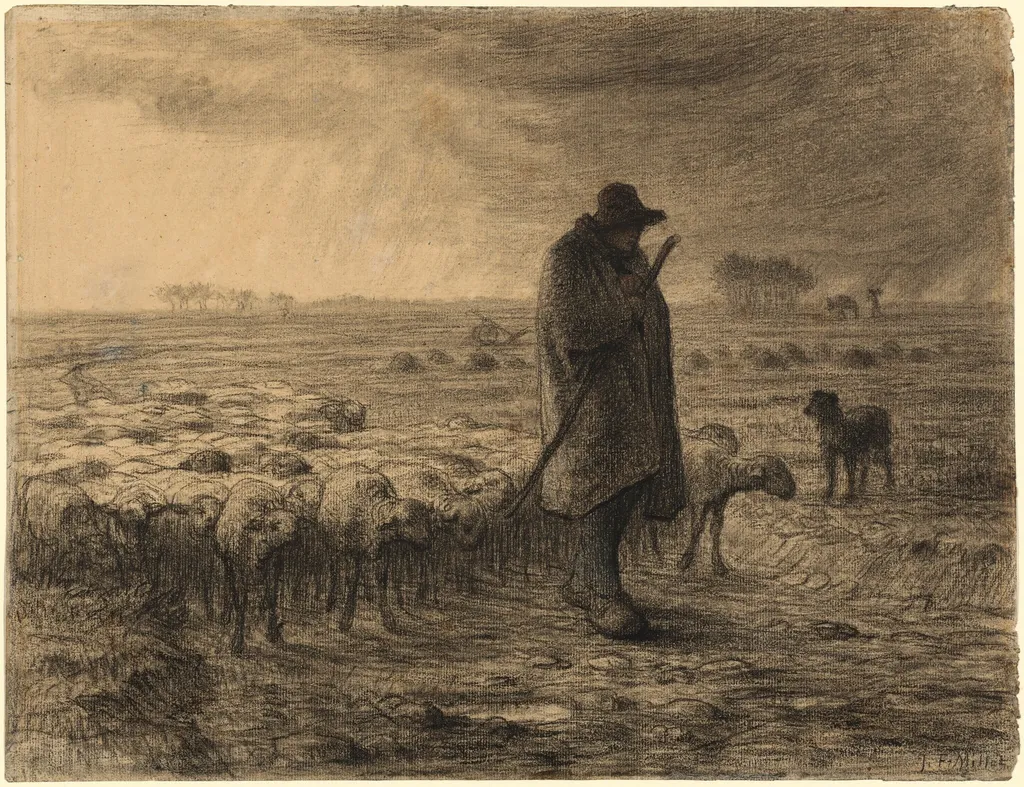
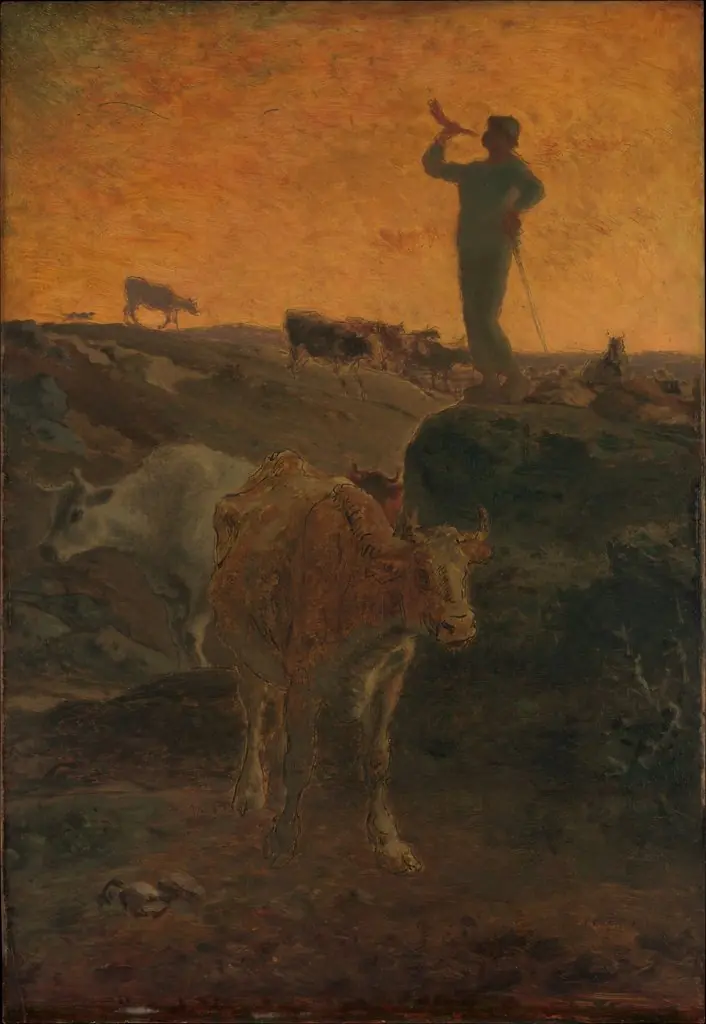
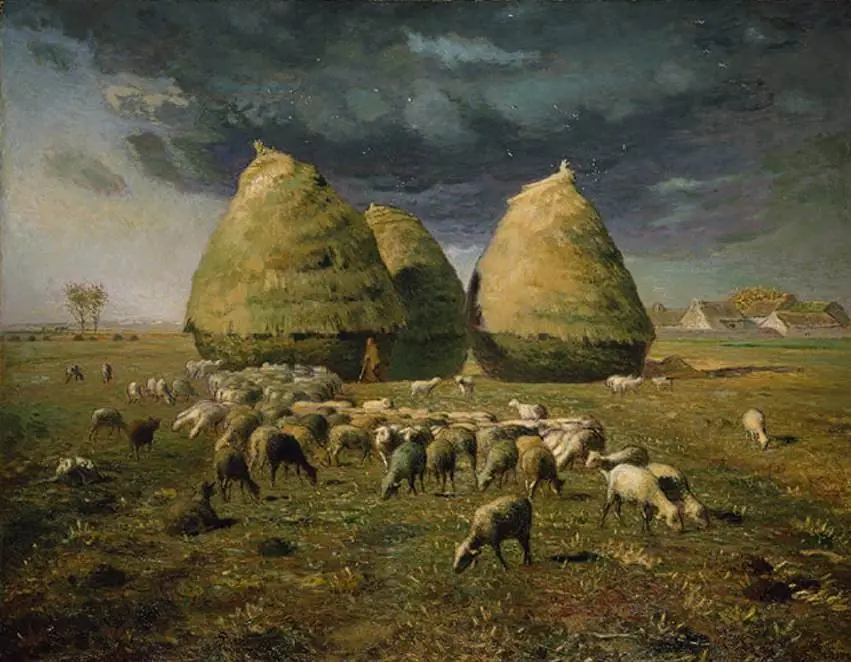
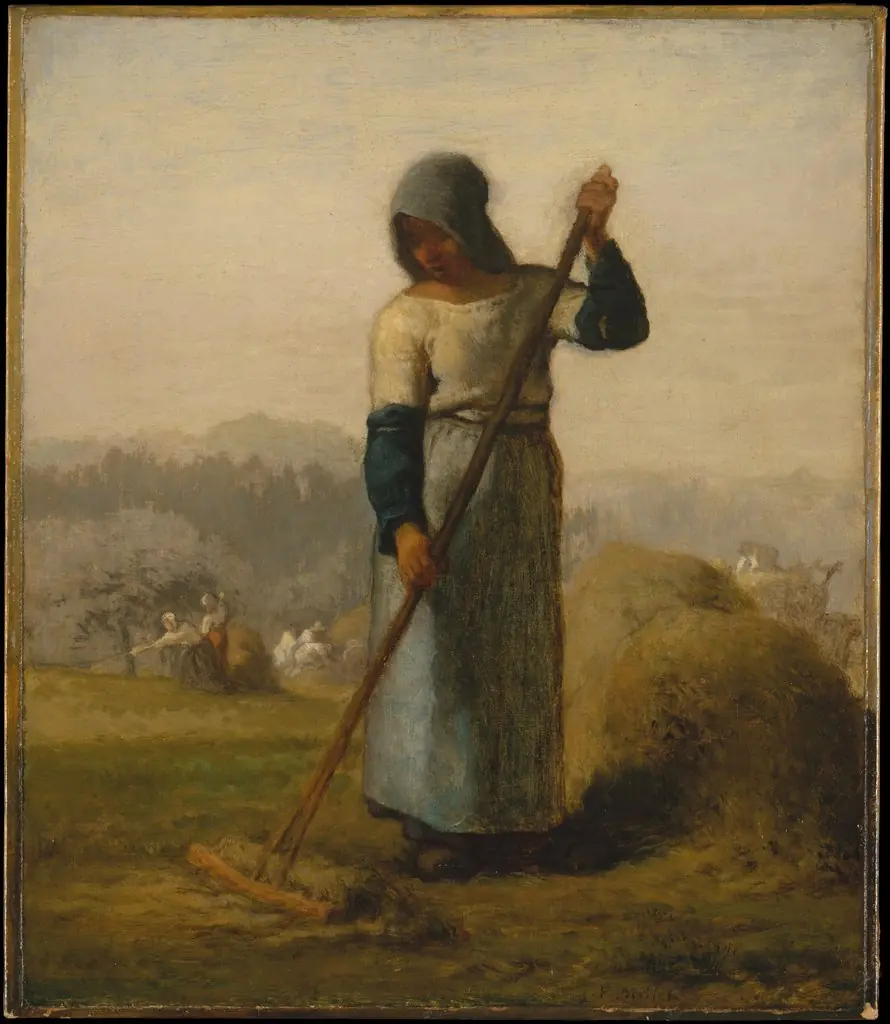
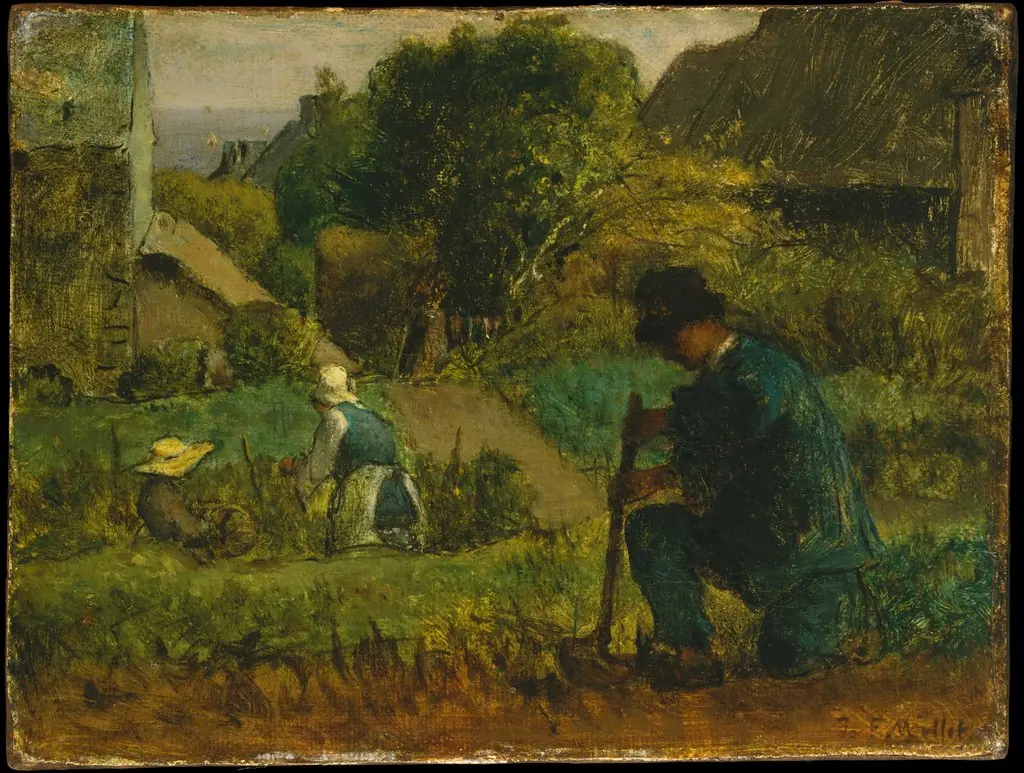
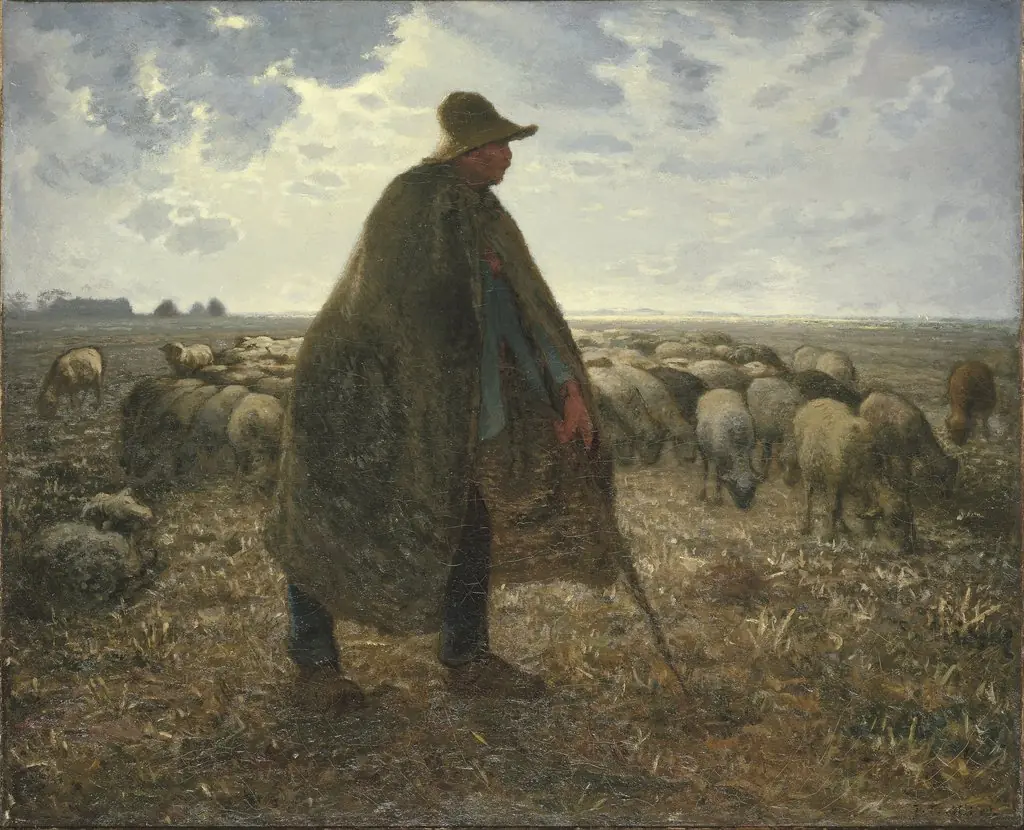
Shepherd Returning with His Flock is a pastel drawing by the Impressionist artist Jean François Millet. It dates from 1860 and is held in the collection of the National Gallery of Art.
About this work
Overview
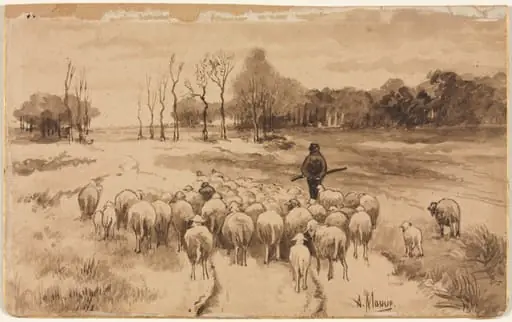
Created circa 1860, *Shepherd Returning with His Flock* is a drawing by Jean‑François Millet executed in conté crayon and pastel. The work captures a solitary figure guiding a small group of sheep across a muted countryside, rendered with swift, gestural lines that convey a moment of quiet labor in a rural setting.
Subject & Meaning
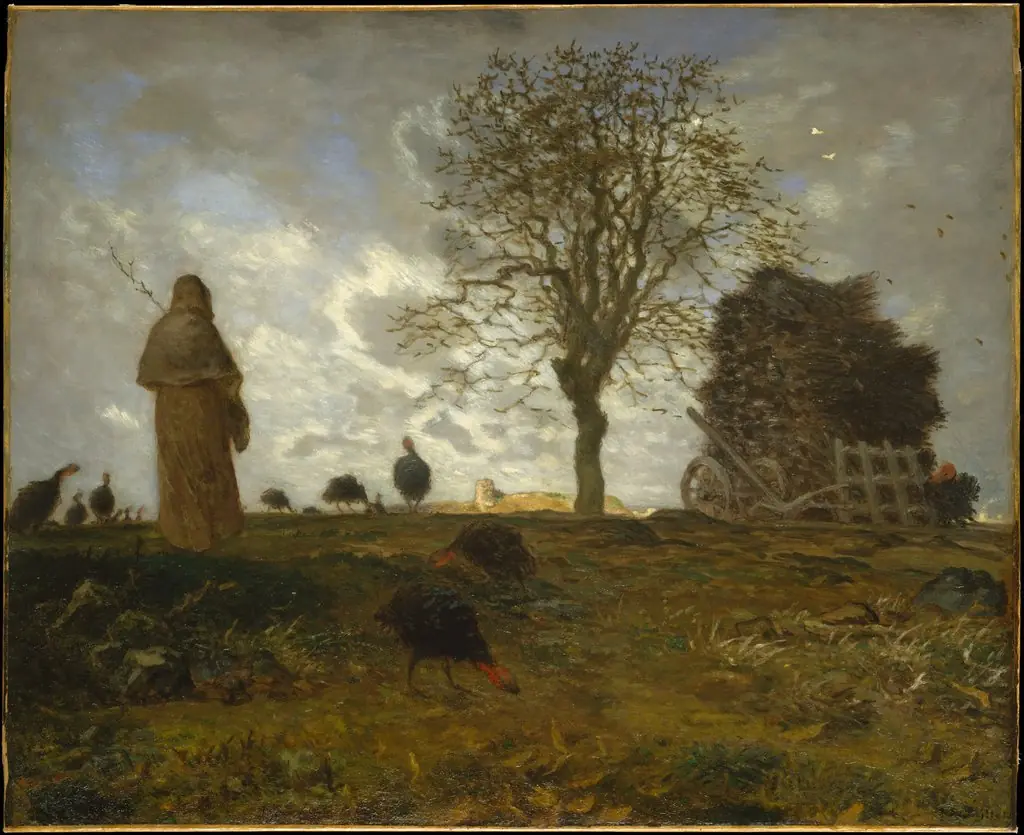
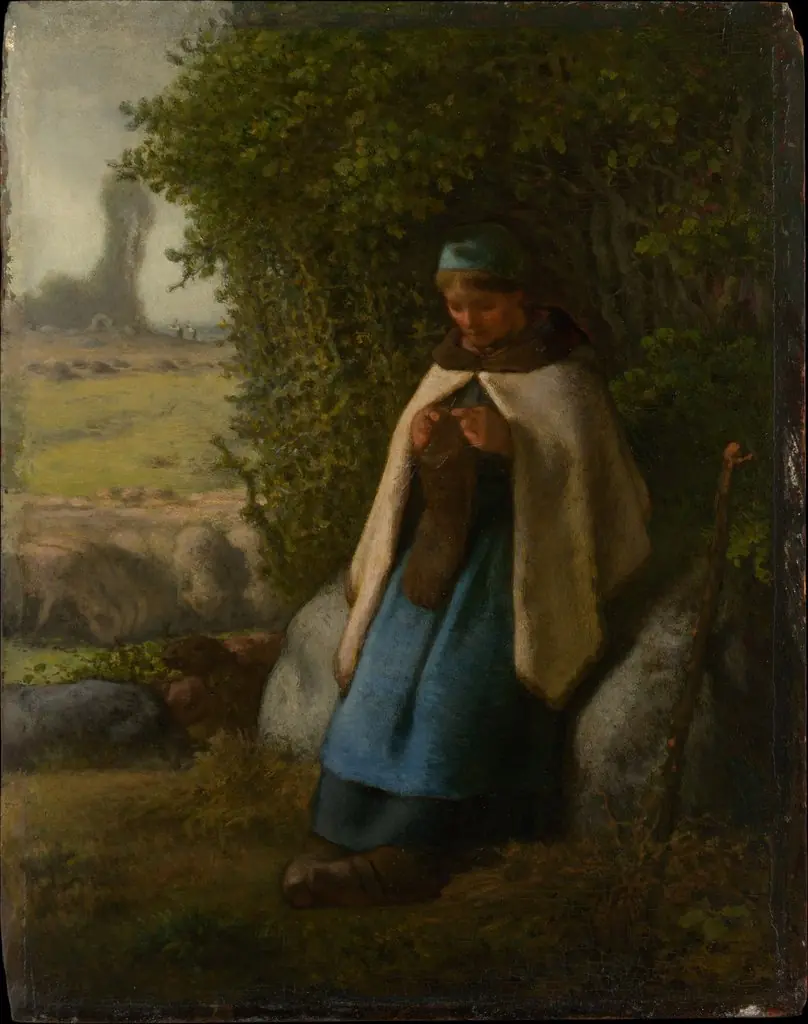
The composition centers on a lone shepherd, his coat loosely outlined, as he gathers his flock in an open field. The sparse background, marked by faint trees on the horizon, emphasizes the everyday responsibilities of agricultural workers, reflecting Millet’s enduring interest in the dignity of peasant life.
Technique & Style
Millet employs a combination of conté crayon for structural lines and pastel for tonal modulation, allowing soft shadows to suggest the texture of wool and fabric. The sketchy, economical strokes give the scene a sense of immediacy, while the pastel washes soften edges, creating a subtle atmospheric haze.
History & Provenance
The drawing belongs to the period when Millet was consolidating his reputation as a leading Realist and a founder of the Barbizon school. Though less frequently exhibited than his oil paintings, the piece illustrates his experimentation with drawing media during the mid‑nineteenth century.
Context
At a time when French art was shifting toward realistic depictions of ordinary life, Millet’s focus on agrarian subjects positioned him against the prevailing academic idealism. This work aligns with his broader oeuvre that elevates the routine tasks of countryside inhabitants to subjects worthy of serious artistic consideration.
Artist & collection
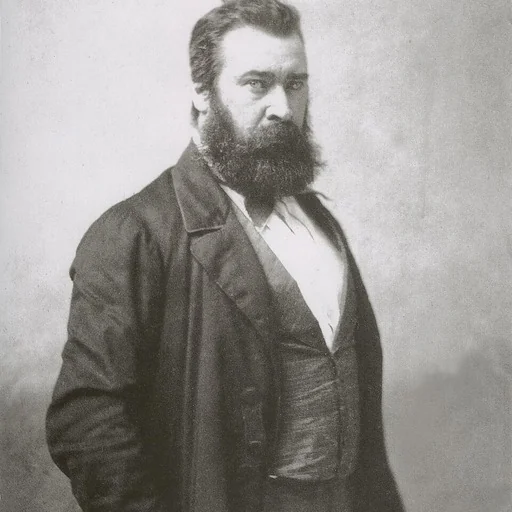
Artist
Jean-François Millet (French pronunciation: ; 4 October 1814 – 20 January 1875) was a French painter and one of the founders of the Barbizon school in rural France.