Artwork
The Large Shepherdess (La Grande Bergere)
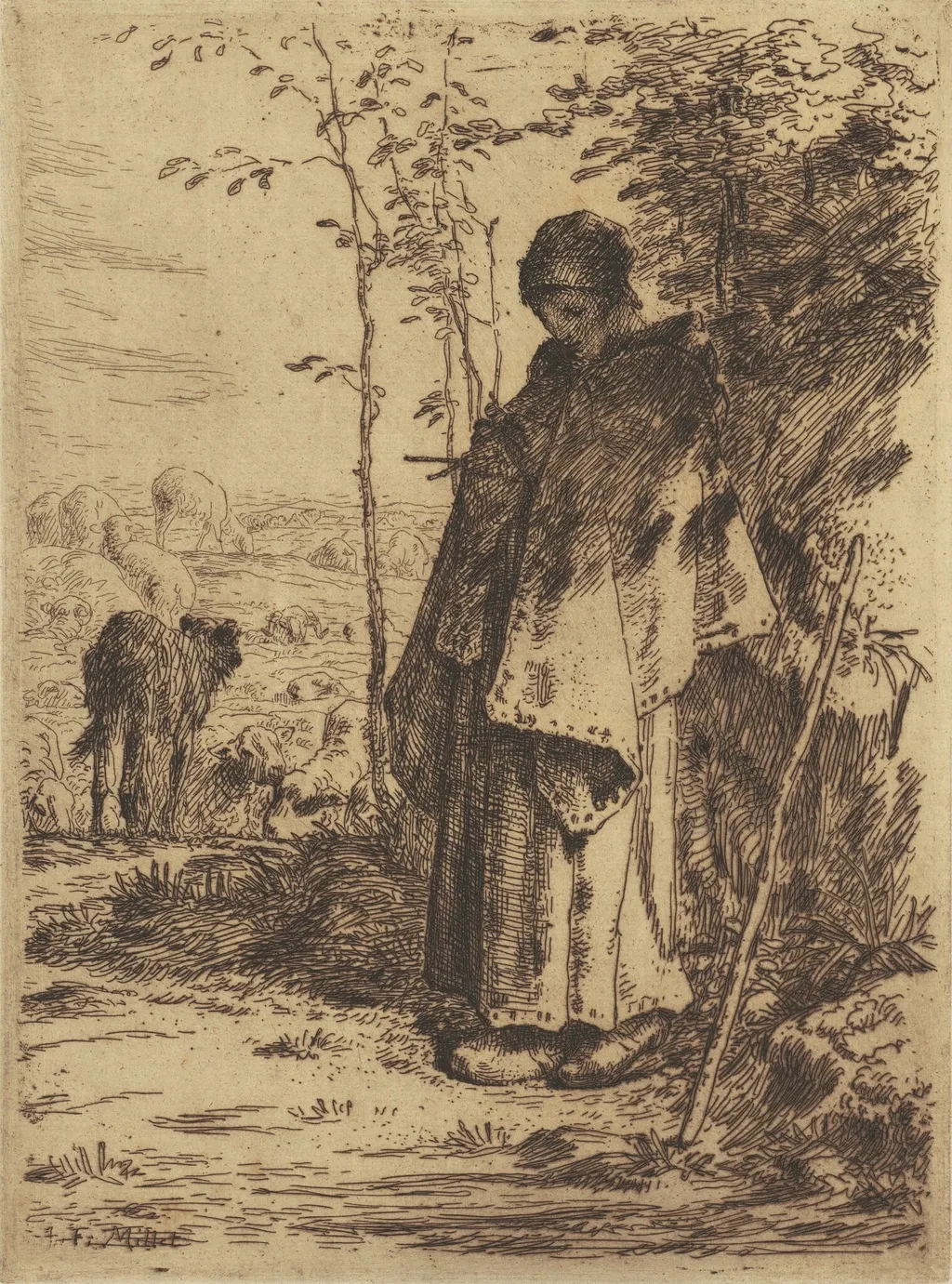
The Large Shepherdess (La Grande Bergere) is an ink print by the Impressionist artist Jean François Millet. It dates from 1862 and is held in the collection of the National Gallery of Art.
About this work
Overview
The Large Shepherdess (La Grande Bergere) is an 1862 etching on laid paper by Jean-François Millet, a leading figure in the Barbizon school and Realism movement.
Subject & Meaning
The etching portrays a serene rural scene: a woman shepherd stands amidst sheep in a field, set against rolling hills and trees. Her prominent figure, defined by bold lines and dark shading, contrasts with the softer rendering of the surrounding landscape and animals, evoking a sense of quiet contemplation.
Technique & Style
Millet executed the work in etching, a medium he used alongside oil painting, pastels, and Conté crayon drawings. The piece showcases his characteristic contrast between strong, dark lines for the central figure and more delicate strokes for the natural surroundings.
History & Provenance
Created in 1862, The Large Shepherdess exemplifies Millet's consistent focus on rural themes, typical of the Barbizon school's emphasis on everyday peasant life.
Context
While Millet is more widely known for his oil paintings, this etching demonstrates his proficiency across multiple mediums, reflecting the Barbizon school's broader exploration of capturing the simplicity and dignity of rural life.
Artist & collection
Artist
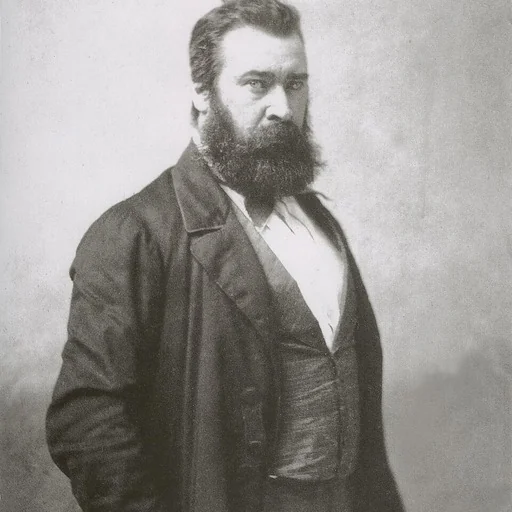
Jean-François Millet (French pronunciation: ; 4 October 1814 – 20 January 1875) was a French painter and one of the founders of the Barbizon school in rural France.

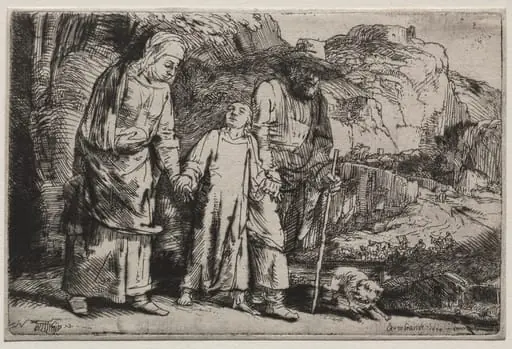 Christ Returning from the Temple with His Parents
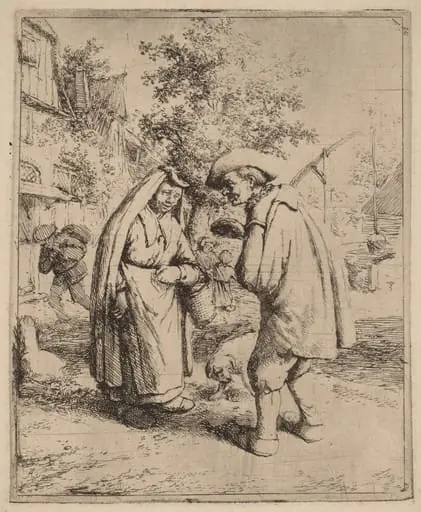 Man and Woman Conversing on a Busy Village Street
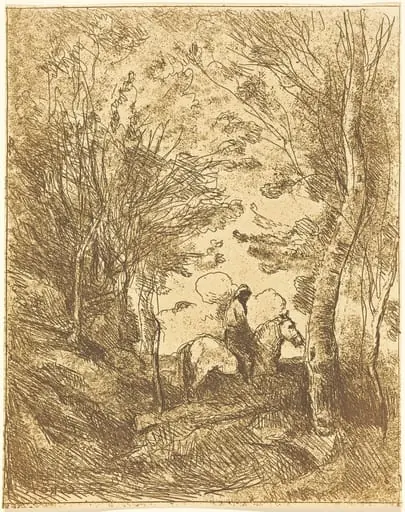 Horseman in the Woods, Large Plate (Le Grand Cavalier sous bois)
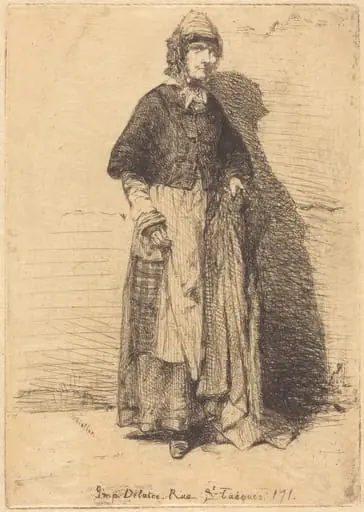 La Mère Gérard
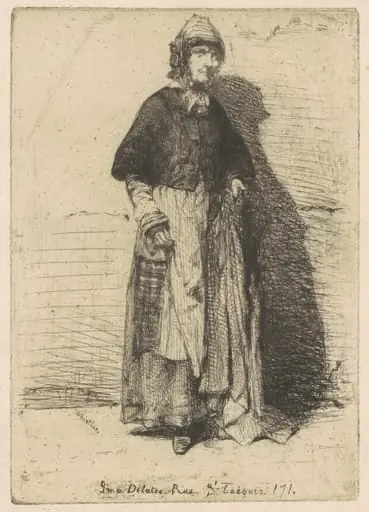 La Mère Gérard
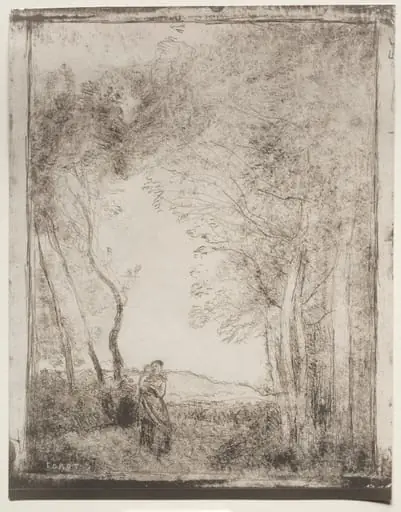 A Young Mother at the Entrance of a Wood
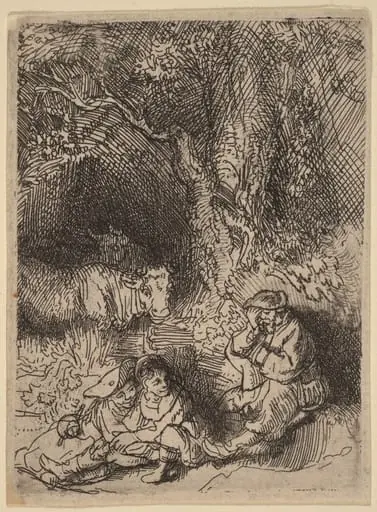 The Sleeping Herdsman
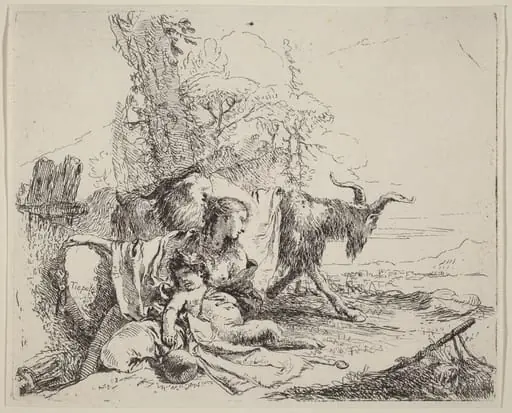 Woman, Satyr Child, and Goat in a Landscape
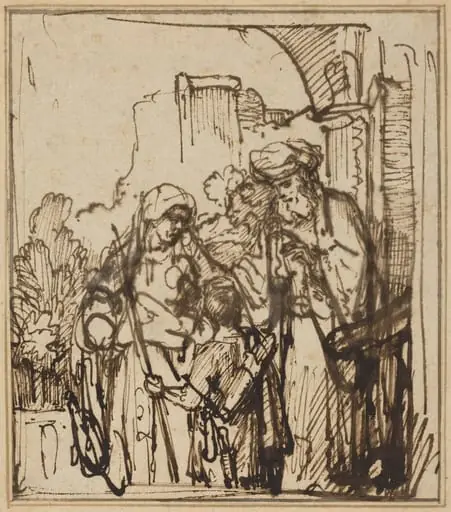 The Dismissal of Hagar