Artwork
Woman, Satyr Child, and Goat in a Landscape
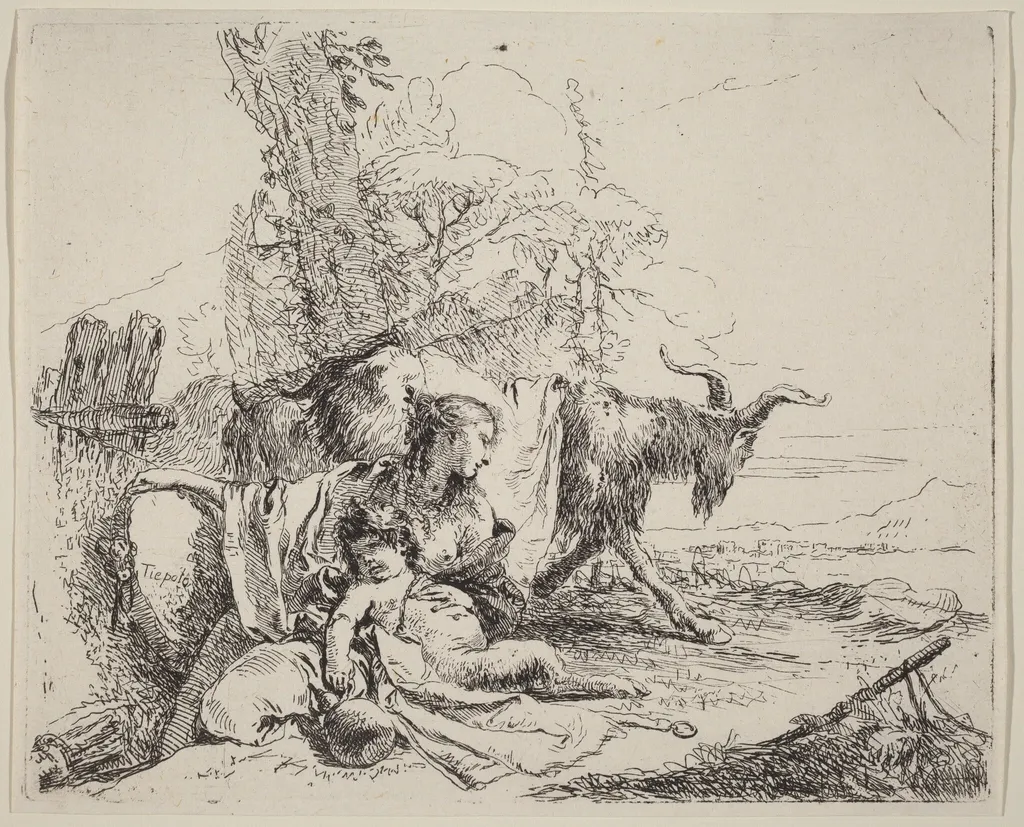
Woman, Satyr Child, and Goat in a Landscape is an ink print by the Rococo painting artist Giovanni Battista Tiepolo. It is held in the collection of the National Gallery of Art.
About this work
Overview
Woman, Satyr Child, and Goat in a Landscape is an etching created by Giovanni Battista Tiepolo in 1785, exemplifying the Rococo style prevalent in his work as a prominent Venetian painter and printmaker.
Subject & Meaning
The etching portrays a serene pastoral scene, featuring a woman cradling a satyr child, accompanied by a nearby goat. The composition is set against a backdrop of a bare tree and a rocky outcrop, evoking a sense of rustic tranquility.
Technique & Style
Tiepolo employed loose, scratchy lines to achieve a rough, sketchy texture, utilizing drypoint to etch deep, expressive marks directly into the metal plate. This technique contrasts with smoother etching or aquatint methods, emphasizing the spontaneous feel of the piece.
History & Provenance
Created in 1785, the etching reflects Tiepolo's later work within his prolific career spanning Italy, Germany, and Spain. Specific provenance details are not provided.
Context
As a Rococo piece, it aligns with the 18th-century European artistic trend emphasizing lighthearted, pastoral themes and delicate aesthetics, characteristic of the Venetian school.
Legacy
While specific impact of this etching on Tiepolo's broader legacy is not detailed, it contributes to the broader appreciation of his mastery of printmaking techniques within the Rococo style.
Artist & collection

Artist
Giovanni Battista Tiepolo, also known as Giambattista Tiepolo, was an Italian painter and printmaker from the Republic of Venice who painted in the Rococo style, considered an important member of the 18th-century Venetian school.

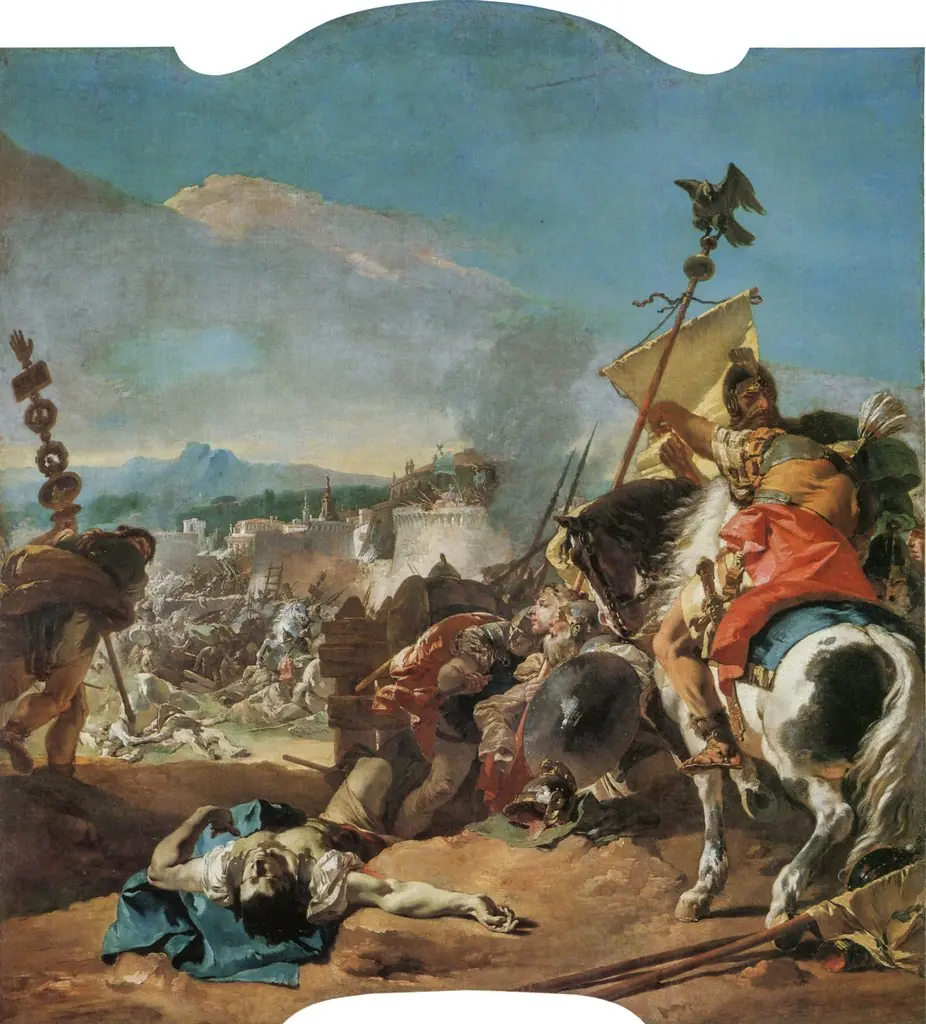
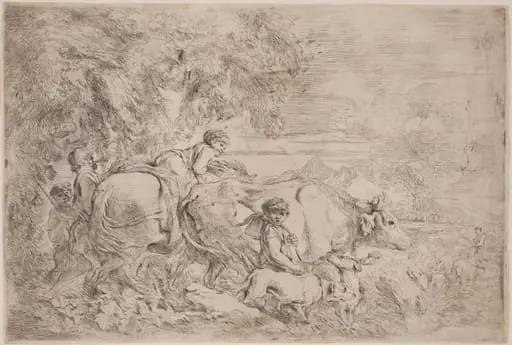 Shepherds Following Their Flock
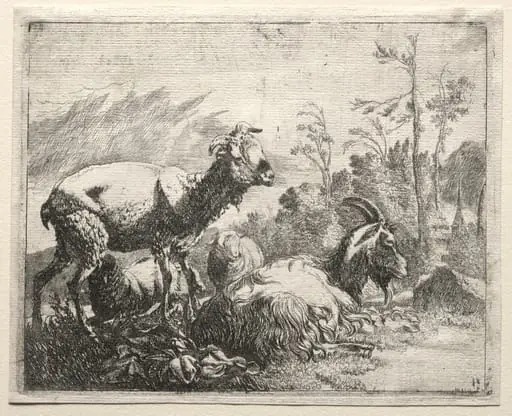 Goats
Goats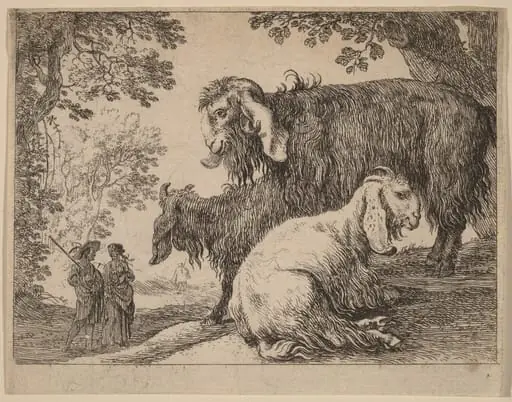 Angora Sheep
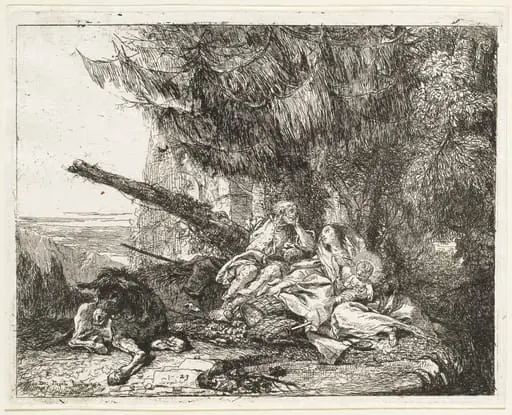 The Rest on the Flight, with Holy Family under a Tree
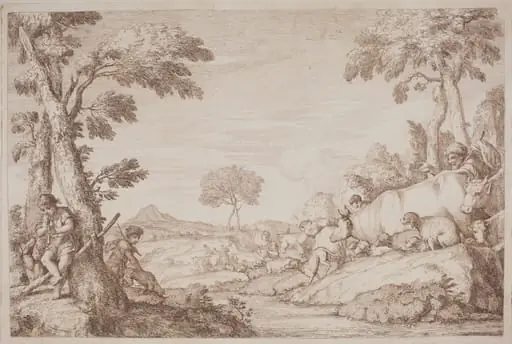 A Pastoral Journey with a Boy Playing His Flute by a Tree
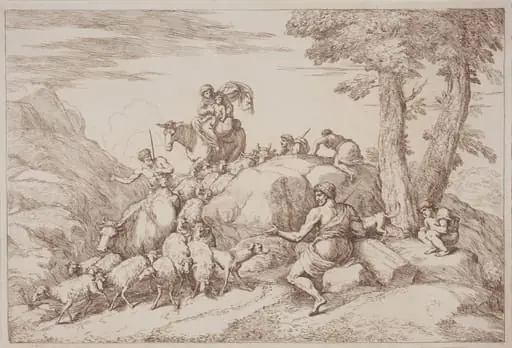 A Pastoral Journey with a Mother and Child on Horesback and an Elderly Shepherd Seated
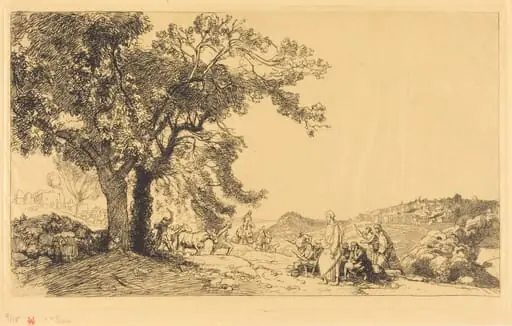 Le Christ au matin de rameaux
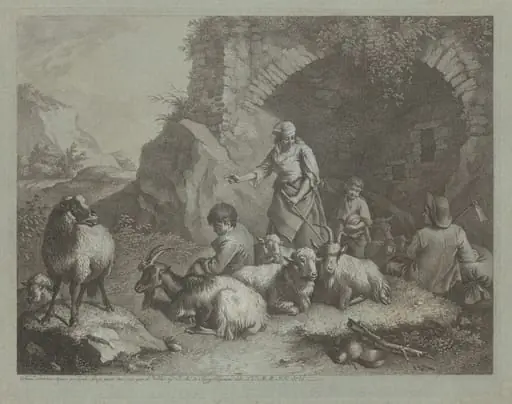 Woman, Shepherd Boys, and Sheep near an Arch
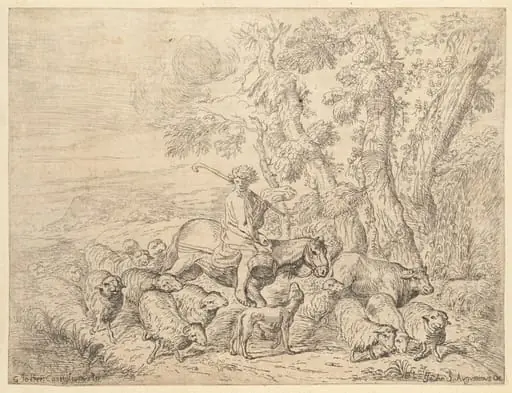 Shepherd on Horseback
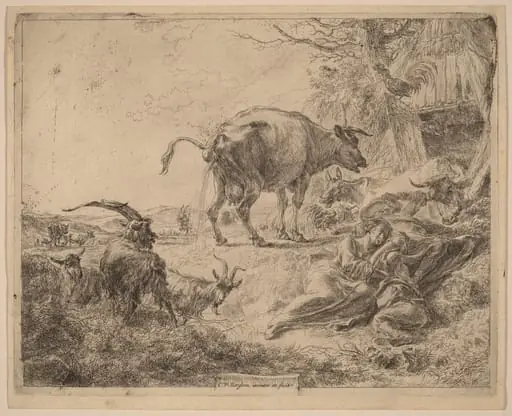 Cow Pissing
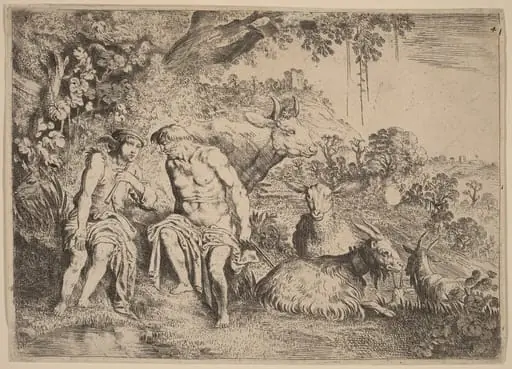 Mercury Lulling Argus to Sleep
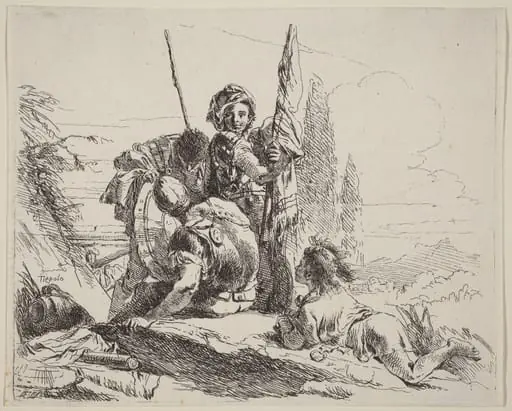 Three Soldiers and a Youth