Artwork
Podul
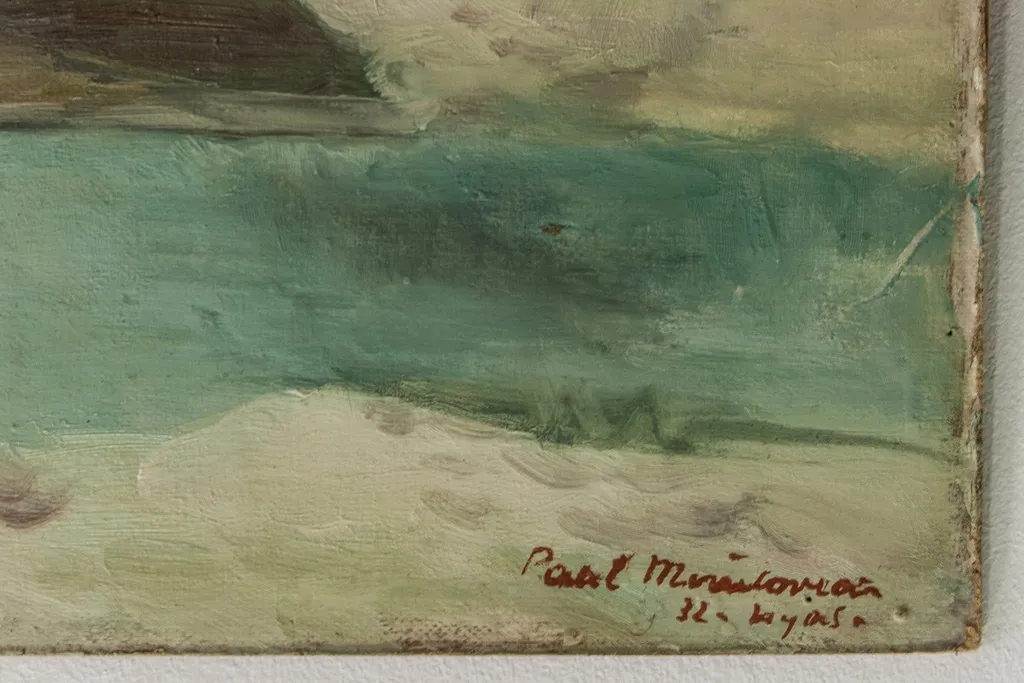
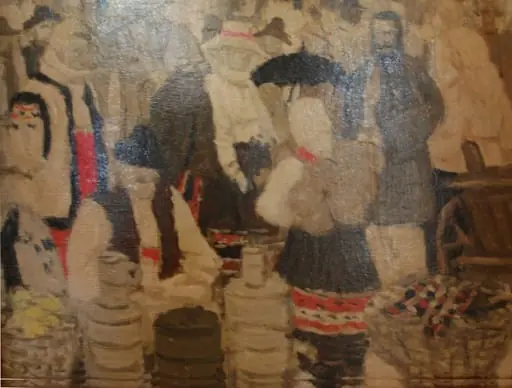
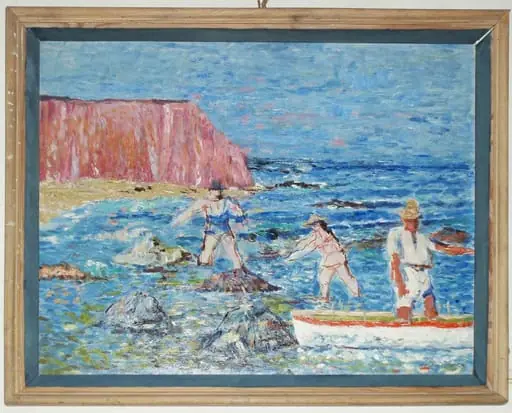
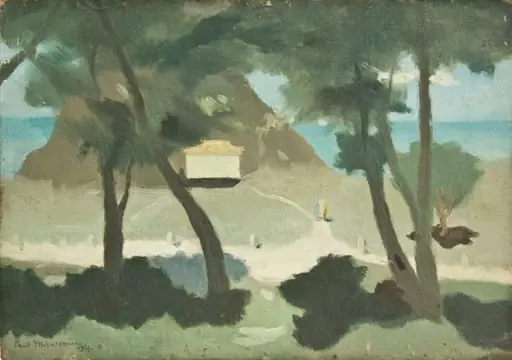
Podul is an unspecified painting by Paul Miracovici. It dates from 1949 and is held in the collection of the Gavrila Simion Eco-Museum Research Institute Tulcea.
About this work
Overview
Paul Miracovici’s *Podul* is an undated painting from approximately 1949, now in the collection of the Museum of Ethnography. The work presents a subdued landscape rendered in muted tones, dominated by soft greens and grays. Its surface bears the marks of vigorous brushwork, suggesting an immediacy in execution rather than meticulous refinement.
Subject & Meaning
The ambiguity of the subject invites interpretation, though the painting’s mood leans toward introspection rather than explicit narrative.
The composition centers on a quiet, rural scene—a low hill receding into a hazy expanse, with a dark, indistinct form in the distance that may suggest a bridge or structure. The ambiguity of the subject invites interpretation, though the painting’s mood leans toward introspection rather than explicit narrative. The subdued palette and diffuse light contribute to an atmosphere of tranquility or melancholy.
Technique & Style
Miracovici employs thick, impasto brushstrokes, layering paint unevenly to create texture and depth. The technique emphasizes the materiality of the medium, with visible strokes lending a sense of spontaneity. The color scheme—pale greens, grays, and muted earth tones—reflects a restrained palette, while the soft blending of hues suggests an interest in atmospheric effects over precise detail.
History & Provenance
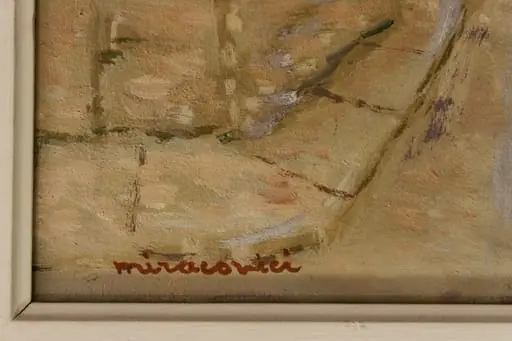
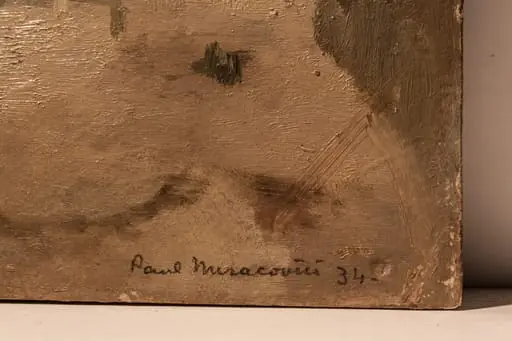
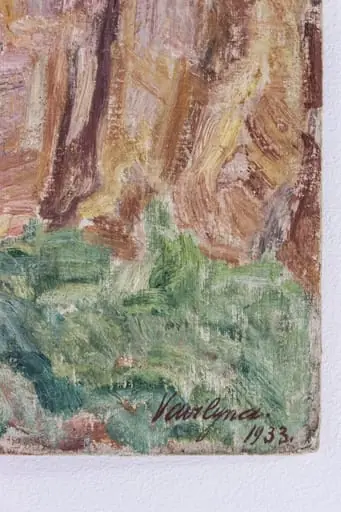
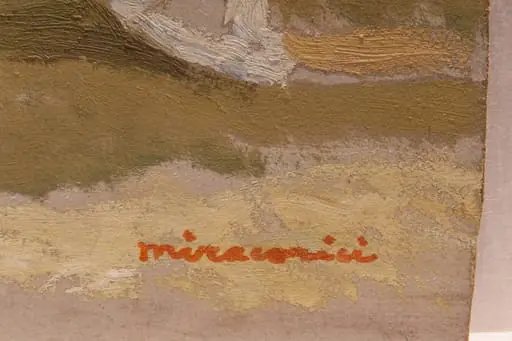
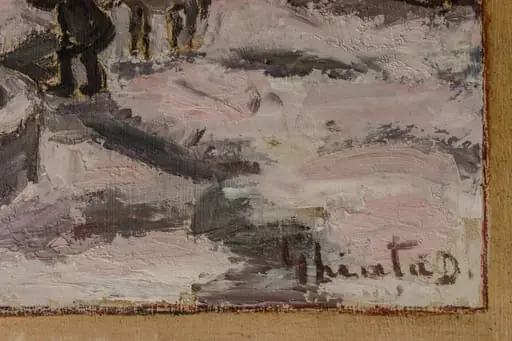
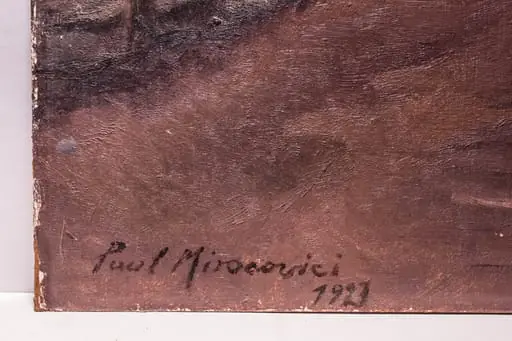
Created around 1949, *Podul* has been part of the Museum of Ethnography’s holdings. The painting’s signature confirms authorship, though the absence of a date leaves exact chronology uncertain. Its inclusion in the museum’s collection suggests a connection to regional artistic traditions or ethnographic themes, though specific exhibition history remains undocumented.
Context
The late 1940s marked a period of transition in Romanian art, with artists navigating shifting political and cultural landscapes. Miracovici’s work from this era often reflects a turn toward introspective or landscape-based subjects, aligning with broader trends in postwar European painting. The emphasis on texture and mood may also signal an engagement with modernist techniques, though without direct affiliation to a particular movement.
Artist & collection
Museum
Gavrila Simion Eco-Museum Research Institute Tulcea
Continue through works from the same source collection.