Artwork
Samurai and Wakashu (Bushi to wakashu)
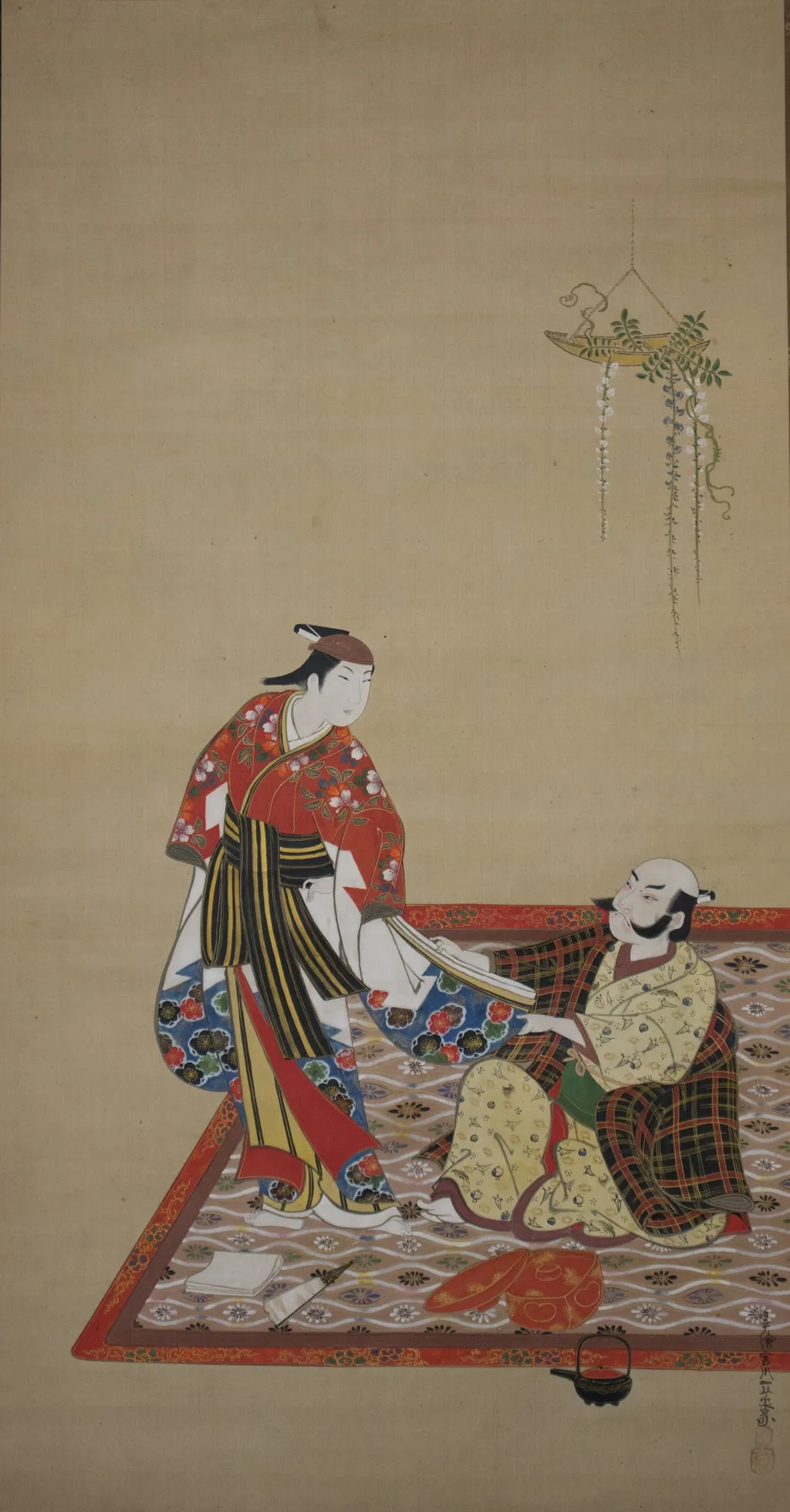
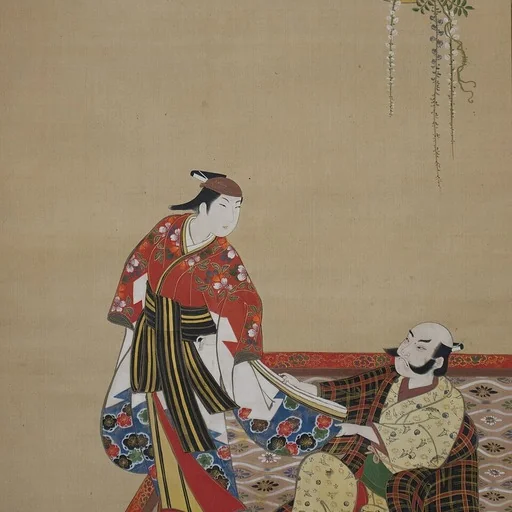
Samurai and Wakashu (Bushi to wakashu) is an unspecified painting by the Ukiyo-e artist Miyagawa Isshō. It dates from 1716 and is held in the collection of the Metropolitan Museum of Art.
About this work
Overview
Miyagawa Isshō’s *Samurai and Wakashu* (Bushi to wakashu), executed in 1716, is an ukiyo-e composition that presents a domestic interior populated by two young men. The work reflects the everyday visual culture of Edo’s urban milieu, capturing a moment of leisure within a richly patterned setting.
Subject & Meaning
The two figures, one clad in a red kimono with white floral motifs and the other in a yellow kimono beneath a plaid robe, are identified as a samurai and a wakashū, a term for adolescent boys in the period. Their relaxed posture on a decorative rug suggests a private, possibly intimate, encounter, a theme common in Edo‑period depictions of youthful companionship.
Technique & Style
Executed in the ukiyo-e woodblock tradition, Isshō employs flat areas of saturated colour and delicate line work to delineate clothing and interior details. The patterned rug, floral ceiling plant, and scattered papers are rendered with precise brush‑like strokes, characteristic of the Kyōhō era’s refined aesthetic.
History & Provenance
Isshō, a disciple of Miyagawa Chōshun, was active between 1689 and 1780, contributing to the development of ukiyo-e during the Kyōhō period (1716–1736). While primarily known for portraits of actors and courtesans, he also produced shunga, and this piece exemplifies his broader interest in urban life.
Context
The image belongs to a broader visual culture that documented the social roles of samurai and wakashū in Edo society. Such works often served both as decorative art and as subtle commentaries on the fluid boundaries of gender and status within the pleasure districts of the time.
Artist & collection