Artwork
blade, print, painting,
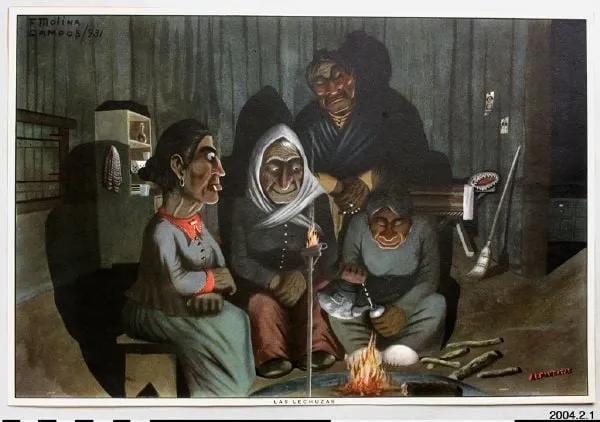
blade, print, painting, is a paint painting by the American Folk Art artist Florencio Molina Campos. It is held in the collection of the ethnographic museum.
About this work
Overview
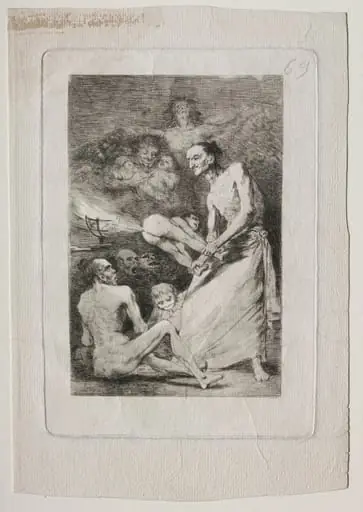
Florencio Molina Campos’s work titled *Blade, Print, Painting* is a genre scene rendered in oil on canvas. The composition captures a moment of rural labor in the Argentine pampas, focusing on a gaucho handling a curved blade above a tied cow. The painting’s flat, vivid palette and simplified forms give it the appearance of an early 20th‑century postcard rather than a formal portrait.
Subject & Meaning
At the center of the image a man in a white shirt steadies a curved blade over a cowhide while the animal lies restrained on the ground. The scene emphasizes the practical aspects of gaucho life—cattle handling and butchery—presented without romantic embellishment, reflecting everyday work rather than heroic mythmaking.
Technique & Style
Molina Campos employs bright, uniform colors and clean outlines that recall the graphic quality of comic‑book illustration. The flatness of the surface and the lack of chiaroscuro simplify the visual narrative, creating a direct, almost schematic representation that aligns with the artist’s penchant for depicting ordinary people in a straightforward manner.
Context
Created during a period when Argentine visual culture was documenting rural traditions, the painting offers a stylized yet authentic glimpse of gaucho culture. Unlike contemporary photographs that captured intricate detail, Molina Campos’s approach reduces the scene to essential forms, aligning with his broader body of work that favored accessible, populist imagery over elite portraiture.
Artist & collection

Artist
Florencio Molina Campos was an Argentine illustrator and a painter known for his typical traditional scenes of the Pampa. His work represents gauchesco scenes with a bit of humor.