Artwork
Port Madoc, North Wales : Sunset Effect
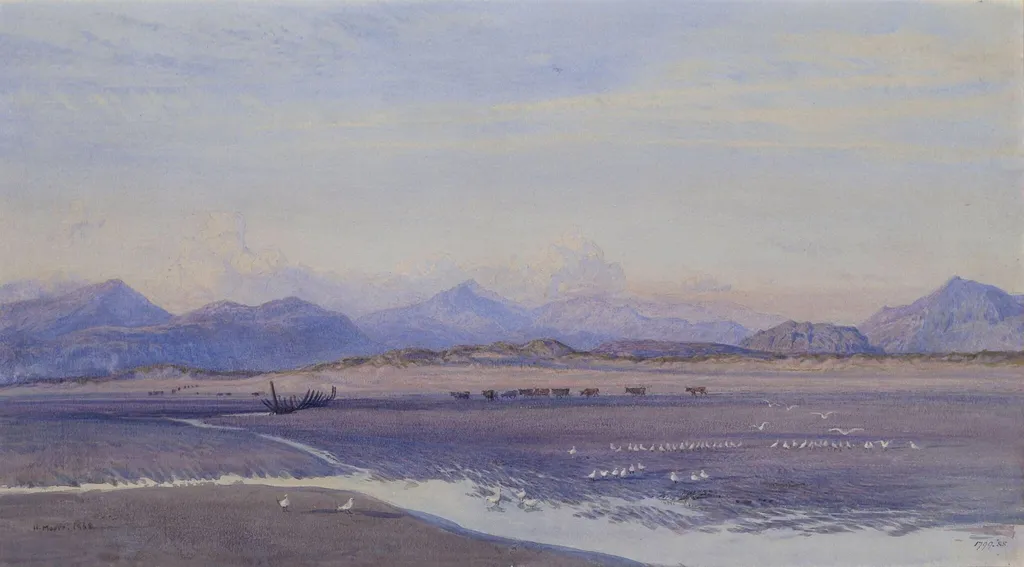
Port Madoc, North Wales : Sunset Effect is a watercolor work on paper by the British Romanticist artist Henry R.A., R.W.S. Moore. It dates from 1868 and is held in the collection of the Victoria and Albert Museum. This watercolour by Henry Moore captures the coastal village of Port Madoc in North Wales during twilight.
About this work
Overview
This watercolour by Henry Moore captures the coastal village of Port Madoc in North Wales during twilight. Executed in transparent washes, the work conveys the quiet transition from day to night. Signed and dated by the artist, it reflects a personal observation of a specific moment in time, grounded in direct engagement with the landscape rather than idealized composition.
Subject & Meaning
The painting invites contemplation rather than narrative, focusing on the emotional resonance of light’s departure.
The scene centers on the calm waters of the estuary, reflecting the fading sunlight as it sinks below the horizon. Silhouetted trees frame the foreground, contrasting with the soft gradients of the sky. There is no human presence, emphasizing solitude and the subtle rhythms of nature. The painting invites contemplation rather than narrative, focusing on the emotional resonance of light’s departure.
Technique & Style
Moore employs delicate watercolour washes to build atmosphere, layering pale pinks and cool blues to suggest the sky’s transition. The water’s surface is rendered with minimal brushwork, allowing the paper’s white to suggest reflection. Darker tones define the tree silhouettes, creating contrast without detail. The technique prioritizes mood over precision, aligning with observational approaches common in late 19th-century British watercolour practice.
History & Provenance
The work is dated and signed by Henry Moore, indicating it was completed during a period of active travel and sketching in Wales. While specific ownership history is not documented, its preservation suggests it was retained within private collections or institutional holdings focused on British watercolours. Its survival reflects a broader interest in topographical and atmospheric landscape studies of the era.
Context
Created during a time when British artists increasingly turned to outdoor sketching, this work aligns with a tradition of watercolour studies that valued immediacy and natural light. Though often associated with Impressionism, Moore’s approach lacks the broken brushwork of French Impressionists; instead, it reflects the quieter, more restrained aesthetics of contemporary Welsh and English landscape watercolourists.
Legacy
The painting contributes to a body of work that documents the Welsh coastline through intimate, light-sensitive studies. While not widely exhibited, it remains a representative example of how watercolour was used to record transient natural effects. Its preservation offers insight into the personal, non-monumental ways artists engaged with landscape in the late 19th century.
Artist & collection
Artist
Henry Moore painted quiet corners of the British landscape in watercolour during the late 1800s.

 The sands of Newcastle, County Down
 The Beach at Kandestederne, West Jutland
 Tehran with the Cusr Kayar
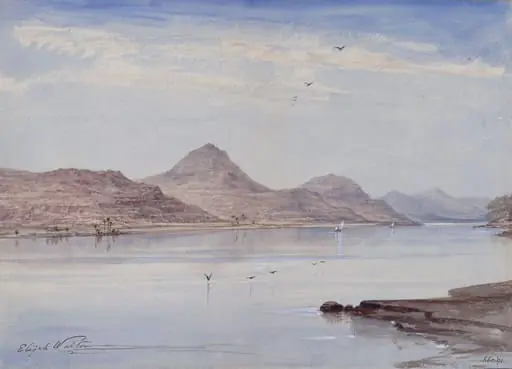 On the Nile : Gebel el Mody, Nubia
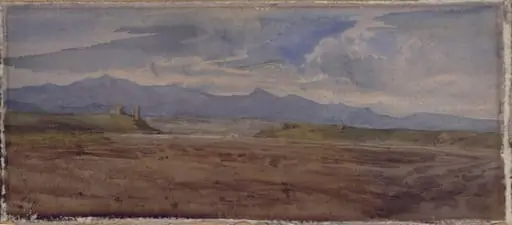 Ruin in Campagna
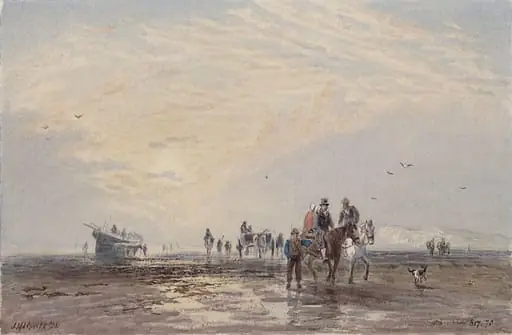 Crossing the Sands
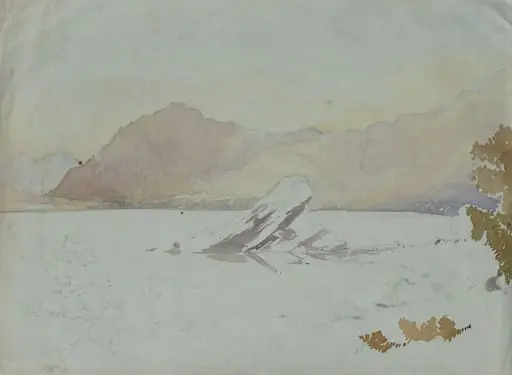 Landscape with mountains
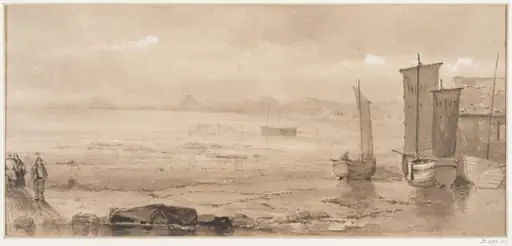 Seashore Study: Low Tide with Fishing Boats and Fisher Folk
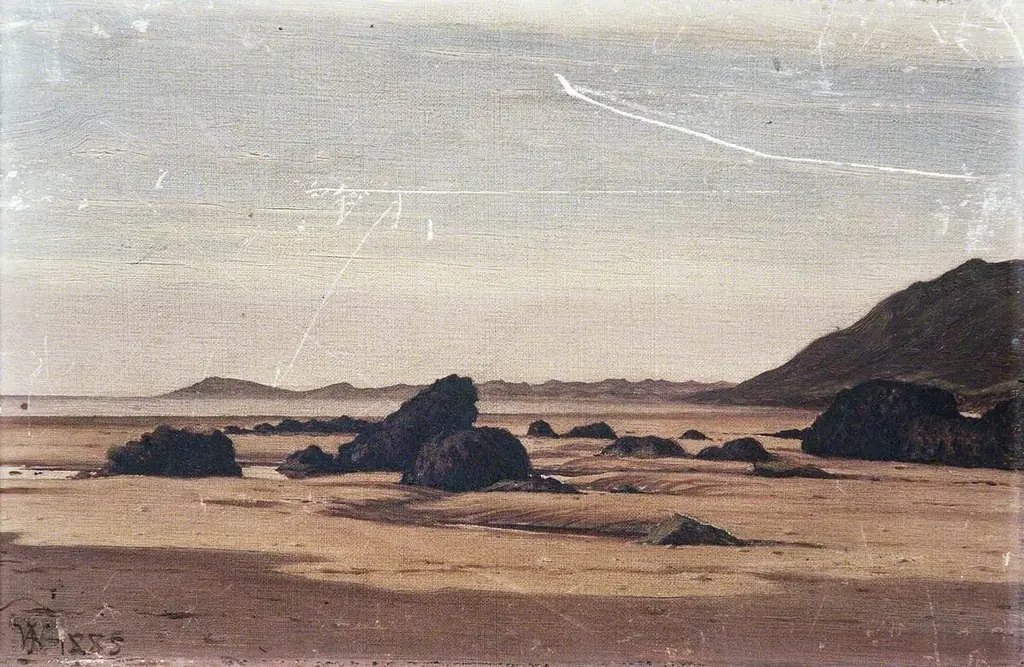 Rhosili Sands with Burry Holmes in the Distance
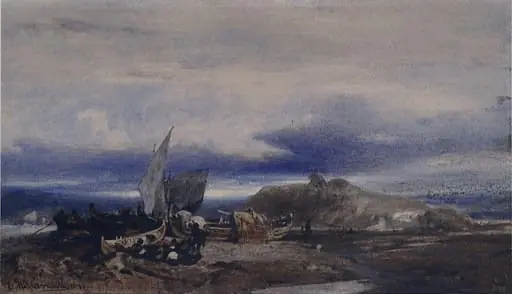 Landscape with Boats