Artwork
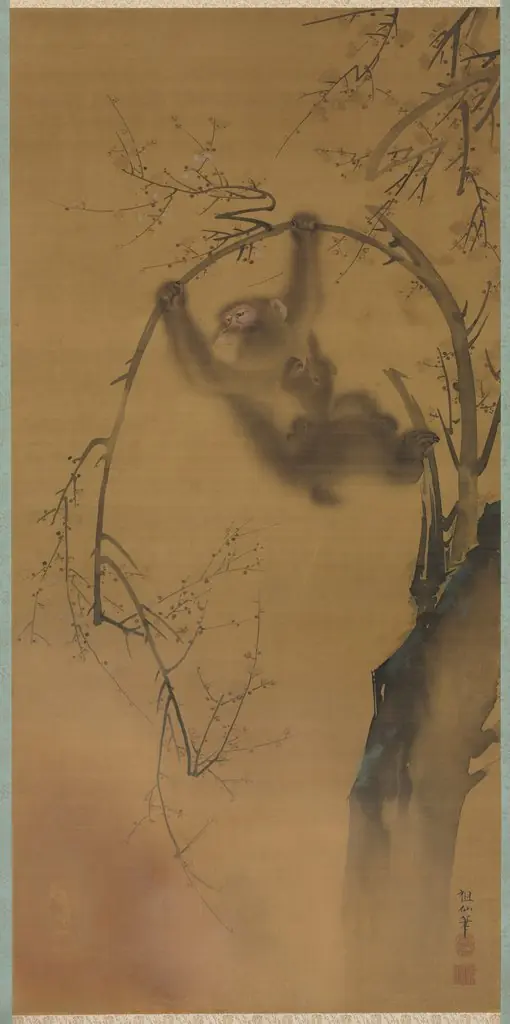
Monkey Hanging on to a Branch
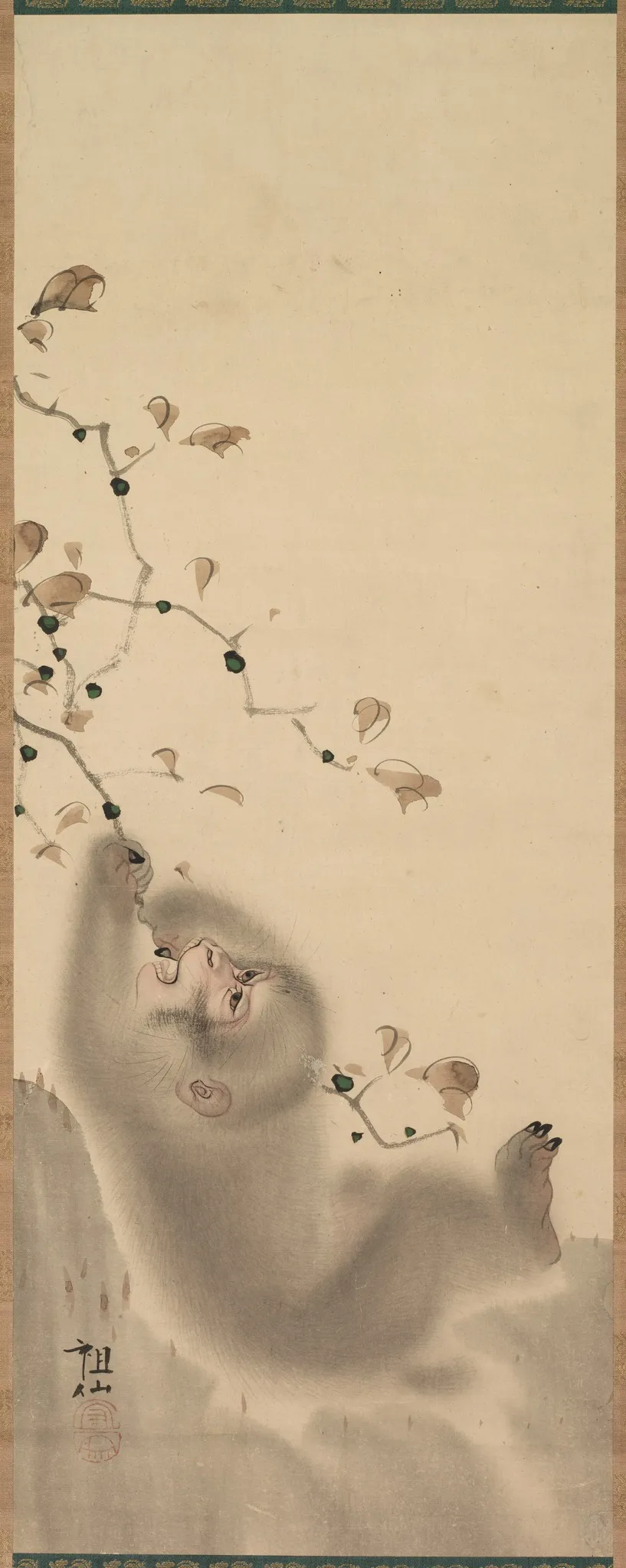
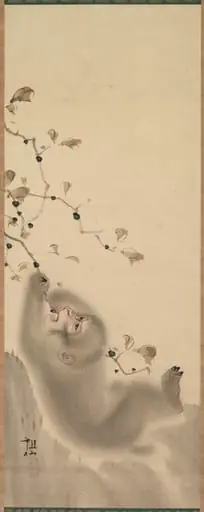
Monkey Hanging on to a Branch is an unspecified painting by Mori Sosen. It dates from 1790 and is held in the collection of the Cleveland Museum of Art.
About this work
Overview
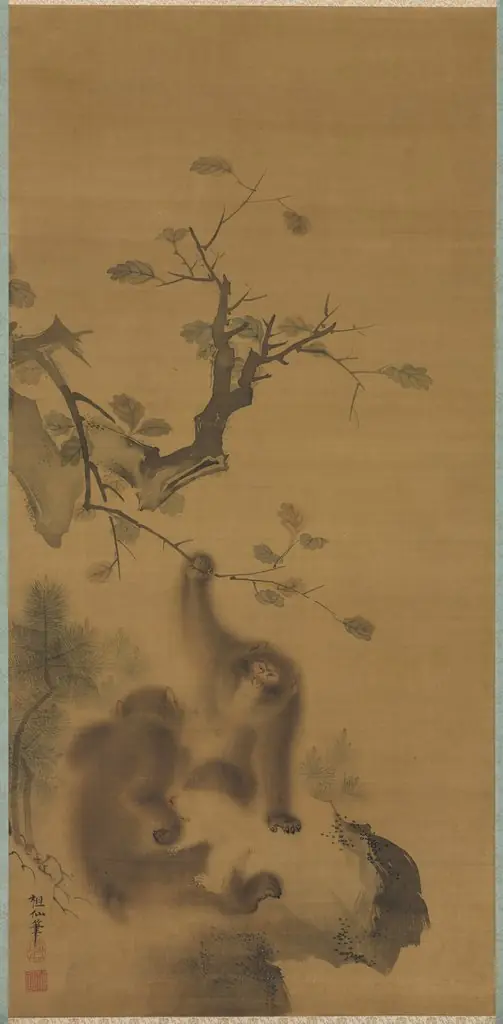
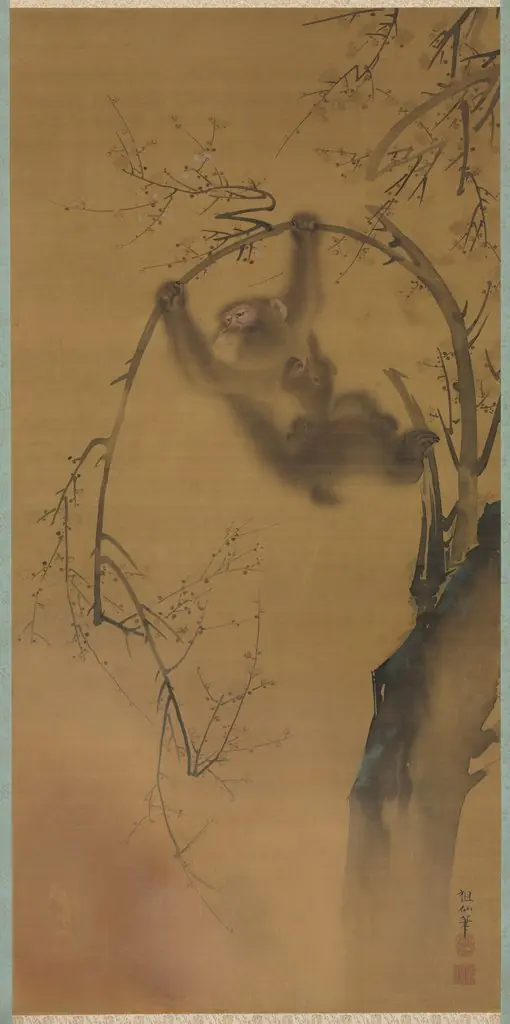
The work depicts a single macaque suspended upside down from a leafy branch that extends diagonally from the left.
Created in 1790 by the Japanese Edo-period artist Mori Sosen, 'Monkey Hanging on to a Branch' exemplifies the artist's renowned specialization in simian subjects. The work depicts a single macaque suspended upside down from a leafy branch that extends diagonally from the left. Sosen renders the animal's anatomy with precise observation, utilizing varied shades of gray ink to differentiate the texture of the fur from the smoother, more detailed rendering of the face and hands. The composition relies on the dynamic tension of the hanging posture against a largely unadorned background, a technique that directs the viewer's focus entirely to the creature's physical form and expressive gaze. This piece reflects Sosen's career-long dedication to capturing the natural behavior and distinct character of monkeys, moving beyond mere caricature to achieve a level of zoological accuracy and psychological depth uncommon in the genre. The painting stands as a representative example of his mature style, where the interplay of brushwork and ink wash creates a sense of weight and movement within a minimalist framework.
Subject & Meaning
The monkey, rendered in varying tones of gray, is shown hanging upside‑down, its limbs grasping the slender branch. Such depictions of primates were common in Edo‑period art, often symbolizing wit, agility, or the playful side of nature. The animal’s focused expression and careful grip suggest a moment of concentration amid an otherwise tranquil setting.
Technique & Style
Mori employs ink and subtle washes to model the monkey’s fur, using layered gray shades to convey texture and volume. The brushwork on the face and hands is finer, highlighting anatomical details, while the surrounding leaves are suggested with minimal strokes. The light beige ground provides a gentle contrast, allowing the figure to emerge without elaborate background scenery.
History & Provenance
After its creation in the late 18th century, the painting entered private collections before being acquired by the Cleveland Museum of Art, where it remains on display. Its documented provenance traces back to Japanese collectors who valued animal studies as part of the broader ukiyo‑e tradition.
Context
Mori Sosen was renowned for his realistic animal studies, particularly his series of monkeys, which catered to the Edo public’s fascination with exotic fauna. This work reflects the period’s interest in natural observation combined with a decorative aesthetic, aligning with contemporary prints and paintings that celebrated everyday creatures.
Artist & collection