Artwork
Ducks at Rest on the Bank
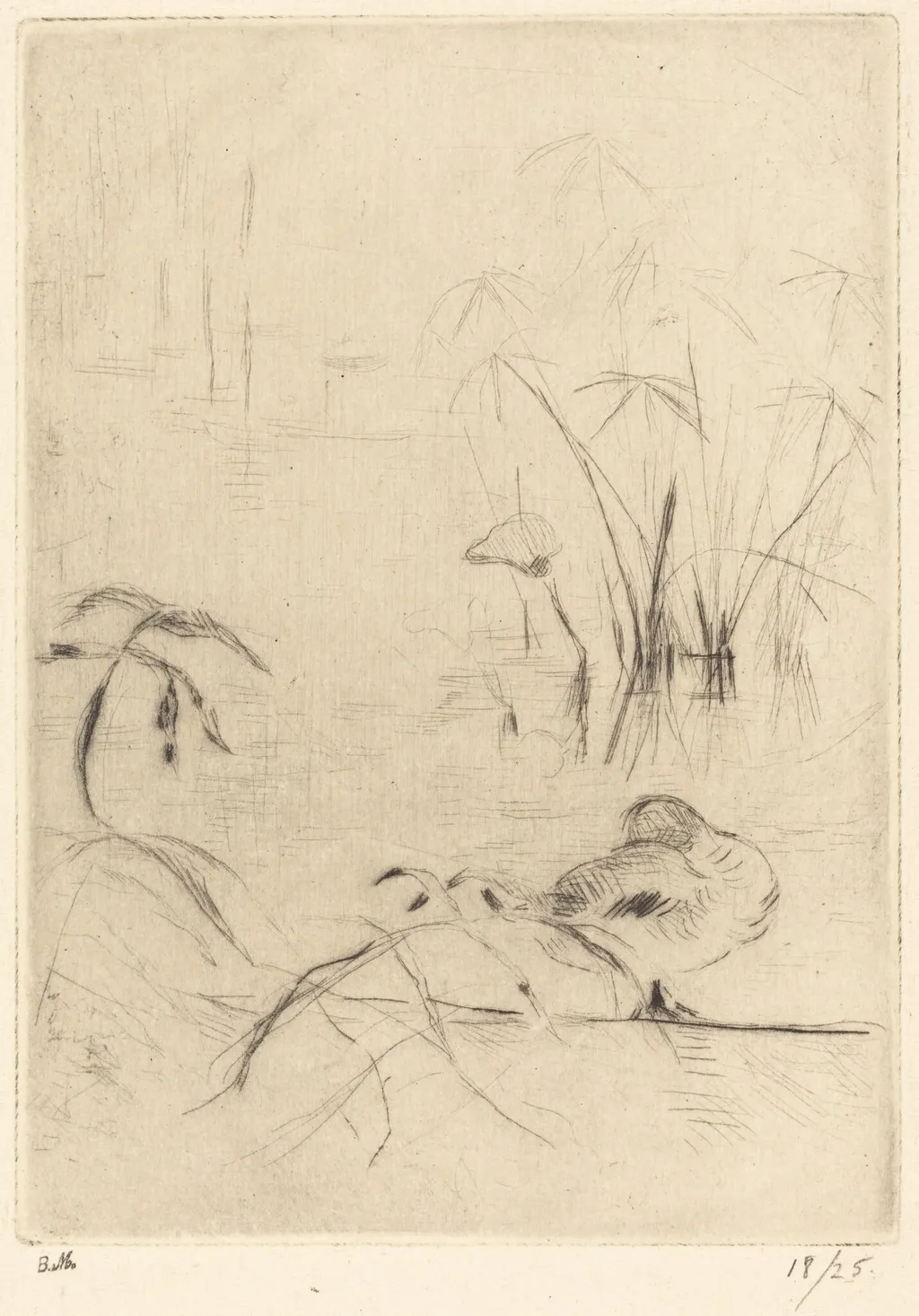
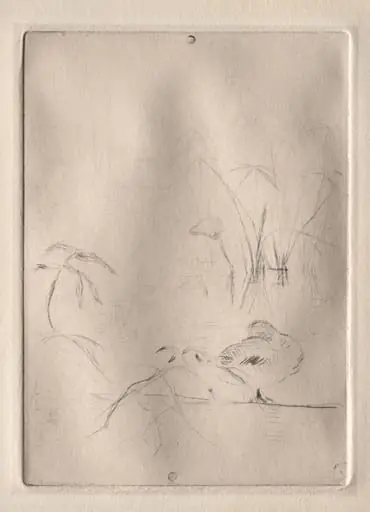
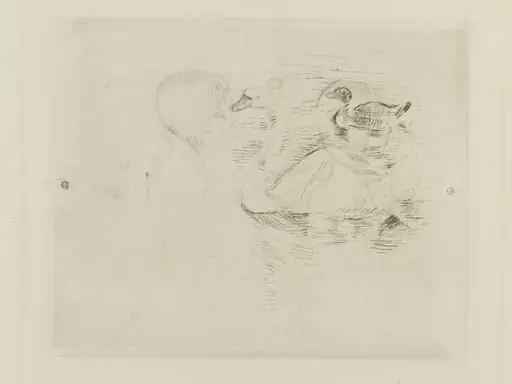
Ducks at Rest on the Bank is an ink print by the Impressionist artist Berthe Morisot. It dates from 1889 and is held in the collection of the National Gallery of Art.
About this work
The date "18/25" might mean it was printed later, even if the original was made in 1889.
This sketch shows two ducks curled up on a grassy bank. Tall reeds lean over them, and the water’s edge is just visible below. The lines are loose and quick, like the artist barely paused to draw.
The paper has a textured look, typical of older prints. The date "18/25" might mean it was printed later, even if the original was made in 1889.
Next, check out Impressionism to see how artists used light and quick strokes.
Overview
Ducks at Rest on the Bank is a drypoint print on laid paper created by French Impressionist artist Berthe Morisot in 1889. The work showcases Morisot's distinctive handling of light and form.
Subject & Meaning
The print captures a serene moment of two ducks resting on a grassy riverbank, overshadowed by leaning reeds, with the water's edge subtly visible. The composition conveys a sense of tranquility.
Technique & Style
Characterized by loose, quick lines, the print reflects Morisot's spontaneous drawing style. The textured appearance of the laid paper complements the expressive drypoint technique.
History & Provenance
Originally created in 1889, the print bears the notation '18/25', suggesting a later printing from the original plate. Morisot, an integral part of the Parisian Impressionist circle, exhibited with the group after initial participation in the Paris Salon.
Context
This work exemplifies Impressionist principles, emphasizing light capture and immediate visual impression. For deeper insight into the movement's emphasis on light and spontaneous brushwork, see the entry on Impressionism.
Artist & collection

Artist
Berthe Marie Pauline Morisot (French: ; 14 January 1841 – 2 March 1895) was a French painter, printmaker and a member of the circle of painters in Paris who became known as the Impressionists.