Artwork
San Giorgio Maggiore
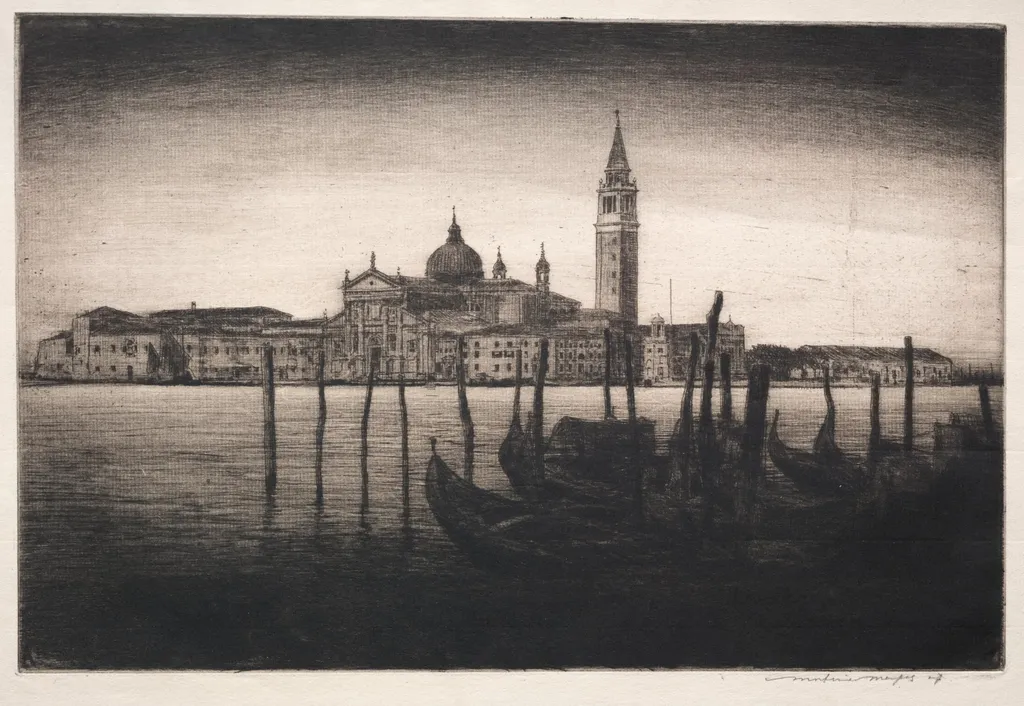
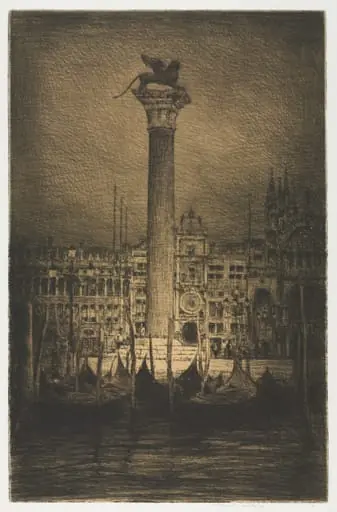
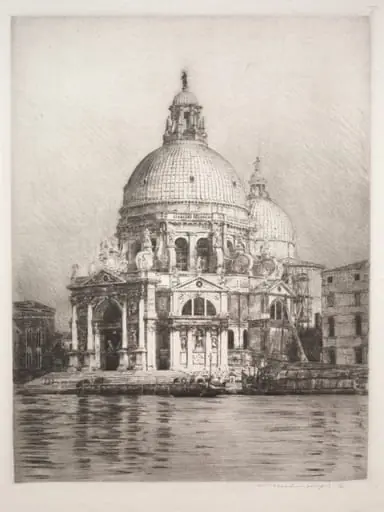
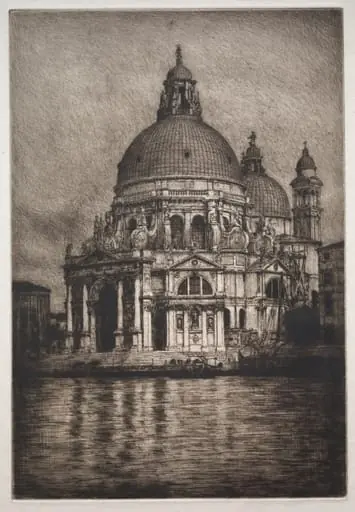
San Giorgio Maggiore is a print by Mortimer Menpes. It dates from 1910 and is held in the collection of the Cleveland Museum of Art.
About this work
Overview
Executed in ink or etching, the work captures a tranquil waterside moment with minimal color, emphasizing form and tone.
Created in 1910 by Mortimer Menpes, this black-and-white print depicts the Venetian island of San Giorgio Maggiore. Executed in ink or etching, the work captures a tranquil waterside moment with minimal color, emphasizing form and tone. It is part of the collection at The Cleveland Museum of Art, where it is preserved as an example of early 20th-century printmaking focused on architectural and atmospheric observation.
Subject & Meaning
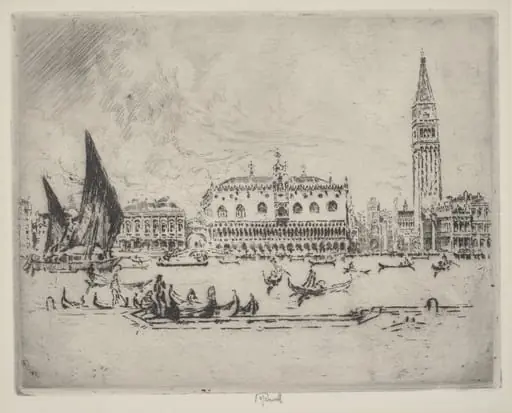
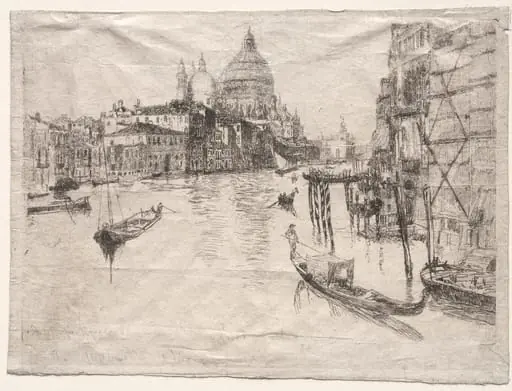
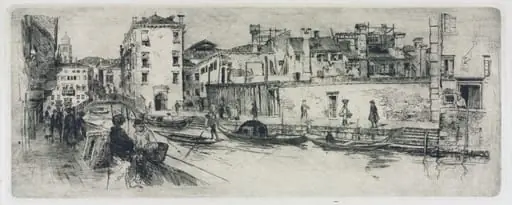
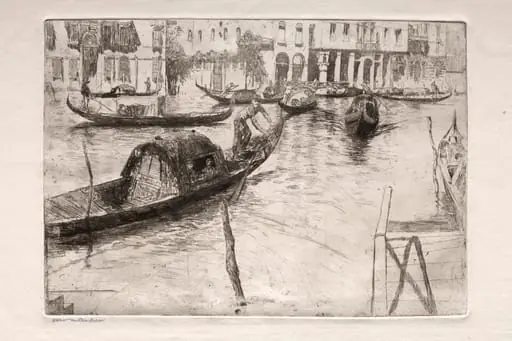
The scene centers on San Giorgio Maggiore’s church, its domes and bell tower rising above the lagoon, framed by three moored gondolas and low-lying buildings. The stillness of the composition, with no human figures, suggests solitude and contemplation. The quietude of the moment reflects a meditative engagement with place, inviting attention to the relationship between architecture, water, and light rather than narrative or activity.
Technique & Style
Menpes employed strong contrasts of light and shadow to define form, using precise linework and tonal gradations to suggest depth without color. Reflections of the gondolas in the water are rendered with subtle, broken lines, implying gentle ripples. The technique leans toward tonal sketching, where areas of dense shadow anchor the composition, while lighter zones suggest reflected light on stone and water, evoking a sense of quiet realism.
History & Provenance
The print was made during Menpes’s travels in Italy, a period when he produced numerous views of Venetian architecture. It entered the Cleveland Museum of Art’s collection through documented acquisition, likely as part of a broader interest in European printmaking at the time. Its preservation reflects early 20th-century institutional efforts to document and display works by artists engaged with architectural subjects.
Context
Menpes worked during a time when artists increasingly turned to printmaking to explore mood and structure over detail. His depiction of San Giorgio Maggiore aligns with broader trends in tonal etching, influenced by Whistler and Japanese woodcuts, which valued atmosphere and composition over literal representation. The work reflects a fascination with Venice as a subject of quiet, enduring beauty rather than tourist spectacle.
Legacy
Though not widely reproduced, the print remains a representative example of Menpes’s approach to architectural subjects through tonal restraint. It contributes to the understanding of how early 20th-century artists used print media to convey spatial harmony and emotional stillness. Its presence in a major American museum underscores its role in shaping Western perceptions of Venetian architecture beyond the painted tradition.
Artist & collection