Artwork
The Doge's Palace
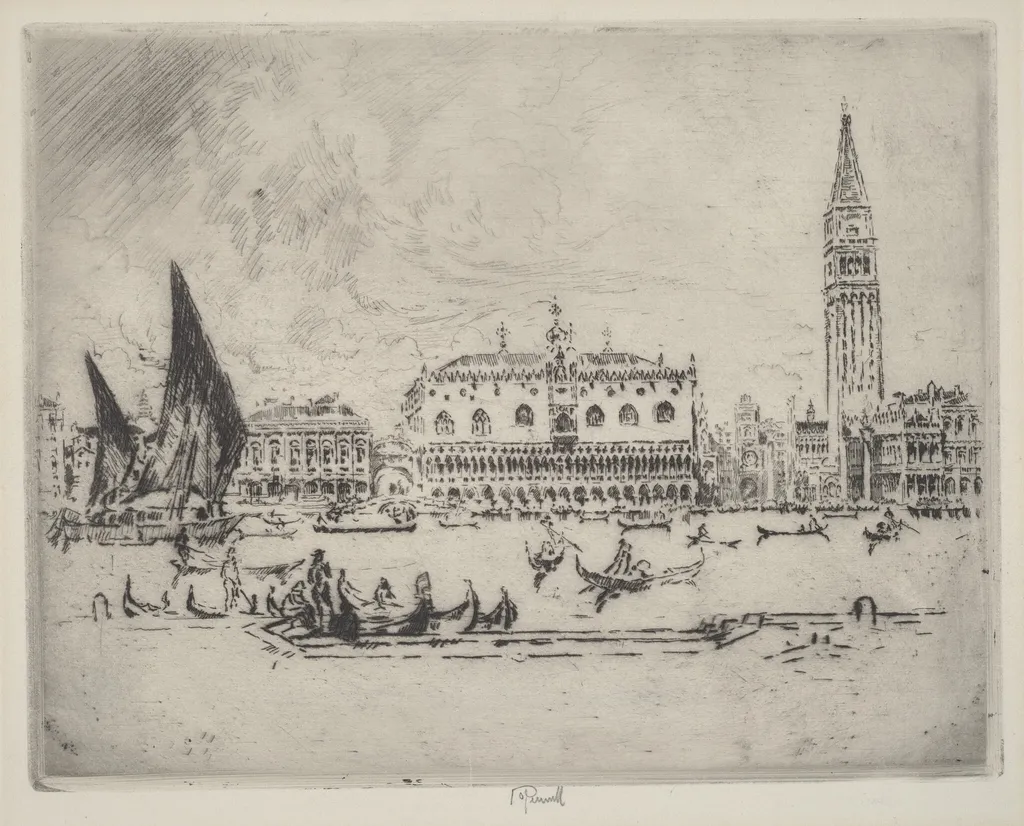
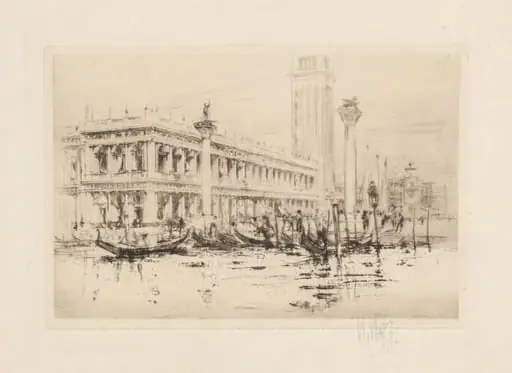
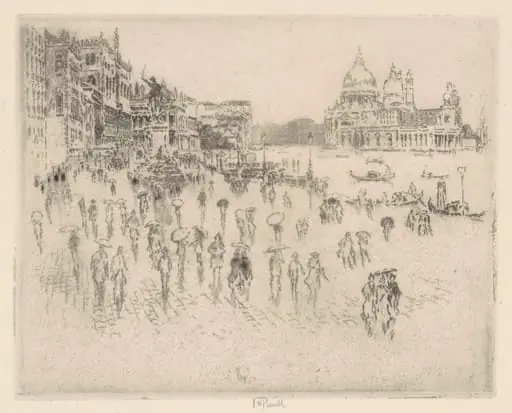
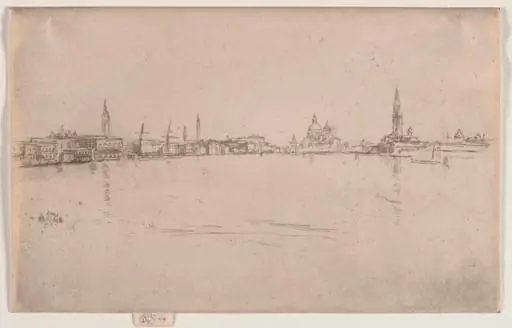
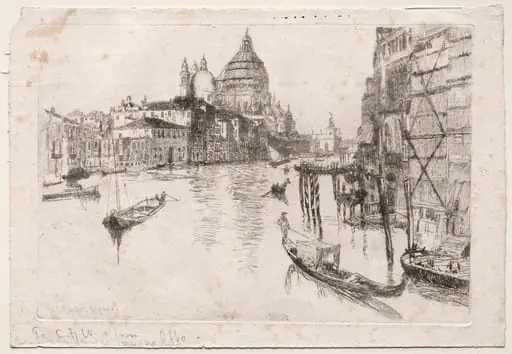
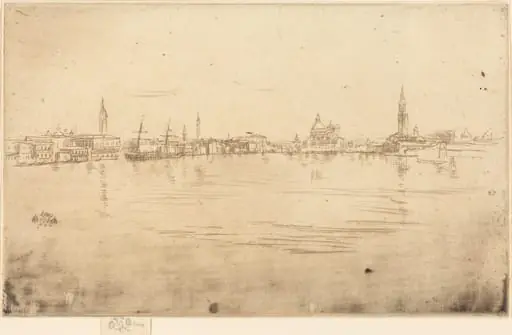
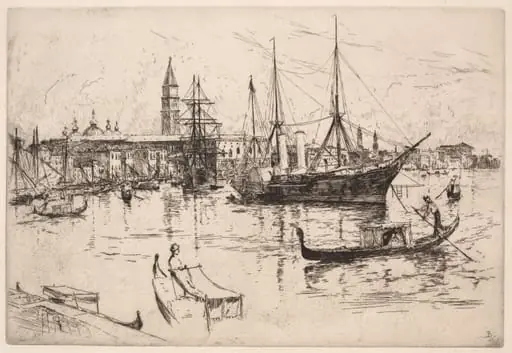
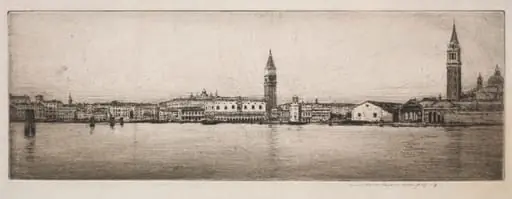
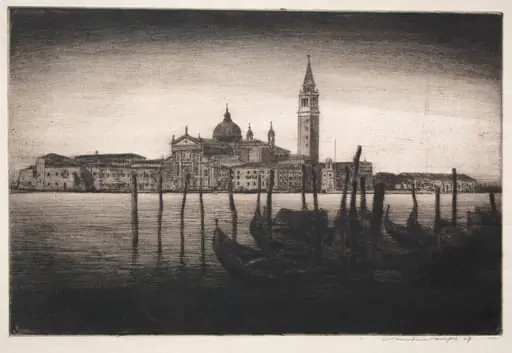
The Doge's Palace is an ink print by the Impressionist artist Joseph Pennell. It dates from 1883 and is held in the collection of the National Gallery of Art.
About this work
Overview
Pennell’s approach blends precision with spontaneity, reflecting his academic training and evolving interest in tonal subtlety.
Joseph Pennell’s 1883 etching captures the Doge’s Palace in Venice, rendered with fine, deliberate lines that convey both architectural detail and atmospheric movement. Created during his time in Europe, the work is part of a larger series documenting historic urban environments. Pennell’s approach blends precision with spontaneity, reflecting his academic training and evolving interest in tonal subtlety. The scene is alive with activity, centered on the canal’s reflections and the rhythm of waterborne transport.
Subject & Meaning
The composition centers on the Doge’s Palace, its Gothic arches and ornate façade dominating the background, while gondolas and smaller boats populate the foreground canal. The building is not isolated but integrated into daily life—its grandeur framed by ordinary movement. Pennell avoids idealization; instead, he presents the palace as a living element within a functioning city, emphasizing continuity between history and the present.
Technique & Style
Pennell employed etching to achieve fine gradations of tone and texture, using incised lines to suggest light on stone, water ripples, and the motion of boats. His brushwork is economical yet expressive—quick, sketch-like strokes define form without overdetailing. Influenced by Whistler’s tonal harmony and his earlier studies under Lambdin and Eakins, he balances structural clarity with a sense of fleeting immediacy.
History & Provenance
Created during Pennell’s European residency in the early 1880s, this etching emerged from his sustained focus on architectural subjects across Italy and beyond. It was produced independently, without collaboration with his wife Elizabeth Robins, who typically contributed literary context to his other works. The print was likely made for private circulation or exhibition, reflecting Pennell’s reputation among print collectors and architectural enthusiasts of the period.
Context
In the late 19th century, American artists increasingly turned to European cities as subjects, drawn by their layered histories and evolving urban rhythms. Pennell’s etchings contributed to a broader revival of interest in printmaking as a serious medium for documentary and aesthetic expression. His focus on Venice aligned with a fascination among artists and writers for the city’s decayed grandeur and enduring cultural presence.
Legacy
Pennell’s etchings, including this one, helped establish architectural printmaking as a distinct genre in American art. His ability to merge technical rigor with observational immediacy influenced later generations of urban documentarians. Though less widely known today, his work remains a significant record of how 19th-century artists interpreted historic spaces through the intimate, tactile medium of etching.
Own this work as a print
Artist & collection
Artist
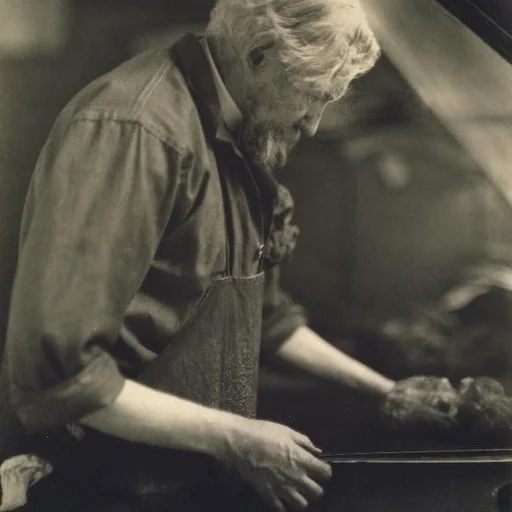
Joseph Pennell (July 4, 1857 – April 23, 1926) was an American draftsman, etcher, lithographer, and illustrator for books and magazines.