Artwork
Strada Clemenței
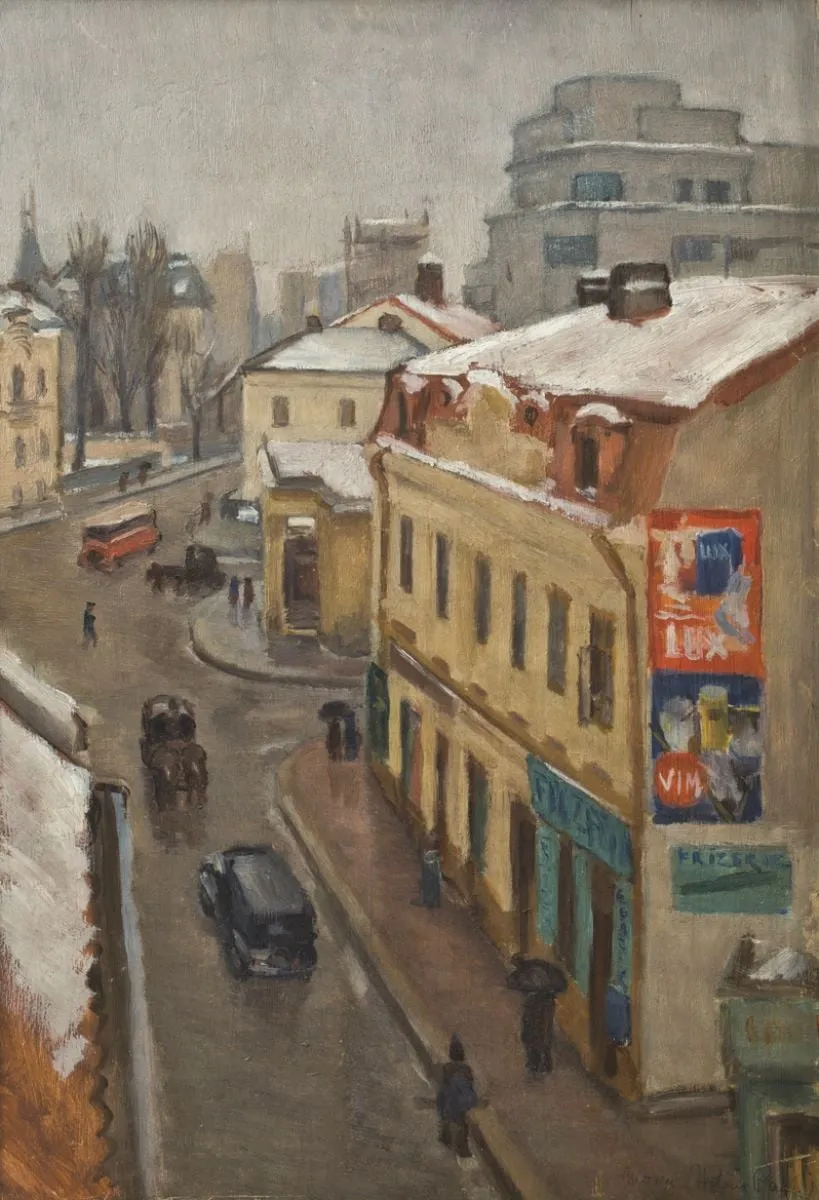
Strada Clemenței is an unspecified painting by Adina Paula Moscu. It dates from 1949 and is held in the collection of the Bucharest Municipality Museum.
About this work
Overview
The work is held in the collection of the Museum of Ethnography, where it contributes to records of mid-20th-century domestic environments.
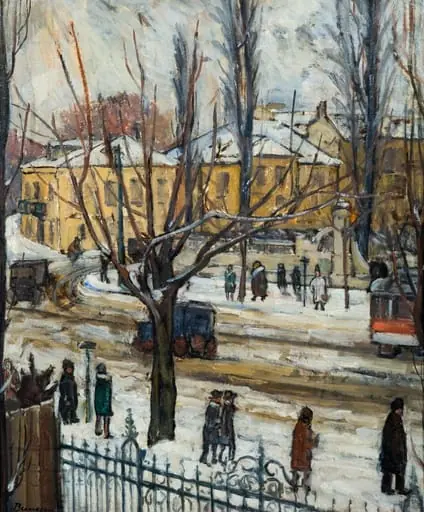
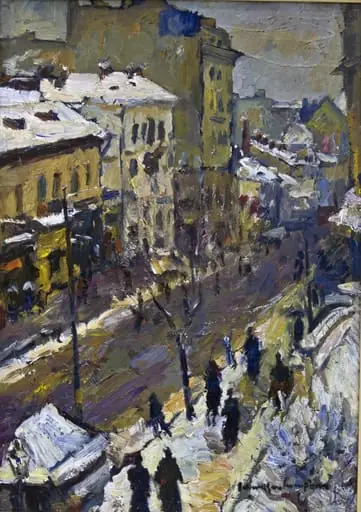
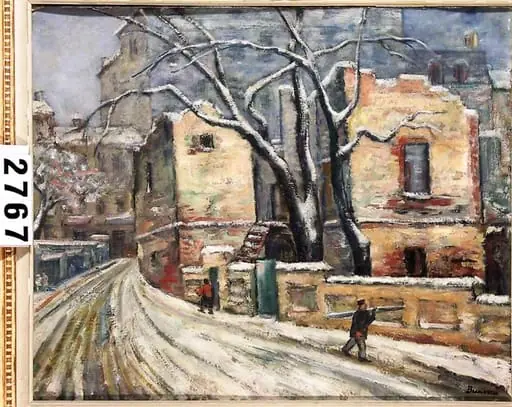
Strada Clemenței, painted around 1949 by Adina Paula Moscu, depicts a quiet winter street in a Romanian urban setting. The scene captures a modest, sloping road lined with modest buildings, their rooftops covered in snow. A few pedestrians and a horse-drawn cart move along the path, suggesting everyday life in the postwar period. The work is held in the collection of the Museum of Ethnography, where it contributes to records of mid-20th-century domestic environments.
Subject & Meaning
The painting presents an unidealized view of urban winter life, emphasizing routine rather than spectacle. Store signs labeled 'Lux' and 'Frizier' hint at commercial activity amid hardship, reflecting the material realities of the time. The presence of both motor vehicles and horse-drawn transport signals a transitional era. The quiet solitude of the figures suggests resilience in ordinary moments, avoiding grand narratives in favor of subtle social observation.
Technique & Style
Moscu employs thick, textured brushwork—particularly in the snow and building facades—to convey tactile depth and the weight of winter. The impasto technique gives the surface a physical presence, enhancing the sense of cold and damp. Soft, diffused lighting suggests overcast skies, with no harsh shadows, reinforcing the muted, subdued mood. Color is restrained, dominated by grays, whites, and muted browns, aligning with the season and the painting’s understated tone.
History & Provenance
Created shortly after World War II, the painting emerged during a period of cultural reorientation in Romania. It entered the Museum of Ethnography’s collection, likely as part of efforts to document everyday life under emerging socialist policies. Its preservation reflects institutional interest in vernacular scenes rather than official propaganda, offering a quiet counterpoint to state-sanctioned art of the era.
Context
In late 1940s Romania, urban life was marked by scarcity and reconstruction. Public transport was unreliable, and horse-drawn carts remained common even as automobiles slowly reappeared. The presence of commercial signage like 'Lux' and 'Frizier' indicates the persistence of private enterprise beneath state control. Moscu’s focus on this ordinary street reflects a broader trend among artists documenting the texture of daily survival.
Legacy
Strada Clemenței endures as a quiet record of postwar Romanian urbanism, valued for its unembellished realism. It stands apart from the monumental or ideological art promoted by the state, offering instead a personal, observational perspective. Its inclusion in the Museum of Ethnography underscores its role as cultural documentation, preserving the visual language of ordinary life during a time of profound change.
Artist & collection
Artist
Romanian painter of the mid-20th century, best known for intimate street scenes and portraiture.