Artwork
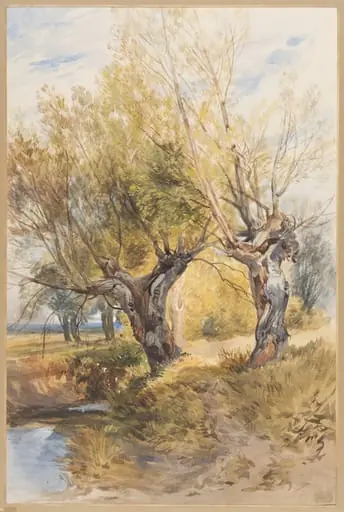
Wood near Bristol
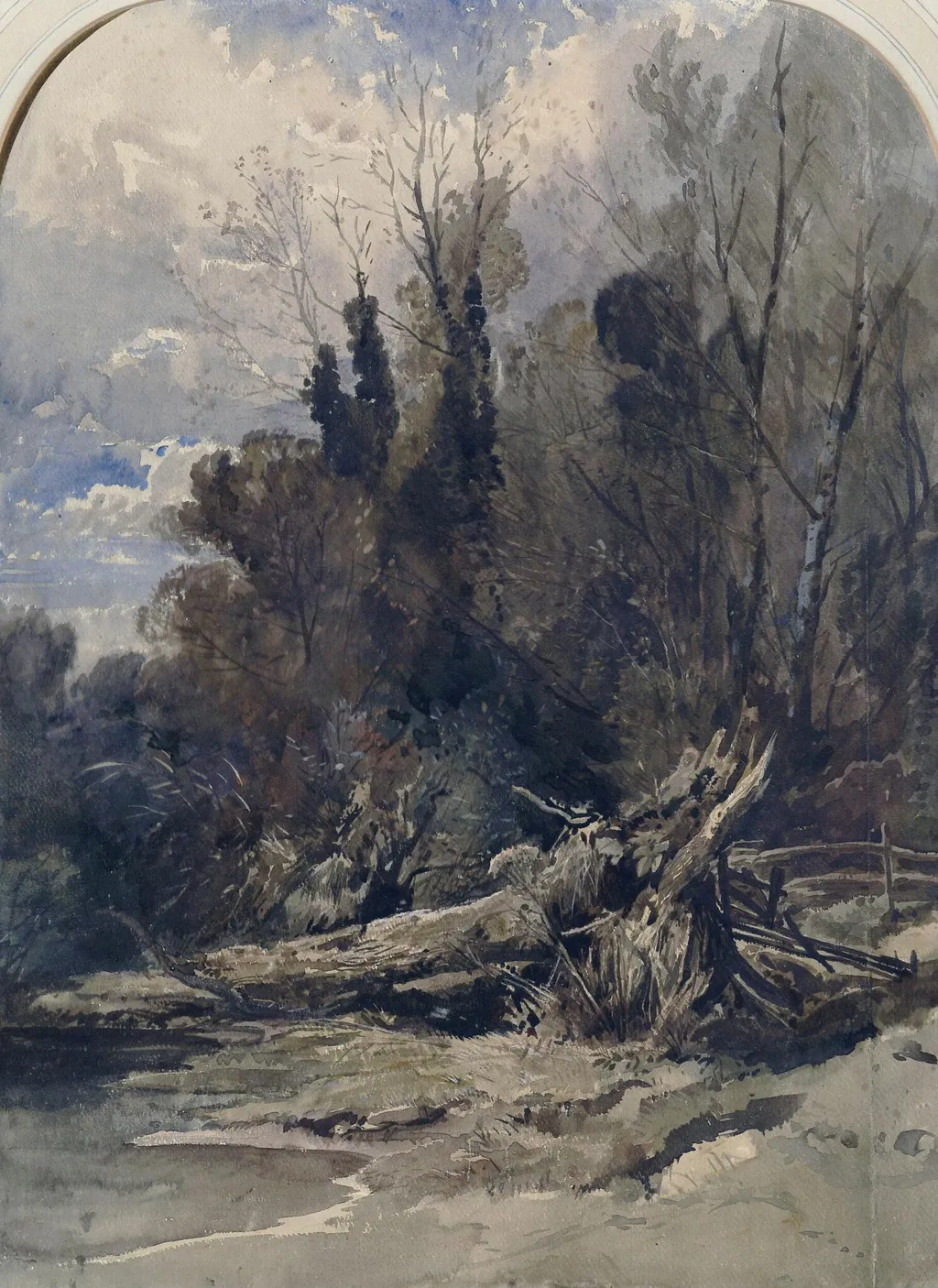
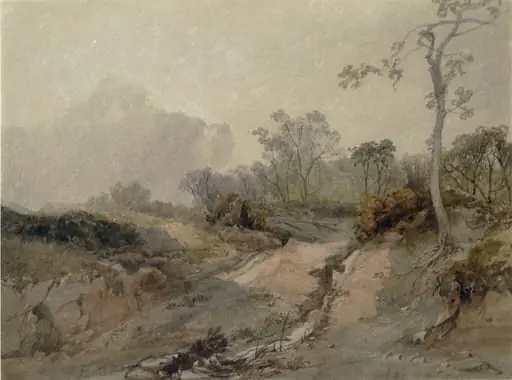
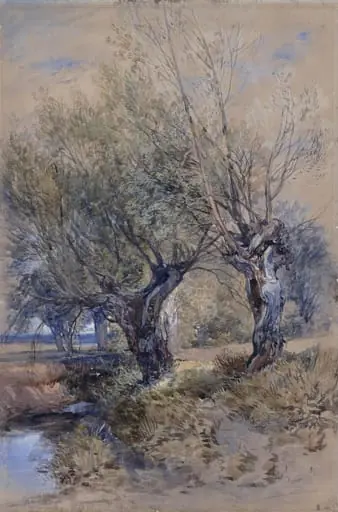
Wood near Bristol is a watercolor work on paper by the British Romanticist artist Muller. It dates from 1840 and is held in the collection of the Victoria and Albert Museum.
About this work
Overview
The piece is part of the Victoria and Albert Museum’s collection, where it is preserved as an example of mid-19th-century British landscape watercolor.
Created around 1840, Wood near Bristol is a watercolor work by the artist Muller, depicting a quiet woodland near the city. The piece is part of the Victoria and Albert Museum’s collection, where it is preserved as an example of mid-19th-century British landscape watercolor. Its subdued palette and intimate scale reflect a quiet engagement with nature, typical of the period’s artistic sensibilities.
Subject & Meaning
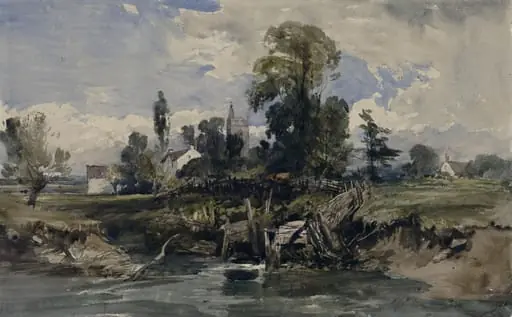
The painting portrays a dense, untended wood in winter or early spring, with bare, twisted branches and exposed roots dominating the composition. There is no human presence, emphasizing nature’s autonomy. The misty atmosphere and uneven light suggest a transient moment, evoking contemplation rather than narrative. This aligns with Romantic ideals that valued nature’s raw, unmediated character over idealized scenery.
Technique & Style
Muller employed delicate watercolor washes to build subtle tonal gradations, allowing the paper’s white to suggest light filtering through the canopy. Dry brushwork defines the rough textures of bark and roots, while sparing use of green and white introduces minimal color contrast. The composition avoids symmetry, favoring an organic, almost chaotic arrangement that enhances the sense of natural disorder.
History & Provenance
The painting entered the Victoria and Albert Museum’s collection in the 19th century, likely through acquisition or donation from a private collector. Its attribution to Muller is consistent with records of lesser-known British watercolorists active in the 1830s–1850s. Though not widely exhibited, it has remained in institutional care since its acquisition, preserving its original condition.
Context
In the 1840s, British artists increasingly turned to local landscapes as subjects, moving away from grand European vistas. Watercolor, prized for its immediacy, became a favored medium for capturing transient effects of light and weather. Muller’s work fits within this trend, reflecting a growing cultural interest in the quiet beauty of the British countryside.
Legacy
Wood near Bristol remains a quiet testament to the skill of 19th-century watercolorists who found depth in modest subjects. While not widely reproduced or celebrated, it contributes to the broader understanding of how artists of the time observed and rendered natural environments with sensitivity and restraint, influencing later generations of landscape painters.
Own this work as a print
Artist & collection