Artwork
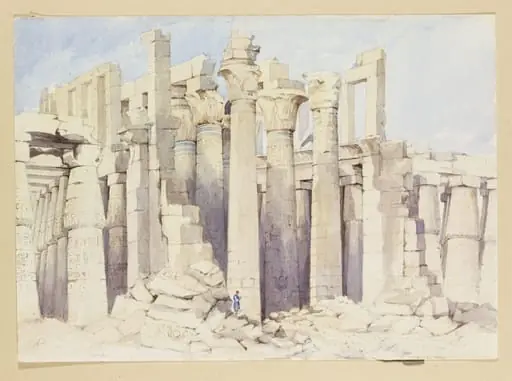
The Hall of Columns at Karnak, Thebes
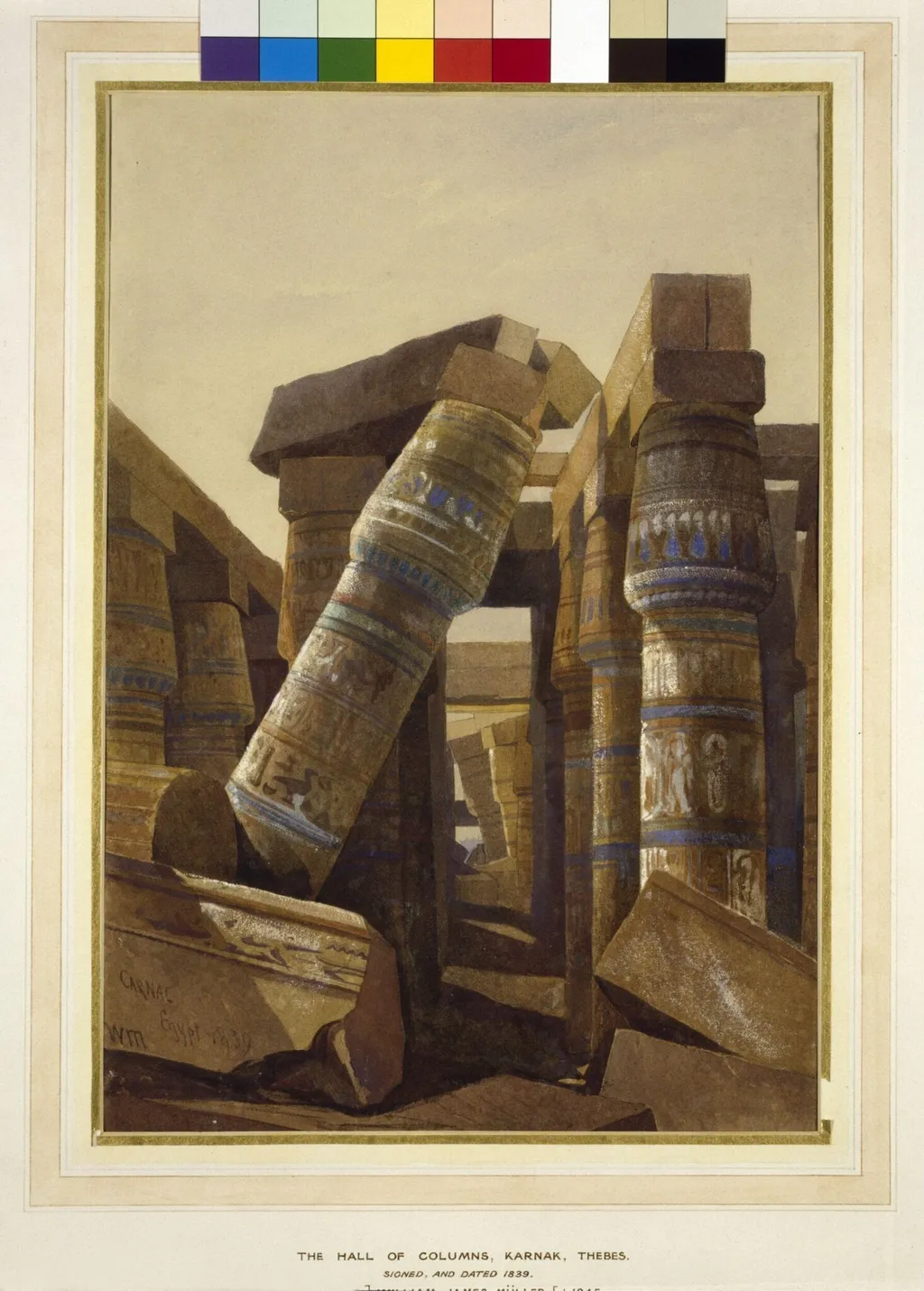
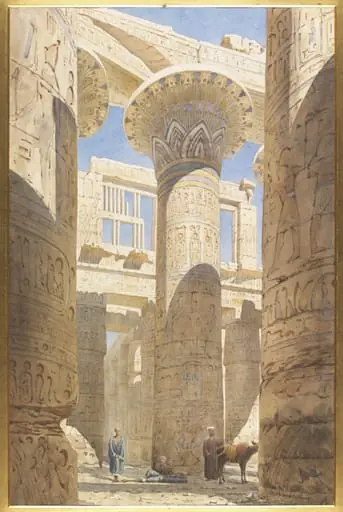
The Hall of Columns at Karnak, Thebes is a watercolor work on paper by the Orientalist artist Muller. It dates from 1839 and is held in the collection of the Victoria and Albert Museum. Painted in 1839, this watercolour captures the ruined state of the hypostyle hall at Karnak Temple in Thebes.
About this work
If you like this, check out the Victoria and Albert Museum to see more works like it.
This painting shows broken stone columns lying on the ground. The columns have carvings and faded paint, some still standing crookedly. The colors are mostly browns and grays, with hints of blue and red on the carvings. The scene looks old and worn, like ruins.
The title says this is from Karnak, a place in Egypt. The artist painted it in 1839, showing how these ancient columns looked back then.
If you like this, check out the Victoria and Albert Museum to see more works like it.
Overview
Painted in 1839, this watercolour captures the ruined state of the hypostyle hall at Karnak Temple in Thebes. The artist signed and dated the work, indicating a deliberate record of the site’s condition at the time. The composition focuses on fallen and leaning columns, their surfaces weathered and fragmented, conveying a sense of time’s passage through quiet detail rather than grandeur.
Subject & Meaning
The scene presents the remnants of a once-majestic religious structure, now reduced to scattered stonework. The broken columns, some still upright but tilted, suggest both the scale of ancient construction and the erosion of its original function. The faded traces of pigment on the carvings hint at lost rituals and imagery, transforming the image into a quiet meditation on impermanence.
Technique & Style
Rendered in watercolour, the work employs muted earth tones—browns and grays—to evoke the dry, sun-baked stone of the ruins. Subtle accents of blue and red, barely visible on the carved surfaces, suggest the remnants of original polychromy. The artist’s brushwork is restrained, favoring atmospheric tone over sharp definition, reinforcing the sense of decay and quiet abandonment.
History & Provenance
Created during a period of growing European interest in Egyptian antiquities, the watercolour reflects early documentation efforts by travelers and artists. While its exact provenance before institutional acquisition is not recorded, its date and signature align with mid-19th century antiquarian practices. It likely served as a visual record for scholars or collectors rather than a decorative piece.
Context
In 1839, Egypt was a site of increasing archaeological activity, though systematic excavation was still in its infancy. The Hall of Columns at Karnak, though known to Western audiences through earlier publications, remained largely inaccessible to most. This watercolour contributes to a growing visual archive of Egypt’s monuments before modern restoration and tourism altered their appearance.
Legacy
The work stands as a modest but valuable document of Karnak’s condition in the early 19th century. It offers insight into how contemporary observers perceived ancient ruins—not as pristine relics, but as fragile, decaying structures. Its quiet realism distinguishes it from later romanticized depictions, preserving a more immediate, unembellished record of the site.
Artist & collection

 Karnac - Gt Hall of Columns View across central avenue
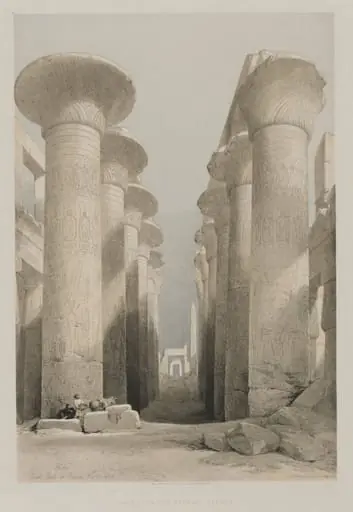 Egypt and Nubia, Volume I: Thebes, Great Hall at Karnac
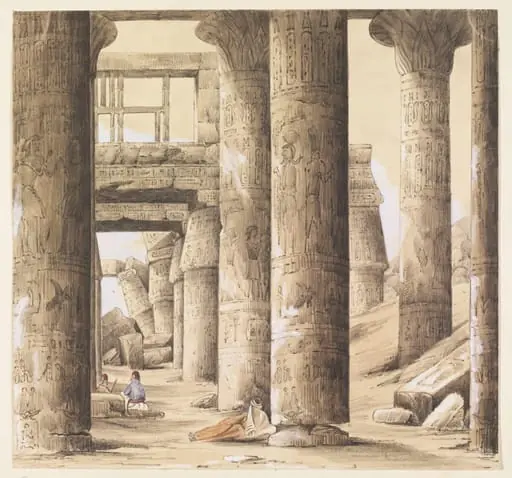 Interior of the Temple of Karnak, Thebes Upper Egypt.
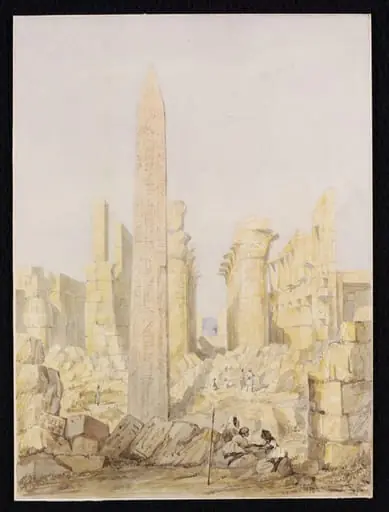 Great Temple. Karnac. Thebes
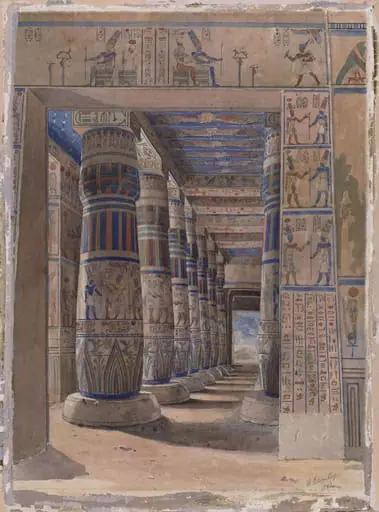 Interior of Crystal Palace, Egyptian Court, columns from the Temple of Karnak
 Karnak
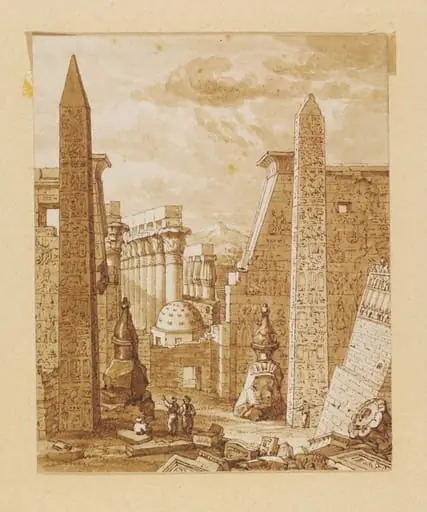 Entry of Palace of Luxor, formerly Thebes
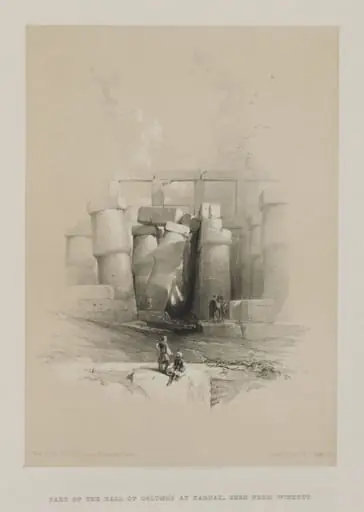 Egypt and Nubia, Volume II: Part of the Hall of Columns at Karnak, Thebes
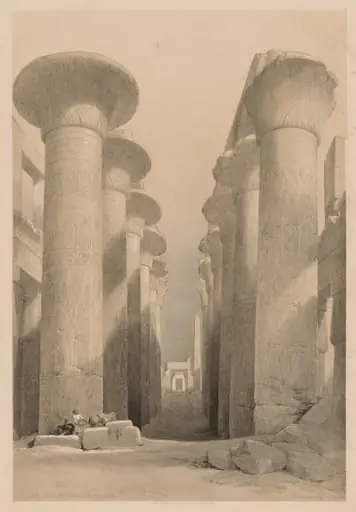 Egypt and Nubia: Volume I - No. 20, Great Hall at Karnak, Thebes