Artwork
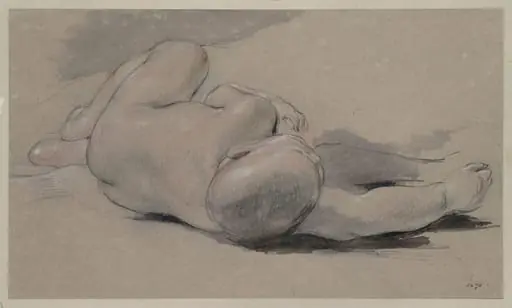
Study of a Male Nude
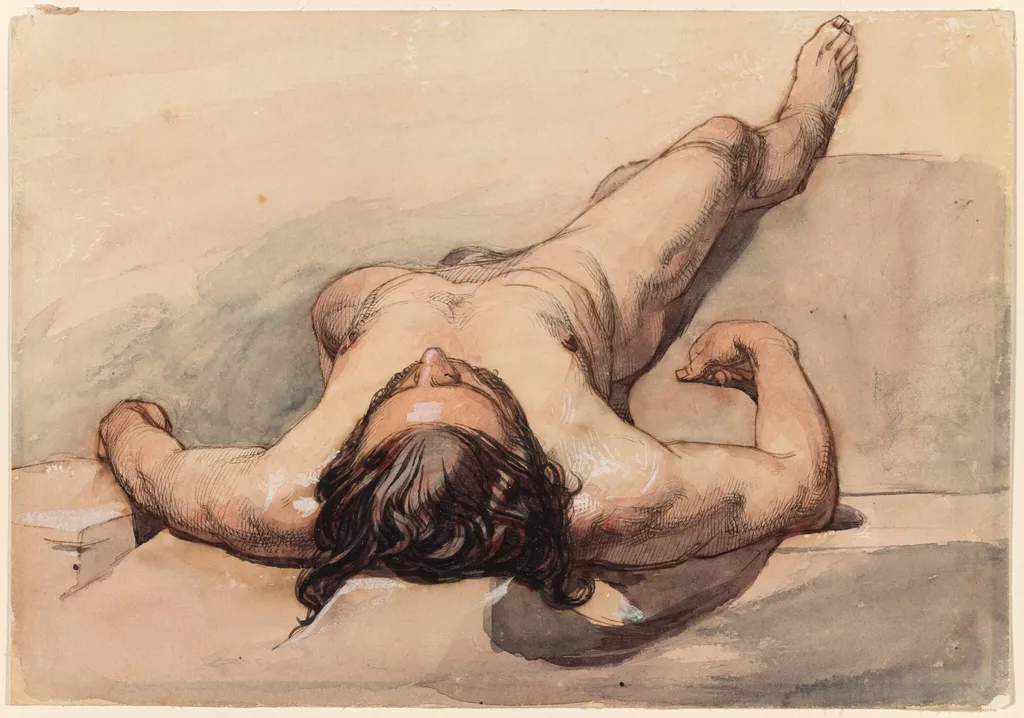
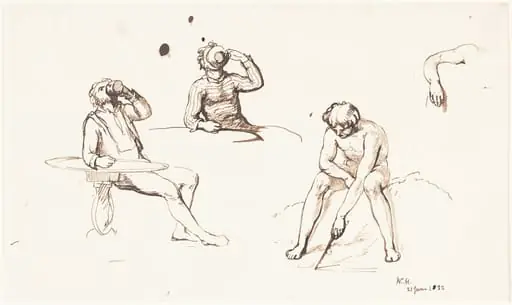
Study of a Male Nude is a watercolor drawing by the Romanticist artist William Mulready. It dates from 1852 and is held in the collection of the National Gallery of Art.
About this work
Overview
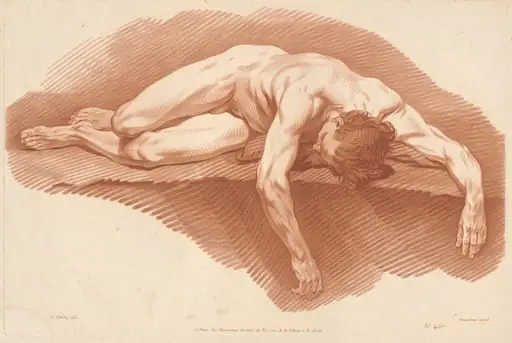
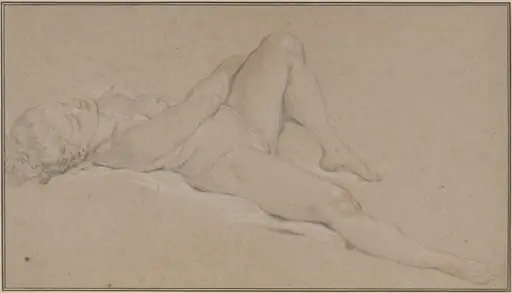
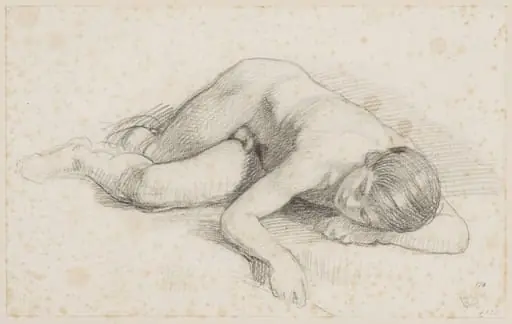
William Mulready’s Study of a Male Nude, executed around 1852, is a modestly sized drawing in pen, black ink, watercolor, and touches of white gouache on wove paper. The work resides in the collection of the National Gallery of Art in Washington, D.C. It exemplifies a preparatory sketch, capturing the anatomy of a reclining figure with swift, assured lines.
Subject & Meaning
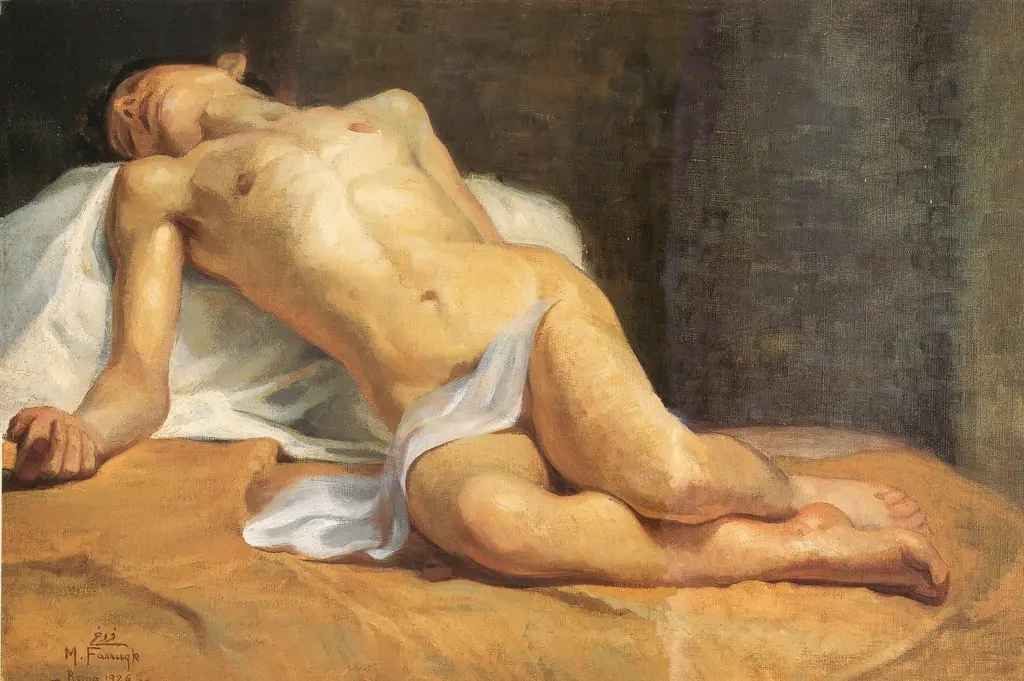
The composition presents a nude male figure lying prone, his torso arched and his head cradled in his folded forearms. The pose emphasizes the curvature of the back and the tension of the musculature, suggesting a study of human form rather than a narrative scene. The figure’s relaxed yet alert posture serves as a reference for anatomical accuracy.
Technique & Style
Mulready employed a combination of pen ink for contour and watercolor washes to model flesh tones, allowing the paper’s warm, slightly yellowed surface to influence the overall hue. Light applications of white gouache highlight the highest points of the body, while the ink delineates muscle groups with quick, confident strokes. The glazing technique creates a subtle depth without heavy layering.
History & Provenance
Created in the mid‑nineteenth century, the drawing entered the National Gallery of Art’s holdings through acquisition in the 20th century, though specific details of its earlier ownership remain undocumented. Its presence in the museum’s collection reflects the institution’s interest in Mulready’s oeuvre and in studies that illuminate the artist’s preparatory processes.
Context
During the 1850s, academic art placed great emphasis on life drawing and the study of the nude as a foundation for larger compositions. Mulready, known primarily for genre scenes, produced this sketch likely as a reference for a more elaborate work or as part of his own training regimen, aligning with contemporary pedagogical practices in art academies.
Artist & collection