Artwork
The West Doorway of Kirkstall Abbey
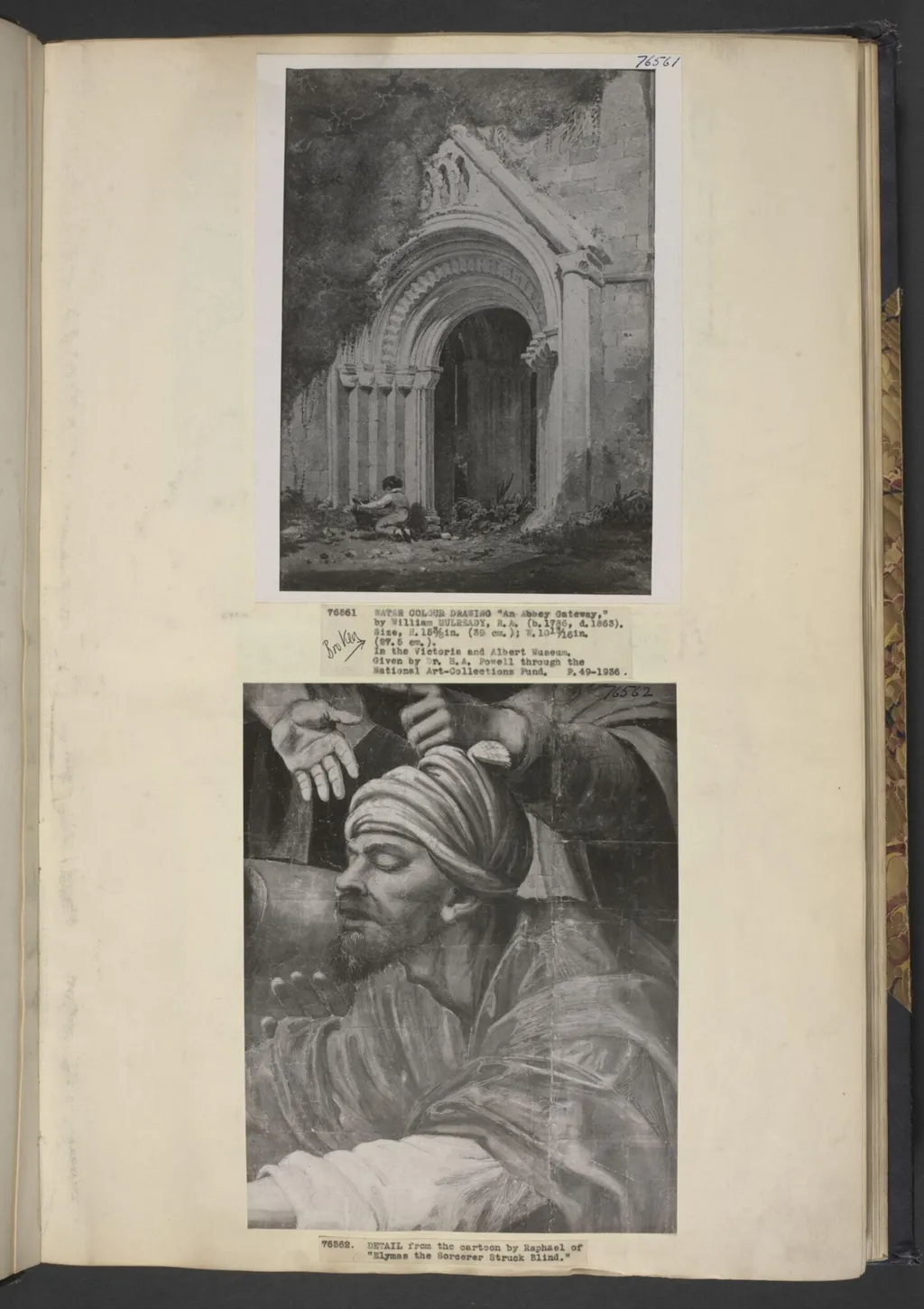
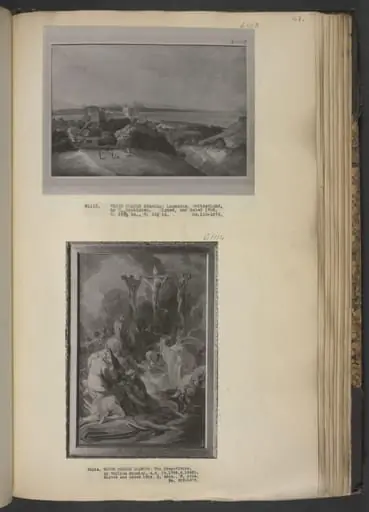
The West Doorway of Kirkstall Abbey is a watercolor work on paper by the British Romanticist artist William Mulready. It dates from 1804 and is held in the collection of the Victoria and Albert Museum.
About this work
This piece was made in 1804, when people often painted ruins to show history fading away.
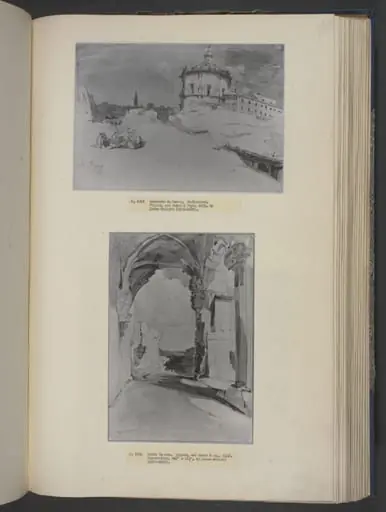
This drawing shows a crumbling stone archway with a broken roof. Inside the doorway, someone sits on the ground, facing away. The walls are rough, and vines or weeds grow at the base.
The artist focused on how old buildings look when they’re left to decay. This piece was made in 1804, when people often painted ruins to show history fading away.
Next, check out the Victoria and Albert Museum to see more works like this.
Overview
Created in 1804, William Mulready’s watercolour depicts the west entrance of Kirkstall Abbey in Yorkshire. The work is signed and dated by the artist, confirming its origin. It captures the architectural remains of the medieval Cistercian monastery, rendered with careful attention to the effects of time and neglect. The composition emphasizes decay rather than grandeur, reflecting a growing interest in ruins during the early 19th century.
Subject & Meaning
The scene centers on a fractured stone archway, its roof partially collapsed, with vegetation creeping along the base. A solitary figure sits within the doorway, turned away from the viewer, reinforcing a sense of solitude and quiet abandonment. The image conveys the passage of time and the quiet erosion of human endeavor, aligning with contemporary Romantic sensibilities that found poignancy in ruined structures.
Technique & Style
Mulready employed watercolour to achieve subtle gradations of tone and texture, capturing the roughness of weathered stone and the delicate spread of wild growth. The medium’s transparency allows underlying layers to suggest age and erosion. Brushwork is restrained yet precise, avoiding dramatic flourishes in favor of quiet observation. The composition directs attention to the doorway’s structural fragility through balanced asymmetry.
History & Provenance
Kirkstall Abbey, founded in the 12th century, had been abandoned since the Dissolution of the Monasteries. By 1804, it was a well-known subject for topographical artists and antiquarians. Mulready’s watercolour was likely made during a period of increased public interest in medieval ruins. The work remains in private hands, with no public record of institutional acquisition, though it is documented in artist catalogues from the early 1800s.
Context
In the early 1800s, British artists frequently turned to monastic ruins as subjects, responding to Romantic ideals and growing archaeological curiosity. Paintings of decayed abbeys like Kirkstall served as visual meditations on impermanence, often linked to national identity and historical memory. Mulready’s work fits within this trend, though it avoids overt sentimentality, favoring restrained observation over dramatic narrative.
Legacy
Mulready’s watercolour contributes to a broader 19th-century visual record of England’s ecclesiastical ruins. While not widely exhibited, it reflects a shift in artistic focus from idealized landscapes to authentic, unembellished depictions of decay. Its quiet realism influenced later topographical artists and remains a modest but significant example of early Romantic landscape drawing in watercolour.
Artist & collection