Artwork
Suomalainen saaristomaisema
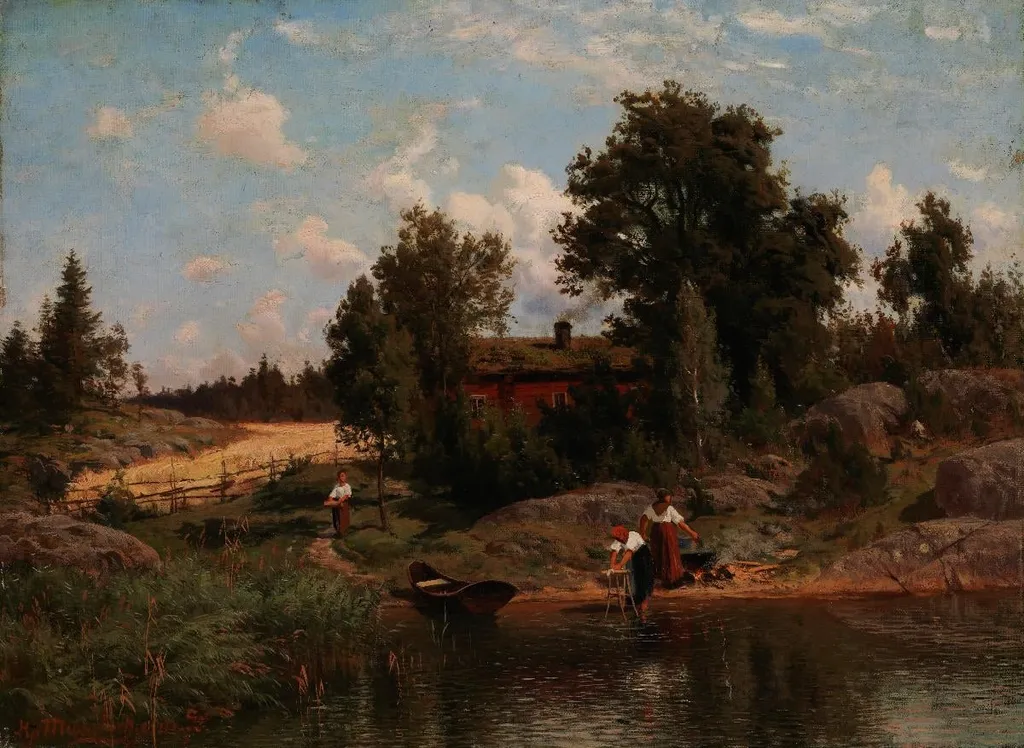
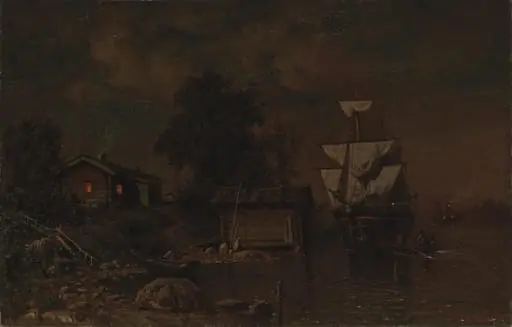
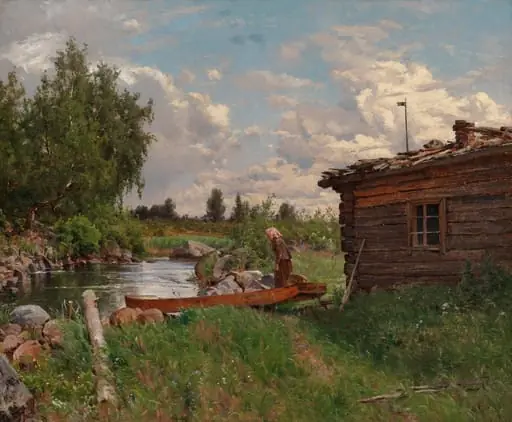
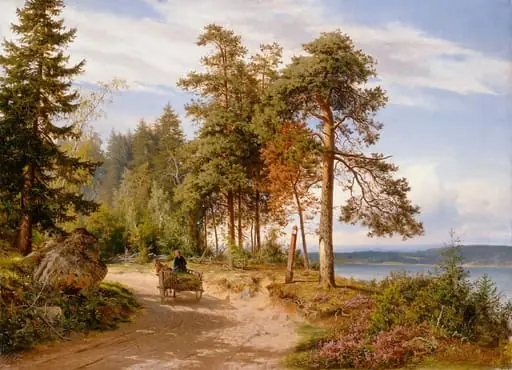
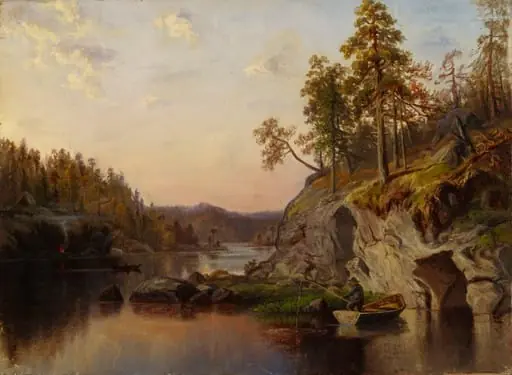
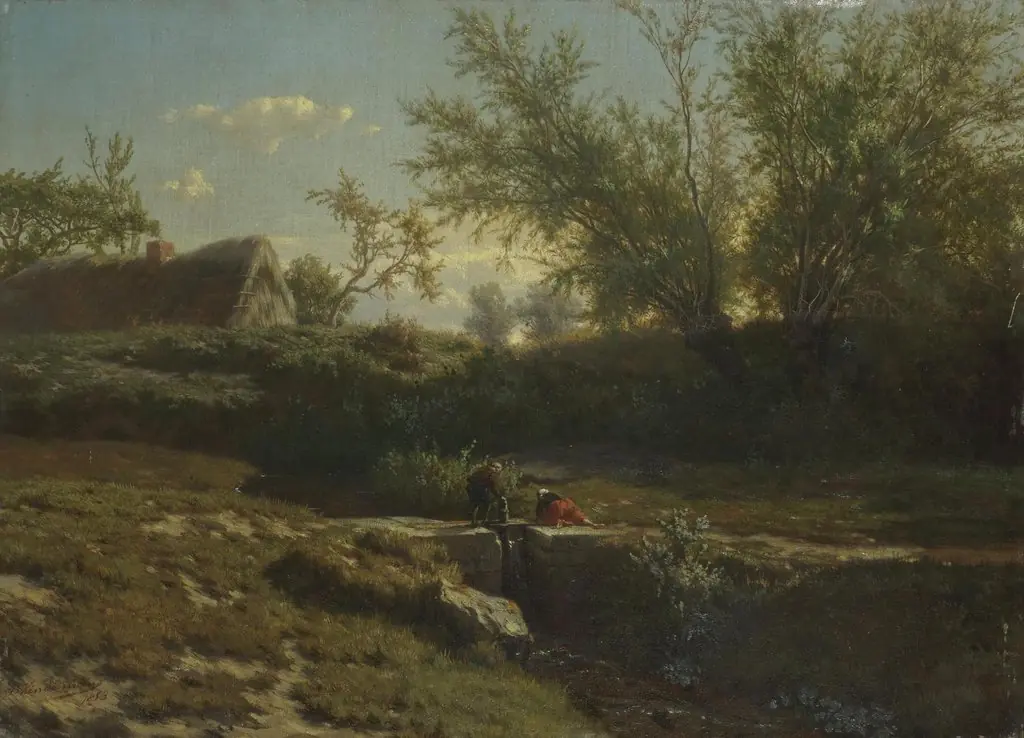
Suomalainen saaristomaisema is an unspecified painting by Hjalmar Munsterhjelm. It is held in the collection of the Finnish National Gallery. This painting depicts a tranquil lakeside setting in the Finnish archipelago, capturing a quiet moment of daily life.
About this work
Overview
Three figures are present: two women seated near a small fire by the water, and a man standing at a distance near a red-roofed structure.
This painting depicts a tranquil lakeside setting in the Finnish archipelago, capturing a quiet moment of daily life. Three figures are present: two women seated near a small fire by the water, and a man standing at a distance near a red-roofed structure. The landscape is defined by dense trees, rugged terrain, and a luminous sky with scattered clouds, all rendered with gentle brushwork that suggests natural light and atmospheric depth.
Subject & Meaning
The scene portrays an unassuming moment of rest and domestic routine, likely tied to seasonal or regional practices. The women’s proximity to the fire and the man’s solitary stance suggest a division of labor or quiet contemplation. The absence of dramatic action emphasizes stillness and harmony with the environment, reflecting a quiet reverence for everyday life in a remote coastal setting.
Technique & Style
The artist employed soft, blended brushstrokes to convey the play of light across water and stone, avoiding harsh lines in favor of atmospheric subtlety. The dark clothing of the figures creates a deliberate contrast against the pale rocks and sky, drawing focus without disrupting the scene’s calm. Thick applications of paint, possibly using impasto, add tactile texture to surfaces like rocks and foliage, enhancing the sense of physical presence.
History & Provenance
The work originates from Finland’s late 19th or early 20th century artistic tradition, a period when landscape and rural life were increasingly valued as subjects. While specific ownership records are not provided, its focus on archipelago scenery aligns with national efforts to define a distinct visual identity rooted in local geography and vernacular culture.
Context
During the time this painting was made, Finnish artists were turning away from foreign influences to explore native landscapes and folk traditions. The archipelago, with its isolated communities and seasonal rhythms, became a symbol of cultural authenticity. This scene reflects that movement, portraying not idealized nature but lived-in, unembellished surroundings shaped by climate and labor.
Legacy
The painting contributes to a broader Finnish artistic canon that elevates quiet, everyday moments in nature as worthy of serious attention. Its restrained palette and emphasis on light and texture influenced later generations who sought to capture the emotional resonance of the northern environment without romanticism or spectacle.
Artist & collection