Artwork
Untitled
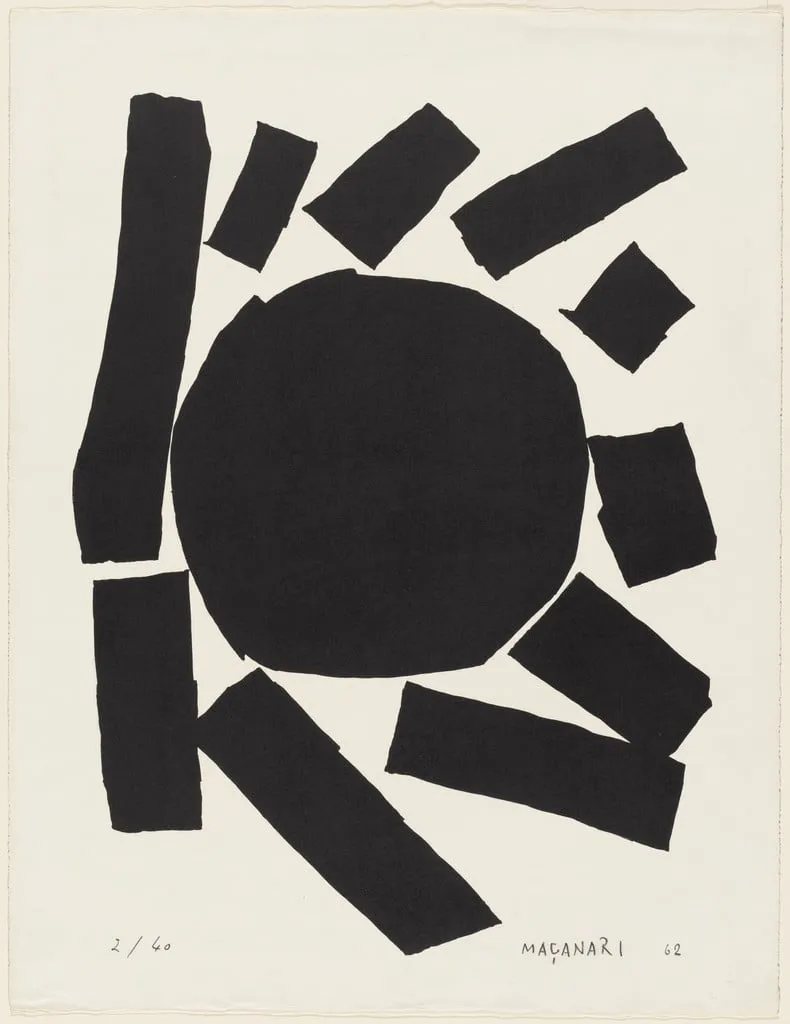
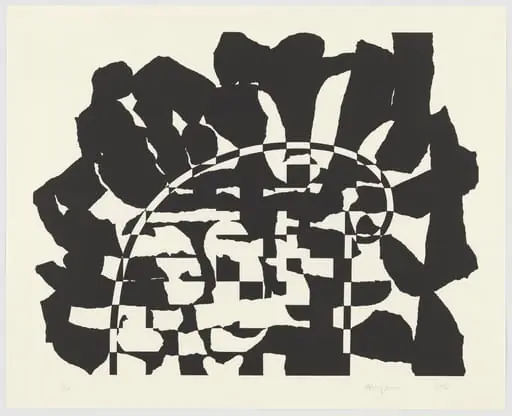
Untitled is an ink print by Murai Masanari. It dates from 1962 and is held in the collection of the Museum of Modern Art.
About this work
Overview
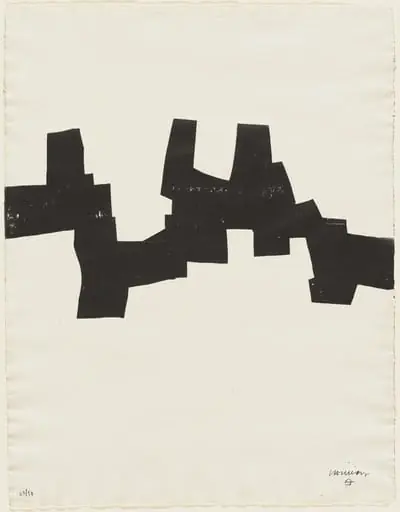
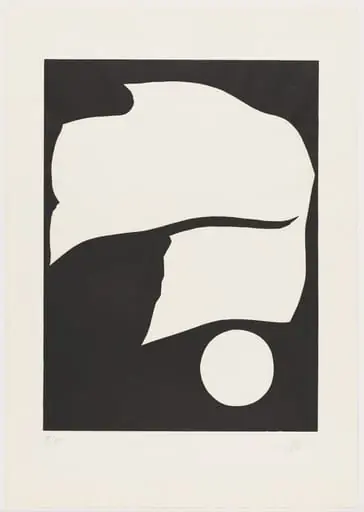
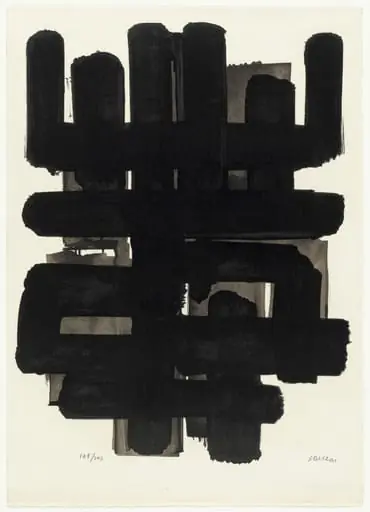
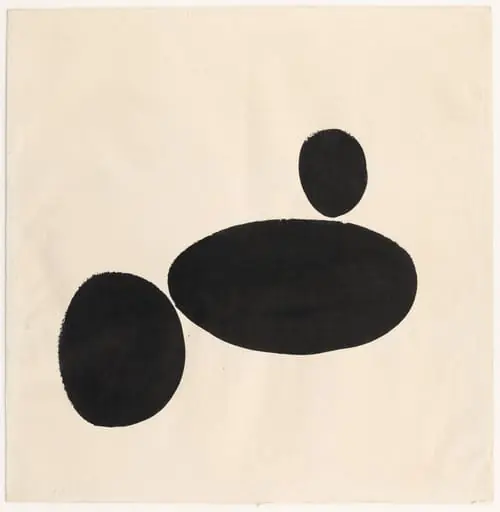
Rendered in stark black and white, the composition centers on a large circular form surrounded by angular, irregular shapes.
Created in 1962, this lithograph by Murai Masanari is part of The Museum of Modern Art’s collection. Rendered in stark black and white, the composition centers on a large circular form surrounded by angular, irregular shapes. The print is one of forty identical impressions, marked as '2/40' to indicate its position in the edition. The artist’s signature, abbreviated as 'Macanari,' appears alongside the year, confirming authorship and date.
Subject & Meaning
The work avoids literal representation, instead proposing an abstract arrangement of forms. The central circle may suggest a nucleus or focal point, while the jagged, overlapping rectangles and lines evoke fragmentation or tension. Without narrative or symbolic references, the piece invites contemplation of balance, disruption, and spatial relationships within minimal visual elements.
Technique & Style
Lithography allowed Murai to achieve sharp contrasts between dense black ink and the uninked paper. The artist’s hand is evident in the precise yet dynamic lines, suggesting both control and spontaneity. The flat, unmodulated tones and lack of shading emphasize graphic clarity, aligning with mid-century Japanese abstract printmaking that favored simplicity and structural rigor.
History & Provenance
The print entered The Museum of Modern Art’s collection following its creation in 1962, likely acquired during a period of increased institutional interest in postwar Japanese prints. Its preservation in a major Western museum reflects growing recognition of Japanese artists working outside traditional genres. The edition size of forty suggests limited production, typical of artist-led print workshops in Japan at the time.
Context
In early 1960s Japan, many artists moved away from figurative traditions toward abstraction, influenced by global modernism and domestic experimental movements. Murai, like contemporaries in the Sōsaku-hanga movement, emphasized personal expression through printmaking. This work reflects a broader trend of reducing imagery to essential forms, responding to both aesthetic innovation and the cultural climate of postwar reconstruction.
Legacy
Though not widely exhibited, this lithograph contributes to the documented shift in Japanese printmaking toward abstraction in the postwar era. It stands as an example of how artists used limited palettes and precise techniques to explore non-representational composition. Its presence in MoMA’s collection underscores its role in international dialogues about modern print media during the 1960s.
Artist & collection