Artwork
A Jellyfish Like the Moon
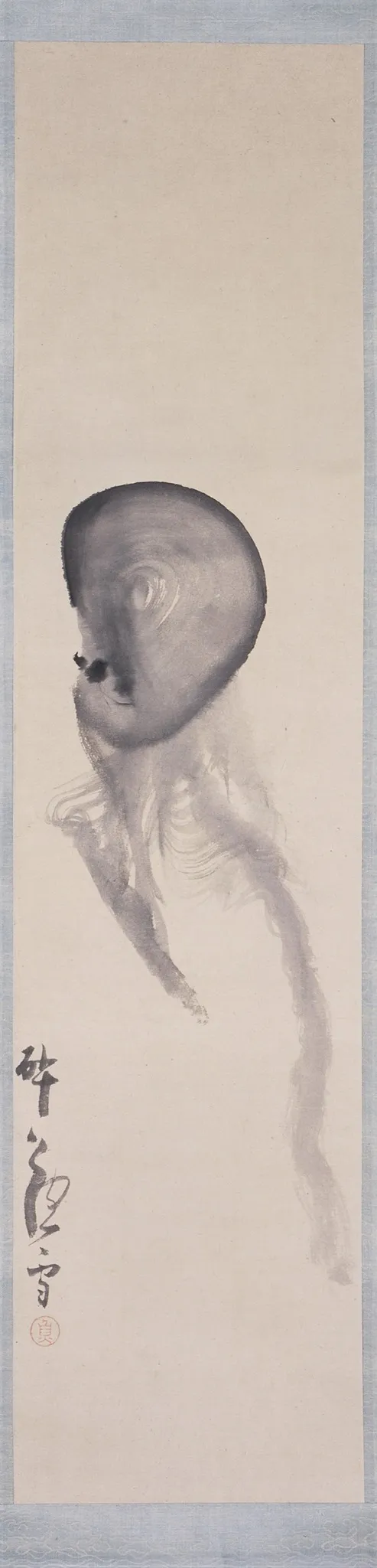
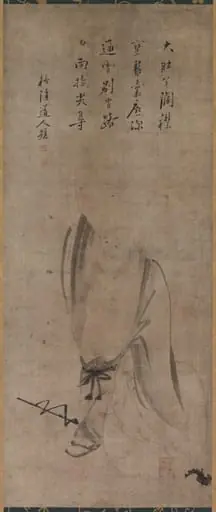
A Jellyfish Like the Moon is an unspecified painting by the Nihonga artist Nagasawa Rosetsu 長澤蘆雪. It dates from 1750 and is held in the collection of the Los Angeles County Museum of Art.
About this work
Overview
The work exemplifies the Edo-period tendency toward expressive simplicity, where form is suggested rather than meticulously rendered.
A Jellyfish Like the Moon is a monochrome ink painting attributed to Nagasawa Rosetsu, dated around 1750. Executed with minimal strokes, it presents a solitary jellyfish against an unadorned pale background. The work exemplifies the Edo-period tendency toward expressive simplicity, where form is suggested rather than meticulously rendered. Its quiet presence and restrained palette invite contemplation rather than narrative interpretation.
Subject & Meaning
The subject is a jellyfish, depicted with no contextual elements—no water, no sky, no shore. Its form, rendered with fluid lines and subtle tonal shifts, evokes both biological delicacy and lunar luminosity, as suggested by the title. The absence of environment isolates the creature, emphasizing its ethereal, transient nature. The title may allude to the jellyfish’s glow or its floating stillness, aligning it with poetic associations of the moon in Japanese aesthetics.
Technique & Style
The painting uses ink washes in shades of gray and black, with sparing white accents to suggest light on the jellyfish’s bell and tentacles. Brushwork is bold and economical, relying on gesture over detail. The tentacles flow in loose, undulating strokes, while the body is a soft, rounded mass. The background remains untouched, enhancing the subject’s isolation. This approach reflects a Zen-inflected aesthetic, valuing suggestion over description.
History & Provenance
The painting entered the collection of the Los Angeles County Museum of Art, though its earlier ownership history is not well documented. It is one of several surviving works by Rosetsu that demonstrate his interest in unconventional subjects and expressive brush techniques. Its survival into the modern era reflects its appeal to collectors drawn to Edo-period ink painting’s understated power.
Context
Created during the mid-Edo period, the work aligns with a broader trend among literati painters who favored spontaneity and personal expression over academic precision. Rosetsu, trained in the Nanga tradition, often depicted natural subjects with unconventional boldness. This piece stands apart from ornate courtly art, instead embracing the quiet intensity of ink on paper as a medium for introspective observation.
Legacy
Though not widely known outside specialist circles, A Jellyfish Like the Moon exemplifies Rosetsu’s distinctive voice within Edo ink painting. Its minimalism and emotional resonance have influenced later generations of artists seeking to convey presence through restraint. The work remains a quiet testament to the capacity of simple forms to evoke complex, contemplative responses.
Artist & collection




![Reeds and Geese, by Yishan Yining [Issan Ichinei]](https://artifactworldgallery.com/img/yishan-yining-issan-ichinei--reeds-and-geese--5f360303c5a40d05-w320.webp)