Artwork
Reeds and Geese
![Reeds and Geese, by Yishan Yining [Issan Ichinei], unspecified, 1316](https://artifactworldgallery.com/img/yishan-yining-issan-ichinei--reeds-and-geese--5f360303c5a40d05-w1024.webp)
Reeds and Geese is an unspecified painting by the Ming dynasty painting artist Yishan Yining [Issan Ichinei]. It dates from 1316 and is held in the collection of the Cleveland Museum of Art.
About this work
The reeds and geese were a favorite theme in Chinese art, and here, Japan was just starting to make it their own.
You see tall reeds bending in the wind and two geese wading at the water’s edge.
This painting was made in Japan, but the artist was Chinese—a Zen monk who moved there. He added a poem at the top, turning the scene into a quiet moment of thought. The reeds and geese were a favorite theme in Chinese art, and here, Japan was just starting to make it their own.
To see more of this kind of work, look up *Japan, Kamakura period (1185–1333)*.
Overview
Reeds and Geese is a modestly sized Japanese ink painting from the early 1300s, featuring tall reeds swaying in the wind and two geese at the water's edge. Created by a Chinese Zen Buddhist monk who relocated to Japan, the work represents an early example of Japan's adoption of a theme deeply rooted in Chinese literary and visual culture.
Subject & Meaning
The painting depicts a serene scene of reeds and geese, a motif symbolizing tranquility and contemplation. The addition of a poem by Yishan Yining transforms the naturalistic depiction into a moment of introspective meditation, aligning with Zen Buddhist themes of mindfulness and harmony with nature.
Technique & Style
Executed in ink, the painting showcases the artist's mastery of expressive brushwork, capturing the dynamic movement of reeds and the serene presence of geese. The style reflects the influence of Chinese ink painting traditions, adapted by the artist within the emerging Japanese ink painting landscape of the time.
History & Provenance
Created in Japan during the Kamakura period (1185–1333) by a Chinese Zen monk, the painting bears an inscription—a poem—added by the eminent monk Yishan Yining, accompanied by his signature and seal, which held greater cultural significance than the unsigned artwork itself.
Context
This work is situated within Japan's early 14th-century cultural exchange with China, marking one of the earliest surviving Japanese interpretations of the reeds and geese theme. It reflects the period's artistic and philosophical inclinations, particularly the growing influence of Zen Buddhism.
Legacy
Reeds and Geese stands as a pivotal, early example of Japanese ink painting, signifying the theme's integration into Japan's cultural vocabulary. Its importance lies in its rarity as a surviving work from this transitional period in Japanese art history, offering insights into the evolution of Japanese-Chinese artistic dialogue.
Artist & collection
Artist
Yishan Yining [Issan Ichinei] (1247–1317) was a Chinese artist.

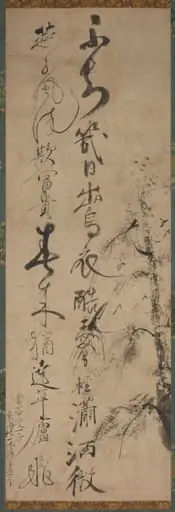 Calligraphy with Willow and Swallows
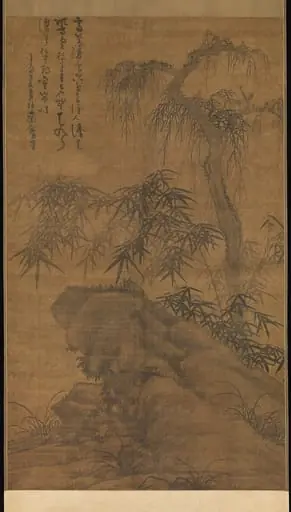 元 吳鎮 高節凌雲圖 軸|Bamboo, old tree, and rock
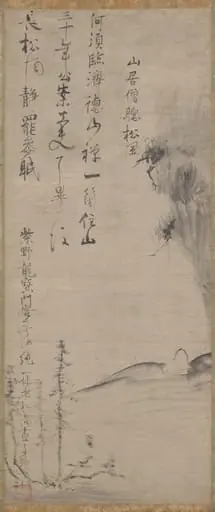 Listening to the Wind in the Pines
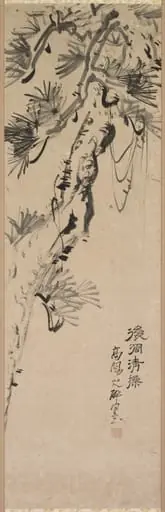 Aged Pine
 清 倣張風 石橋圖 軸|The Stone Bridge
 The Bird's Nest Patriarch
 Seated Priest
 瑞巖龍惺・竹香全悟・九淵龍賝・南江宗沅・ 翺之慧鳳賛 東坡笠屐図|Su Shi (Dongpo) in a Bamboo Hat and Clogs
 Layered Peaks and Splashing Waterfall: Portrait of Hua Yan as a Young Man
 Ink Flowers