Artwork
Puppies, Sparrows, and Chrysanthemums
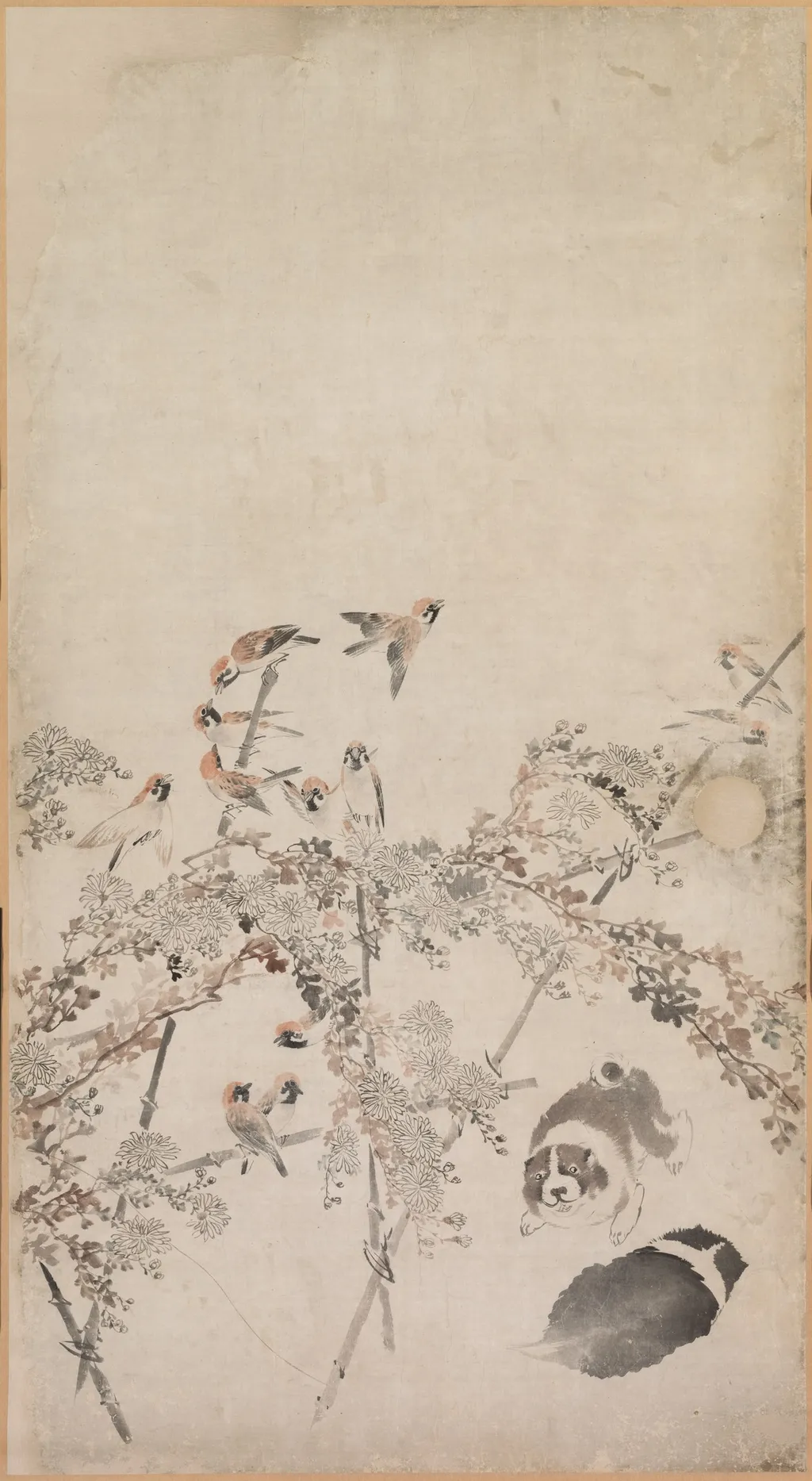
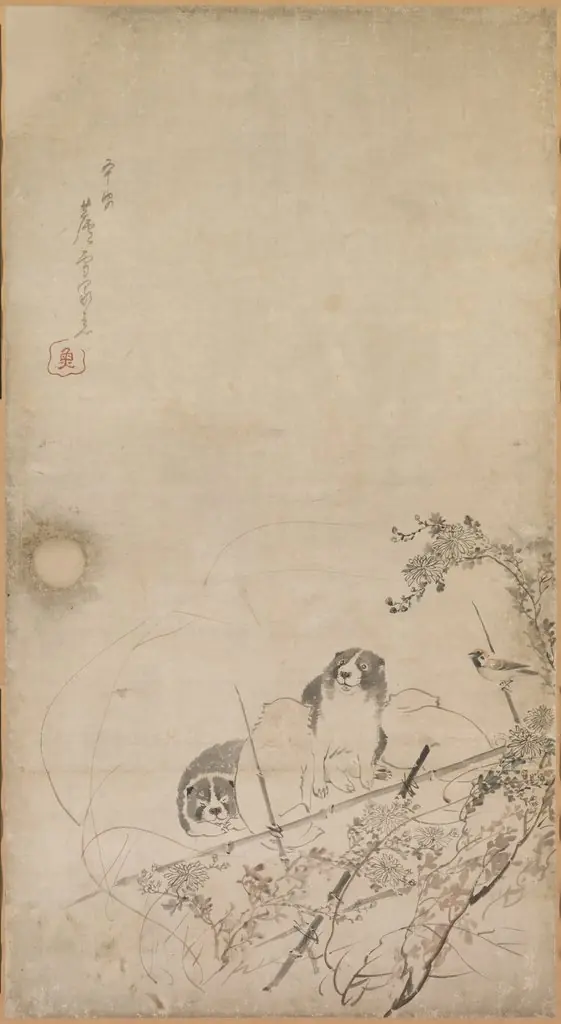
Puppies, Sparrows, and Chrysanthemums is an unspecified painting by the Nihonga artist Nagasawa Rosetsu 長澤蘆雪. It dates from 1788 and is held in the collection of the Cleveland Museum of Art.
About this work
Overview
The composition presents a sparse setting where a few sparrows hover near delicate branches while two puppies sit below, gazing upward.
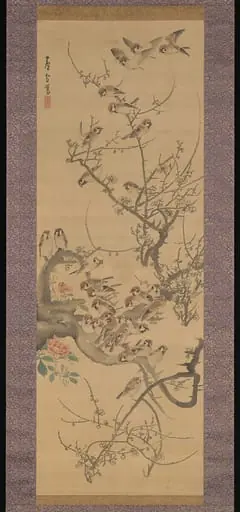
Created in 1788 by Nagasawa Rosetsu, this small-scale painting titled Puppies, Sparrows, and Chrysanthemums is part of the collection at the Cleveland Museum of Art. The composition presents a sparse setting where a few sparrows hover near delicate branches while two puppies sit below, gazing upward. A minimalist background emphasizes the interaction of the animals and the subtle floral motif, rendered in a restrained palette of whites, grays, muted browns, with touches of pink and green.
Subject & Meaning
The work juxtaposes domestic and wild elements—puppies, birds, and chrysanthemum blossoms—to suggest a harmonious coexistence within nature. The attentive puppies and the fluttering sparrows create a quiet narrative of curiosity and observation, while the chrysanthemums, a symbol of longevity in Japanese culture, add a layer of seasonal reference. Together the figures convey a gentle liveliness that balances activity with serenity.
Technique & Style
Rosetsu employs delicate brushwork characteristic of late‑eighteenth‑century Japanese painting, using fine lines to delineate feathers and fur against an almost empty space. The limited color scheme relies on subtle washes of ink and light pigments, allowing tonal variations to suggest form rather than bold coloration. The composition’s open background reflects a Zen‑inspired emphasis on negative space, directing focus to the modest subjects.
History & Provenance
The painting was completed in 1788 during Rosetsu’s mature period and later entered the holdings of the Cleveland Museum of Art, where it is displayed as part of the museum’s Asian art collection. Documentation traces its acquisition to the museum’s mid‑20th‑century purchases of Japanese Edo‑period works, though earlier ownership records remain sparse.
Context
Nagasawa Rosetsu was a prominent painter of the Edo period, known for his ability to blend realism with poetic simplicity. This piece reflects the era’s interest in genre scenes that celebrate everyday life and natural motifs. The inclusion of both animals and chrysanthemums aligns with contemporary artistic conventions that valued symbolic flora and fauna as carriers of cultural meaning.
Artist & collection