Artwork
Sparrows on Blossoming Plum; A Sage with Tiger; Chinese Bird on Snow-Laden Branch
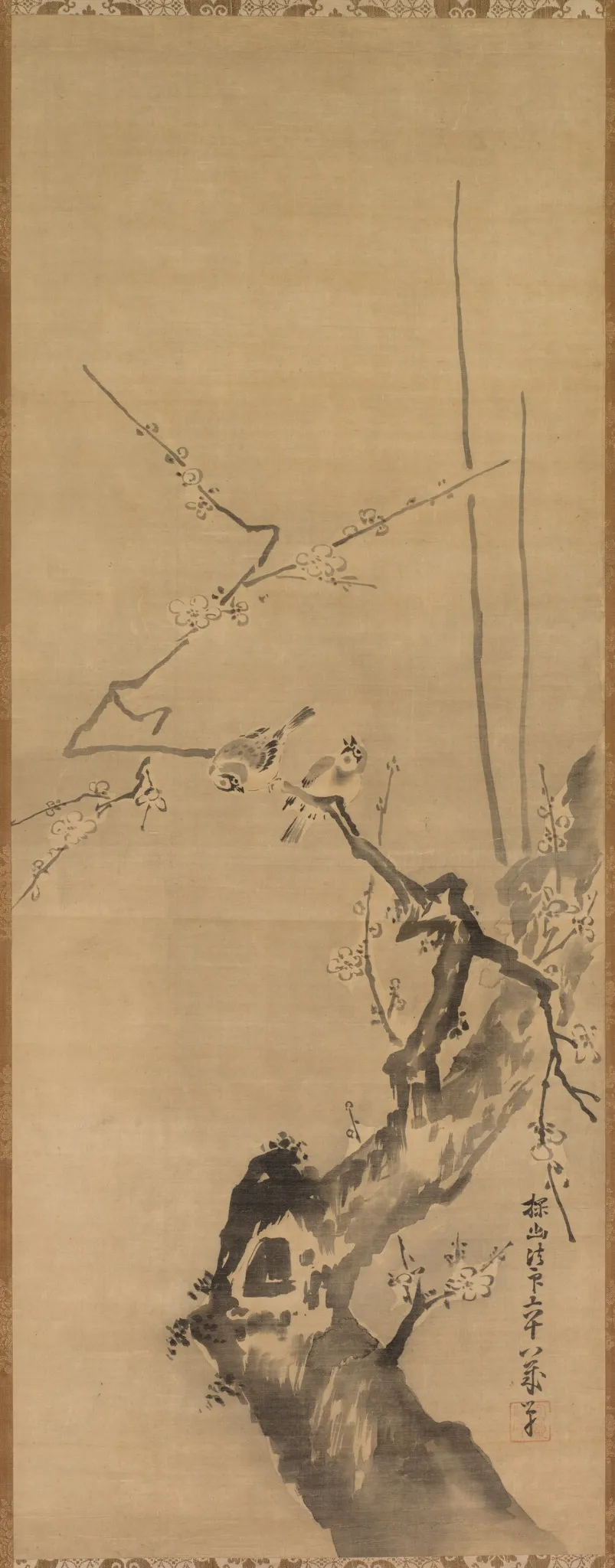
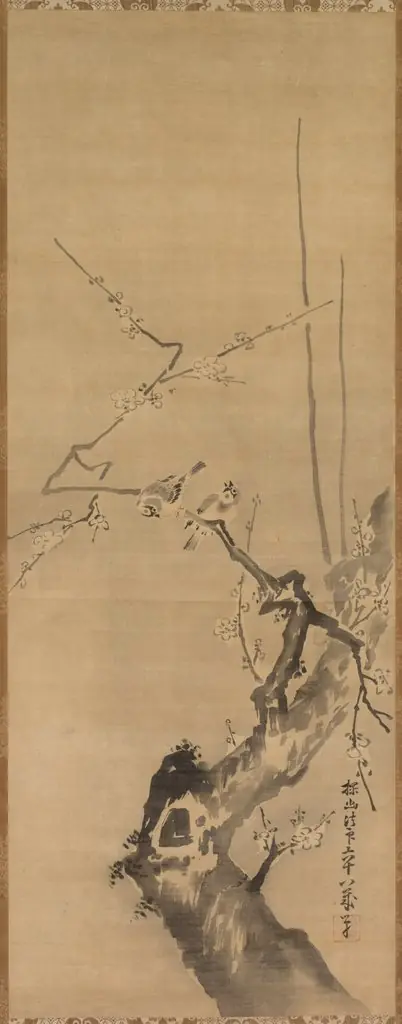
Sparrows on Blossoming Plum; A Sage with Tiger; Chinese Bird on Snow-Laden Branch is an unspecified painting. It dates from 1649 and is held in the collection of the Cleveland Museum of Art. The work presents a pair of diminutive birds perched upon stark, twisting branches that bear a handful of pale blossoms.
About this work
Overview
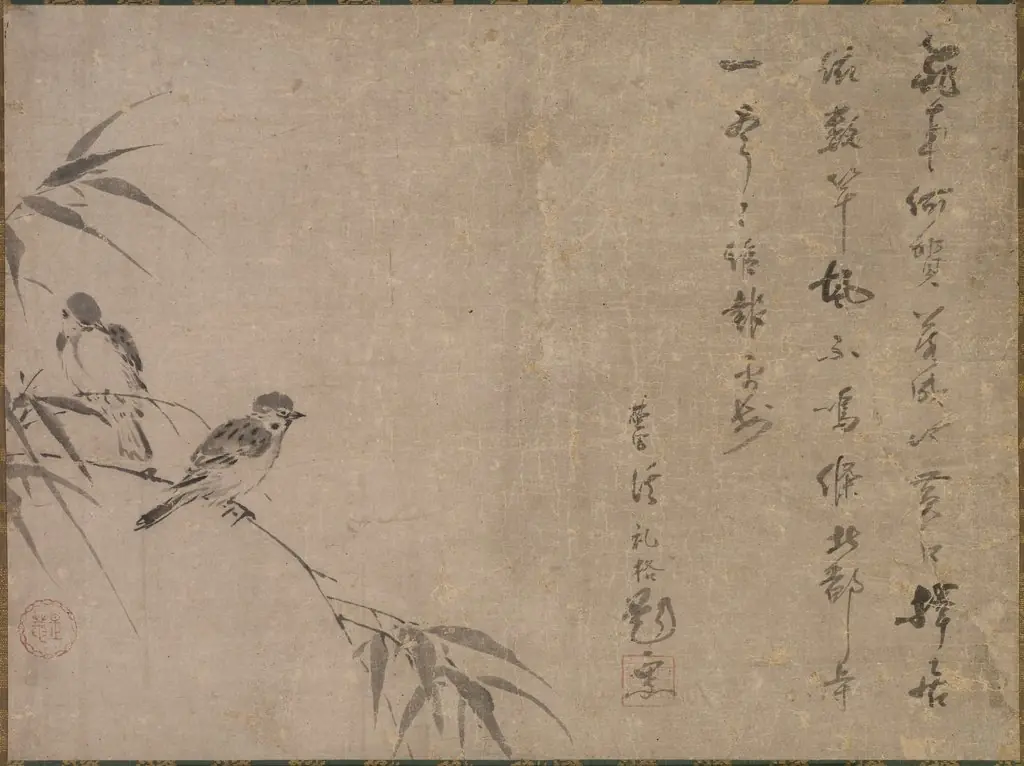
The work presents a pair of diminutive birds perched upon stark, twisting branches that bear a handful of pale blossoms. The composition is set against a muted, almost paper‑like background, allowing the figures to stand out. The branches vary in thickness, some rendered with dark, solid strokes and others with light, sketchy lines, creating a sense of depth and movement within the limited space.
Subject & Meaning
The two birds, rendered in a simplified yet lively manner, appear poised as if ready to take flight, suggesting themes of transience and the fleeting moment of spring. The sparse blossoms on the bare limbs evoke the early stages of renewal, while the starkness of the setting may allude to the quiet contemplation often associated with solitary observation of nature.
Technique & Style
The artist employs a confident brushwork that alternates between heavy, decisive strokes and softer, fading lines, producing a subtle chiaroscuro effect that models the forms against the light background. The contrast between thick, dark branches and delicate, thin ones highlights the interplay of light and shadow, while the birds are suggested with minimal detail, emphasizing gesture over realism.
Context
The painting reflects a tradition of Chinese bird-and-branch motifs, where sparse compositions and restrained palettes convey both natural observation and poetic sentiment. The use of a plain, almost paper‑colored field aligns with the aesthetic of literati painting, where the void is as significant as the depicted forms, inviting contemplation of the scene’s quiet elegance.
Artist & collection