Artwork
Tenjin Traveling to China
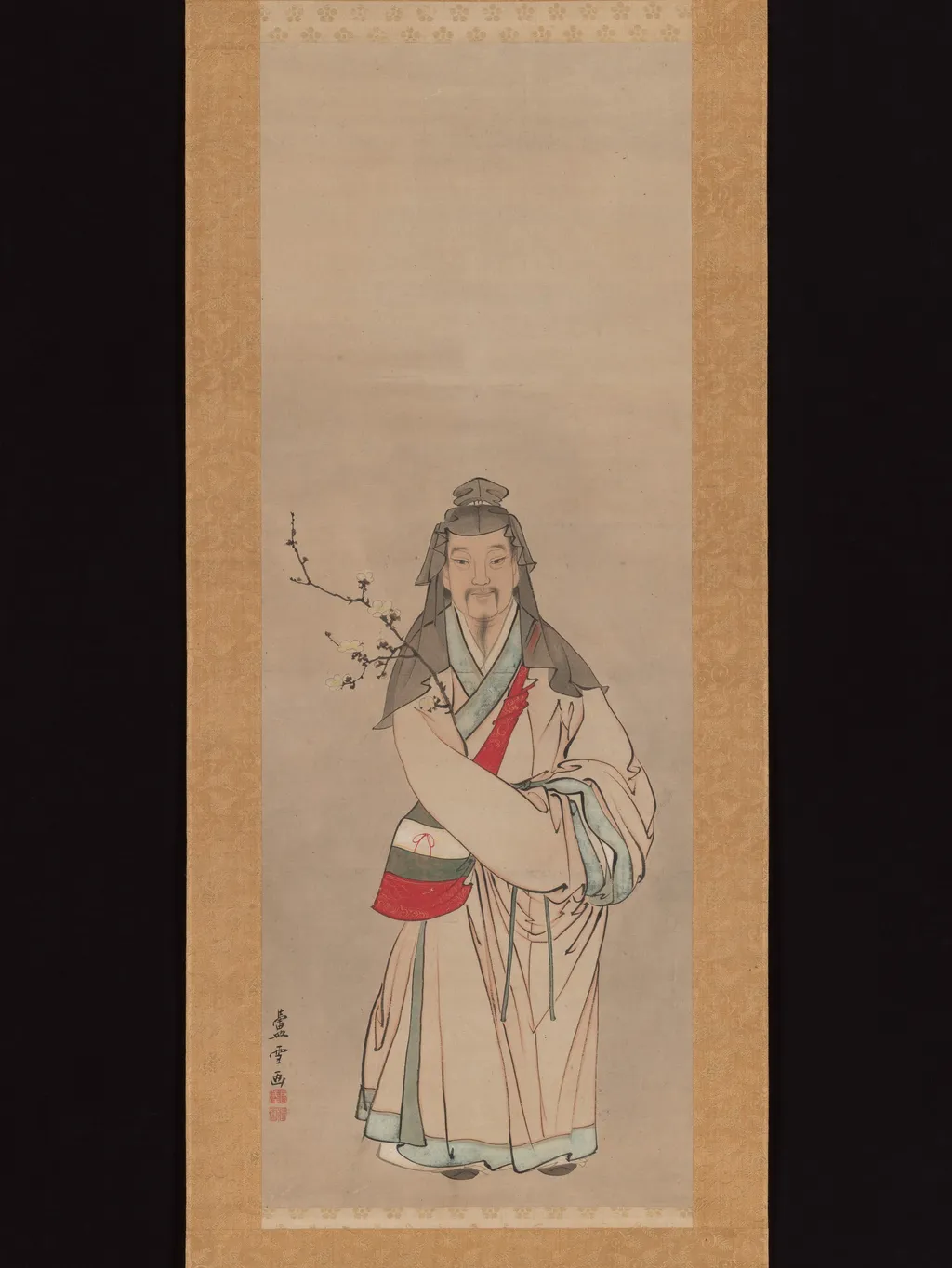
Tenjin Traveling to China is an unspecified painting by the Ukiyo-e artist Nagasawa Rosetsu 長澤蘆雪. It dates from 1794 and is held in the collection of the Metropolitan Museum of Art.
About this work
Overview
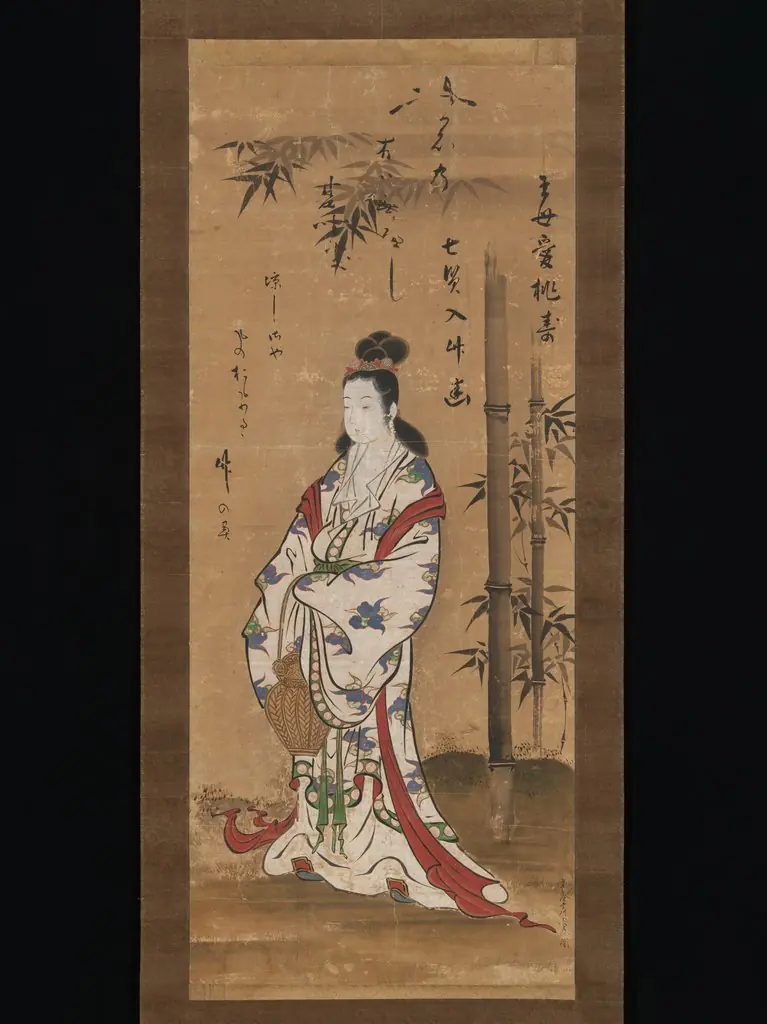
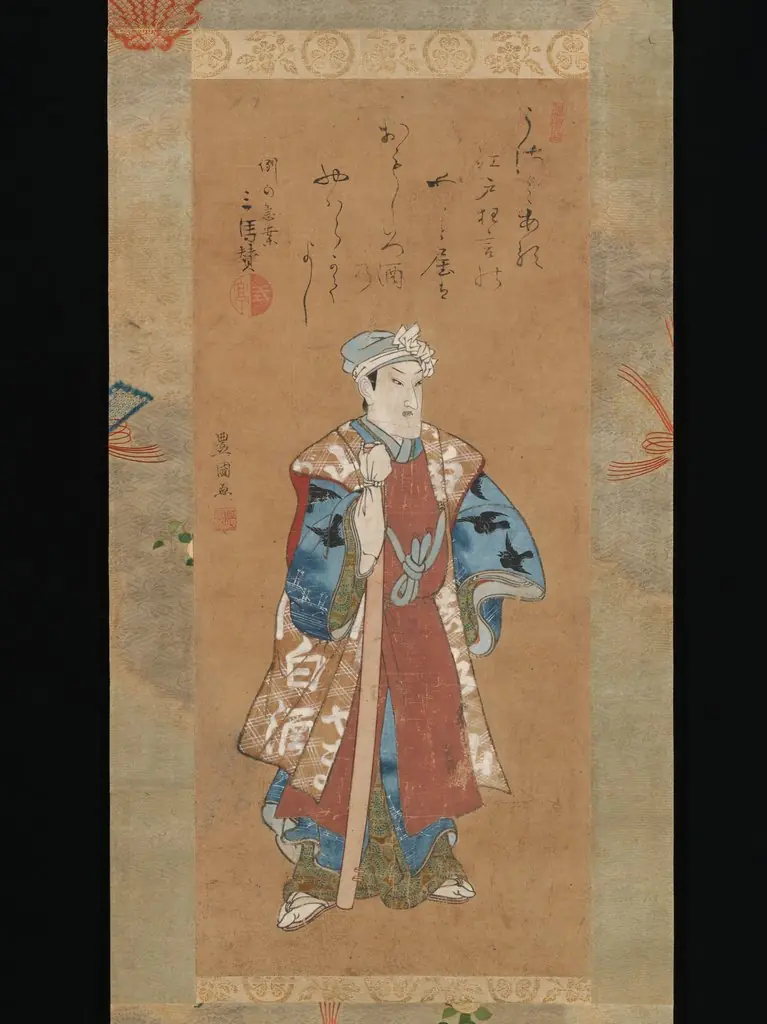
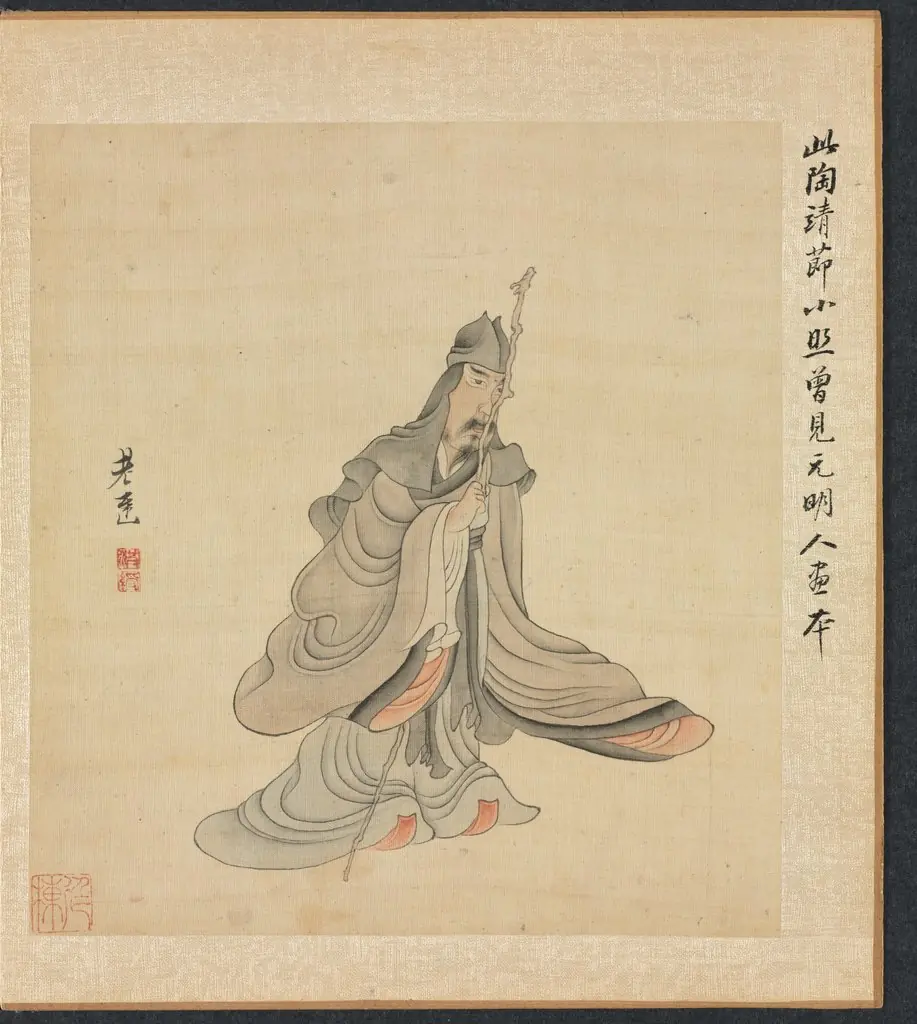
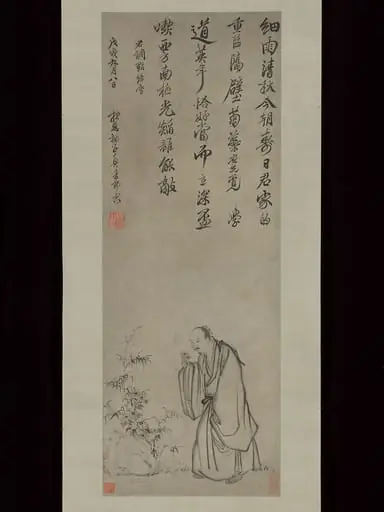
Created in 1794 by the Edo‑period painter Nagasawa Rosetsu, “Tenjin Traveling to China” is a modestly sized work in the collection of the Metropolitan Museum of Art. The composition presents a solitary figure in traditional attire, set against a muted, light‑brown backdrop that emphasizes the quiet atmosphere of the scene.
Subject & Meaning
The central figure is a man bearing a slender branch adorned with small white blossoms, his calm expression and relaxed pose suggesting a contemplative journey. The inclusion of the branch, a common symbol of purity and transience in Japanese visual culture, hints at the scholarly or spiritual undertones associated with the deity Tenjin, traditionally linked to learning and travel.
Technique & Style
Rosetsu employs a restrained brushwork that balances delicate line with subtle washes of ink and muted pigments. The figure’s robe, highlighted by a red sash, and the simple hat are rendered with precise, economical strokes, while the background’s uniform tone creates depth without elaborate detail, reflecting the artist’s preference for understated elegance in everyday subjects.
History & Provenance
After its completion in the late 18th century, the painting entered private collections before being acquired by the Metropolitan Museum of Art, where it now resides as part of the museum’s Japanese holdings. Its provenance traces a typical path for Edo‑period works that moved from aristocratic or merchant owners to Western institutions during the early 20th century.
Artist & collection