Artwork
Diana After the Hunt
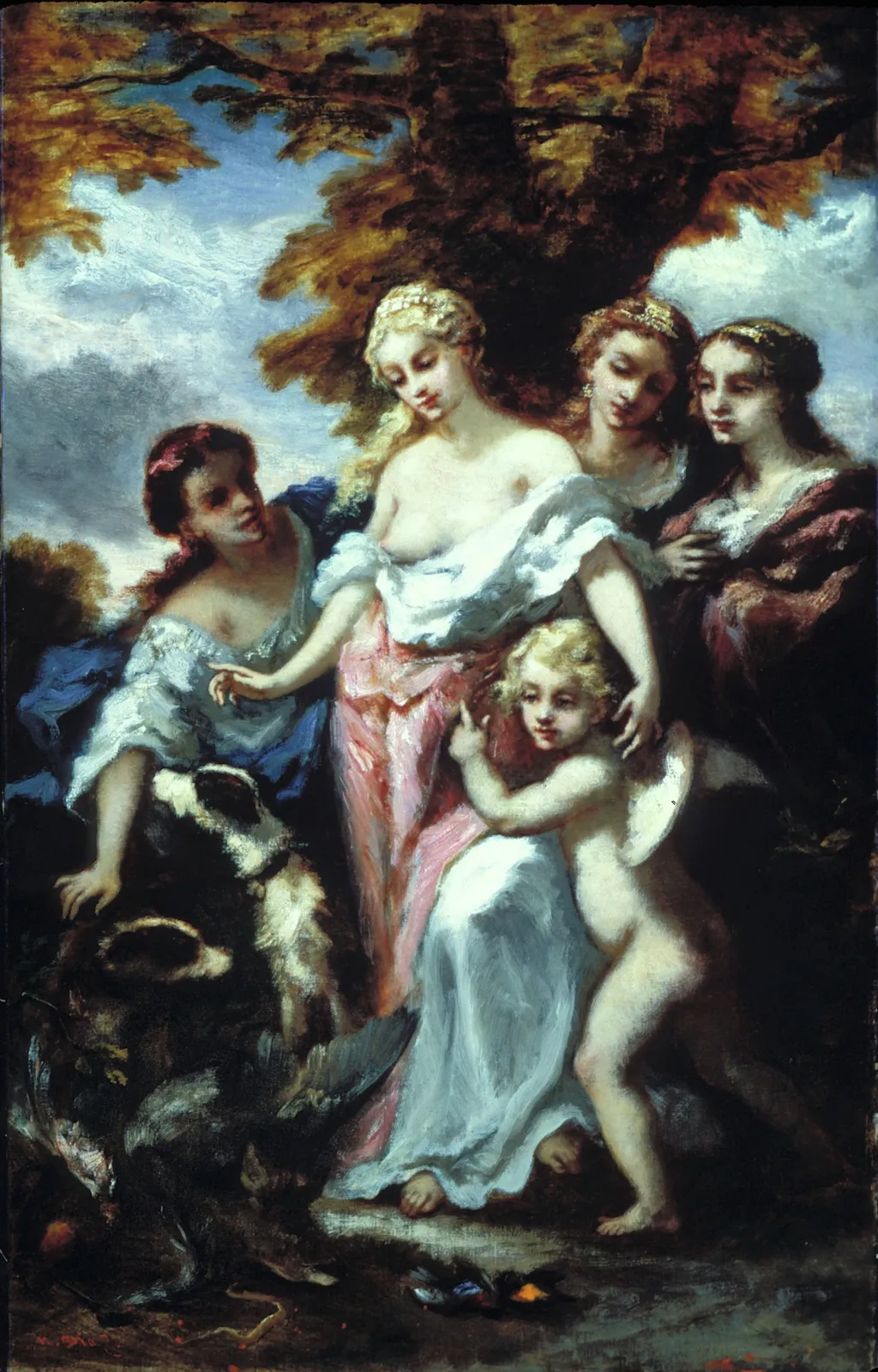
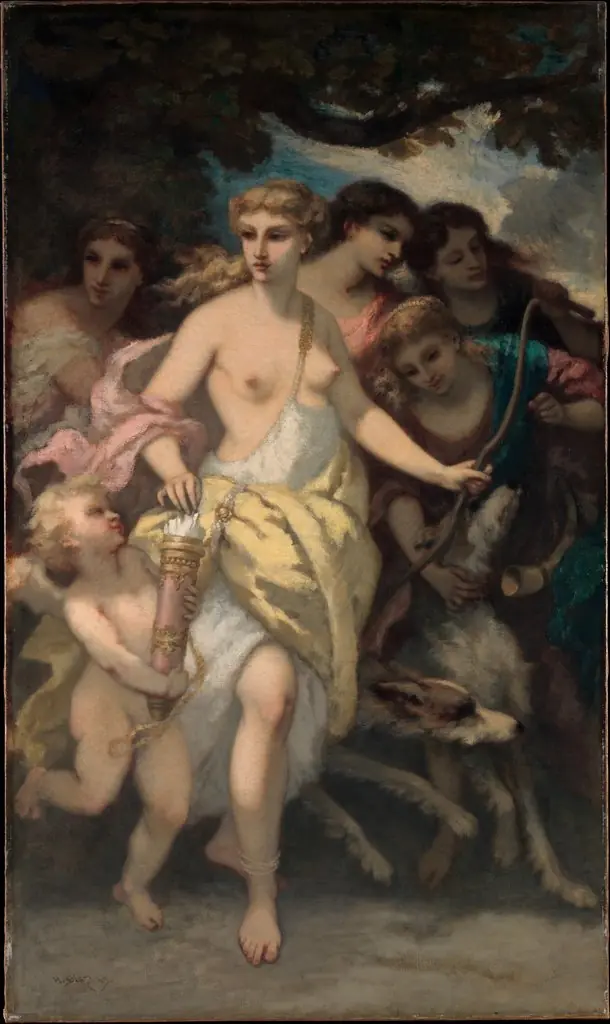
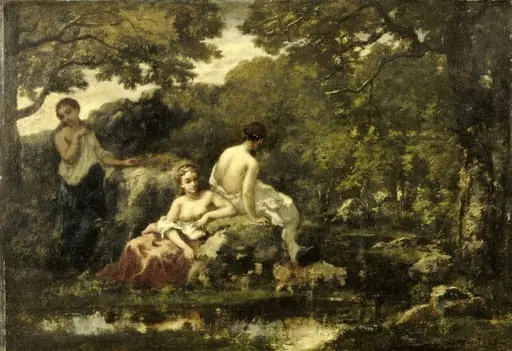
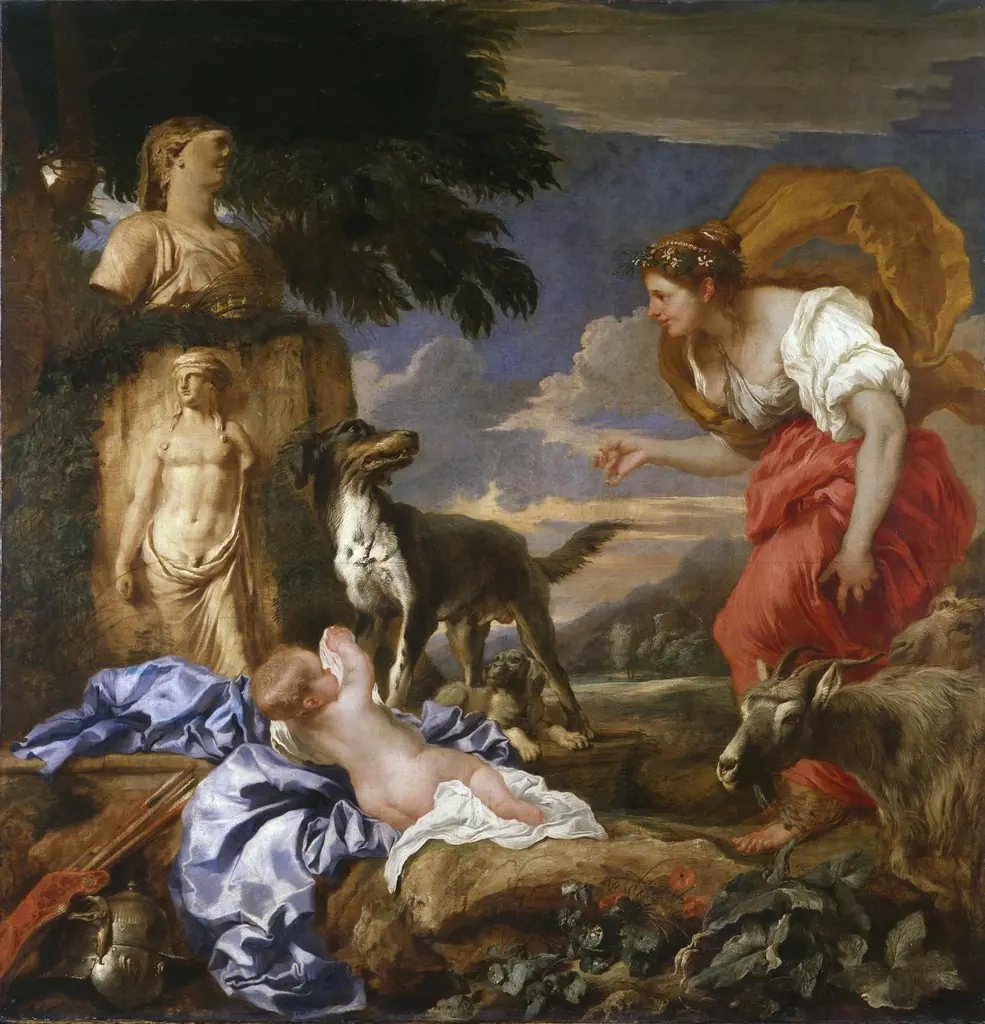
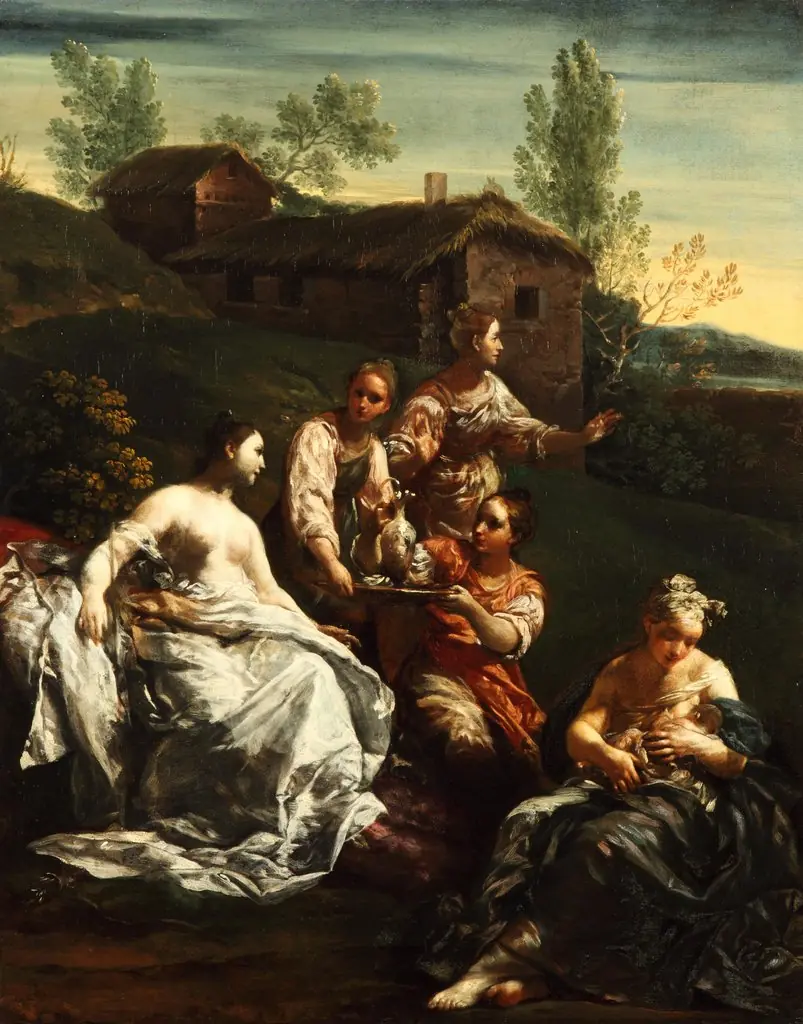
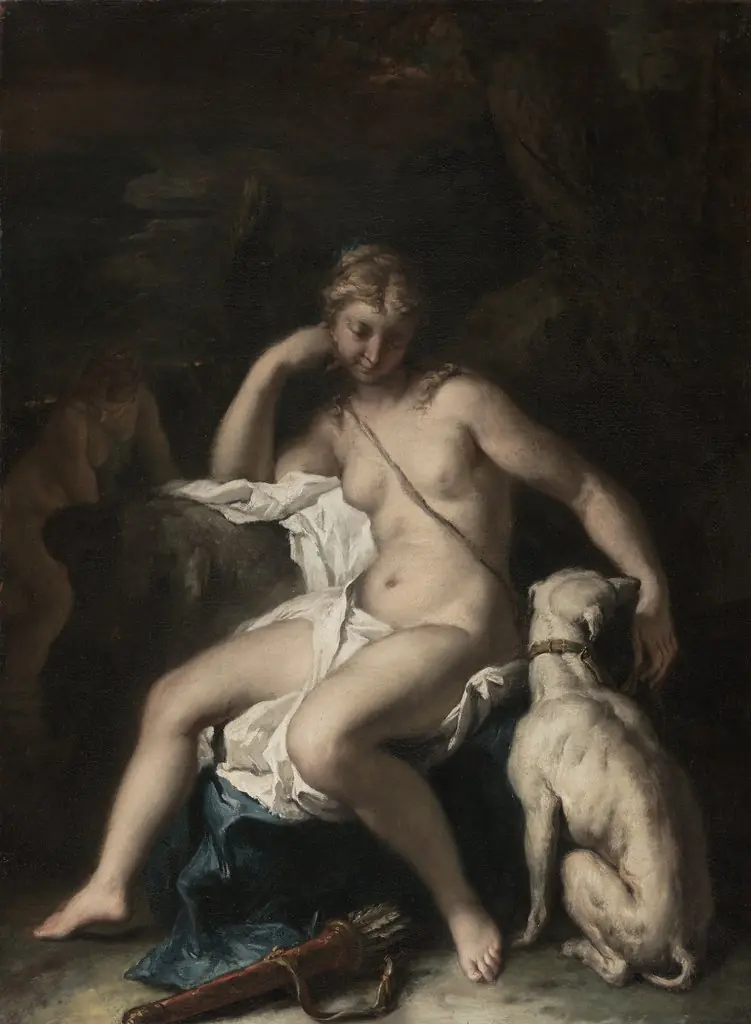
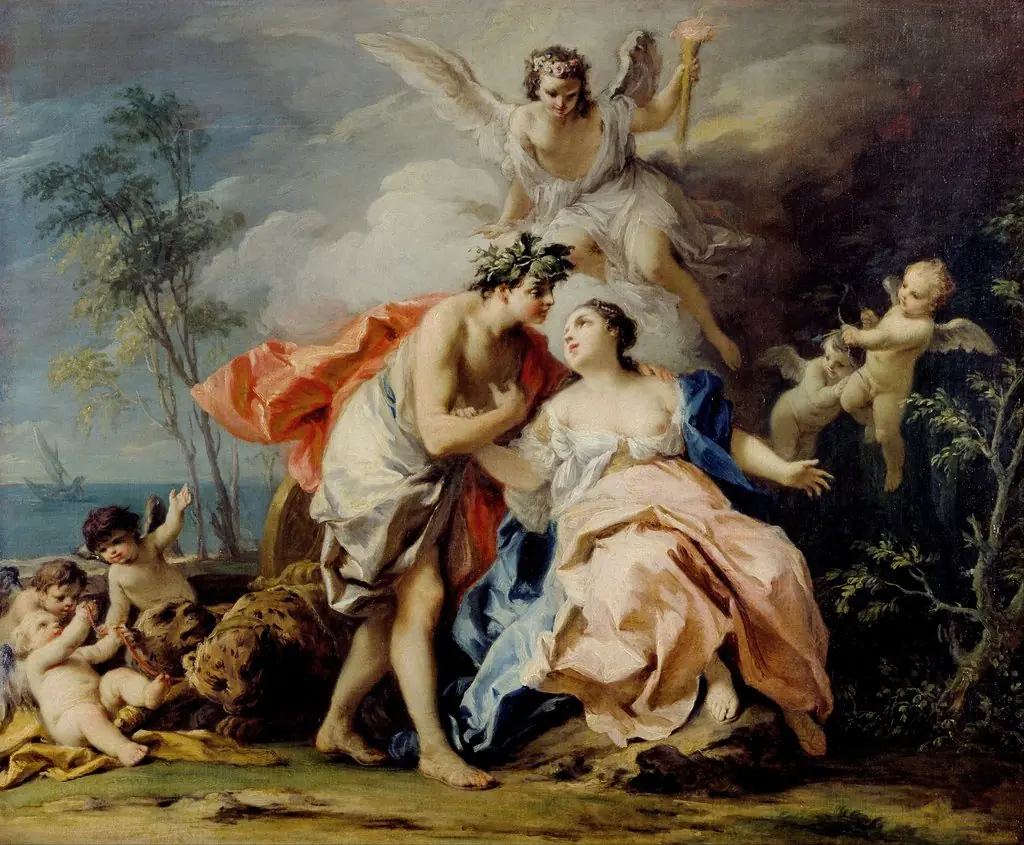
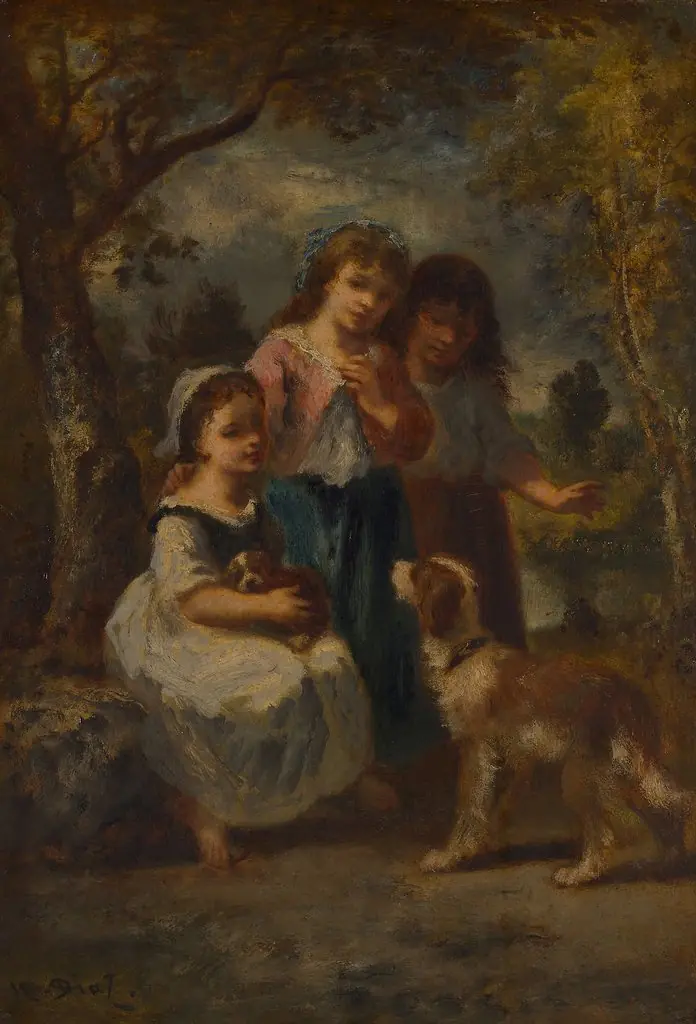
Diana After the Hunt is an oil painting by the Barbizon school artist Narcisse Virgilio Díaz. It dates from 1848 and is held in the collection of the Detroit Institute of Arts.
About this work
Overview
Narcisse Virgilio Díaz’s oil painting Diana After the Hunt was completed in 1848. The work portrays the Roman goddess of the hunt in a tranquil, slightly misty setting, surrounded by a small group of figures. It is part of the collection of the Detroit Institute of Arts, where it is displayed among other 19th‑century French works.
Subject & Meaning
The central figure is Diana, identifiable by her white, flowing garment and the infant she cradles, suggesting a moment of peace following a hunt. Flanked by three women and a child, the composition evokes themes of protection, fertility, and the gentle side of the huntress, aligning with 19th‑century romanticized views of classical mythology.
Technique & Style
Díaz employs a soft chiaroscuro, allowing the illuminated figures to emerge from a darker, atmospheric background. Thick, impasto brushstrokes give the drapery a tactile quality, while the sky’s muted blues and golds create a dreamy ambience. The overall effect balances realism in the figures with an idealized, almost lyrical landscape.
History & Provenance
After its exhibition in France during the mid‑1800s, the painting entered private collections before being acquired by the Detroit Institute of Arts in the early 20th century. Its provenance reflects the period’s interest in mythological subjects and the artist’s reputation as a member of the Barbizon school.
Context
Created during a time when French artists were revisiting classical themes through a romantic lens, Díaz’s work reflects the broader 19th‑century fascination with nature and mythology. The painting’s serene mood contrasts with the more dramatic, violent depictions of hunting scenes common in earlier academic art, highlighting a shift toward introspection.
Own this work as a print
Artist & collection
Artist
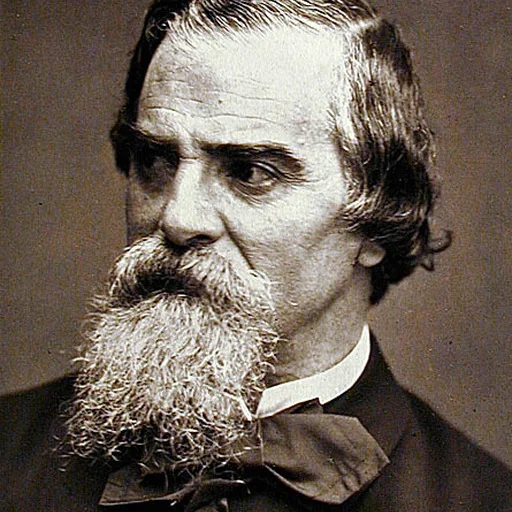
Narcisse Virgilio Díaz (1807–1876) was a French artist, born in Bordeaux.