Artwork
Forest
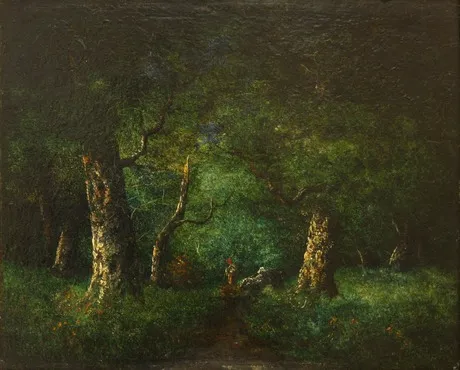
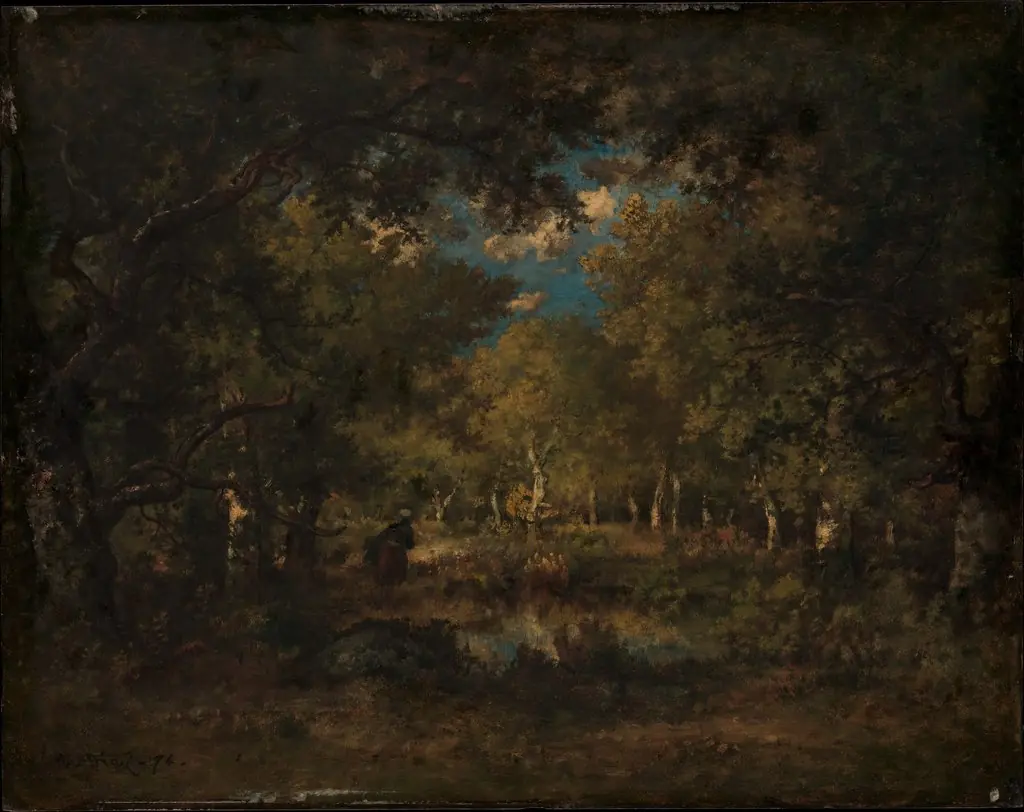
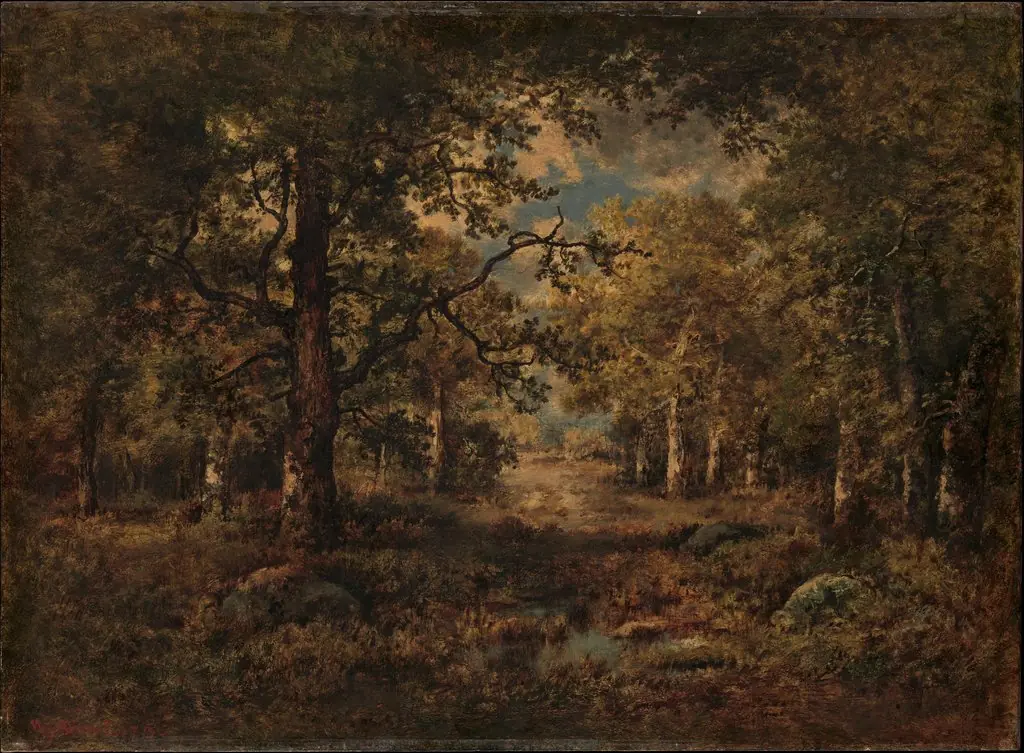
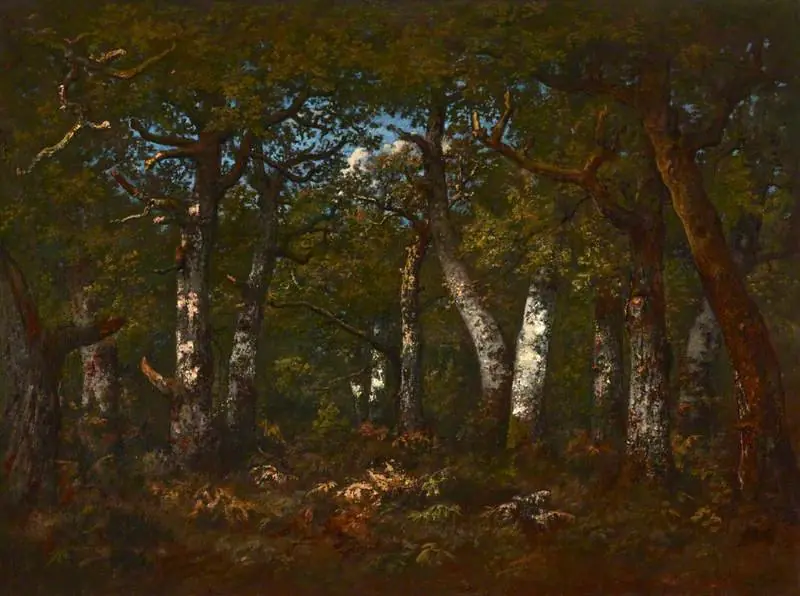
Forest is an oil painting by the Barbizon school artist Narcisse Virgilio Díaz. It dates from 1850 and is held in the collection of the National Gallery of Armenia.
About this work
Overview
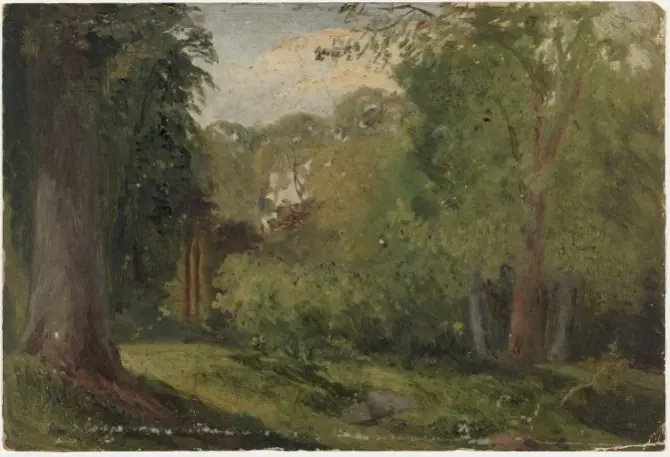
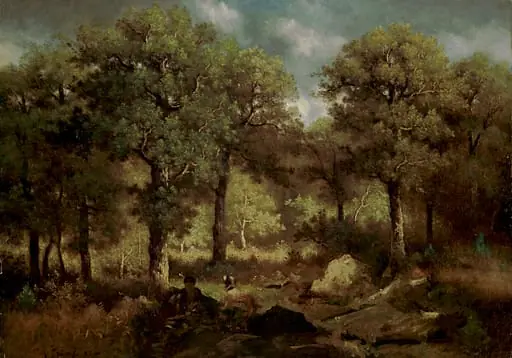
Painted around 1850, Forest is a landscape work by Narcisse Virgilio Díaz executed in oil on wood. The composition fills the frame with dense woodland, emphasizing verticality and layered foliage. It resides in the National Gallery of Armenia, where it exemplifies the artist’s engagement with naturalistic scenes rooted in the Barbizon tradition.
Subject & Meaning
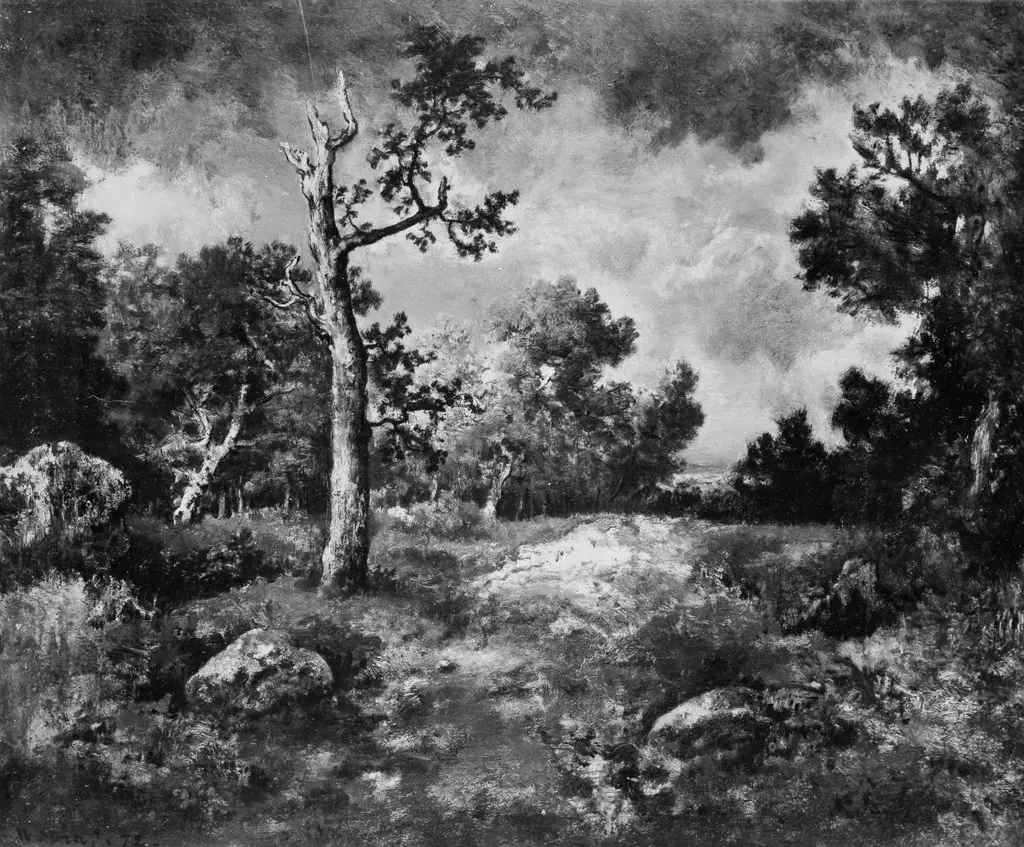
The painting presents an immersive forest interior, devoid of human figures or clear narrative. The towering trees and thick undergrowth suggest a wild, untamed environment, evoking solitude and quiet endurance. The absence of pathways or openings reinforces a sense of enclosure, inviting contemplation of nature’s autonomy rather than its utility or symbolism.
Technique & Style
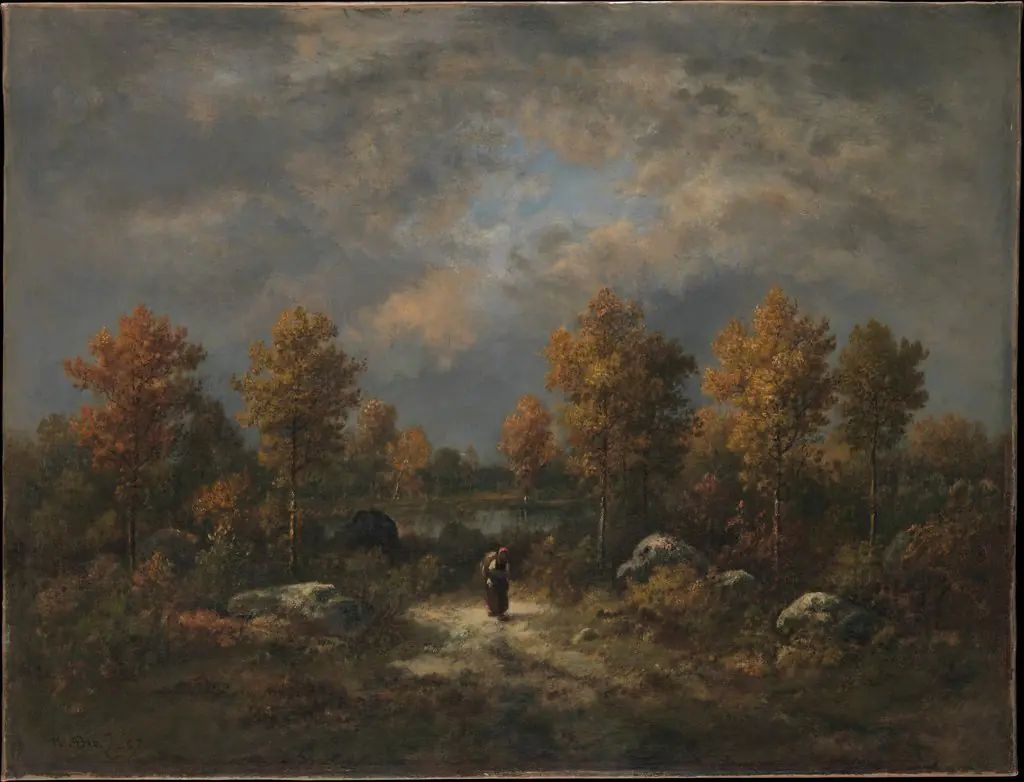
Díaz employs chiaroscuro to model the forms of trees and foliage, creating depth through contrast between sunlit leaves and shadowed trunks. Brushwork is detailed yet fluid, capturing the texture of bark and the density of canopy. Cool undertones in the background—blues and purples—enhance atmospheric perspective, while the foreground remains richly saturated with greens and earth tones.
History & Provenance
Created during Díaz’s mature period, the painting reflects his shift from romanticized landscapes to more observed, intimate natural scenes. It entered the collection of the National Gallery of Armenia in the 20th century, likely through state acquisition or donation, though its earlier ownership remains undocumented.
Context
Díaz was associated with the Barbizon School, which emphasized direct observation of nature over idealized composition. Forest aligns with this movement’s ethos, rejecting theatricality in favor of quiet realism. Contemporary European audiences increasingly valued such works as expressions of spiritual connection to the natural world, distinct from academic traditions.
Legacy
Though not widely exhibited outside Armenia, the painting contributes to the recognition of Díaz’s role in bridging French landscape traditions with Eastern European collections. Its preservation offers insight into 19th-century approaches to naturalism, particularly in regions where such works were less commonly collected.
Artist & collection
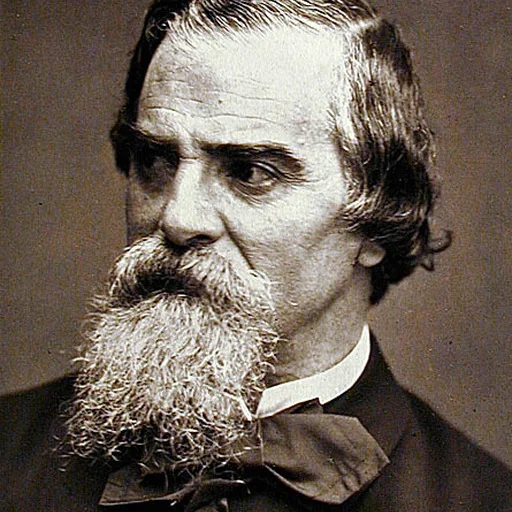
Artist
Narcisse Virgilio Díaz (1807–1876) was a French artist, born in Bordeaux.