Artwork
Turkish Women
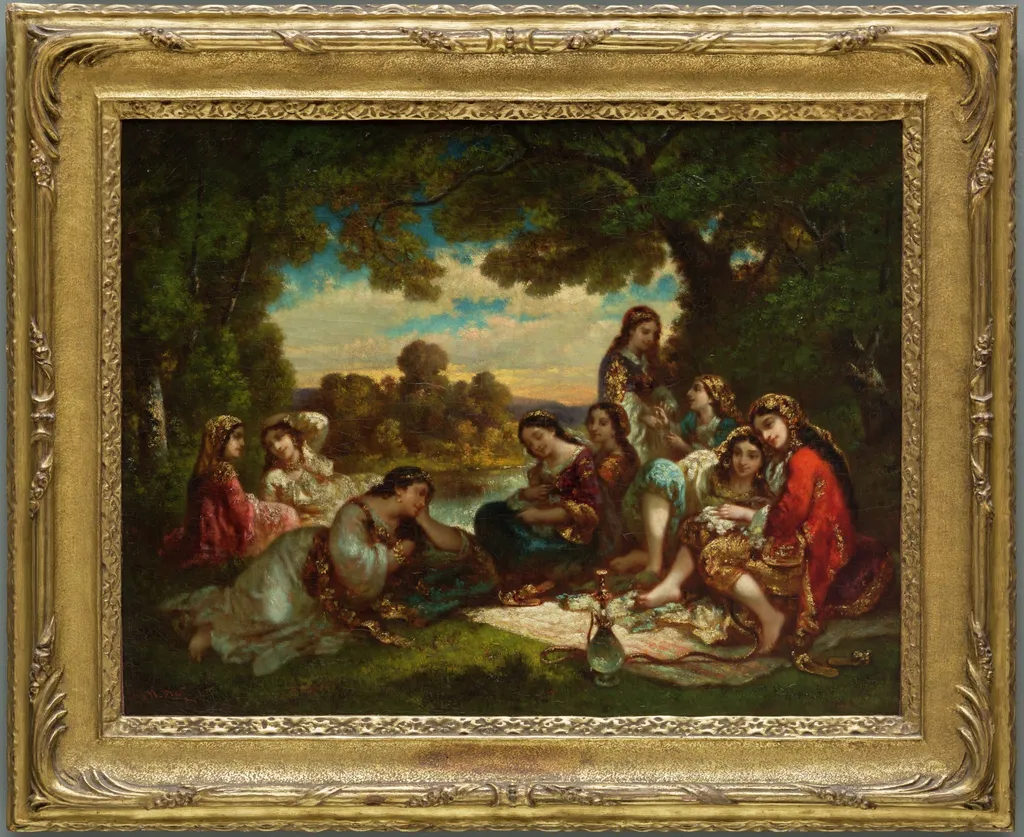
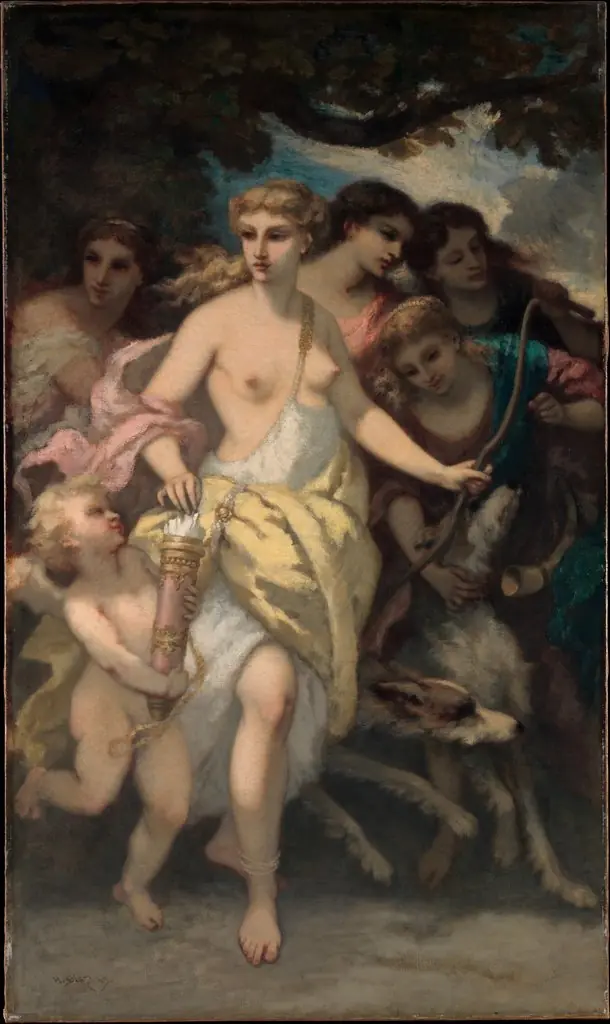
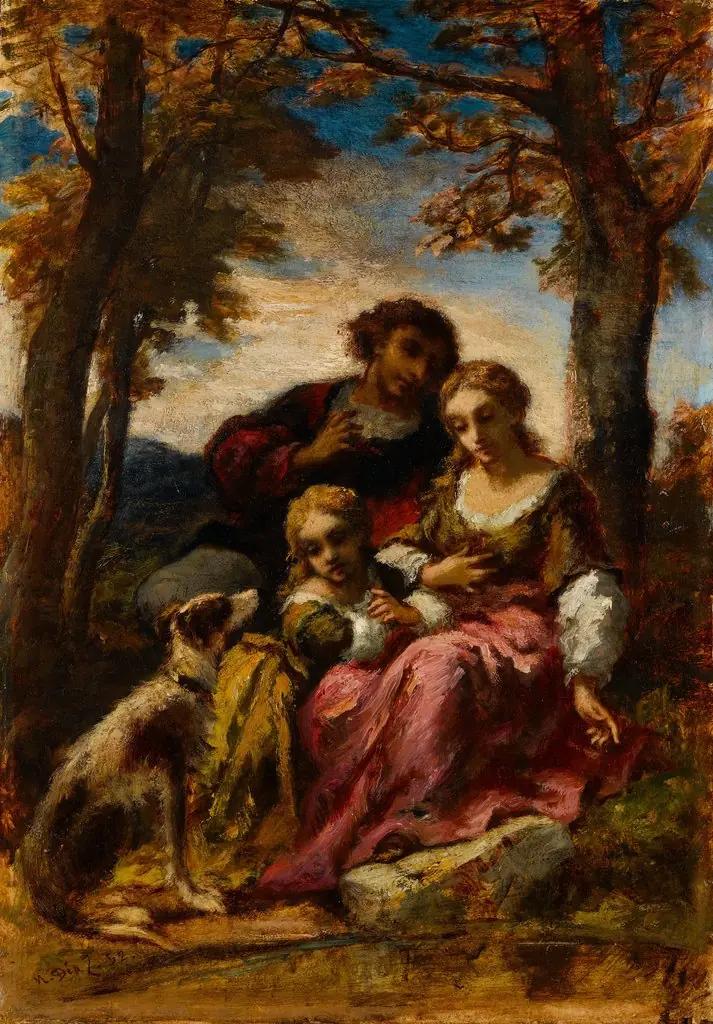
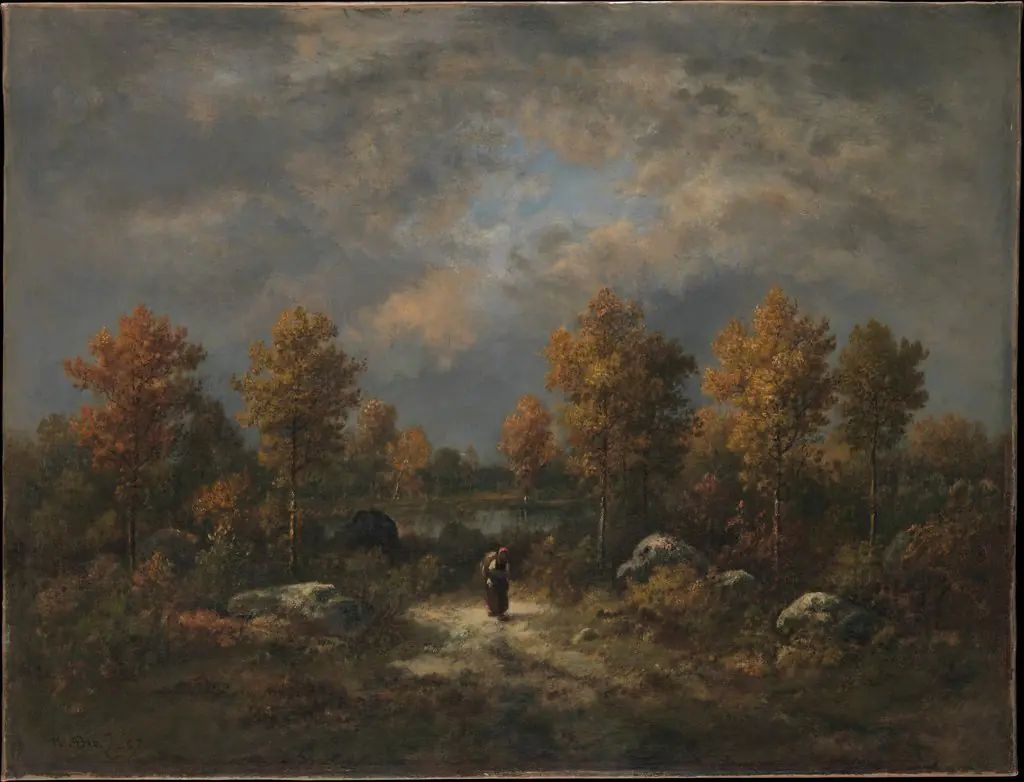
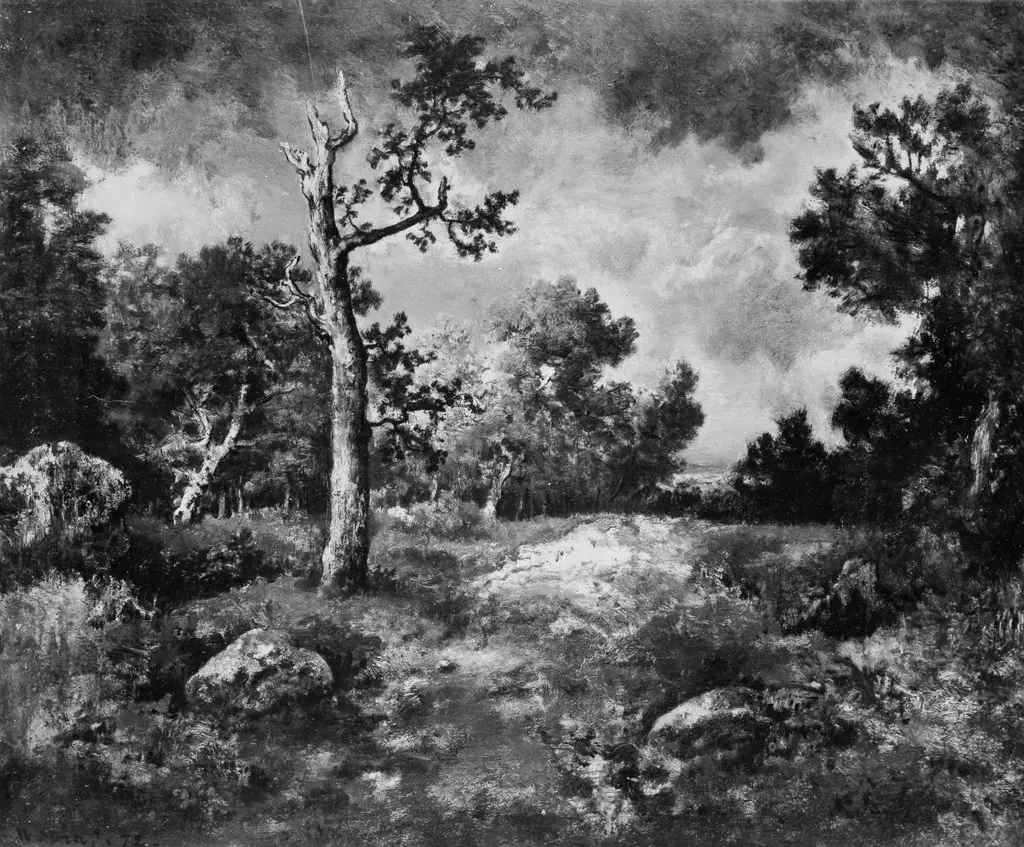
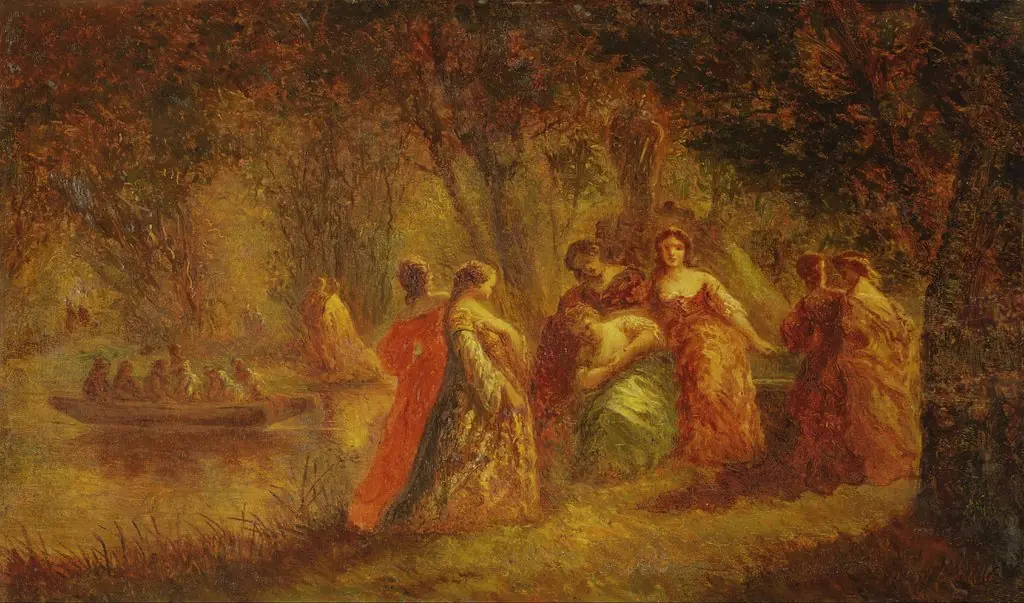
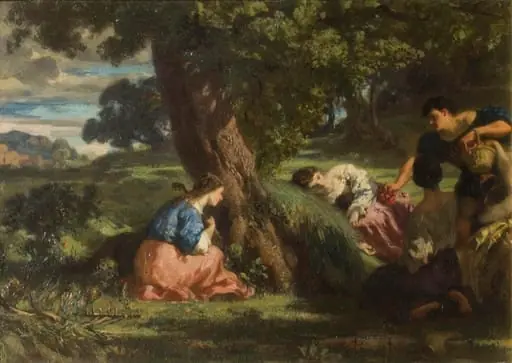
Turkish Women is an oil painting by the Orientalist artist Narcisse Virgilio Díaz. It dates from 1807 and is held in the collection of the Detroit Institute of Arts.
About this work
Overview
Díaz, a French painter associated with the Barbizon school, rendered the scene with attention to atmospheric detail and subdued color harmonies.
Turkish Women is an oil painting by Narcisse Virgilio Díaz, completed in 1859, not 1807 as sometimes misstated. It depicts a quiet interior scene of women in Ottoman dress, engaged in a moment of repose. The work is part of the collection at the Detroit Institute of Arts, where it has been held since its acquisition in the early 20th century. Díaz, a French painter associated with the Barbizon school, rendered the scene with attention to atmospheric detail and subdued color harmonies.
Subject & Meaning
The painting portrays a group of women in traditional Turkish attire, seated on a rug near a hookah, surrounded by foliage and water. Their calm expressions and relaxed postures suggest a private, intimate setting, free from external observation. Rather than exoticizing the scene, Díaz emphasizes tranquility and domestic rhythm. The absence of narrative drama invites contemplation of daily life, aligning with 19th-century Orientalist tendencies that favored mood over spectacle.
Technique & Style
Díaz employed loose, visible brushwork to convey texture in fabric, foliage, and water, blending warm earth tones with cool blues and greens. The lighting is diffused, avoiding sharp contrasts, yet still suggesting depth through subtle gradations. While not strictly using chiaroscuro, the painting relies on tonal modulation to model forms and create spatial recession. The surface retains a tactile quality, characteristic of Barbizon-inspired realism adapted to Orientalist themes.
History & Provenance
Painted in 1859, Turkish Women entered the Detroit Institute of Arts’ collection in 1923, acquired from a private donor. Its journey from Díaz’s Paris studio to Detroit reflects broader 19th-century European interest in Oriental subjects and their subsequent migration to American collections. The painting was exhibited in Paris salons during Díaz’s lifetime and later recognized for its atmospheric sensitivity, though it never achieved the fame of his forest scenes.
Context
Díaz painted this work during a period when French artists increasingly turned to North African and Middle Eastern subjects, influenced by colonial expansion and travel literature. While many contemporaries emphasized theatricality, Díaz favored quiet observation. His approach aligned with the Barbizon school’s focus on naturalism and mood, even when depicting foreign settings. Turkish Women reflects a shift from spectacle to serenity within Orientalist painting.
Legacy
Though not widely reproduced, Turkish Women remains a quiet example of how French Romantic-era painters interpreted non-Western life with nuance. It contributes to scholarly discussions on Orientalism’s spectrum—from exotic fantasy to empathetic observation. The painting’s preservation in a major American institution ensures its continued role in examining 19th-century cross-cultural representation and the evolution of genre painting beyond European settings.
Artist & collection

Artist
Narcisse Virgilio Díaz (1807–1876) was a French artist, born in Bordeaux.