Artwork
River Landscape with Tobias and the Angel
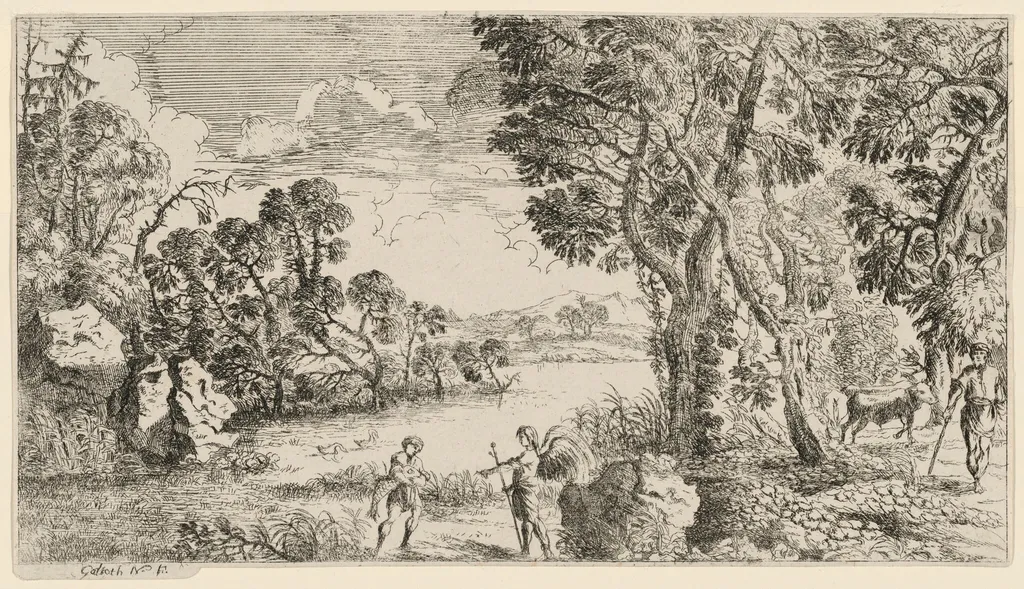
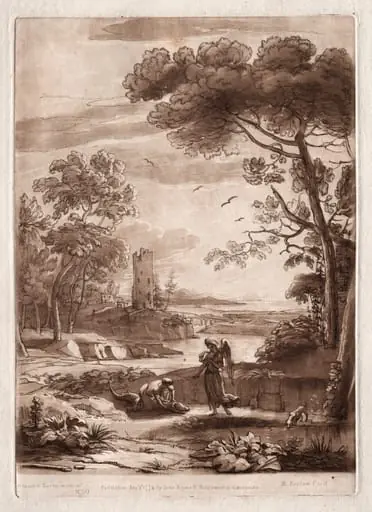
River Landscape with Tobias and the Angel is an ink print by the Baroque artist John Galioth Nardois. It dates from 1648 and is held in the collection of the National Gallery of Art. Created around 1648, this etching on laid paper presents a tranquil riverside scene rendered in fine linear detail.
About this work
Overview
Created around 1648, this etching on laid paper presents a tranquil riverside scene rendered in fine linear detail.
Created around 1648, this etching on laid paper presents a tranquil riverside scene rendered in fine linear detail. The work is attributed to John Galioth Nardois and resides in the National Gallery of Art, Washington. As a print from the mid-seventeenth century, it reflects the period’s interest in combining naturalistic landscape with biblical narrative, executed with the precision characteristic of etching techniques of the time.
Subject & Meaning
The scene illustrates the biblical story of Tobias and the Archangel Raphael, drawn from the Book of Tobit. Tobias, accompanied by the angel in disguise, journeys beside a river, symbolizing divine guidance through life’s trials. The quiet intimacy of the figures amid the landscape emphasizes spiritual presence within the natural world, a common theme in Baroque religious imagery that sought to humanize sacred narratives.
Technique & Style
The artist employed etching to achieve delicate tonal gradations, using fine lines to model the texture of foliage, water, and the angel’s wings. Shading is subtle yet effective, lending volume to forms without heavy contrast. The composition balances open space with dense vegetation, creating a sense of depth and calm. The style aligns with Northern European landscape traditions, prioritizing atmospheric harmony over dramatic intensity.
History & Provenance
The print entered the collection of the National Gallery of Art, Washington, following its acquisition from established European sources. Its date of creation, circa 1648, places it within a period of flourishing printmaking in the Dutch and Flemish regions. Though Nardois is not widely documented, this work survives as a rare example of his output, suggesting he operated within a network of printmakers who adapted religious themes for private collectors.
Context
In mid-seventeenth-century Europe, landscape prints often served as vehicles for moral or spiritual reflection. Artists like Nardois blended secular scenery with biblical figures to appeal to private devotion and intellectual taste. This work reflects the influence of Dutch landscape traditions, where nature was rendered with observational care, even when serving allegorical purposes, bridging the devotional and the topographical.
Legacy
Though Nardois remains a minor figure in art history, this etching contributes to the broader understanding of how religious narratives were integrated into landscape prints during the Baroque era. It exemplifies the quiet, contemplative mode of printmaking that appealed to collectors seeking refined, meditative imagery. The work continues to be studied for its technical restraint and its role in the evolution of narrative landscape in print.
Artist & collection

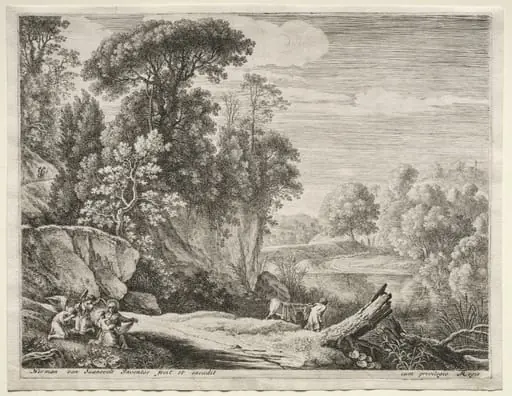 The Flight into Egypt: The Donkey Led to the River
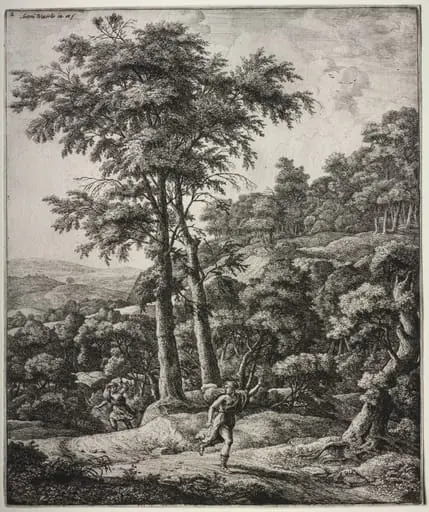 Six large upright landscapes with scenes from Ovid's Metamorphoses: Apollo and Daphne
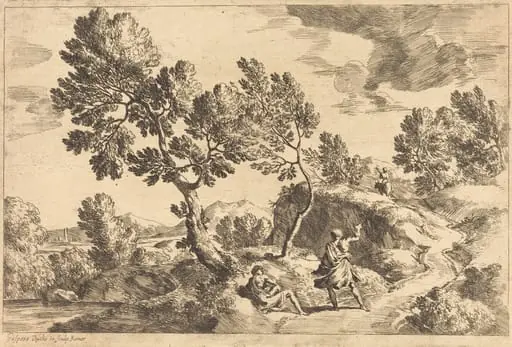 Roman Landscape
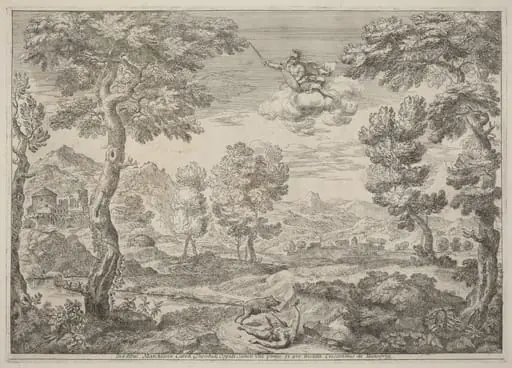 Mars's Revenge on Adonis
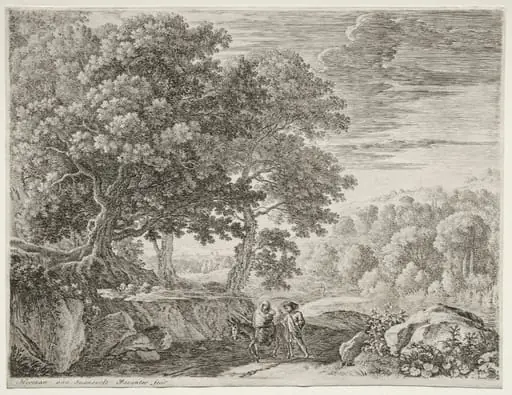 The Flight into Egypt: The Holy Family
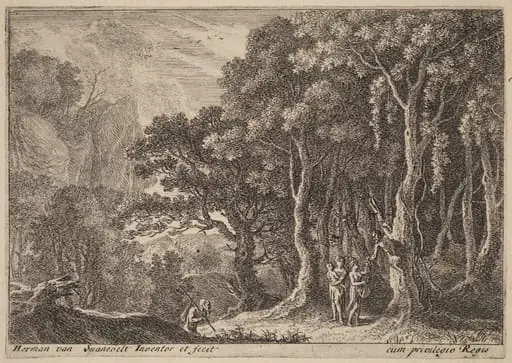 A Satyr Gathering Fruit
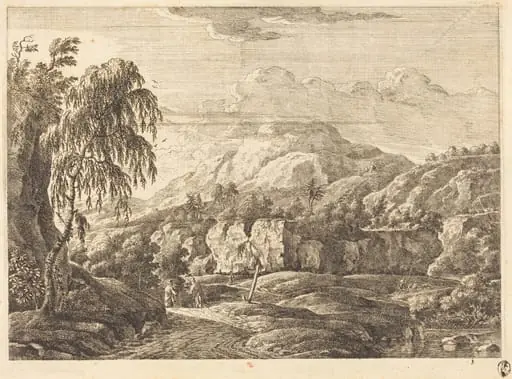 Landscape with Cross and Figures
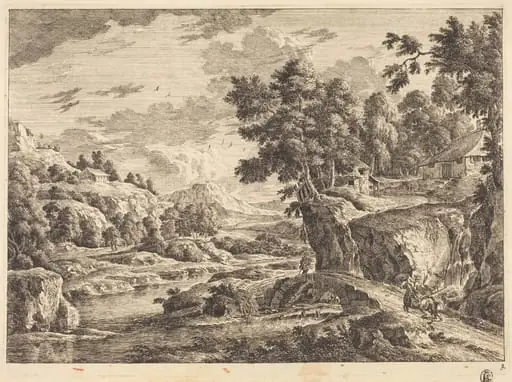 Landscape with a Bridge and Three Farm Buildings
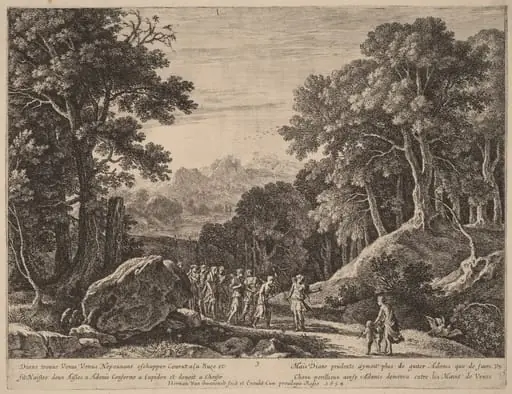 Venus Offering Diana a Choice between Cupid and Adonis
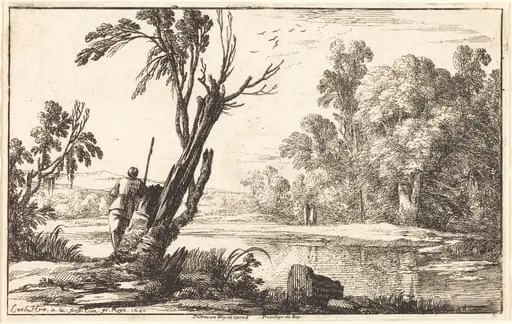 A Man Gazing across a Still Pond
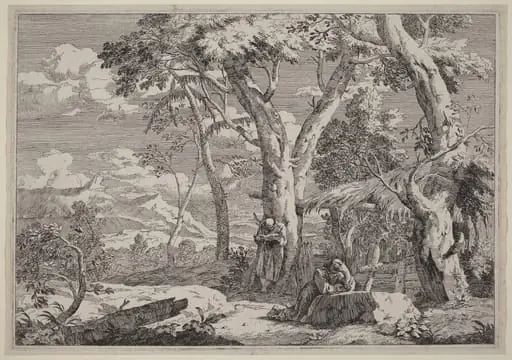 Wilderness Landscape with Two Monks
 Liber Veritatis: No. 50, A River Scene with Tobias and the Angel