Artwork
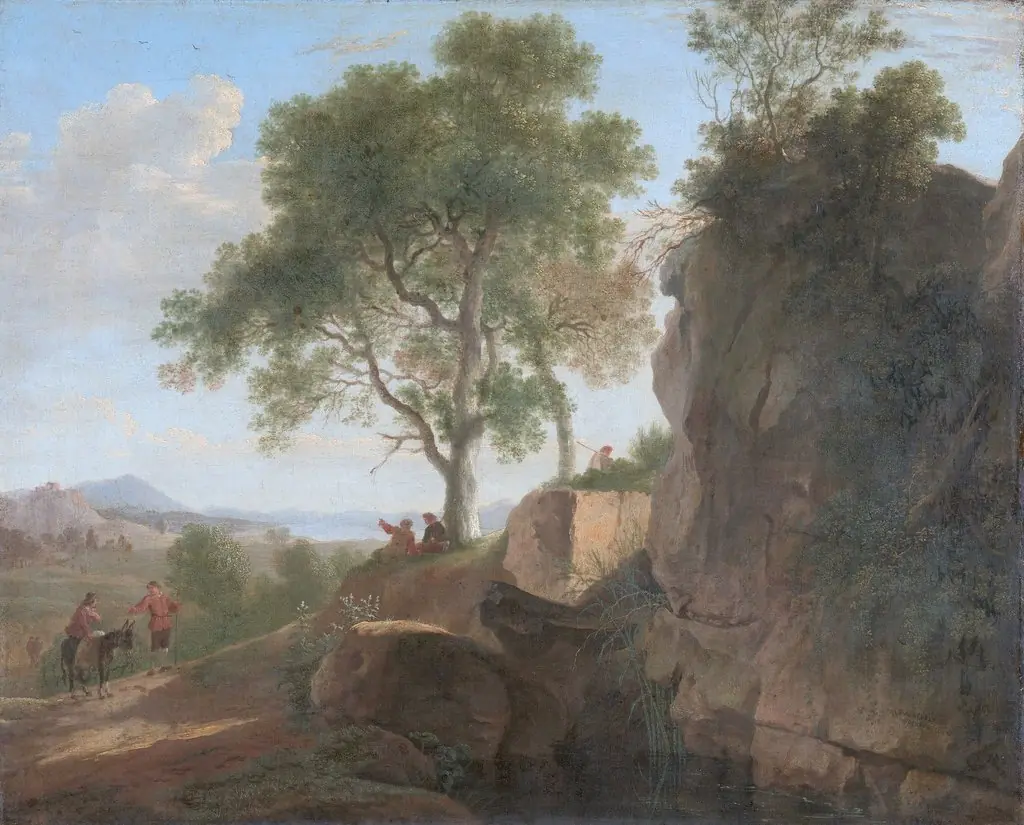
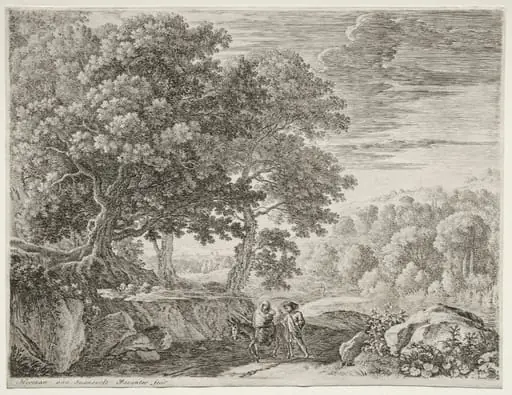
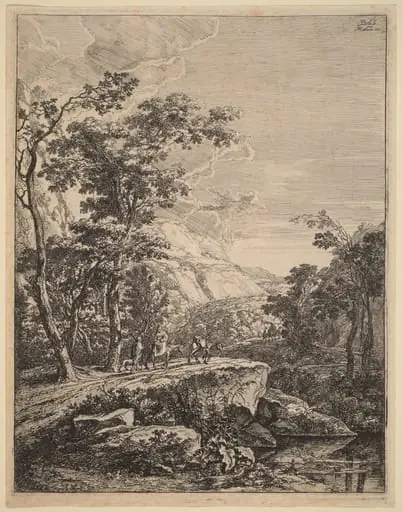
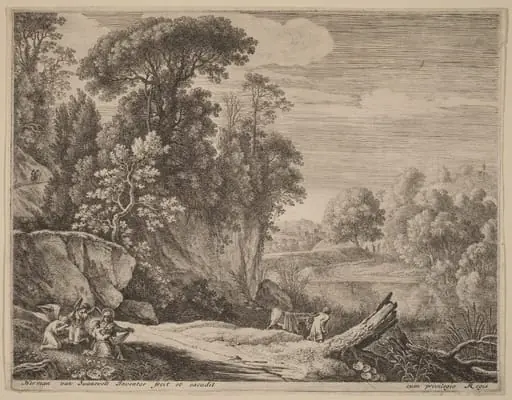
The Flight into Egypt: The Donkey Led to the River
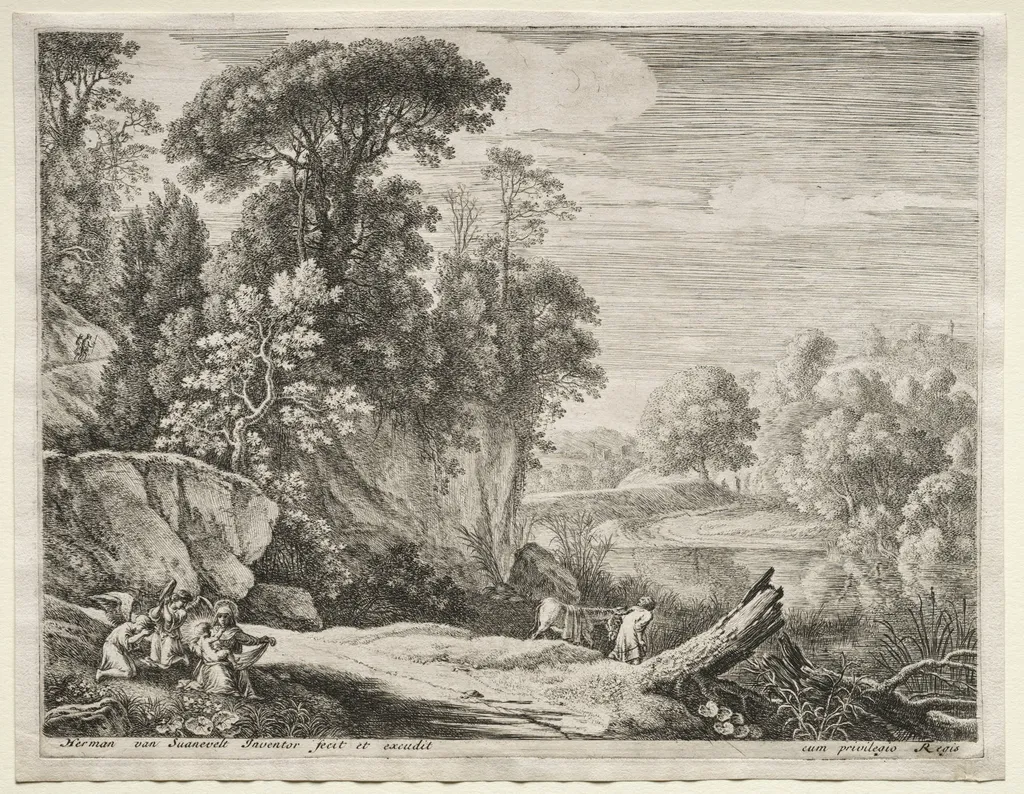
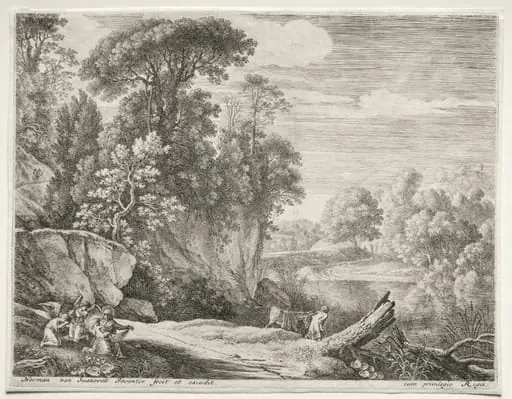
The Flight into Egypt: The Donkey Led to the River is a print by the Baroque artist Herman van Swanevelt. It dates from 1653 and is held in the collection of the Cleveland Museum of Art.
About this work
Overview
Created around 1653 by Dutch artist Herman van Swanevelt, this print captures a quiet moment from the biblical Flight into Egypt.
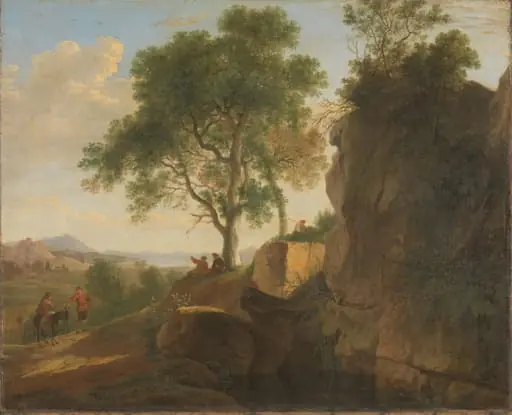
Created around 1653 by Dutch artist Herman van Swanevelt, this print captures a quiet moment from the biblical Flight into Egypt. It is part of the collection at The Cleveland Museum of Art. The composition centers on a donkey approaching a river, with distant figures suggesting the Holy Family’s journey. The scene unfolds in a calm, naturalistic landscape, emphasizing atmosphere over narrative drama.
Subject & Meaning
The image illustrates the Holy Family’s escape to Egypt, a moment of rest amid peril. Rather than focusing on dramatic tension, van Swanevelt highlights solitude and tranquility. The donkey, central to the foreground, symbolizes humility and endurance, while the distant figures reinforce the quiet resilience of the journey. The river, a common motif in such scenes, suggests renewal and passage.
Technique & Style
Van Swanevelt employs bold, expressive brushwork to render texture in foliage and water, creating a tactile sense of the environment. Light filters through the trees with subtle gradations, enhancing spatial depth. The sky, softly modeled with wispy clouds, contributes to a hazy, atmospheric quality. His approach blends naturalism with poetic restraint, typical of his Italian-influenced landscape style.
History & Provenance
The work entered The Cleveland Museum of Art’s collection through established acquisition channels, though its earlier ownership history is not widely documented. Van Swanevelt, active in Rome during the 1630s and 1640s, developed a distinctive landscape idiom that influenced later Dutch and French painters. This print reflects his mature period, following his return to the Netherlands.
Context
Produced during the mid-17th century, the print aligns with the Dutch Golden Age’s interest in landscape as an independent subject. While religious themes persisted, artists increasingly emphasized mood and environment over doctrinal emphasis. Van Swanevelt’s work bridges Italianate tonalism and Northern realism, reflecting broader European trends in secularizing sacred narratives through natural settings.
Legacy
Van Swanevelt’s approach to landscape influenced a generation of Dutch and French painters who prioritized atmosphere and light. Though less celebrated than contemporaries like Rembrandt, his quiet, poetic compositions contributed to the evolution of landscape as a vehicle for emotional resonance. This print remains a quiet example of how sacred stories were reimagined through intimate, naturalistic observation.
Own this work as a print
Artist & collection

 The Flight into Egypt
 The Donkey Led to the River
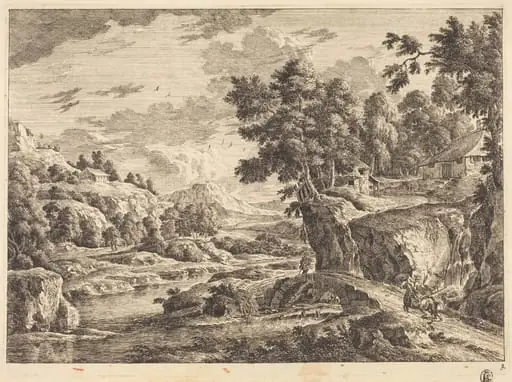 Landscape with a Bridge and Three Farm Buildings
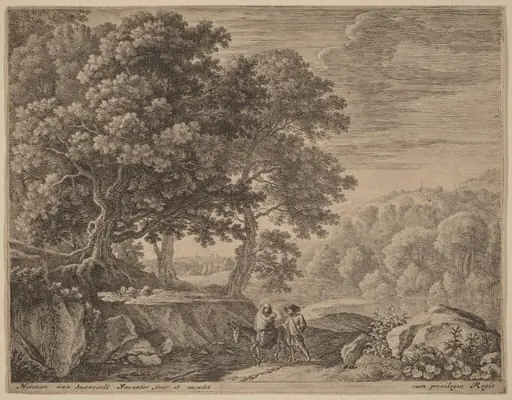 The Little Angels on the Hill
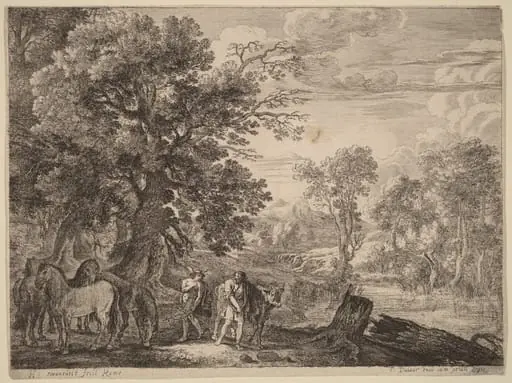 Mercury Silencing Battus
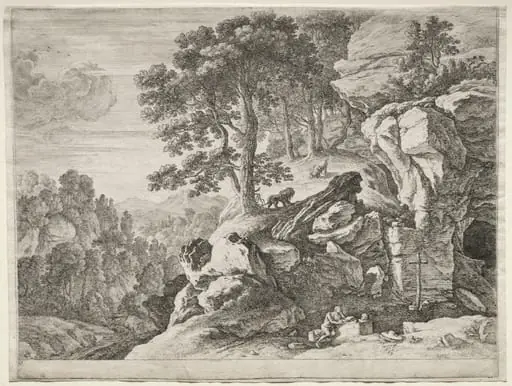 The Penitents: St. Jerome in the Desert
 The Flight into Egypt: The Holy Family
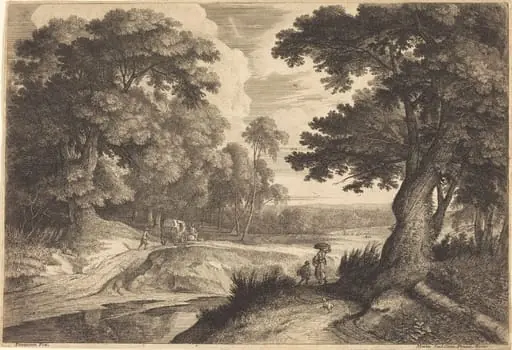 Edge of a Wood with Peasants Going to Market
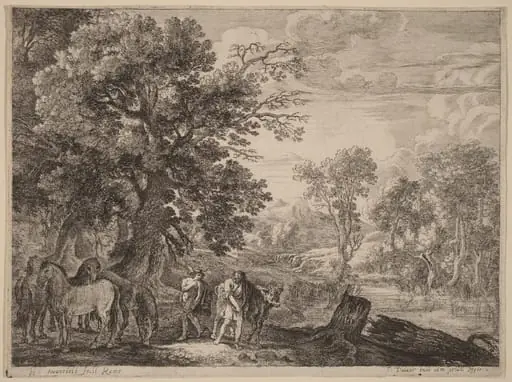 Mercury Silencing Battus
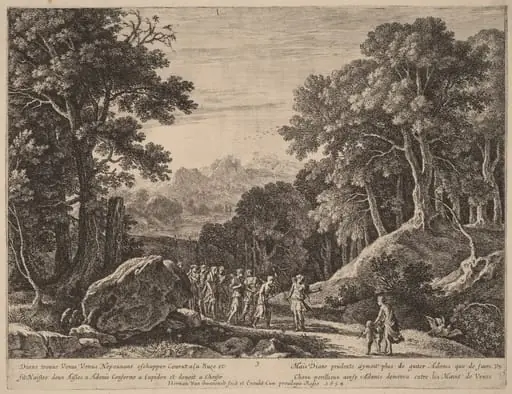 Venus Offering Diana a Choice between Cupid and Adonis
 The Woman on the Hinny
 The Donkey Led to the River