Artwork
Satan's messenger
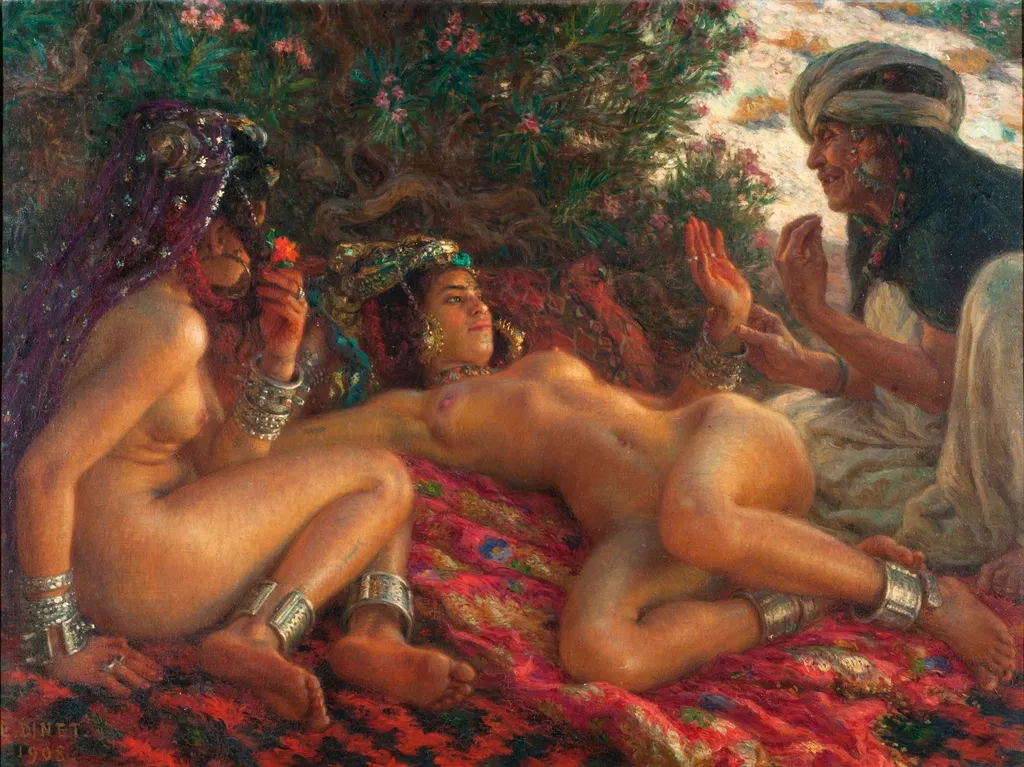
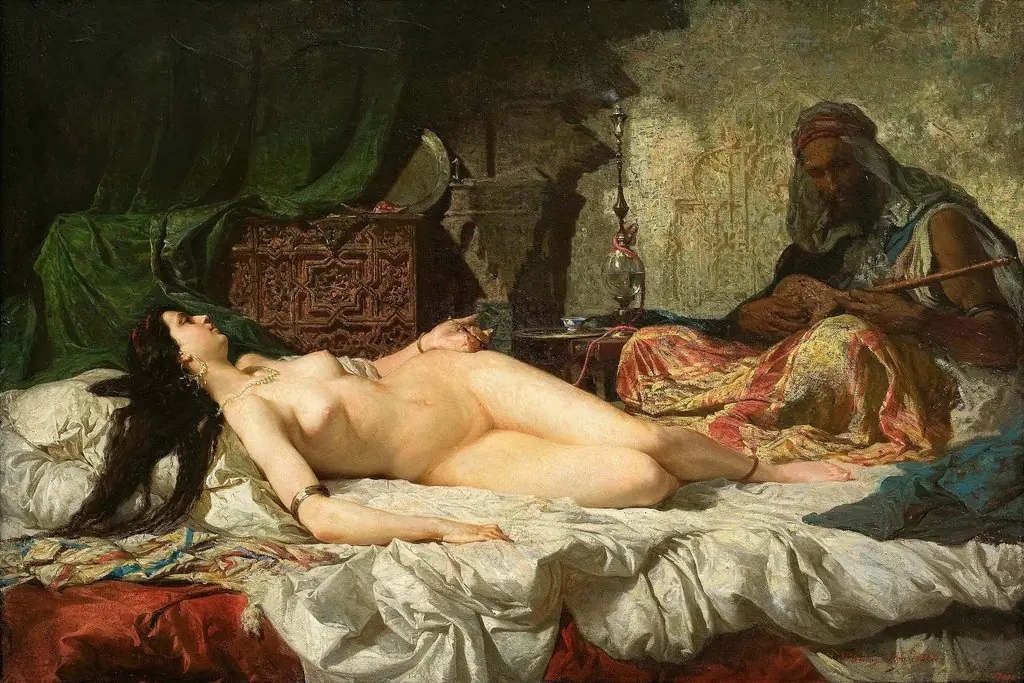
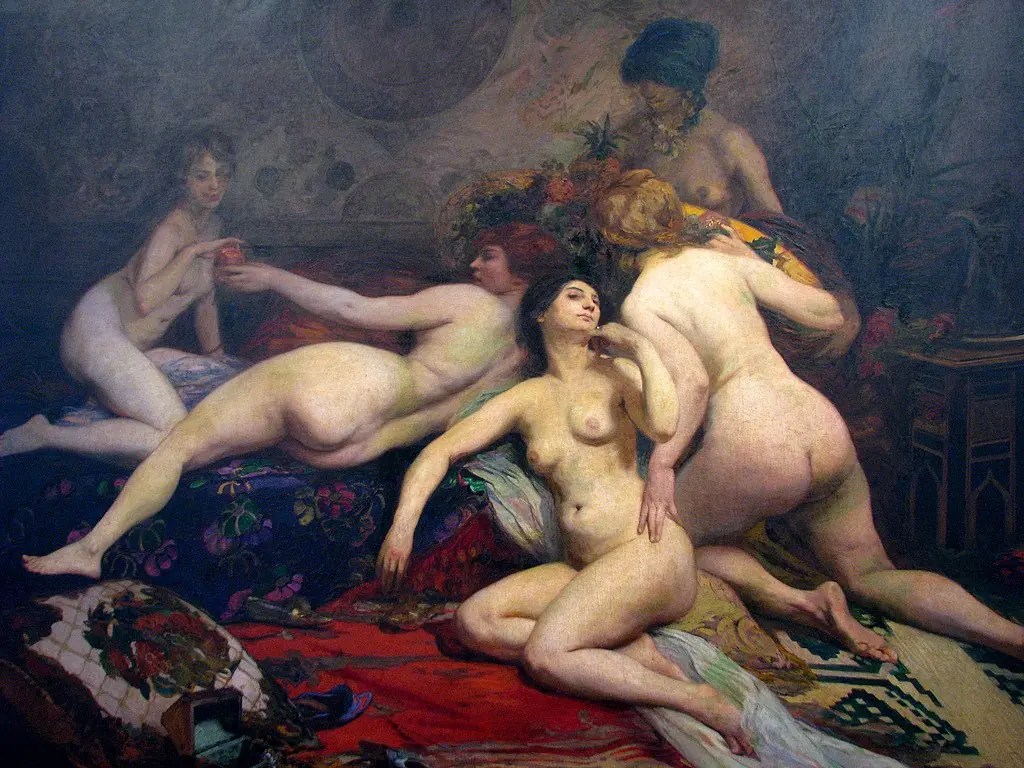
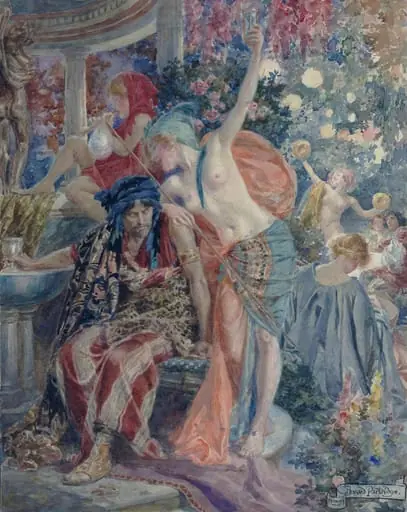
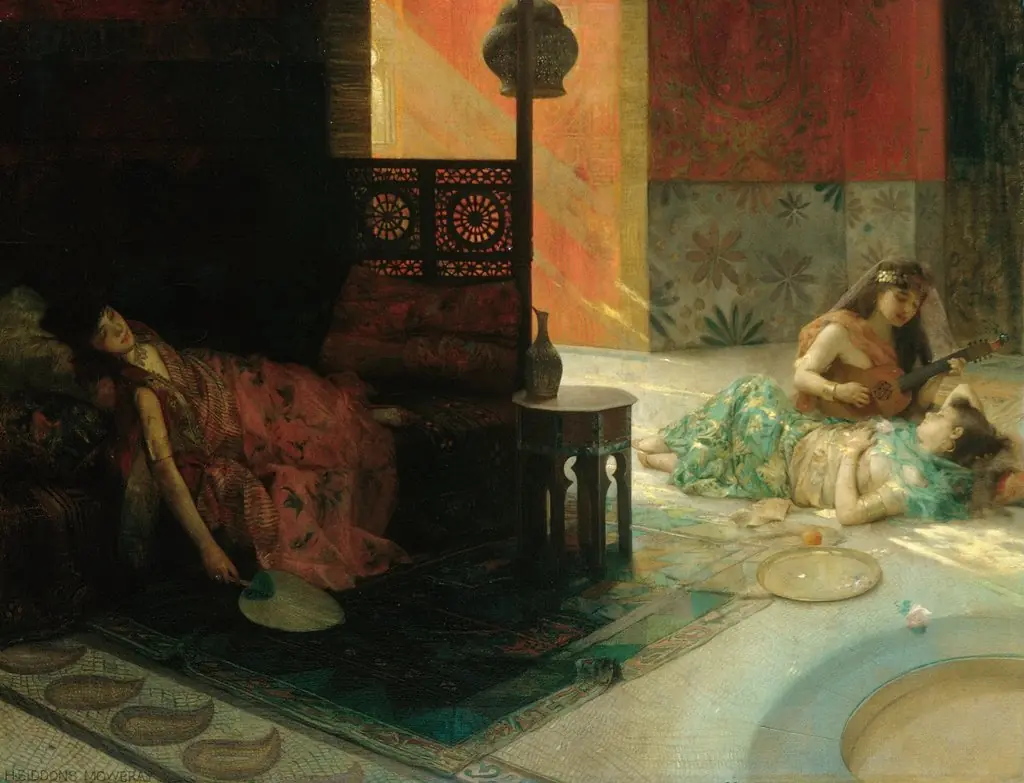
Satan's messenger is an oil painting by the Orientalist artist Nasreddine Dinet. It dates from 1908 and is held in the collection of the National Museum of Fine Arts, Argentina.
About this work
Overview
This piece, now in the National Museum of Fine Arts in Buenos Aires, reflects his commitment to portraying local customs beyond exoticized stereotypes.
Painted in 1908 by Nasreddine Dinet, *Satan's Messenger* is an oil-on-canvas work rooted in the orientalist tradition. Dinet, a French artist deeply immersed in Algerian life after converting to Islam and learning Arabic, rendered scenes from North African society with unusual intimacy. This piece, now in the National Museum of Fine Arts in Buenos Aires, reflects his commitment to portraying local customs beyond exoticized stereotypes.
Subject & Meaning
The painting presents three women in a verdant, flower-filled garden, their postures and gestures suggesting a quiet, intimate moment. One reclines while the others sit nearby, one holding a bloom and the other gesturing with open hands. Though titled *Satan's Messenger*, the image offers no explicit narrative of evil; instead, it invites contemplation of feminine presence, ritual, or perhaps a folkloric allusion rooted in regional storytelling traditions.
Technique & Style
Dinet employed rich, saturated hues—emerald greens, rose pinks, and deep purples—to build a luminous, atmospheric setting. His brushwork captures the texture of fabric, foliage, and skin with subtle precision. Careful modulation of light and shadow lends volume and spatial depth, while the composition’s quiet symmetry emphasizes stillness and introspection, distinguishing it from more theatrical orientalist works.
History & Provenance
Created during Dinet’s mature period, the painting entered the collection of the National Museum of Fine Arts in Buenos Aires in the 20th century, though its exact acquisition path remains undocumented. Its presence in South America reflects the international circulation of orientalist art beyond European centers, possibly through private collectors or diplomatic exchanges in the early 1900s.
Context
Dinet stood apart from many orientalist painters by living among his subjects in Algeria, adopting local customs, and writing in Arabic. His work emerged amid European fascination with the East, yet he sought authenticity over fantasy. *Satan's Messenger* aligns with his broader project: depicting Algerian life not as spectacle, but as lived experience, informed by personal engagement and cultural respect.
Legacy
Though often grouped with orientalist painters, Dinet’s approach challenged the genre’s conventions. His dedication to linguistic and religious immersion lent his depictions a quiet authority. *Satan's Messenger* endures as a testament to his unique position—neither outsider nor native, but a bridge between cultures—offering a nuanced vision of North African life that resists simplification.
Own this work as a print
Artist & collection
Artist
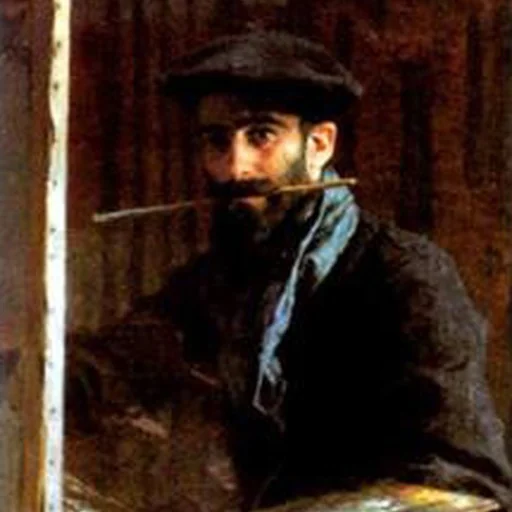
Nasreddine Dinet (born as Alphonse-Étienne Dinet on 28 March 1861 – 24 December 1929, Paris) was a French orientalist painter and was one of the founders of the Société des Peintres Orientalistes Society for French Orientalist Painters.

Museum
National Museum of Fine Arts, Argentina
Continue through works from the same source collection.