Artwork
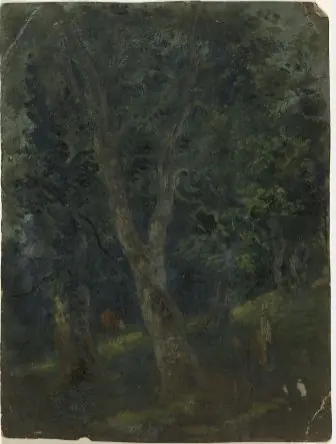
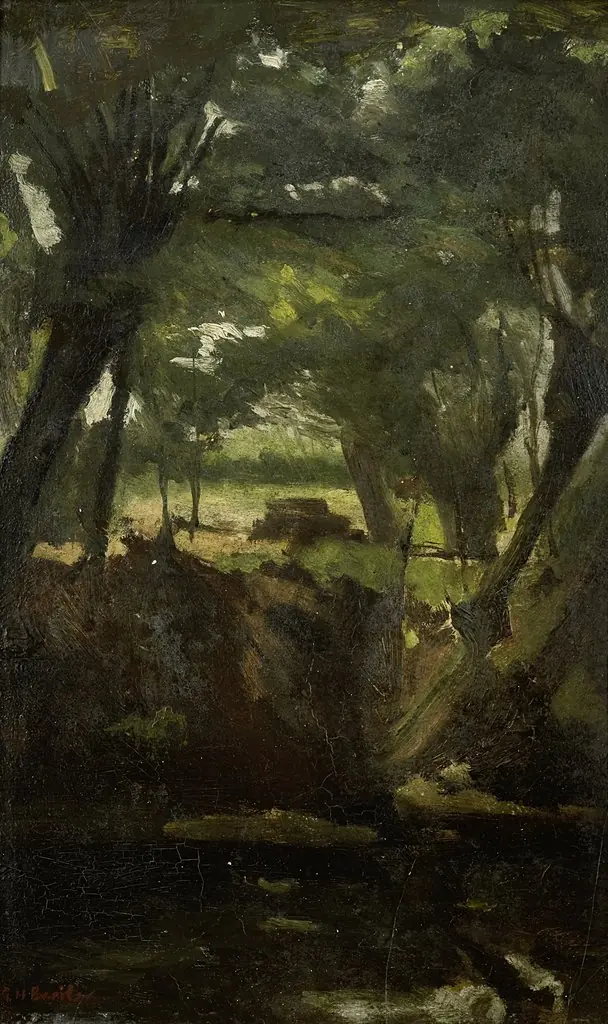
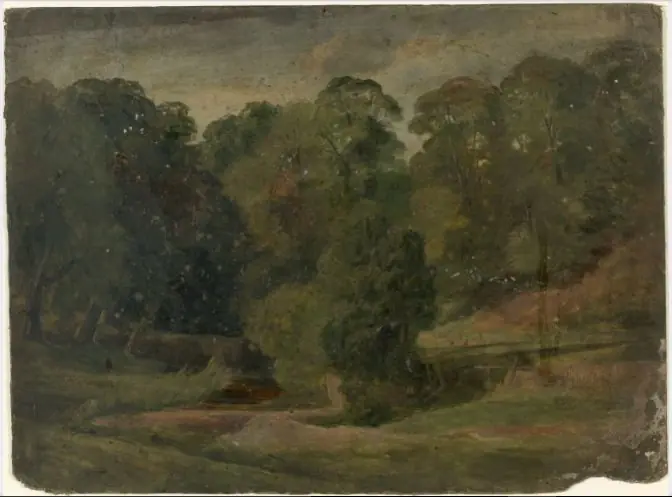
A Wooded Landscape, Moonlight Effect
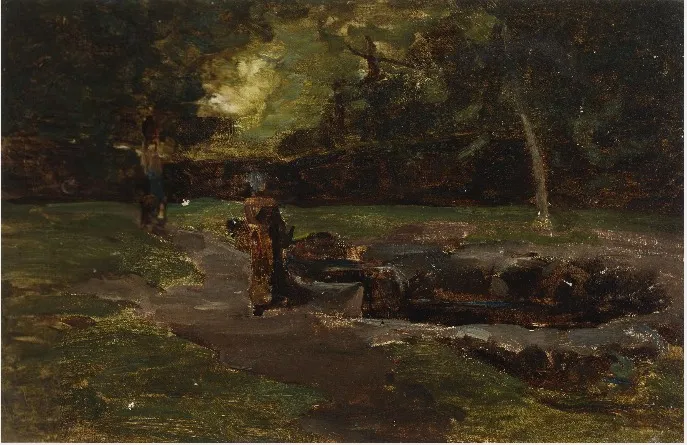
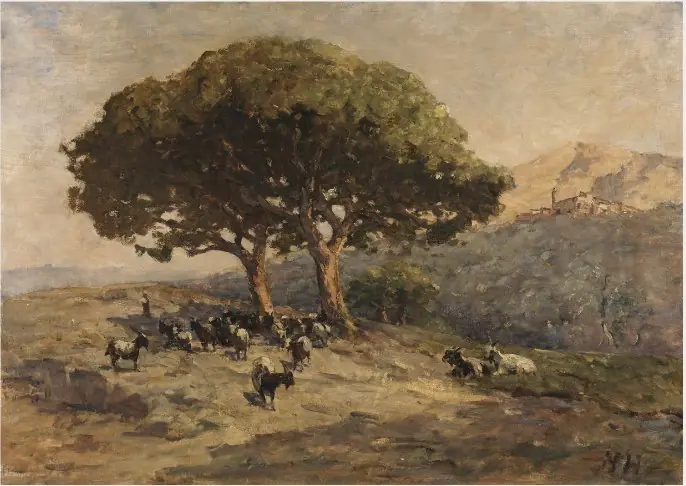
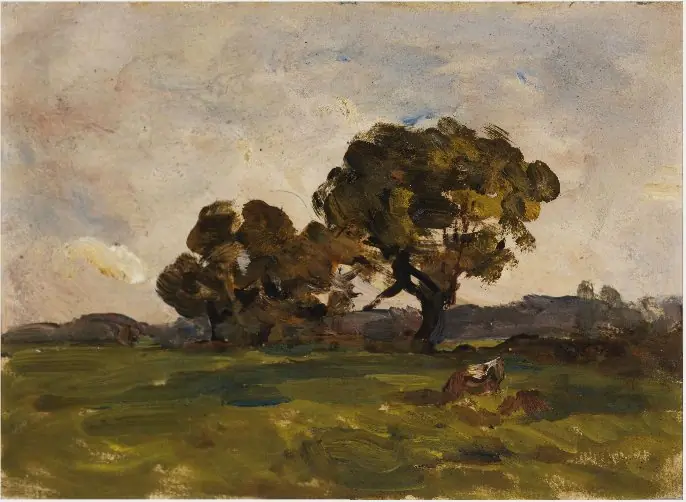
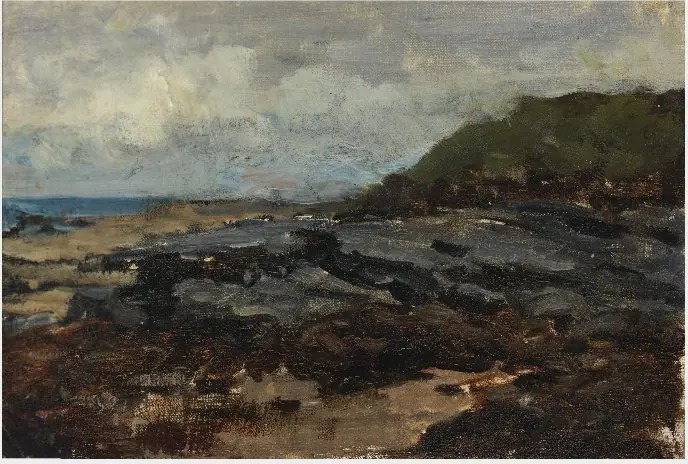
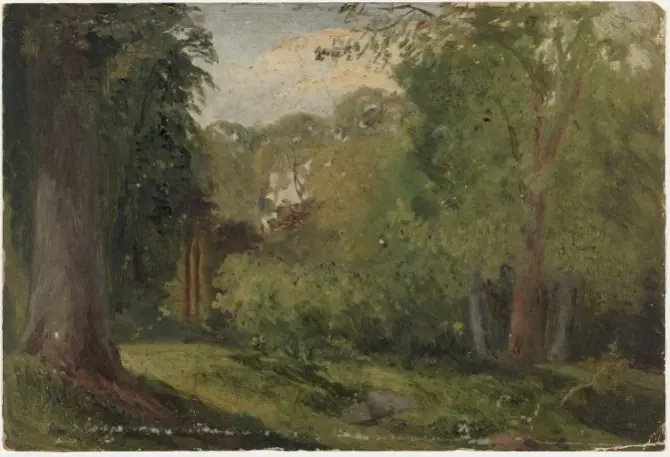
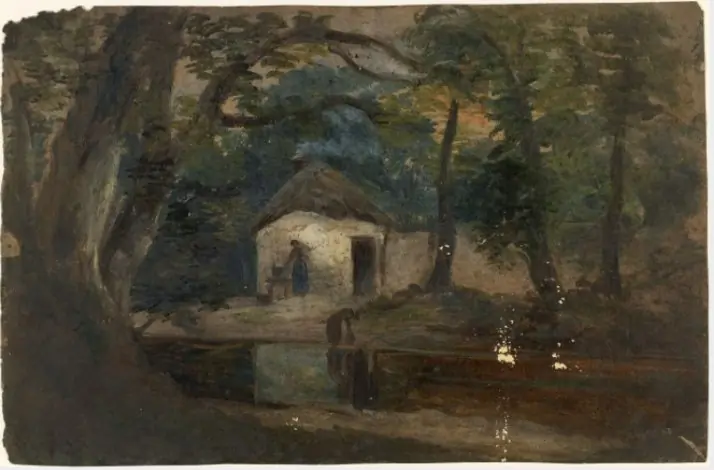
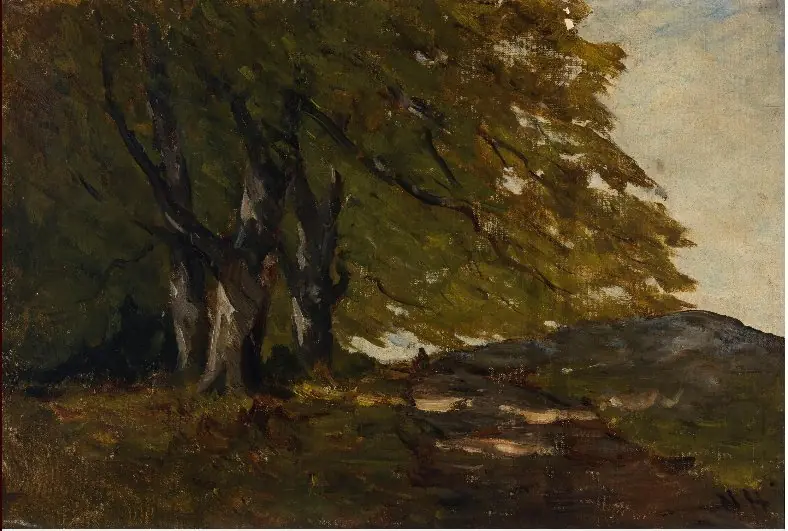
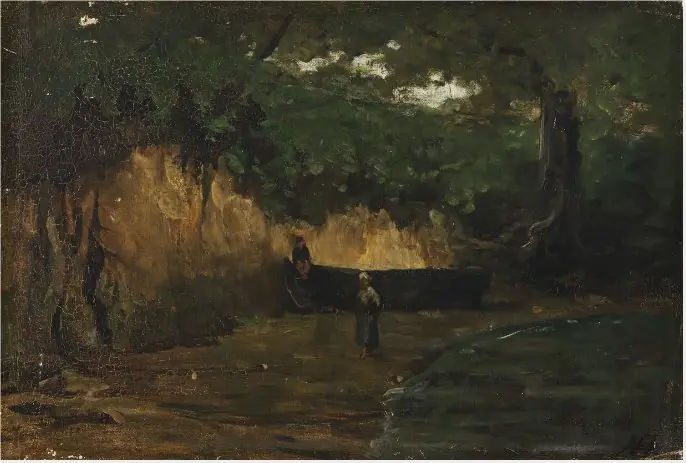
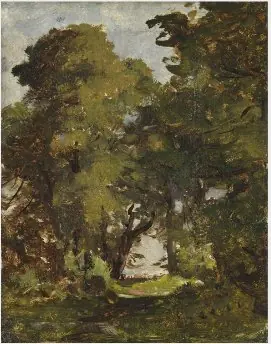
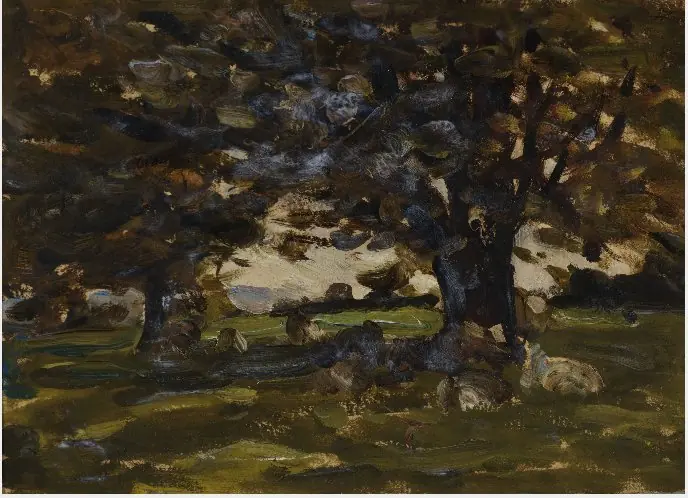
A Wooded Landscape, Moonlight Effect is an oil painting by the Impressionist artist Nathaniel Hone the Younger. It dates from 1881 and is held in the collection of the National Gallery of Ireland.
About this work
Overview
The piece belongs to the broader tradition of late 19th-century landscape painting, reflecting an interest in natural light and atmospheric conditions.
Painted around 1881, *A Wooded Landscape, Moonlight Effect* is an oil-on-canvas work by Nathaniel Hone the Younger, an Irish artist known for his quiet, observant landscapes. The piece belongs to the broader tradition of late 19th-century landscape painting, reflecting an interest in natural light and atmospheric conditions. It is part of the National Gallery of Ireland’s collection, where it remains a subtle example of the artist’s engagement with nocturnal scenes.
Subject & Meaning
The painting depicts a solitary, ancient tree dominating a quiet woodland at night. Its gnarled trunk and sprawling roots anchor the composition, while the surrounding grass and scattered stones suggest an undisturbed natural setting. The moon’s pale light bathes the scene in a cool, even glow, evoking stillness rather than drama. There is no human presence, reinforcing a sense of solitude and the quiet persistence of nature beyond human intervention.
Technique & Style
Hone employed subtle gradations of tone to render the moonlit atmosphere, using thin layers of oil to suggest the diffused quality of lunar light. Chiaroscuro is applied with restraint, creating depth without harsh contrasts. Brushwork is soft and blended, particularly in the foliage, avoiding the broken strokes typical of French Impressionism. The effect is one of muted luminosity, emphasizing mood over detail and aligning with a more introspective approach to landscape.
History & Provenance
The painting was completed during Hone’s mature period, after years of study in Dublin and London. It entered the National Gallery of Ireland’s collection in the early 20th century, likely through direct acquisition or donation. Unlike some of his more prominent contemporaries, Hone did not exhibit widely abroad, and this work remains one of the few surviving examples of his nocturnal studies, offering insight into his personal artistic priorities.
Context
In the 1880s, Irish artists were increasingly turning to native landscapes as subjects, often influenced by European trends but maintaining a distinct local sensibility. Hone’s moonlit scene aligns with a broader interest in twilight and night effects among painters of the time, though his approach is quieter than the dramatic chiaroscuro of Romantic predecessors. His work reflects a shift toward intimate, contemplative observation rather than grand narrative.
Legacy
Though not widely known outside Ireland, Hone’s *A Wooded Landscape, Moonlight Effect* stands as a quiet testament to his sensitivity to natural light and mood. It contributes to the understanding of how Irish artists adapted broader European techniques to express local environments with restraint and nuance. The painting continues to be studied for its understated technique and its role in the development of Irish landscape painting beyond the 19th-century academic mainstream.
Artist & collection
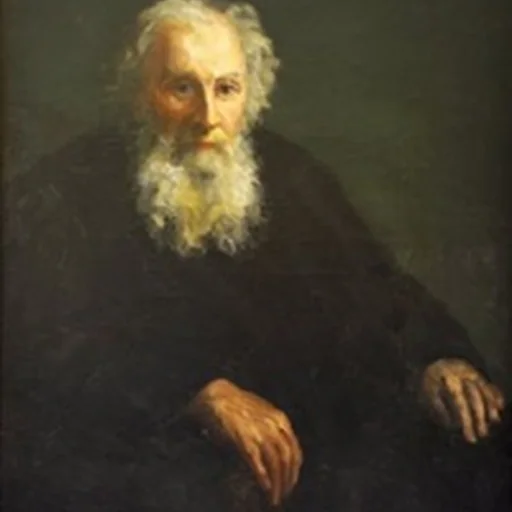
Artist
Nathaniel Hone the Younger (26 October 1831 – 14 October 1917) was an Irish painter, the great-grand-nephew of the painter Nathaniel Hone.