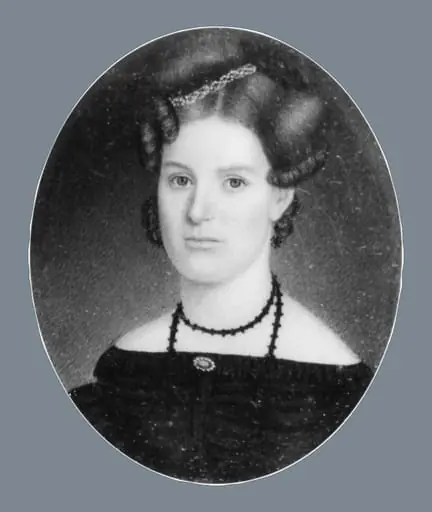
Artwork
Portrait of a Lady
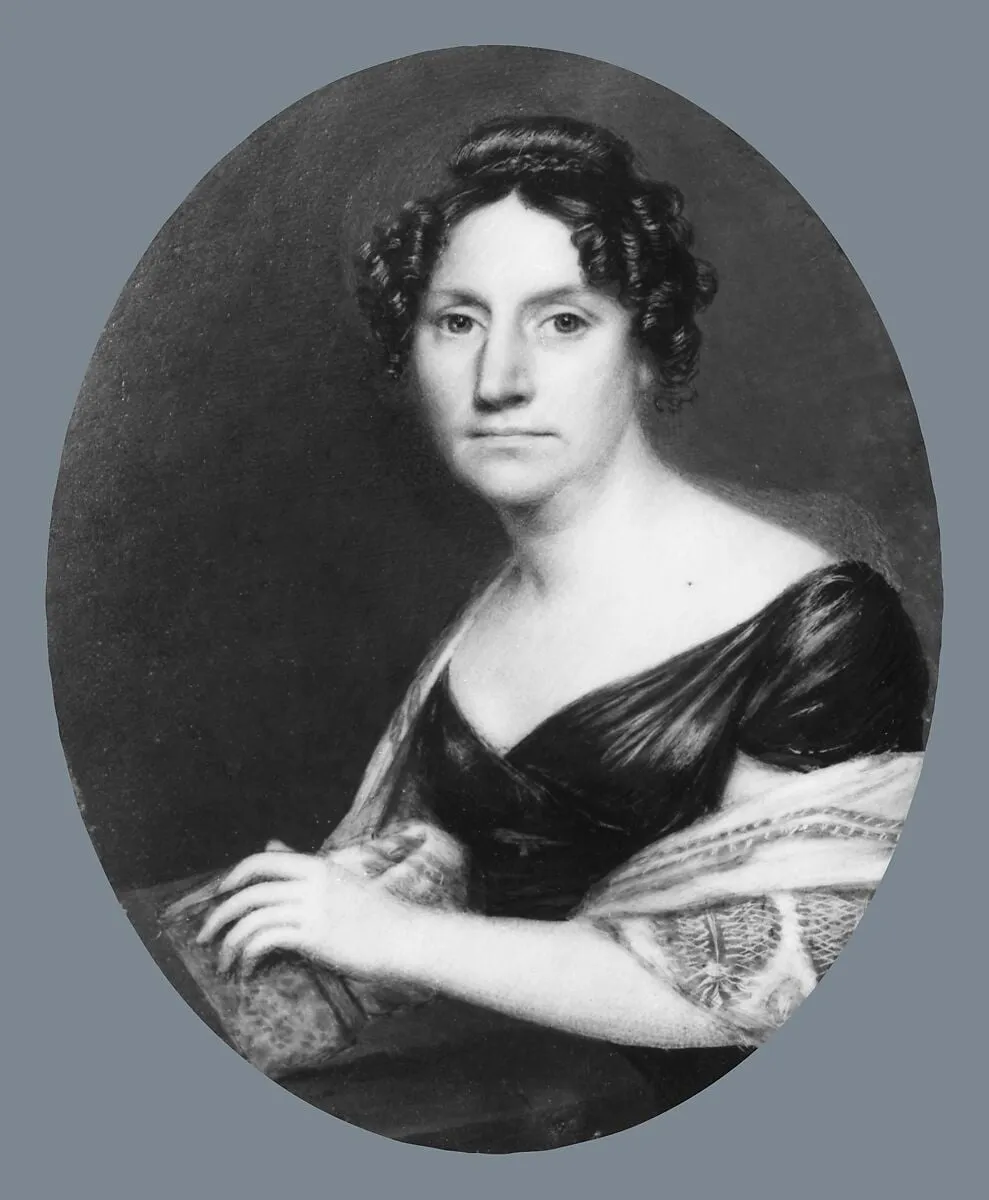
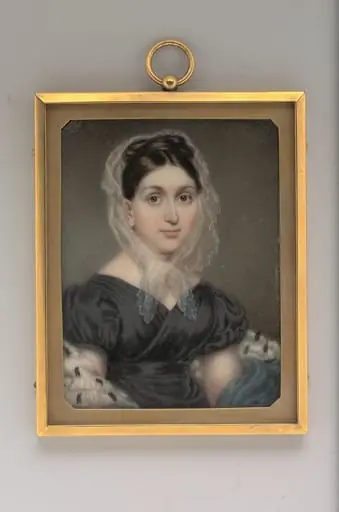
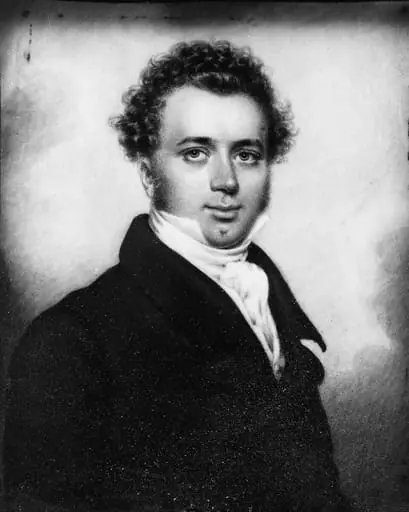
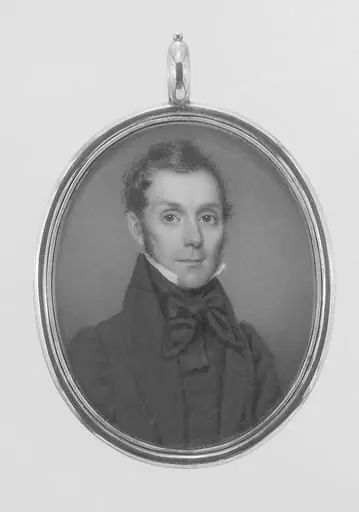
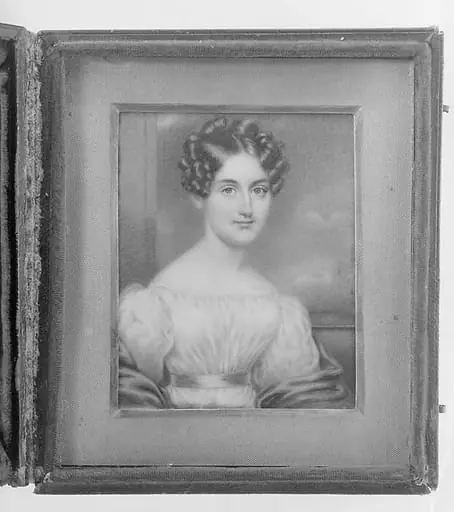
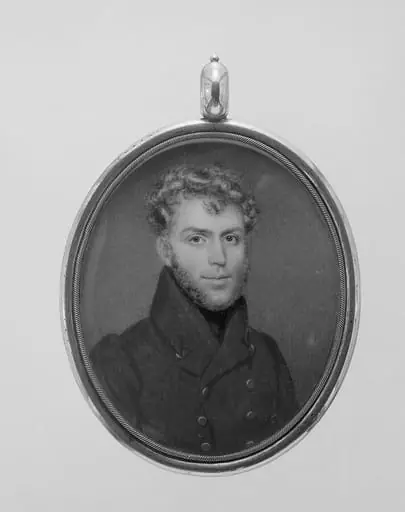
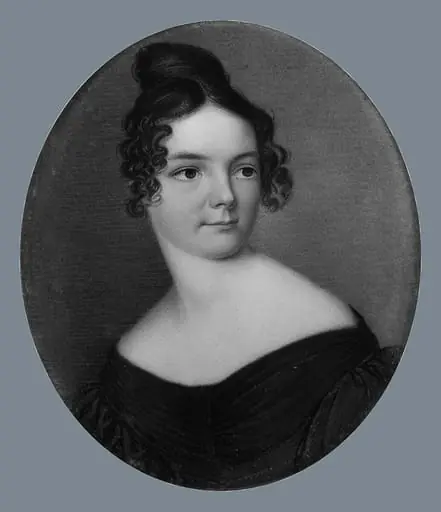
Portrait of a Lady is a watercolor painting by the Romanticist artist Nathaniel Rogers. It dates from 1820 and is held in the collection of the Metropolitan Museum of Art.
About this work
The artist used thin, see-through layers called glazing to build up color without losing the ivory’s shine.
A woman in a black dress looks straight at you. Her white lace collar is so fine you can almost feel it. Tiny brushstrokes on ivory make her skin glow.
This is a miniature—small enough to hold in your hand. In 1820, people carried these like photos in lockets. The artist used thin, see-through layers called glazing to build up color without losing the ivory’s shine.
If you like this, look up other American portraits from the same time.
Overview
This watercolor on ivory, titled Portrait of a Lady, was created by Nathaniel Rogers around 1820. It presents an anonymous woman in a format characteristic of the era. As a miniature, the artwork is small in scale, designed for intimate viewing and personal possession. It is part of the American Wing collection, reflecting early 19th-century American portraiture.
Subject & Meaning
The painting features a woman adorned in a dark gown, her gaze directed forward, engaging the viewer directly. A delicate white lace collar provides a contrast against her attire, rendered with fine detail. The composition emphasizes her presence through a straightforward portrayal, typical of personal portraits intended for close examination.
Technique & Style
Executed in watercolor on an ivory support, this miniature demonstrates the artist's refined technique. Rogers applied thin, translucent layers, a method known as glazing, to gradually build color intensity. This approach allowed the natural luminosity of the ivory surface to remain visible, contributing a subtle glow to the sitter's complexion. The delicate application of pigment through minute brushstrokes further enhances the portrait's intricate detail.
Context
In the early 19th century, miniature portraits served a function akin to personal photographs today. Their compact size made them suitable for carrying, often encased within lockets or small frames, allowing individuals to keep images of loved ones close. This practice underscores the intimate and sentimental value attached to such artworks during the period, preceding the advent of photographic technology.
Artist & collection

Artist
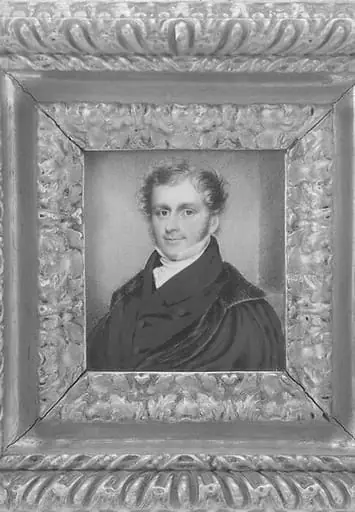
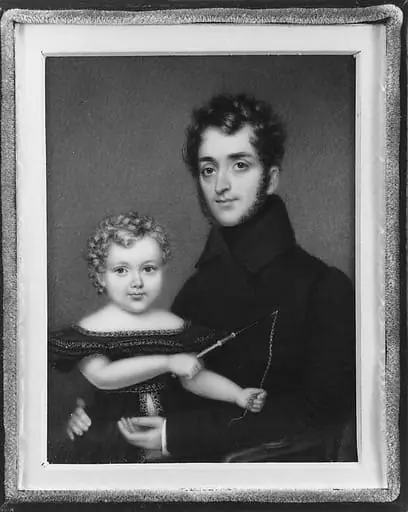
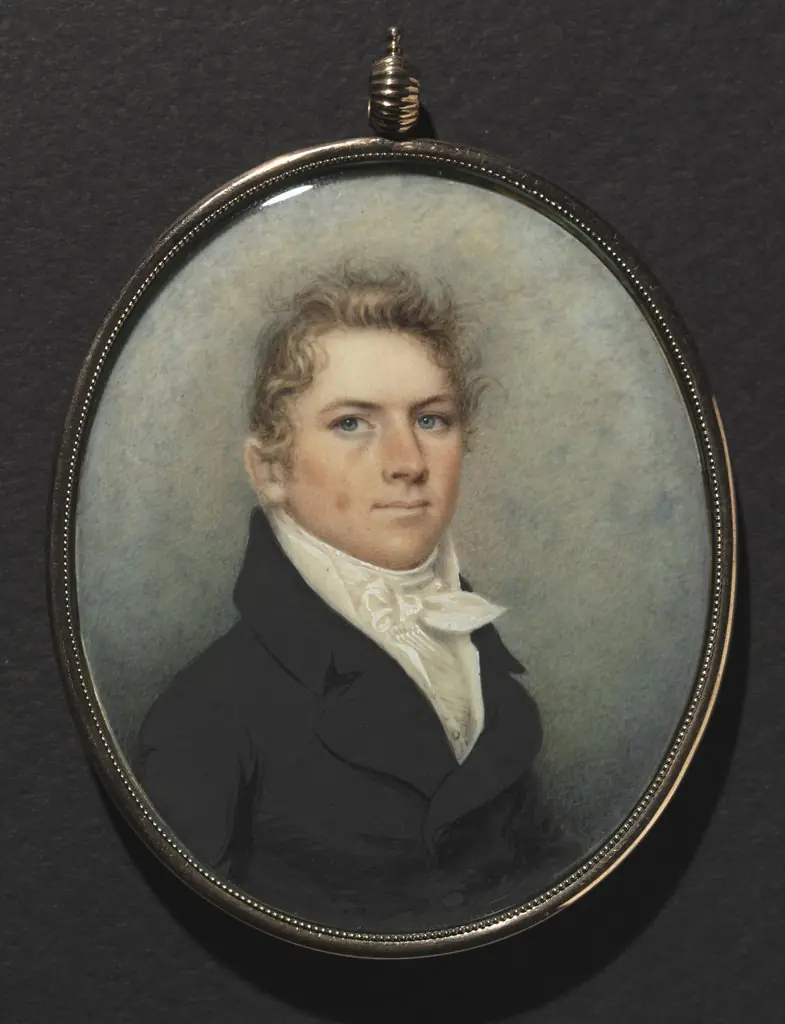
Watercolor on ivory miniatures from the early 1800s show off Nathaniel Rogers' exacting brush.