Artwork
Flori de liliac
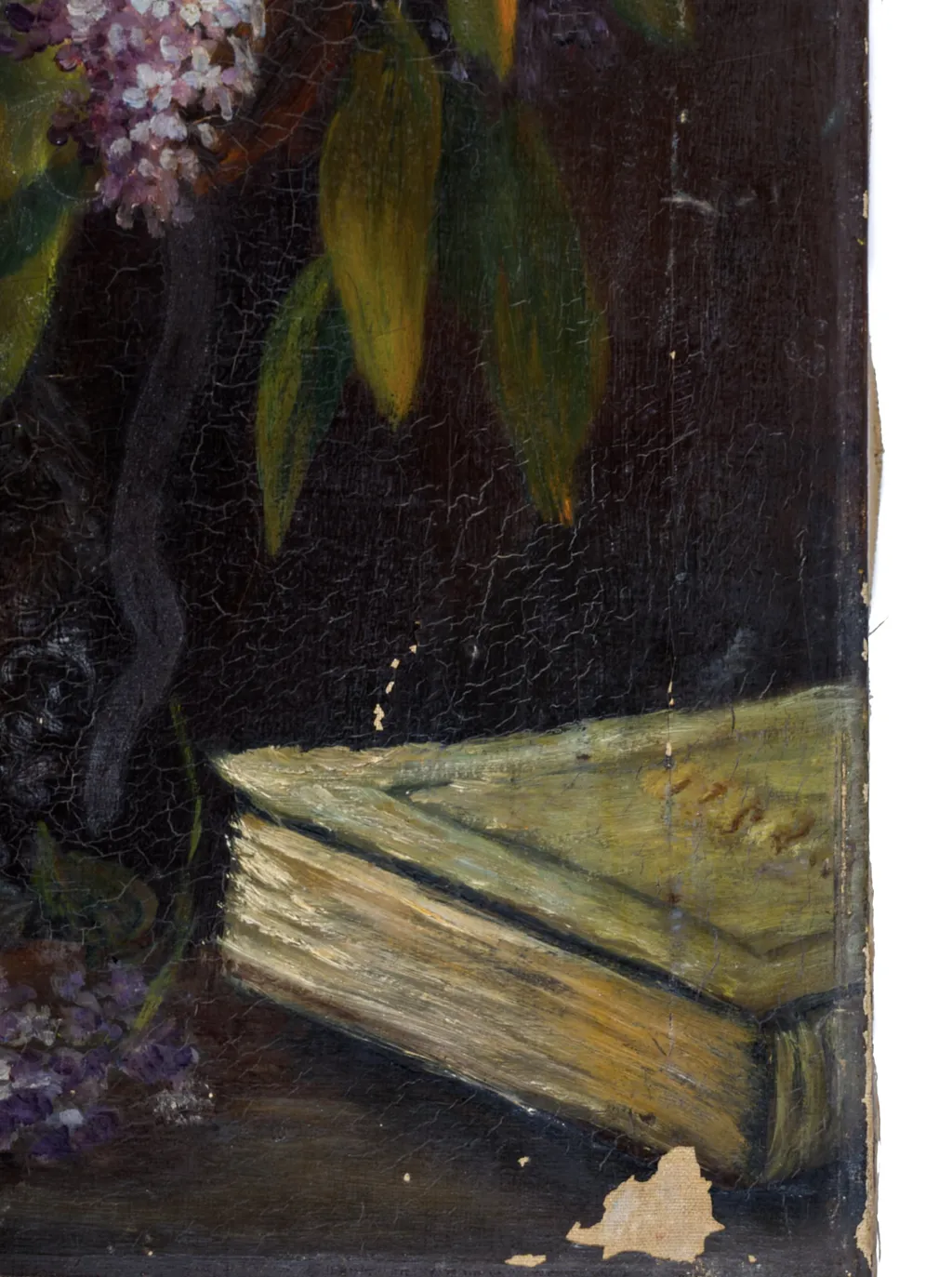
Flori de liliac is an unspecified painting by Nennovici Aurelia. It dates from 1931 and is held in the collection of the Moldova National Museum Complex.
About this work
Overview
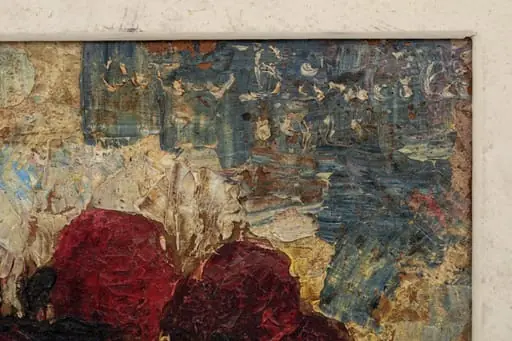
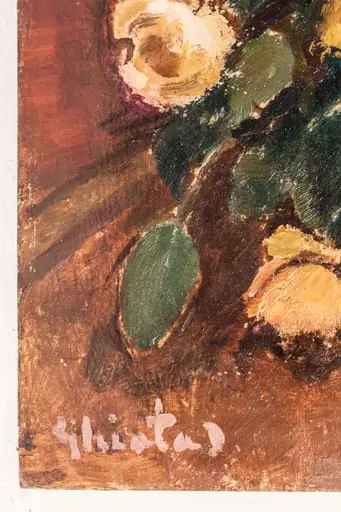
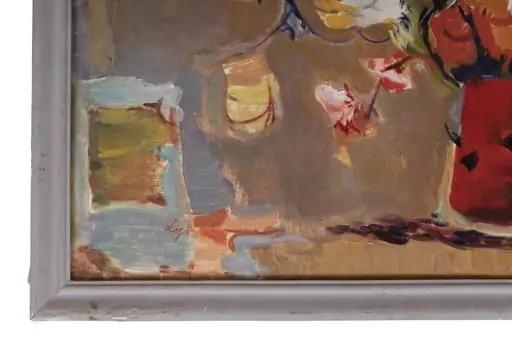
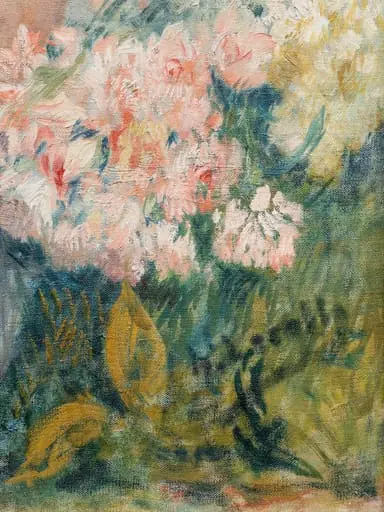
Flori de liliac, created around 1931 by Nennovici Aurelia, is a painting featuring a draped curtain and a cluster of flowers. The composition focuses on a yellowish-green fabric draped over a dark, obscured form, set against a backdrop of purple flowers with white centers and accompanying green leaves.
Subject & Meaning
The subject of Flori de liliac is a still life, emphasizing the interplay between a draped, textured curtain and a group of purple flowers. The meaning, while not explicitly stated, may lie in the contrast between the rough, uneven curtain and the hastily yet vibrantly depicted flowers, potentially exploring themes of texture, spontaneity, and the relationship between foreground and background.
Technique & Style
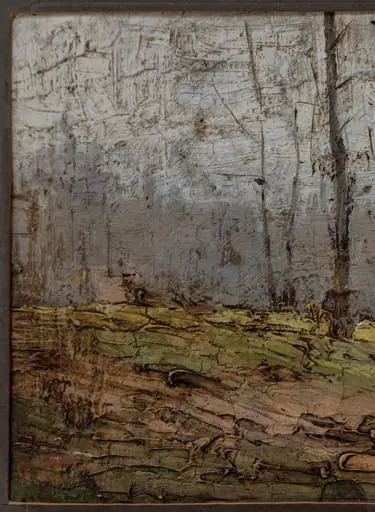
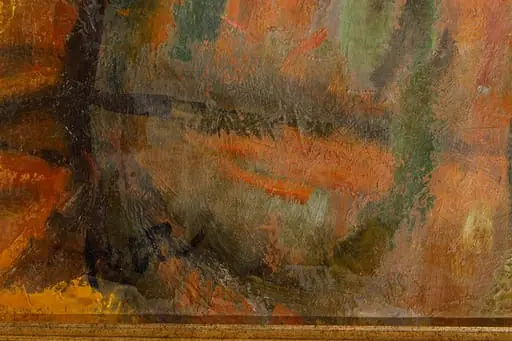
The painting is characterized by thick, uneven brushstrokes, particularly evident on the curtain, which imparts a tactile, impasto quality. The flowers are executed with a quicker, more spontaneous touch, contrasting with the more labored, rough folds of the curtain. In some areas, paint is scraped off, adding to the textured, almost three-dimensional effect.
History & Provenance
Created circa 1931 by Nennovici Aurelia, specific details regarding the artwork's history, exhibitions, or ownership changes are not provided in the available information.
Context
Flori de liliac reflects early 20th-century artistic tendencies towards expressive brushwork and textured painting, akin to impasto techniques seen in various modern movements of the time.
Artist & collection
Artist
Aurelia Nennovici covered walls in her Bucharest apartment with lilacs every spring, then painted them before they wilted—thick, bruise-purple blooms that stayed wet on the canvas for days.