Artwork
The Healing of the Paralytic
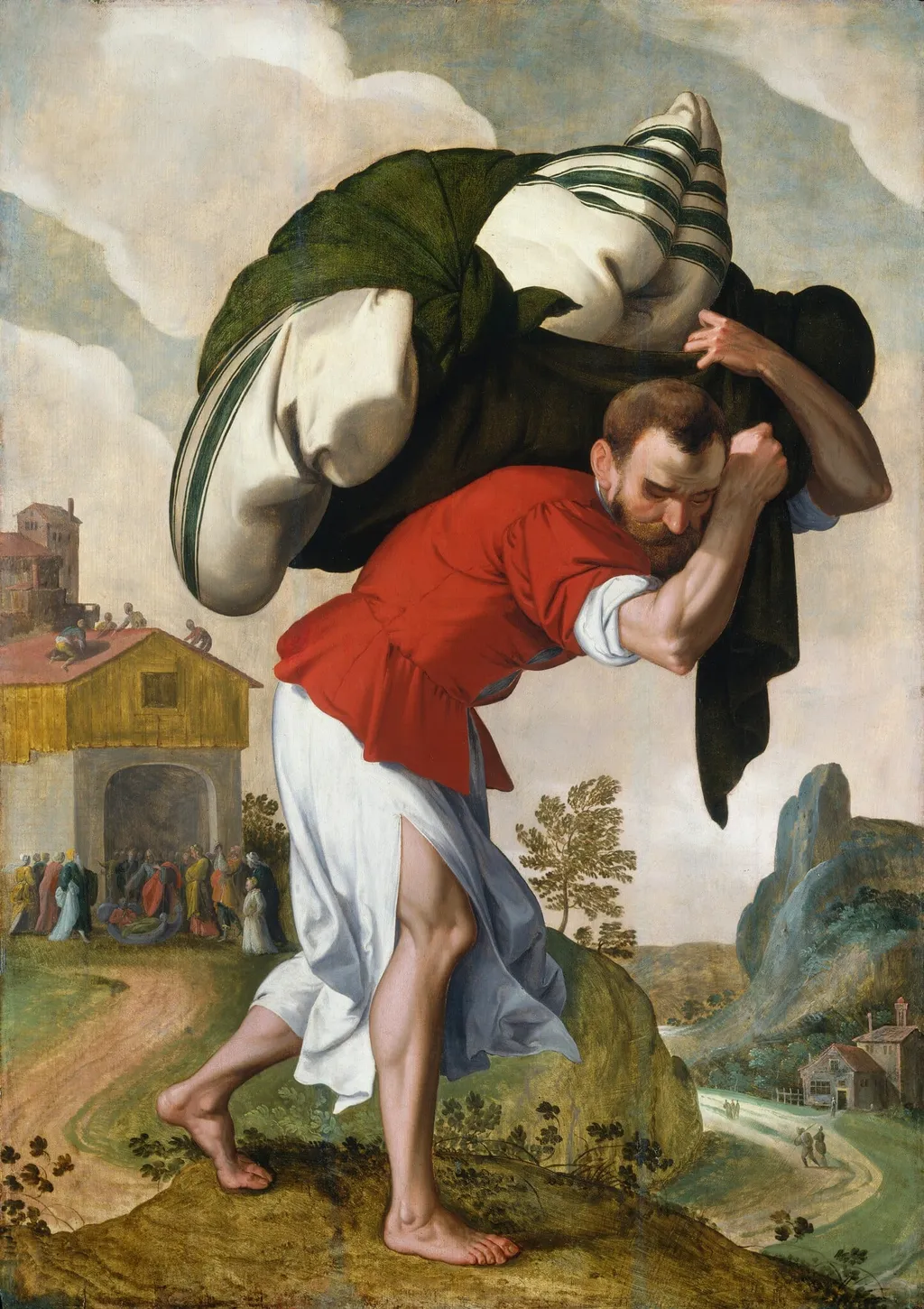
The Healing of the Paralytic is an oil painting. It dates from 1560 and is held in the collection of the National Gallery of Art.
About this work
Overview
Titled "The Healing of the Paralytic," this oil on panel painting depicts a significant biblical event. It portrays one man carrying another through a rural landscape, with a village visible in the distance. This work exemplifies the artistic trends prevalent during the Renaissance, a transformative period of cultural development in Europe.
Subject & Meaning
The painting illustrates a man in a red shirt and white trousers bearing another individual, clad in a green cloak and white pants, on his back.
The painting illustrates a man in a red shirt and white trousers bearing another individual, clad in a green cloak and white pants, on his back. They traverse a dirt path, suggesting a journey or passage. The title indicates this scene refers to the biblical account of the paralytic, who, after being healed, was instructed to take up his bed and walk, symbolizing divine intervention and restoration.
Technique & Style
Executed in oil on panel, the painting demonstrates the meticulous detail and rich color characteristic of Renaissance artistry. The rendering of figures, their drapery, and the landscape elements like hills and distant architecture, reflects the period's emphasis on naturalistic representation and spatial depth, contributing to a coherent and engaging visual narrative.
Context
This artwork is situated within the broader context of the Renaissance, a transformative cultural movement spanning several centuries in Europe. Artists during this era often drew inspiration from classical antiquity, emphasizing humanism, realism, and a renewed interest in perspective and anatomical accuracy, which are subtly evident in the composition and rendering.
Own this work as a print
Artist & collection