Artwork
Quayside scene
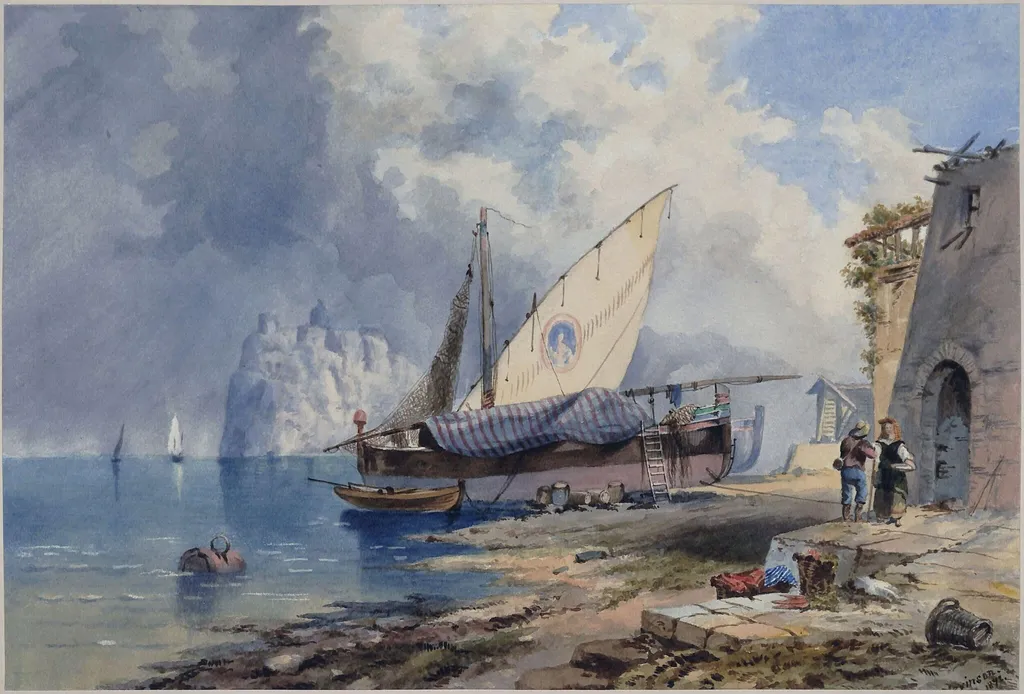
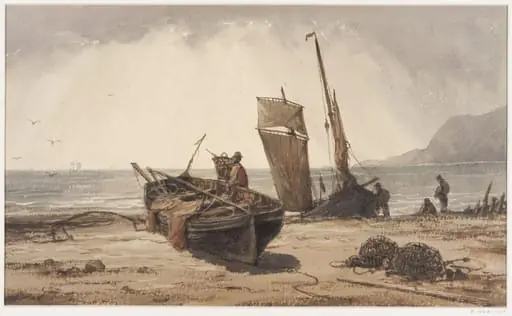
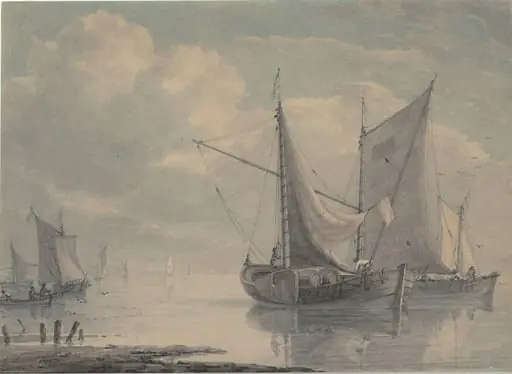
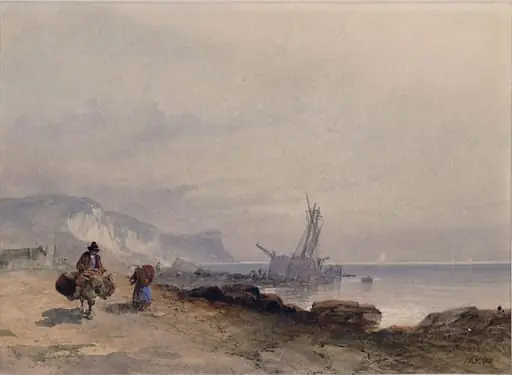
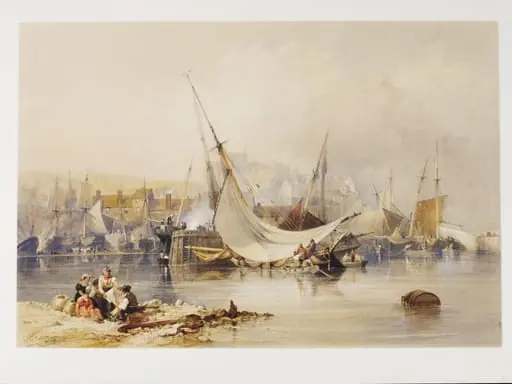
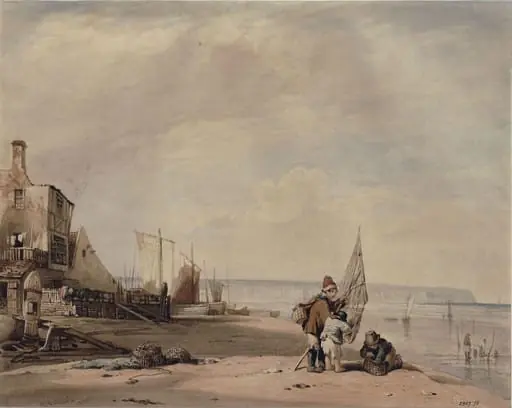
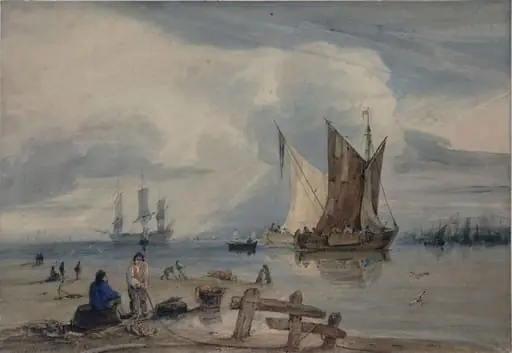
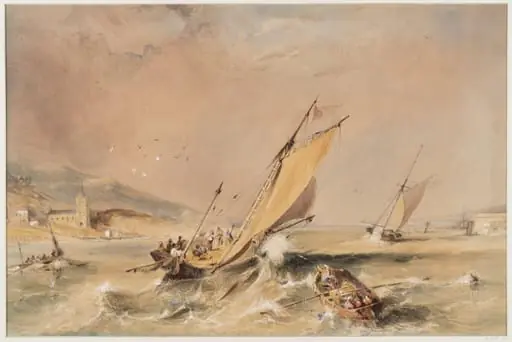
Quayside scene is a watercolor work on paper by the Impressionist artist Edward Bonney Nevinson. It dates from 1872 and is held in the collection of the Victoria and Albert Museum. A watercolour by E.
About this work
Overview
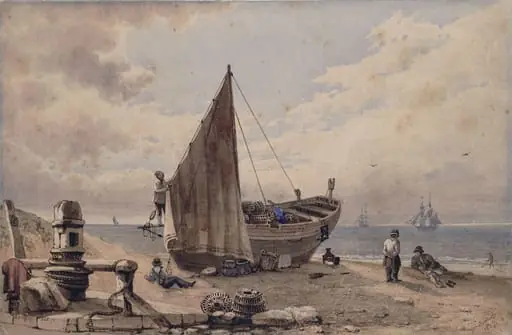
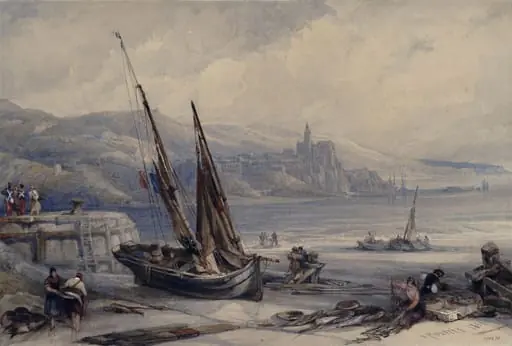
The composition centers on a large vessel with striped sails anchored near a stone archway, its sail bearing a small, stylized face.
A watercolour by E.B. Nevinson captures a quiet moment on Naples’s waterfront, signed and dated by the artist. The composition centers on a large vessel with striped sails anchored near a stone archway, its sail bearing a small, stylized face. Calm waters, scattered clouds, and a distant swimmer suggest a tranquil, unremarkable day. Two figures stand near the shore, their stillness reinforcing the scene’s quietude.
Subject & Meaning
The painting presents an unembellished view of maritime routine—no grand narrative, no theatricality. The figures, one in a dark coat and another with a wide-brimmed hat, appear engaged in ordinary tasks, while the swimmer and small boat imply local activity. The painted face on the sail may reflect folk tradition or sailor superstition, adding subtle cultural texture without overt symbolism.
Technique & Style
Nevinson employs transparent watercolour washes to suggest light and atmosphere, with loose, economical brushwork defining the boat’s sails and the rocky shore. The sky is rendered with soft, uneven clouds, and the sea’s surface is barely hinted at, relying on negative space. The simplicity of the sail’s face and the restrained palette reinforce a documentary tone over decorative flourish.
History & Provenance
The work is attributed to E.B. Nevinson, a 19th-century British artist known for topographical watercolours. Signed and dated, it likely originated from a sketch made during travel in southern Italy. Its survival suggests it was retained by the artist or a private collector, though no public record of early ownership is documented.
Context
During the 1800s, British artists frequently traveled to Italy, producing watercolours of coastal towns for private collections. Naples, with its layered architecture and maritime life, was a common subject. Nevinson’s work aligns with this tradition, valuing observation over romanticism, reflecting a broader interest in authentic, everyday scenes.
Legacy
The painting contributes to a modest but persistent body of 19th-century British watercolours documenting Mediterranean ports. While not widely exhibited, it exemplifies the quiet precision of travel sketches made outside academic circles. Its preservation offers insight into how ordinary coastal life was recorded by amateur and professional artists alike.
Artist & collection
Artist
Edward Bonney Nevinson painted quiet, everyday scenes in watercolour during the late 1800s.