Artwork
The Virgin of Guadalupe with the Four Apparitions
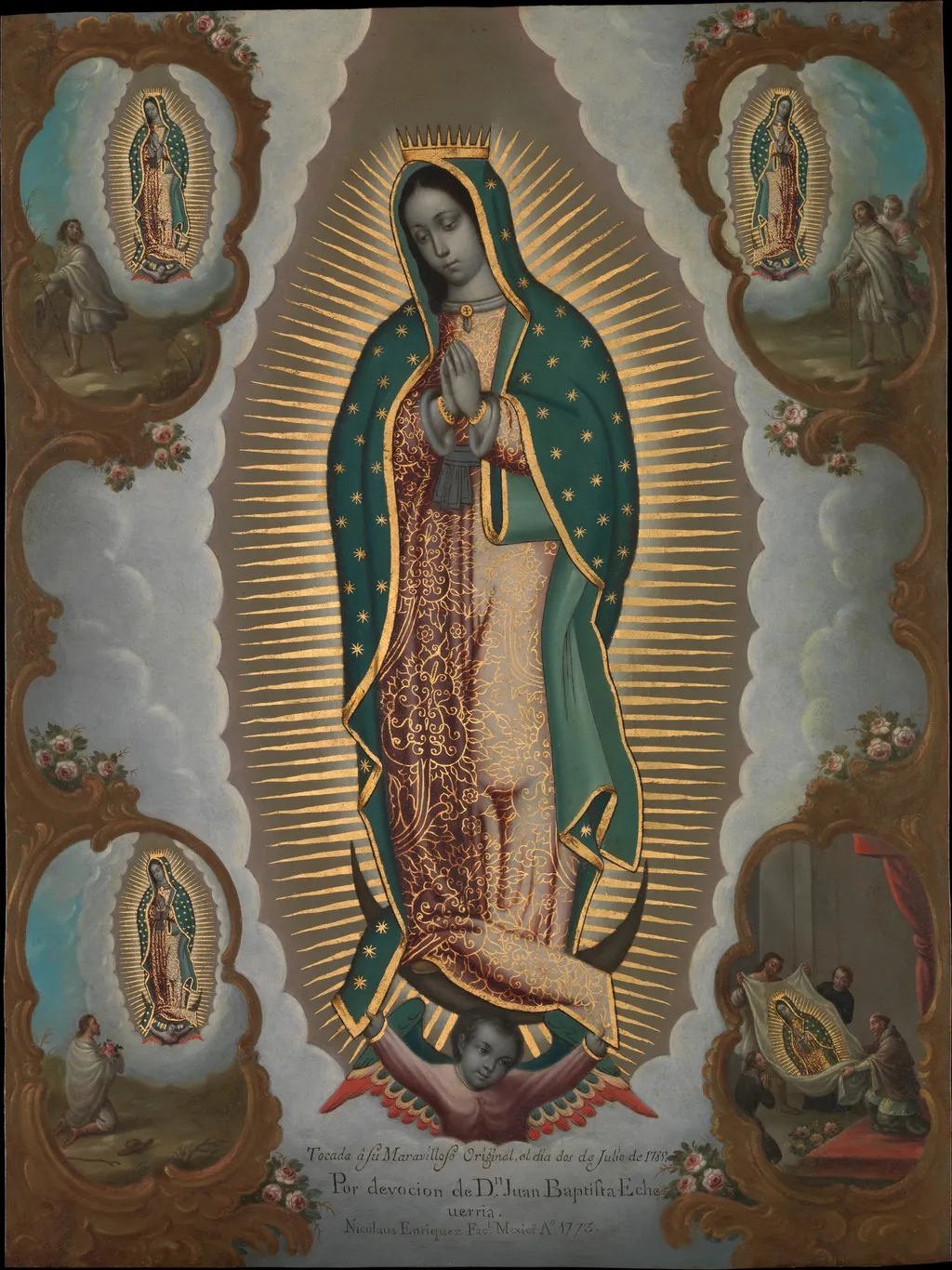
The Virgin of Guadalupe with the Four Apparitions is an oil painting by the Rococo painting artist Nicolás Enríquez. It dates from 1773 and is held in the collection of the Metropolitan Museum of Art.
About this work
Around her are four smaller scenes with the same figure in each, all framed like windows.
This painting shows a robed figure with dark skin standing on a cloud, holding a baby. Around her are four smaller scenes with the same figure in each, all framed like windows. The colors are bright—gold stars, green and red robes, and soft blues in the sky. Tiny people kneel below, looking up.
The artist signed it in 1773, noting it was made for devotion. The main figure’s face is calm, but the gold rays behind her glow like sunlight.
Look up chiaroscuro to see how light and shadow create drama in paintings.
Overview
This painting, titled The Virgin of Guadalupe with the Four Apparitions, was created by Nicolás Enríquez in 1773. Executed on copper, the work is a devotional image centered on the figure of Mary. It is currently part of the collection at The Metropolitan Museum of Art, representing a significant example of religious art from the period.
Subject & Meaning
The central image portrays the Virgin of Guadalupe as a robed figure with dark skin, standing on a cloud while cradling an infant. Surrounding this primary depiction are four smaller, window-like scenes, each illustrating a distinct apparition of the Virgin. Below, small figures kneel in reverence, gazing upwards. The artist's signature from 1773 indicates the painting's original purpose as an object of devotion.
Technique & Style
Enríquez employed a vibrant palette in this composition, featuring striking gold stars, rich green and red robes, and soft blue tones for the sky. The main figure's expression conveys serenity, while the golden rays emanating from behind her create a luminous effect, suggesting divine light. This use of bright, contrasting colors and radiant light emphasizes the sacred nature of the subject.
History & Provenance
Created by Nicolás Enríquez in 1773, this painting bears the artist's signature, which also notes its intended use for private or public devotion. Its presence in The Metropolitan Museum of Art today underscores its historical and artistic value, preserving an example of 18th-century religious painting from the Americas.
Own this work as a print
Artist & collection
