Artwork
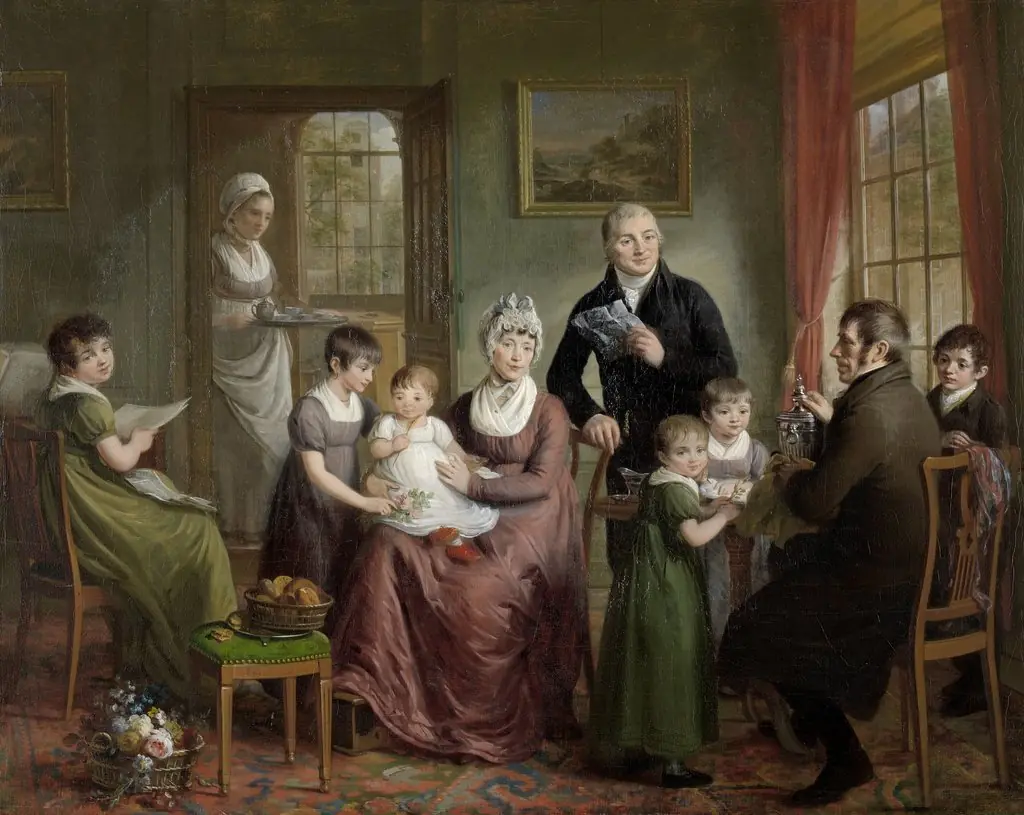
Portrait of Aernout van Beeftingh, his Wife Jacoba Maria Boon and their Children
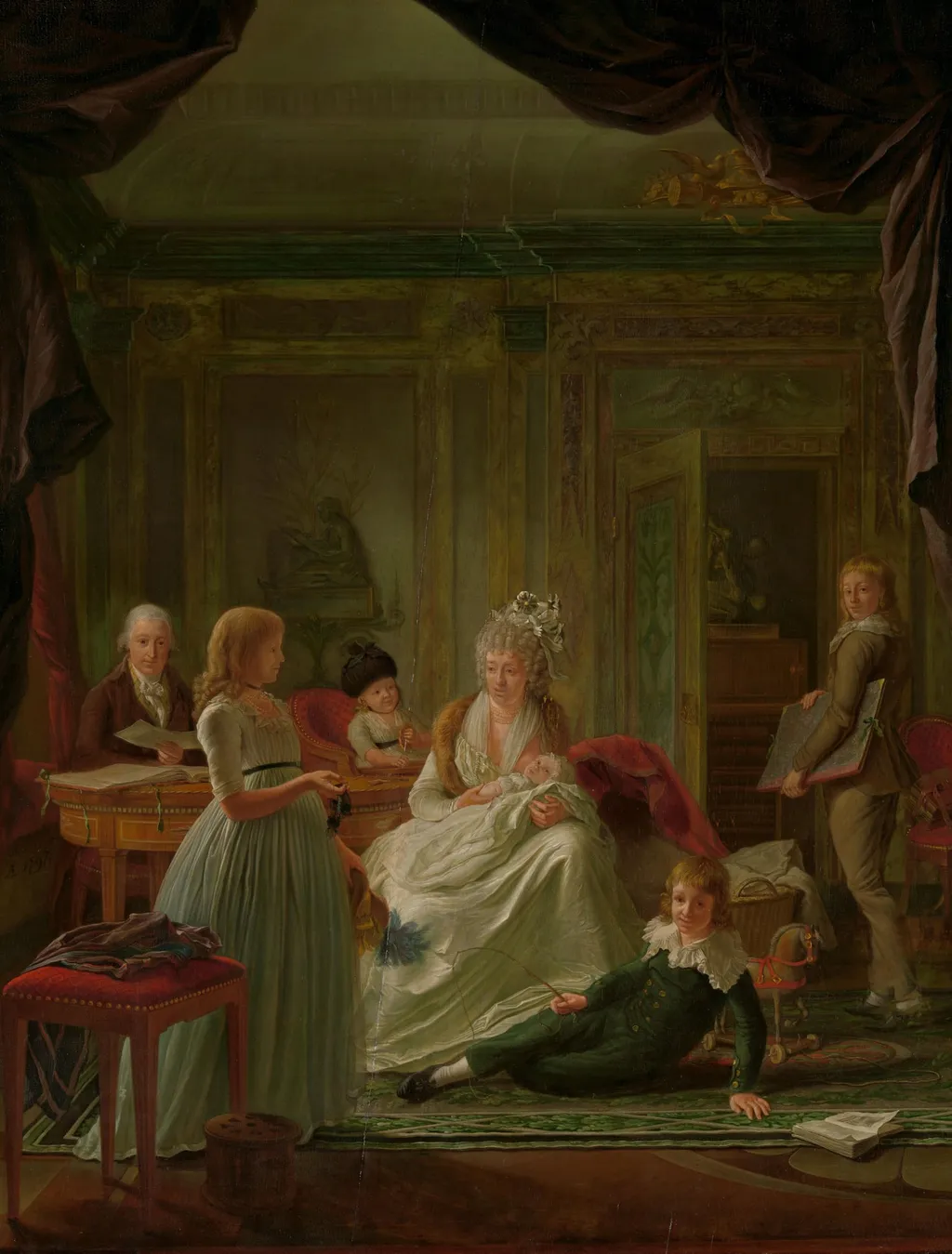
Portrait of Aernout van Beeftingh, his Wife Jacoba Maria Boon and their Children is an unspecified painting by the Rococo painting artist Nicolaes Muys. It dates from 1797 and is held in the collection of the Rijksmuseum.
About this work
You see a family of five in a cozy room: dad holding a print, mom breastfeeding, two boys playing, and a toddler in a high chair eating a cookie.
You see a family of five in a cozy room: dad holding a print, mom breastfeeding, two boys playing, and a toddler in a high chair eating a cookie.
Most portraits from 1797 show stiff poses and fancy clothes. Here, the mom nurses openly—rare for the time. The kids act like kids, not little adults. Even the padded hat on the toddler feels real, like a parent’s worry.
To see more everyday scenes like this, visit the Rijksmuseum.
Overview
Painted in 1797, this work depicts the Van Beeftingh family in a domestic setting, breaking from the formal conventions of portraiture common at the time. Rather than rigid poses and elaborate attire, the scene captures quiet, unposed moments of daily life: nursing, reading, playing, and eating. The composition feels intimate, grounded in observation rather than ceremony.
Subject & Meaning
The family is shown engaged in ordinary, private activities—nursing, studying prints, handling toys, and eating. These actions suggest values of domestic harmony and intellectual curiosity. The mother’s nursing and the child’s padded headgear reflect practical care, while the father’s engagement with art hints at cultural interests. The scene elevates familial routine into a quiet affirmation of private life.
Technique & Style
The artist employs soft lighting and naturalistic detail to enhance realism. Textures of fabric, wood, and skin are rendered with subtle precision. Postures are relaxed, avoiding theatricality; children are depicted with unidealized gestures, such as clutching a whip or chewing a biscuit. The setting is rendered with modest furnishings, reinforcing the absence of aristocratic grandeur.
History & Provenance
Commissioned by Aernout van Beeftingh, a Dutch collector and merchant, the painting remained within the family for generations before entering a public collection. Its survival is notable, as informal domestic scenes from this period were rarely preserved. The work’s authenticity is supported by documented family records and stylistic alignment with regional portraiture of the late 18th century.
Context
In late 18th-century Holland, portraiture typically emphasized status through formal dress and symbolic props. This painting diverges by focusing on unguarded moments, aligning with emerging Enlightenment ideals of natural behavior and familial affection. Similar domestic scenes were rare in commissioned art, making this work an unusual example of middle-class self-representation during a period of social change.
Legacy
The painting stands as an early example of domestic realism in Dutch portraiture, influencing later 19th-century genre scenes. Its emphasis on authentic childhood behavior and maternal care challenged prevailing norms. Today, it is valued not for grandeur but for its quiet humanity, offering insight into the private lives of non-noble families in the Dutch Republic.
Own this work as a print
Artist & collection

 The Duke of Chartres and his Family at the Palais Royal
 Portrait of the Family of the 1st Viscount of Santarém
 Actors Before a Performance
 The Waagepetersen Family
 Portret van de familie Villers
 Familien Nathanson
 Portrait of the Family of Adrianus Bonebakker with Dirk L. Bennewitz
 Portrait of the Saltykov Family
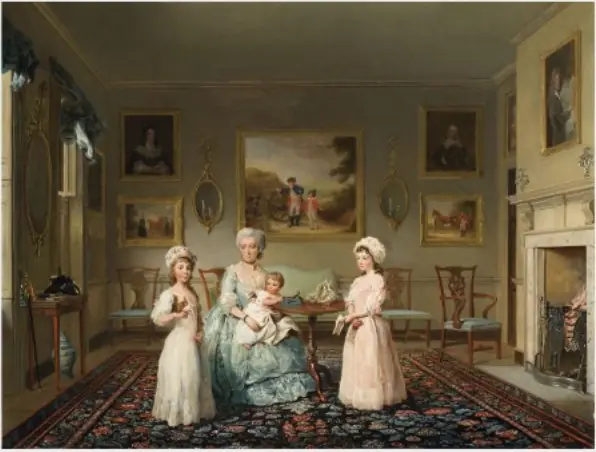 Portrait of Mrs Congreve with her Children
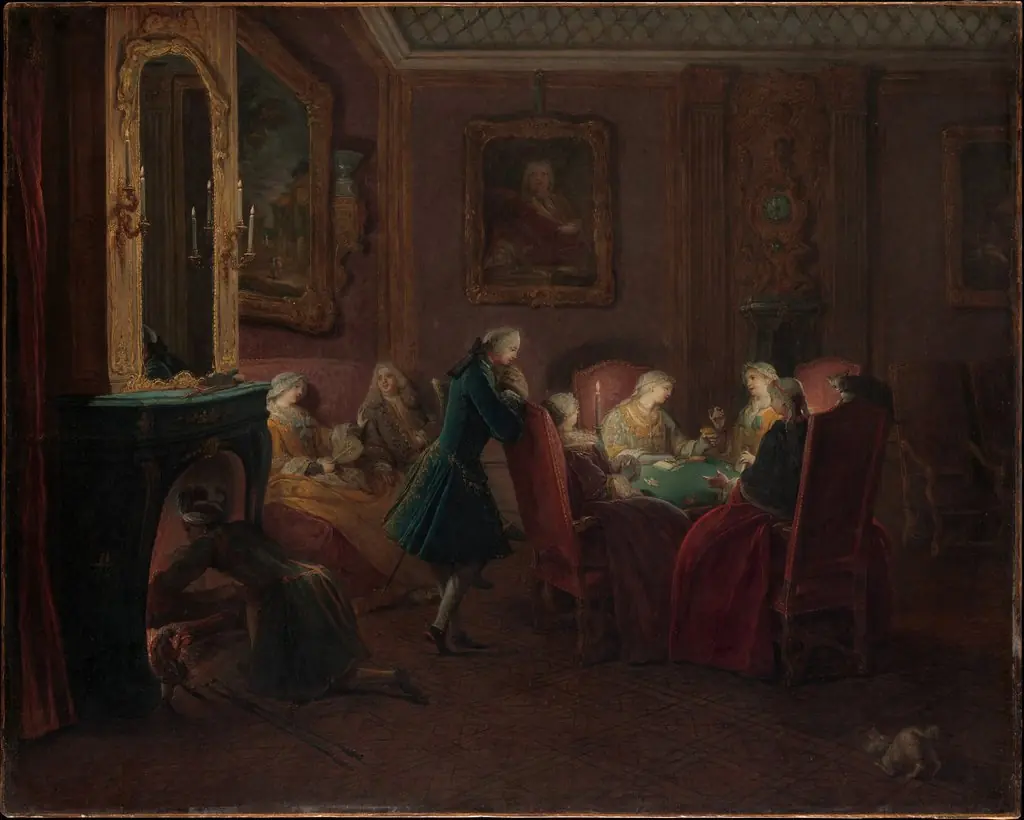 Card Players in a Drawing Room
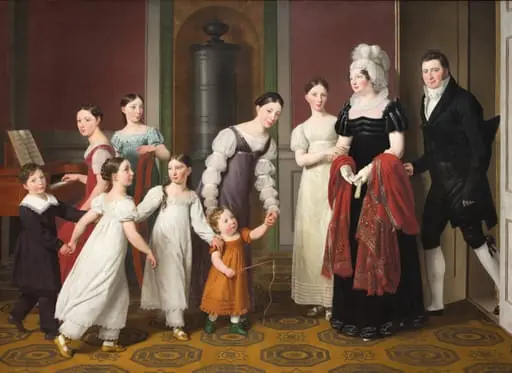 The Nathanson Family