Artwork
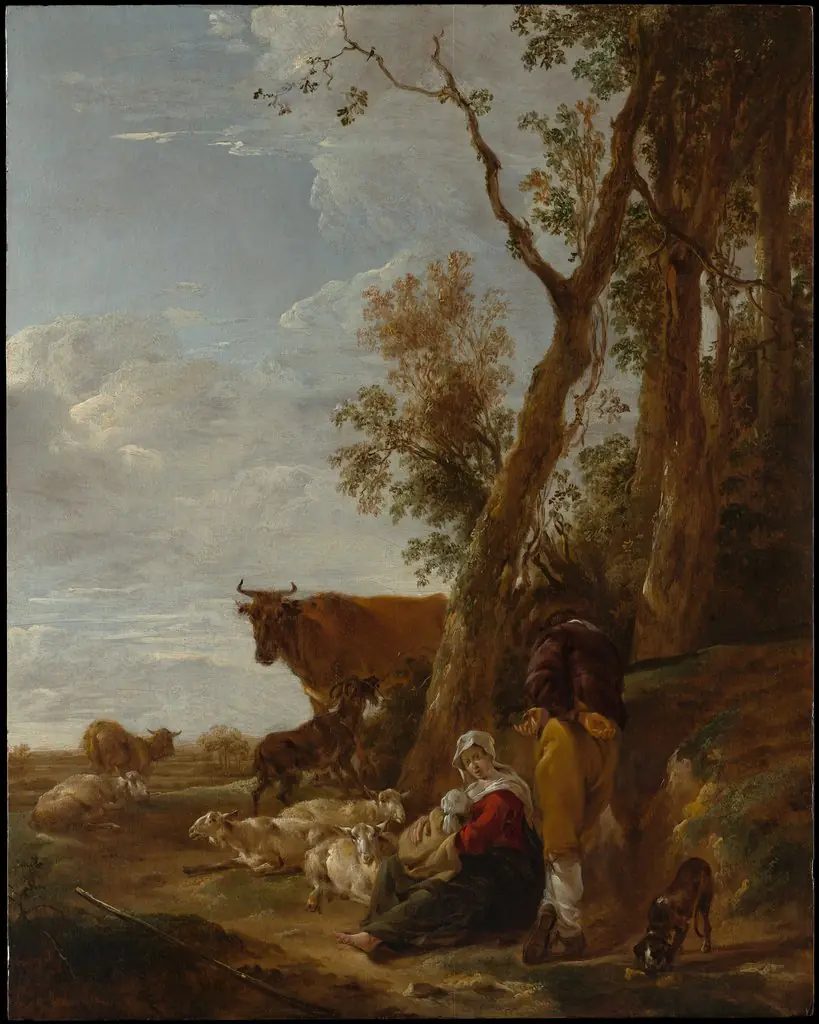
A Shepherd and a Shepherdess with Animals
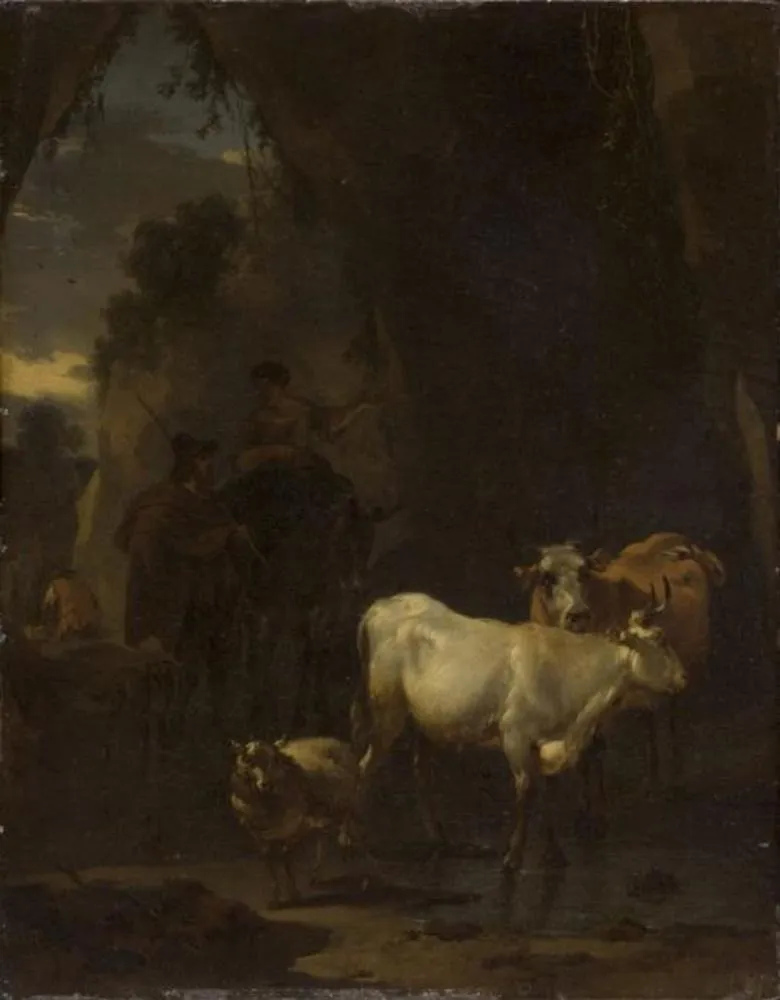
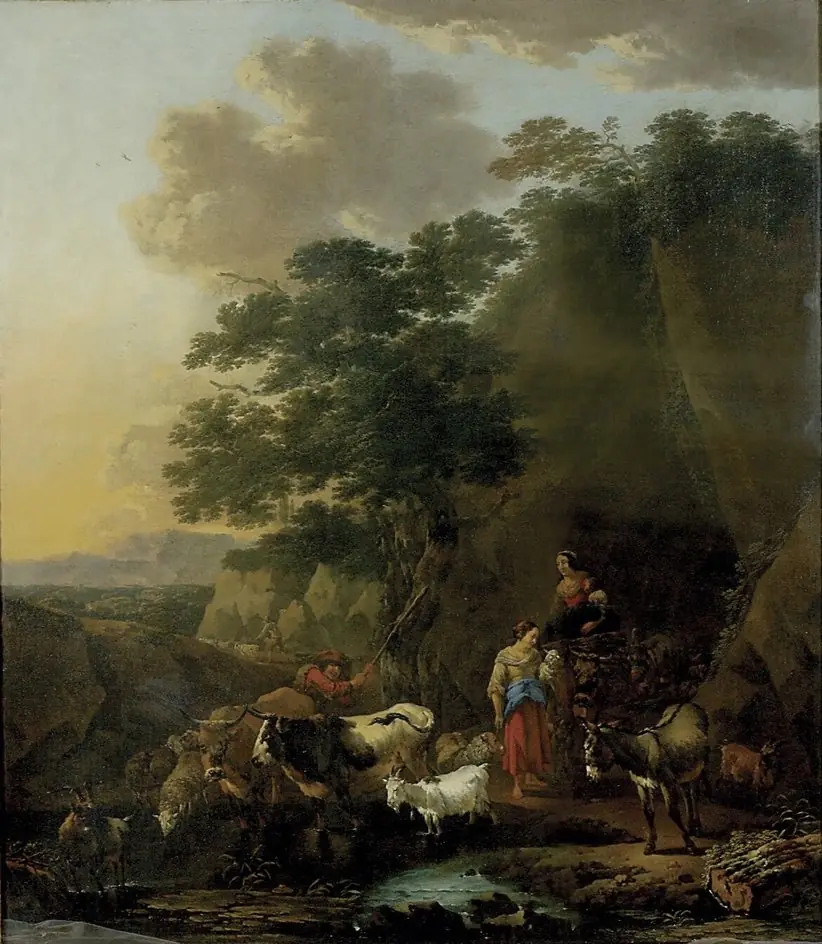
A Shepherd and a Shepherdess with Animals is an oil painting by the Dutch Golden Age artist Nicolaes Pieterszoon Berchem. It dates from 1660 and is held in the collection of the Philadelphia Museum of Art.
About this work
You can learn more about this type of art by looking at the work of Nicolaes Pieterszoon Berchem.
This painting is called A Shepherd and a Shepherdess with Animals.
It was made by Nicolaes Pieterszoon Berchem in 1660.
The Philadelphia Museum of Art has this painting, and it's made with oil paint.
I don't know what the painting looks like, but I know it exists.
The artist made it a long time ago, and it's still around today.
You can learn more about this type of art by looking at the work of Nicolaes Pieterszoon Berchem.
Overview
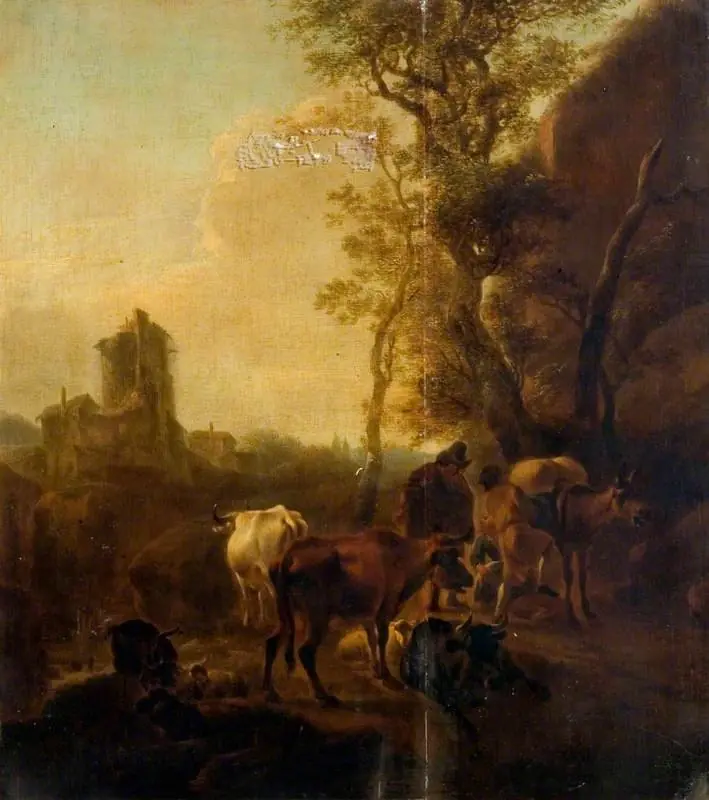
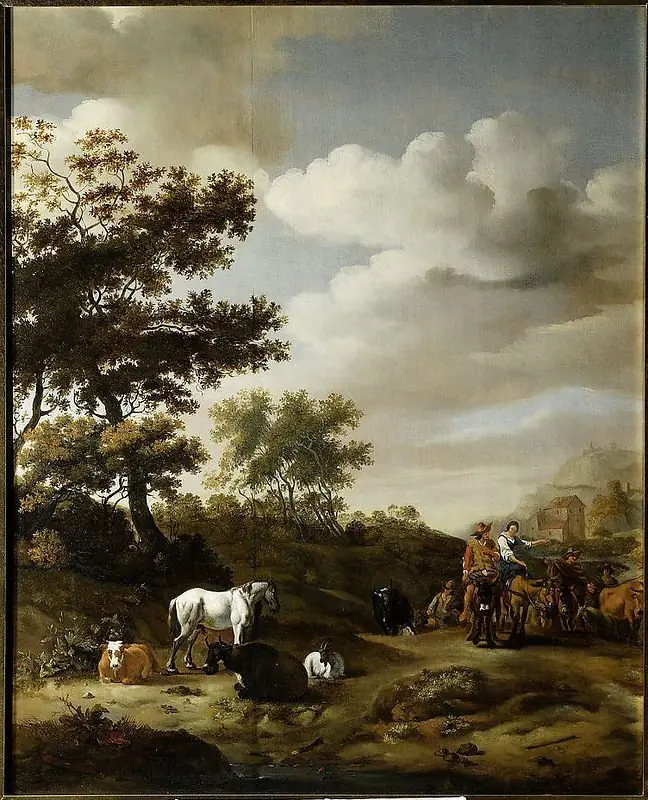
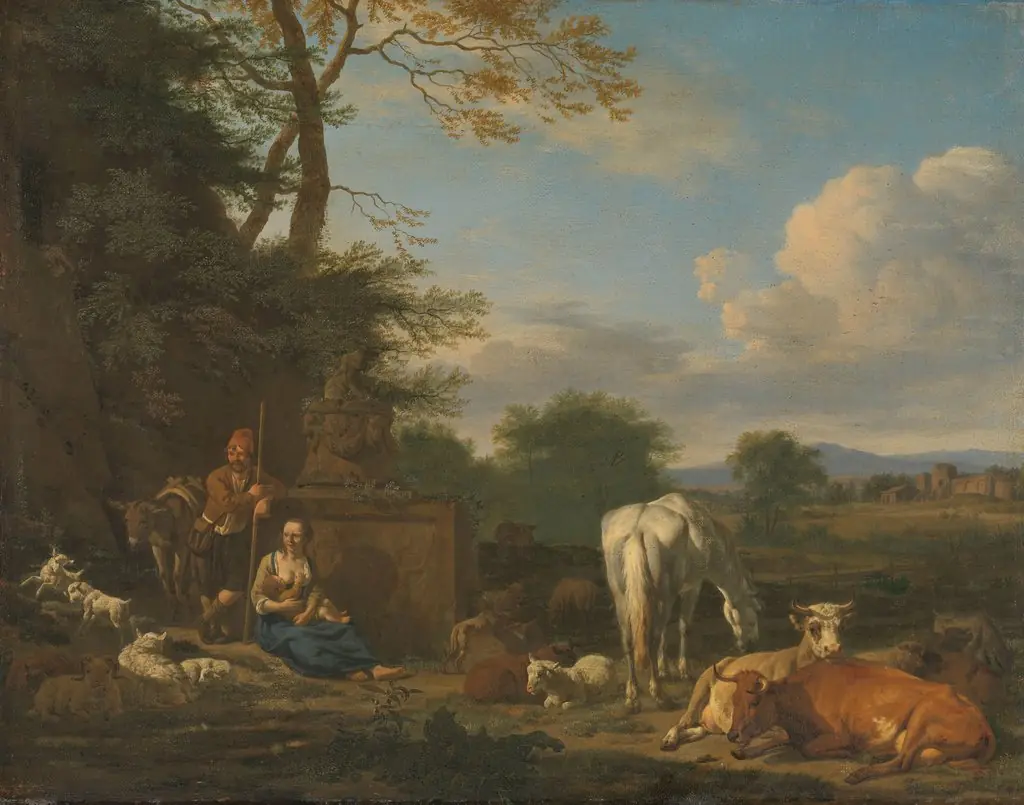
Painted in 1660 by Nicolaes Pieterszoon Berchem, this oil-on-canvas work presents a quiet rural scene featuring a shepherd and shepherdess accompanied by livestock. It reflects the Dutch Italianate landscape tradition, in which Northern European artists idealized the Italian countryside through imagined pastoral settings. The painting is held in the collection of the Philadelphia Museum of Art, where it contributes to the broader understanding of 17th-century Dutch genre painting.
Subject & Meaning
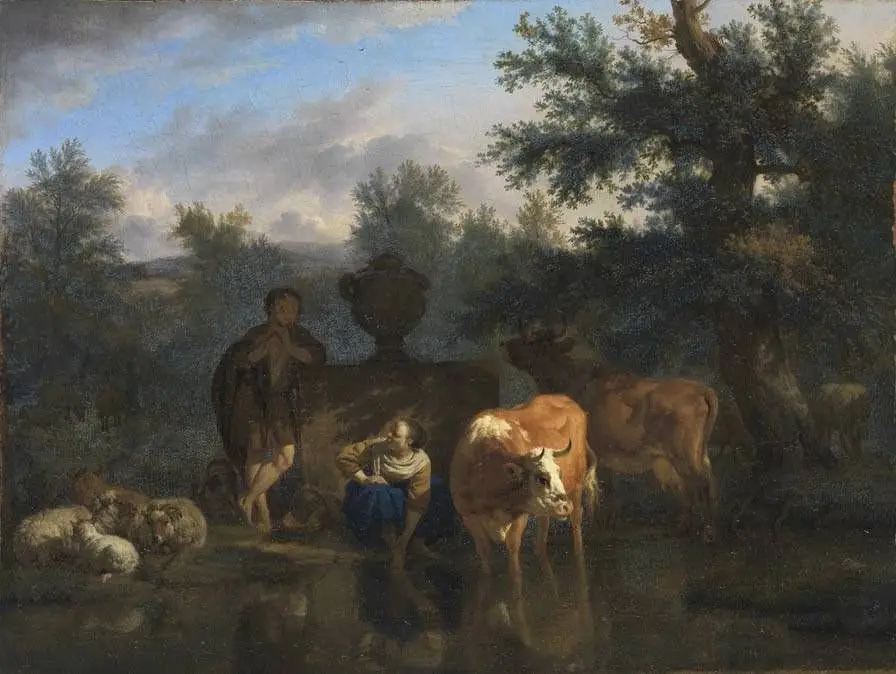
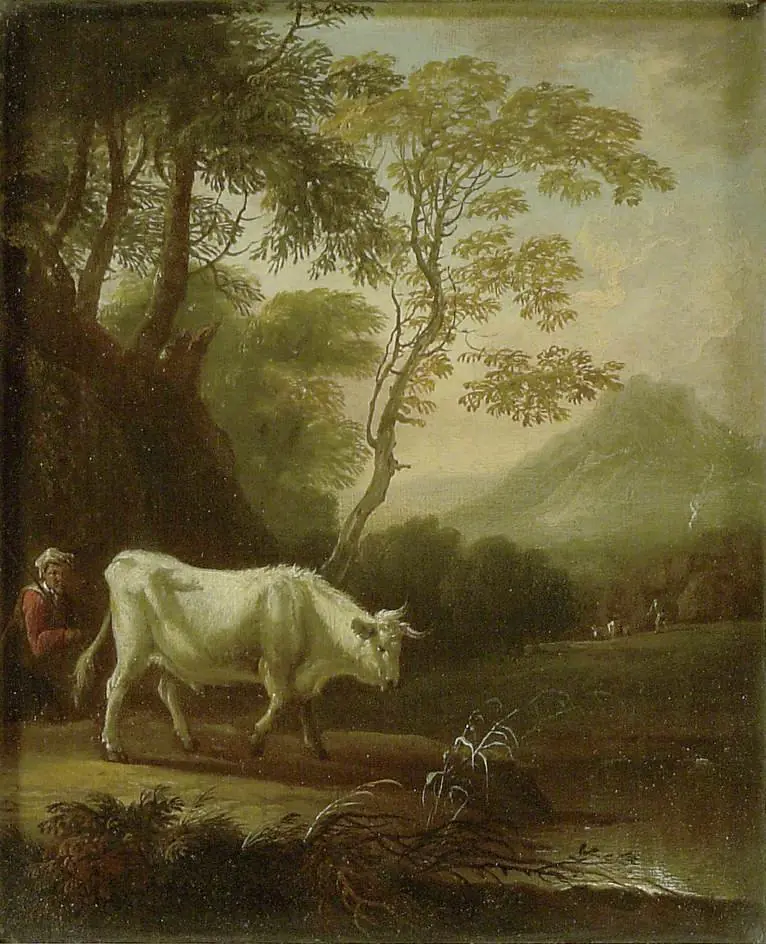
The figures—a shepherd and shepherdess—are depicted in tranquil repose amid grazing animals, evoking an idealized vision of rural life rather than a specific moment. Their presence is not narrative-driven but symbolic, suggesting harmony between humans and nature. The composition draws on classical pastoral themes, common in Renaissance and Baroque art, to convey serenity and moral simplicity, values admired in Dutch society despite its urbanizing reality.
Technique & Style
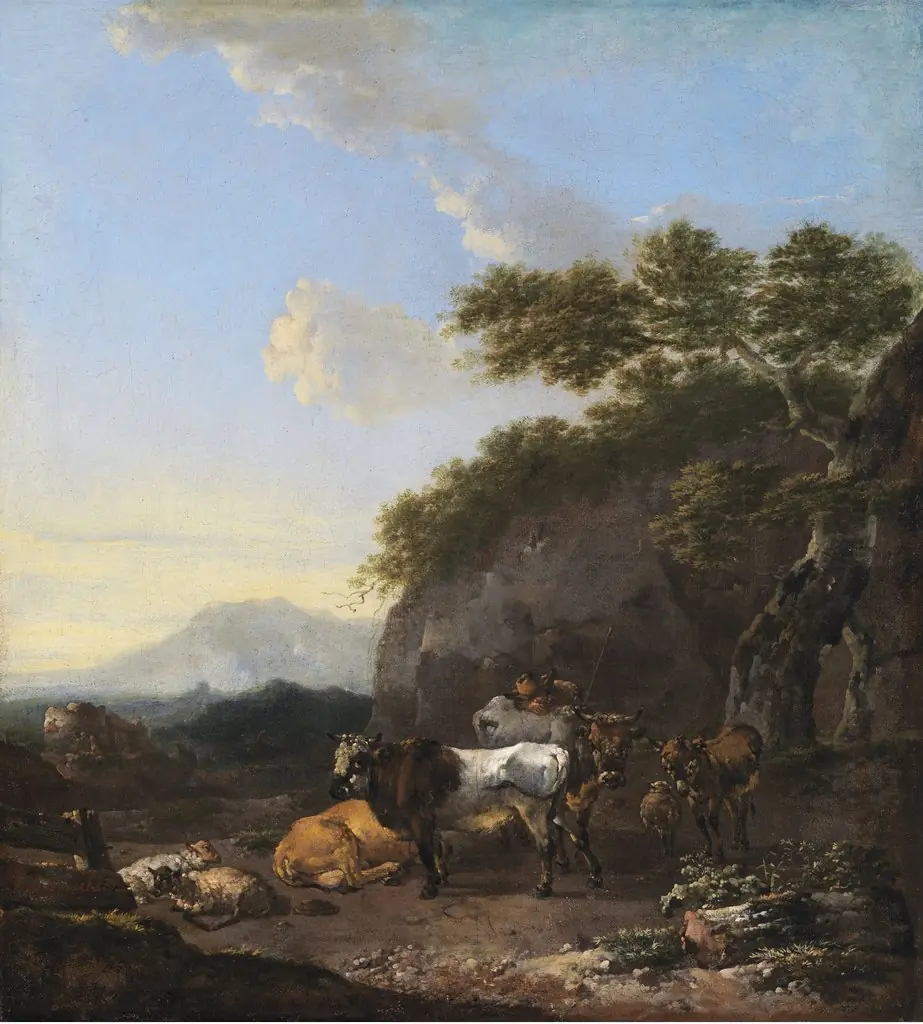
Berchem employed soft, luminous brushwork to render atmospheric depth and naturalistic lighting, characteristic of Dutch Italianate painting. The animals are rendered with careful attention to anatomy and texture, while the landscape blends real and imagined elements—rolling hills, distant ruins, and scattered trees—to create a timeless setting. His use of warm, earthy tones and subtle gradations of light enhances the calm, poetic mood of the scene.
History & Provenance
Created during the height of Berchem’s career, the painting entered the Philadelphia Museum of Art’s collection in the 20th century, though its earlier ownership history remains largely undocumented. It was likely produced for a private Dutch collector interested in idealized landscapes. As a work from the artist’s mature period, it exemplifies his mature synthesis of Italianate composition and Northern European realism.
Context
In mid-17th-century Holland, demand grew for landscapes that offered escape from urban life. Artists like Berchem, who had not traveled to Italy but studied its imagery through prints and sketches, constructed imagined pastoral scenes that appealed to bourgeois tastes. These works balanced classical references with Dutch attention to detail, creating a hybrid style that dominated the market for decades.
Legacy
Berchem’s pastoral compositions influenced later landscape painters across Europe, particularly in their blending of idealism and observation. While not widely celebrated today, his works remain important for understanding how Dutch artists reinterpreted foreign landscapes to suit domestic sensibilities. This painting stands as a quiet example of a genre that shaped European visual culture well into the 18th century.
Artist & collection
Artist
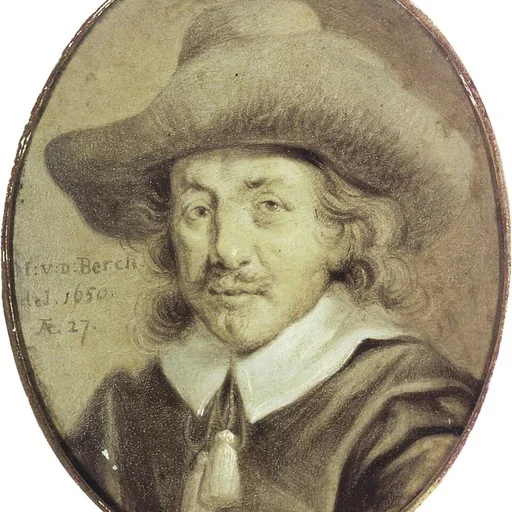
Nicolaes Pieterszoon Berchem (1 October 1620 – 18 February 1683) was a highly esteemed and prolific Dutch Golden Age painter of pastoral landscapes, populated with mythological or biblical figures, but also of a number of allegories and…