Artwork
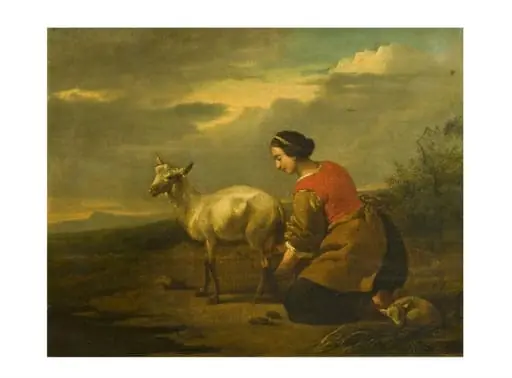
Woman Milking a Ewe
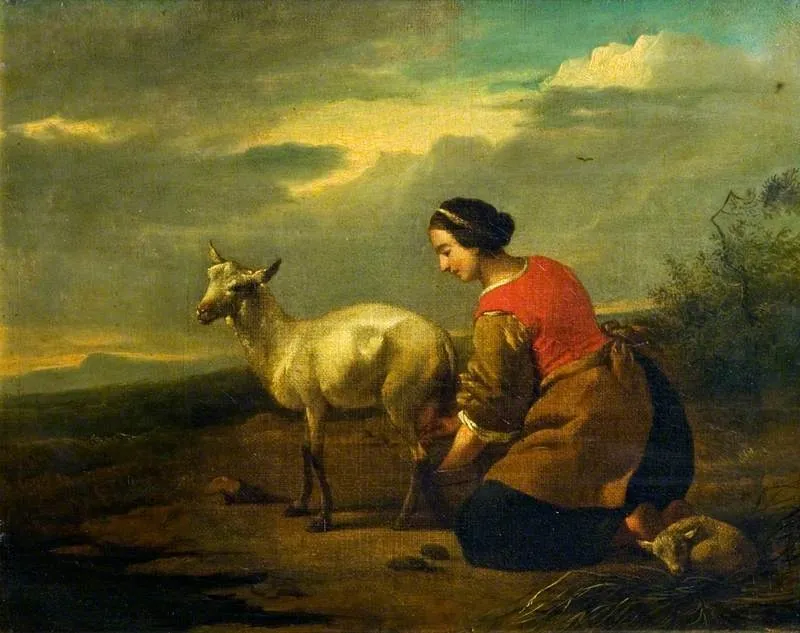
Woman Milking a Ewe is an oil painting by the Dutch Golden Age artist Nicolaes Pieterszoon Berchem. It dates from 1662 and is held in the collection of the Victoria and Albert Museum.
About this work
Overview
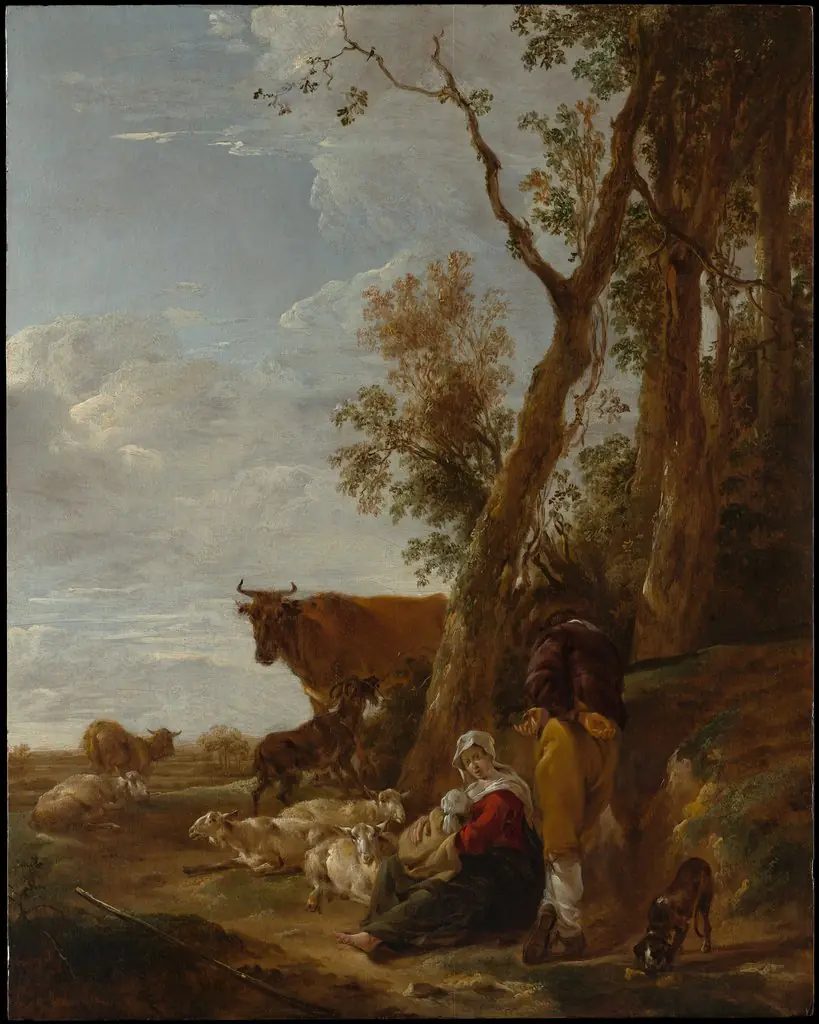
Woman Milking a Ewe is an oil painting created by Nicolaes Pieterszoon Berchem around 1662. It depicts a serene rural scene of a woman milking a ewe, set against a backdrop of trees and a cloudy sky.
Subject & Meaning
The painting captures a moment of everyday pastoral life, with a woman in a red dress and brown apron gently milking a calm white ewe. The scene conveys a sense of peacefulness and tranquility.
Technique & Style
Berchem's characteristic style blends rustic realism with subtle nods to classical influences. The work features chiaroscuro, a technique emphasizing contrasts of light and dark to create depth and volume.
History & Provenance
As a second-generation Dutch Italianate landscape painter, Berchem drew inspiration from his travels to or studies of Italy, incorporating these elements into his distinct approach. The painting is now part of the Victoria and Albert Museum's collection.
Context
Created during the Dutch Golden Age, the painting reflects the period's fascination with pastoral themes and the blending of mythological/biblical undertones with everyday life scenes, characteristic of Berchem's oeuvre.
Legacy
While specific lasting impacts of *Woman Milking a Ewe* on the broader art historical canon are not prominently documented, it remains a representative example of Berchem's contribution to Dutch Italianate landscape painting.
Artist & collection
Artist
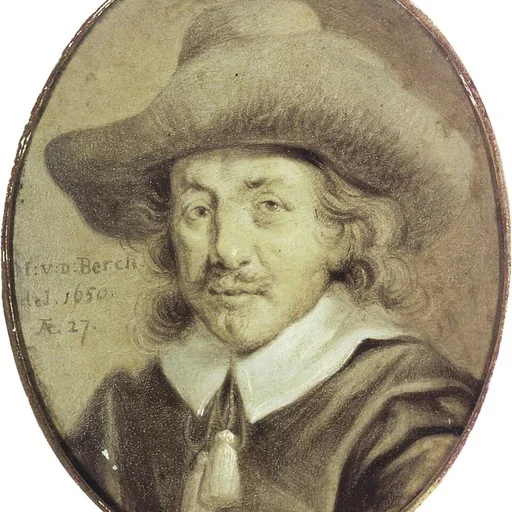
Nicolaes Pieterszoon Berchem (1 October 1620 – 18 February 1683) was a highly esteemed and prolific Dutch Golden Age painter of pastoral landscapes, populated with mythological or biblical figures, but also of a number of allegories and…