Artwork
Vanitas
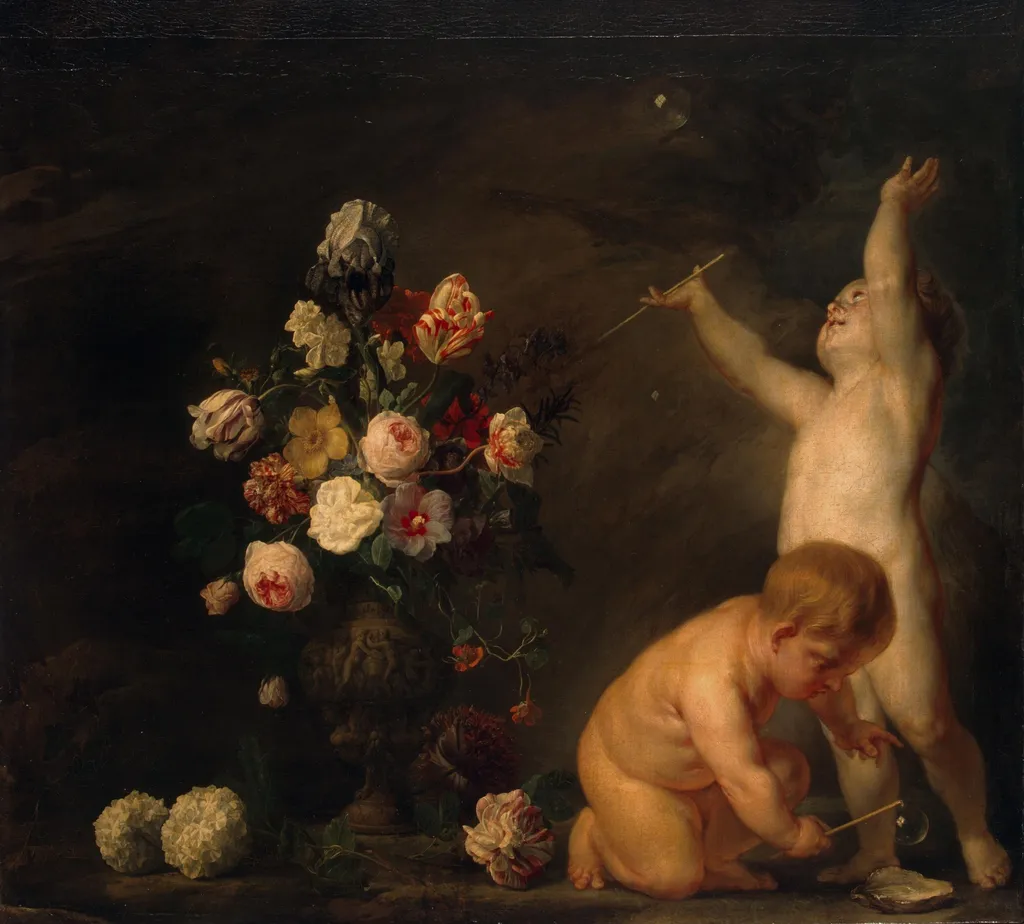
Vanitas is an oil painting by the Dutch Golden Age artist Nicolaes van Verendael. It dates from 1660 and is held in the collection of the Hermitage Museum.
About this work
Overview
Nicolaes van Verendael’s oil painting *Vanitas*, executed in 1660, belongs to the still‑life genre that flourished in the Dutch Golden Age. The work is part of the State Hermitage Museum’s collection and exemplifies the period’s preoccupation with the fleeting nature of existence, expressed through a carefully arranged assemblage of symbolic objects.
Subject & Meaning
The composition features two plump, nude youths against a dark backdrop. One child, upright, gestures upward with a stick, while the other crouches, clutching a small mirror and a fragile soap bubble. A tall vase brims with roses, tulips and white blossoms, some already wilting, juxtaposing vitality with decay—a visual meditation on the transience of life and beauty.
Technique & Style
Van Verendael employs pronounced chiaroscuro, allowing light to illuminate the figures and floral bouquet while the surrounding darkness recedes. The delicate rendering of the bubble’s surface tension and the subtle gradations of the petals demonstrate the artist’s skill in capturing fleeting textures within a controlled, almost theatrical, spatial setting.
History & Provenance
Created in Antwerp, where van Verendael was active as a specialist in flower and vanitas still lifes, the painting later entered the Russian Imperial collection before becoming part of the State Hermitage Museum’s holdings. Its provenance reflects the 18th‑ and 19th‑century European interest in Dutch genre paintings as exemplars of moralizing art.
Own this work as a print
Artist & collection
Artist
Nicolaes van Verendael or Nicolaes van Veerendael (1640 in Antwerp – 1691 in Antwerp) was a Flemish painter active in Antwerp who is mainly known for his flower paintings and vanitas still lifes.