Artwork
Perseus
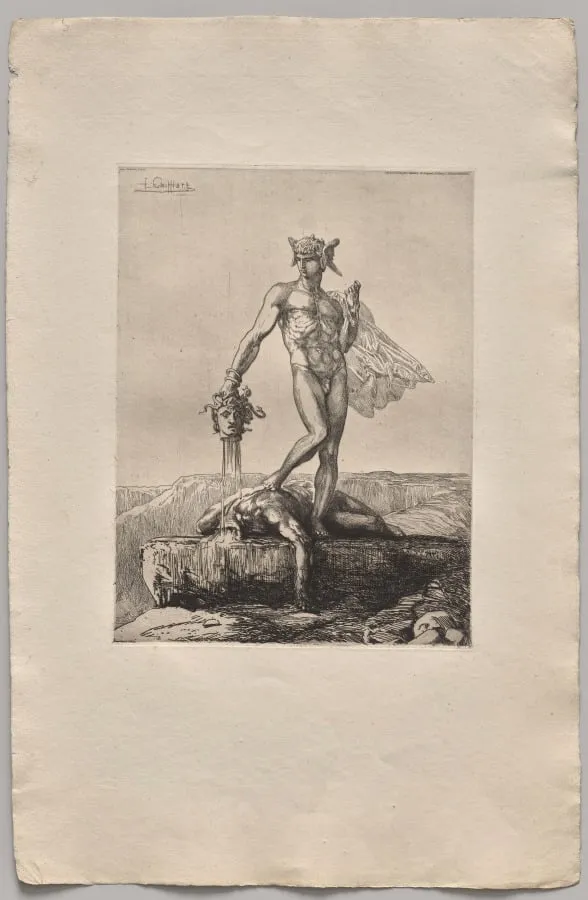
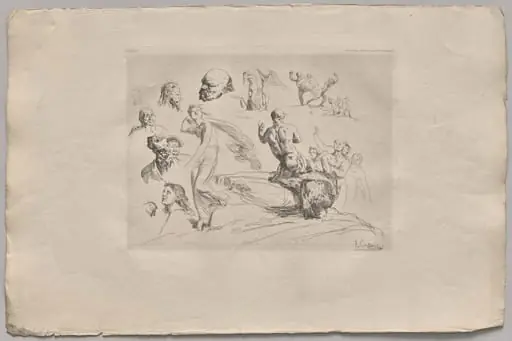
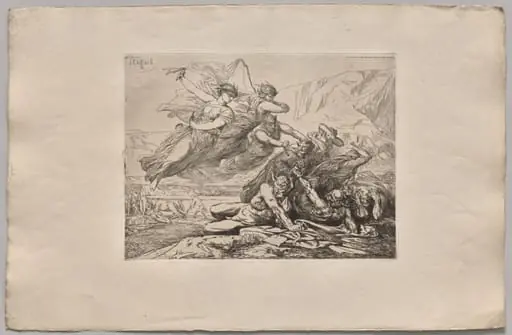
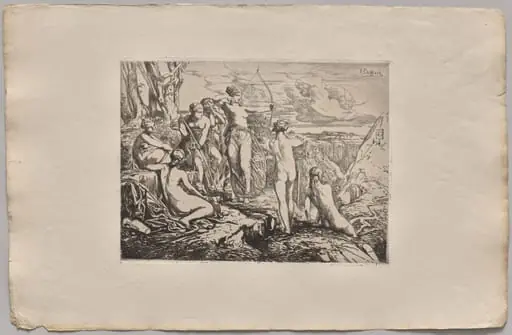
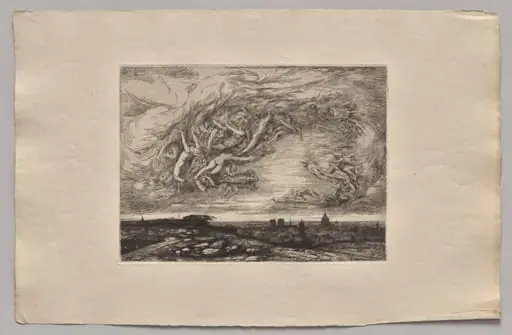
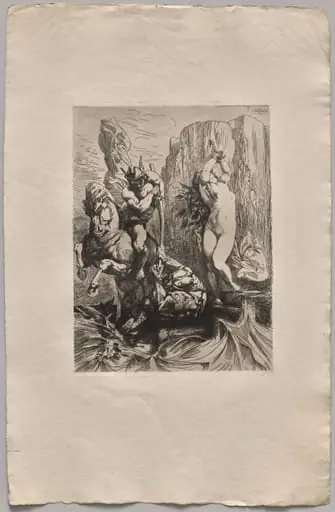
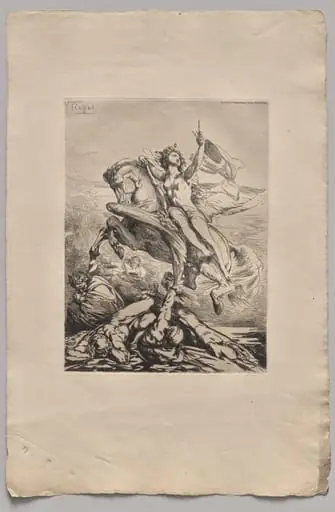
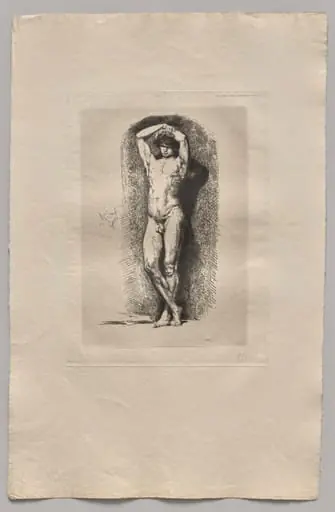
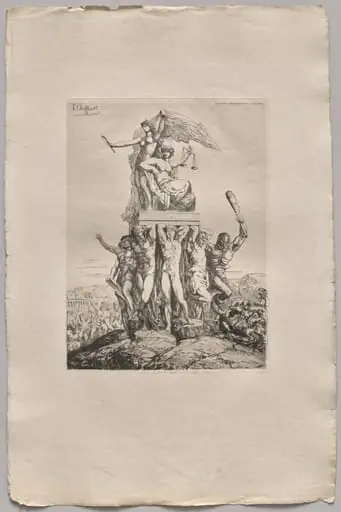
Perseus is a print by the Impressionist artist Nicolas-François Chifflart. It dates from 1865 and is held in the collection of the Cleveland Museum of Art.
About this work
Overview
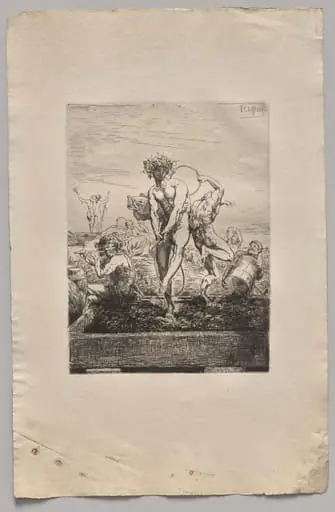
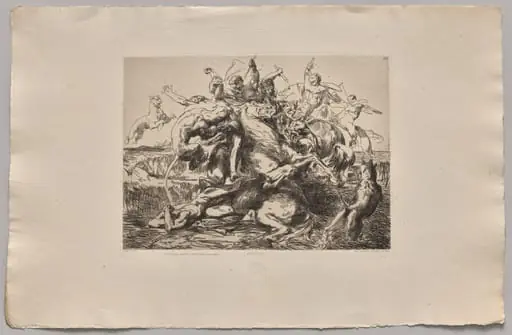
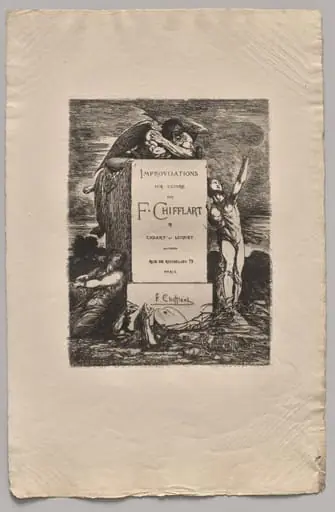
François‑Nicolas Chifflart’s print Perseus belongs to his 1865 series Improvisations on Copper, produced during the French etching revival of the mid‑nineteenth century. Executed on a small copper plate, the work invites close, personal viewing rather than public display, reflecting the artist’s interest in intimate, contemplative prints.
Subject & Meaning
The image depicts a muscular figure clutching a sword in one hand and a severed head in the other, evoking the mythic hero Perseus after his triumph over Medusa. The stark composition, dominated by darkness and incisive lines, emphasizes the violent act and the hero’s physical power, inviting reflection on themes of conquest and mortality.
Technique & Style
Chifflat applied his design directly onto a prepared copper plate, treating the surface as a sketchbook. This rapid, almost doodle‑like approach yields a raw, urgent quality, with sharply defined contours cutting through deep shadows. The intimate scale and immediacy of the drawing distinguish the print from more polished, studio‑finished etchings of the period.
History & Provenance
Created as part of the Improvisations on Copper series, the print exemplifies Chifflart’s contribution to the nineteenth‑century revival of copper‑plate etching. While specific ownership records are scarce, the work remains associated with the artist’s oeuvre that highlighted experimental drawing techniques and the resurgence of small‑format prints in French art circles.
Artist & collection
Artist
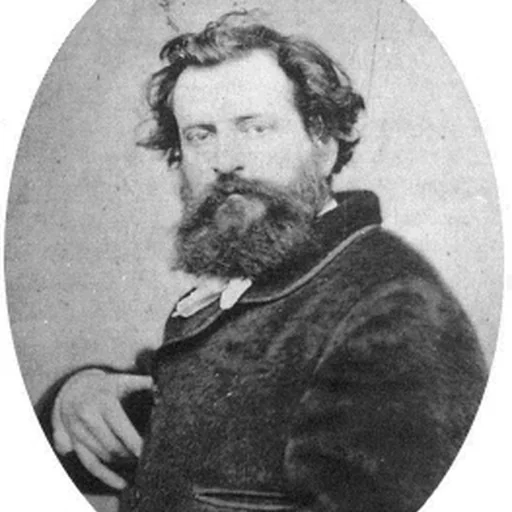
Nicolas-François Chifflart (1825–1901) was a French artist, born in Saint-Omer.