Artwork
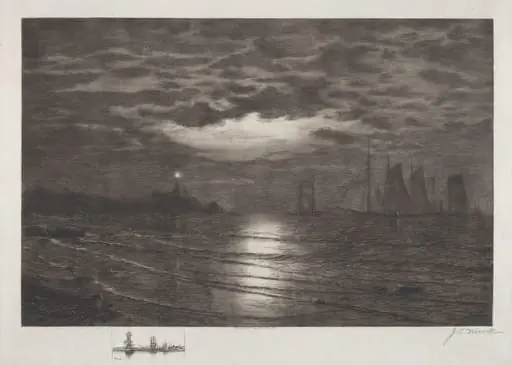
Moonlight at Low Tide
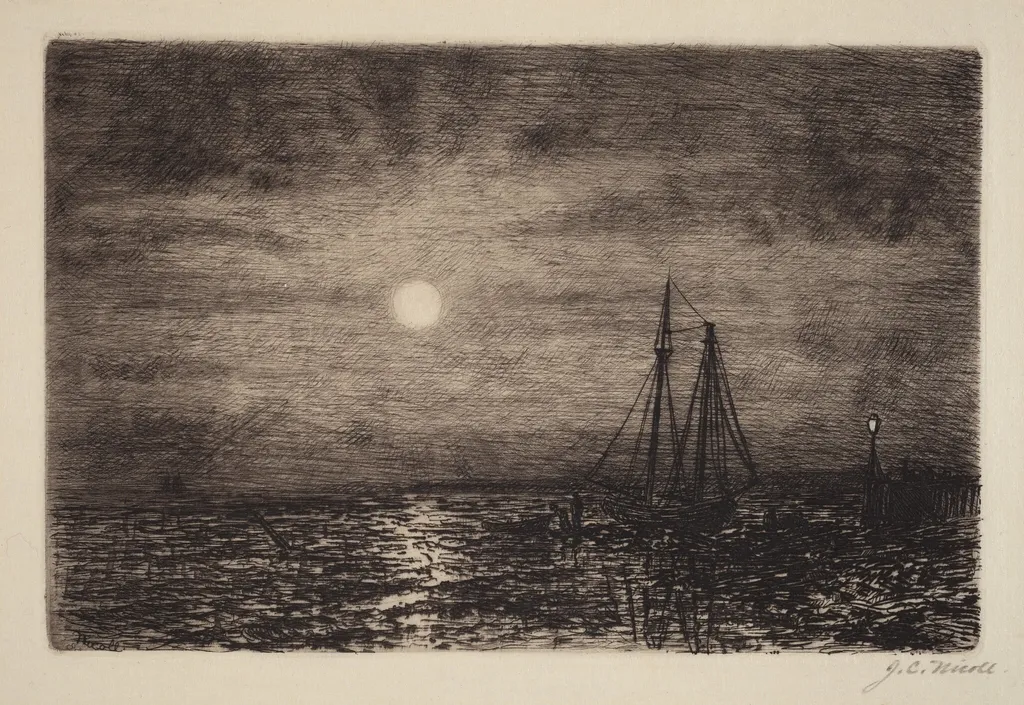
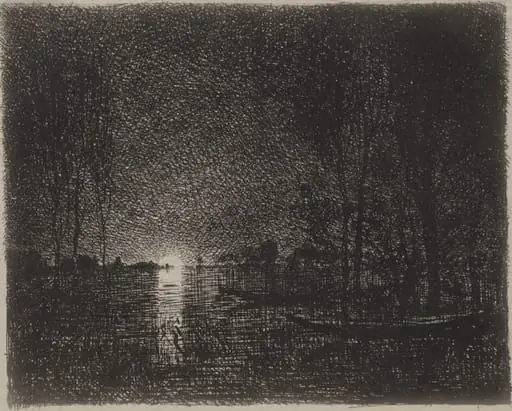
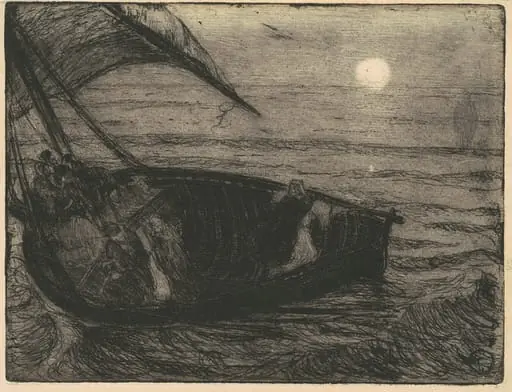
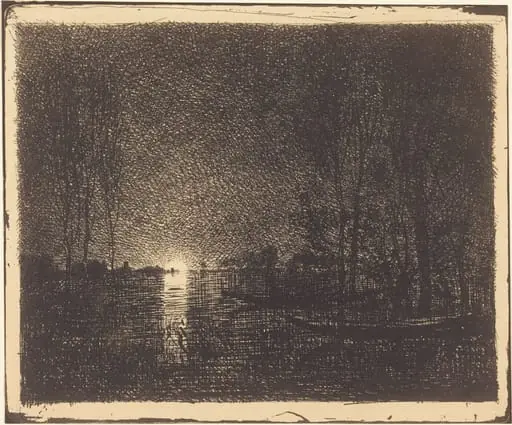
Moonlight at Low Tide is an ink print by the Impressionist artist James Craig Nicoll. It dates from 1885 and is held in the collection of the National Gallery of Art.
About this work
Overview
James Craig Nicoll’s print titled Moonlight at Low Tide, executed around 1885, is an etching and aquatint on wove paper rendered entirely in black. The work measures the delicate interplay of light and shadow on a nocturnal shoreline, capturing a moment when the sea reflects the pale glow of the moon.
Subject & Meaning
The image presents a tranquil beach at night, where gentle waves catch and echo the moon’s illumination. The composition emphasizes the hush of the tide and the subtle, almost ethereal quality of moonlight, inviting contemplation of the quiet, liminal space between land and sea.
Technique & Style
Nicoll combined traditional etching—incising lines into a metal plate—with aquatint, a method that creates smooth, tonal areas by allowing ink to settle in powdered resin. This dual approach yields soft, gradated shadows and luminous highlights, distinguishing the print from photographic realism while preserving a painterly softness.
History & Provenance
Created in the mid-1880s, the piece reflects a period when artists were increasingly exploring nocturnal subjects, often imbuing them with a slightly uncanny atmosphere. The work remains in a private collection, while additional prints by Nicoll are held by the National Gallery of Art in Washington, D.C.
Context
During the 1880s, the depiction of night scenes was gaining popularity, aligning with broader artistic interests in mood and the unseen. Nicoll’s use of aquatint to render the diffuse quality of moonlight aligns with contemporary experiments in printmaking that sought to expand the medium’s expressive range.
Own this work as a print
Artist & collection
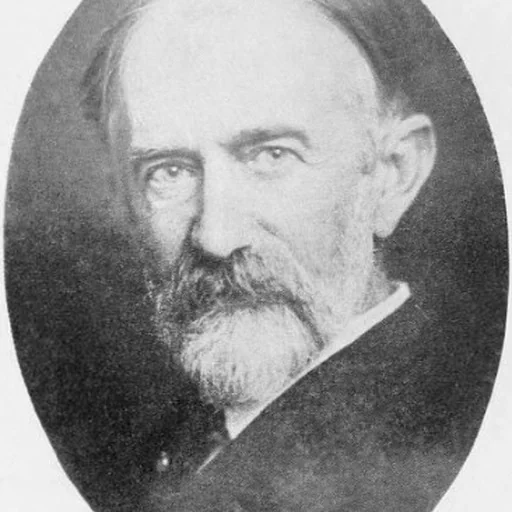
Artist
James Craig Nicoll (1846–1918) was an American artist, born in New York City.