Artwork
The Introduction of the Captive Osman Pasha to Alexander II at Plevna
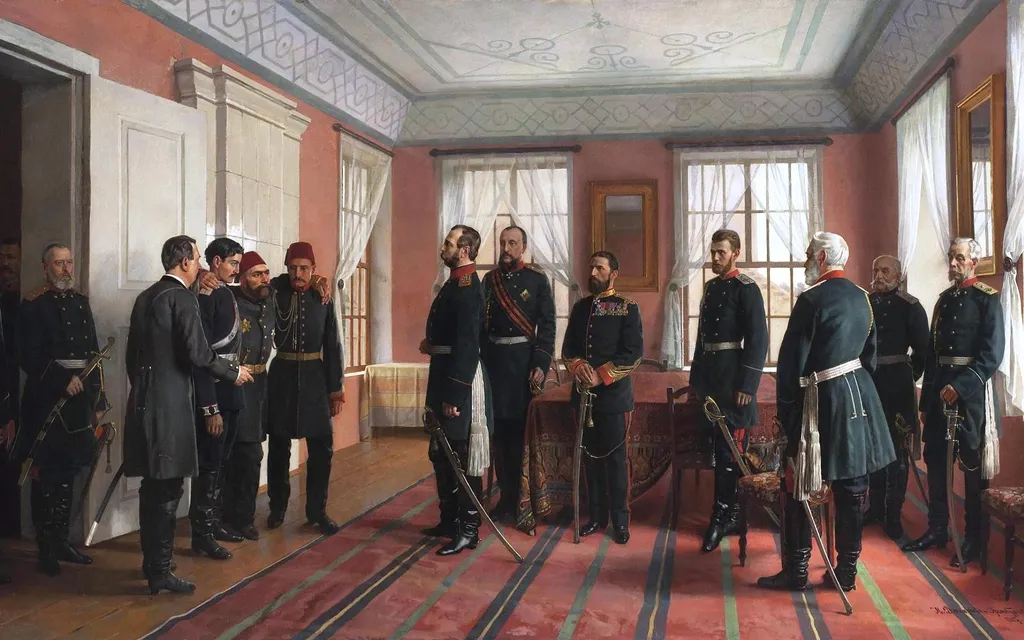
The Introduction of the Captive Osman Pasha to Alexander II at Plevna is an oil painting by the Realist artist Nikolai Dmitriev-Orenburgsky. It dates from 1894 and is held in the collection of the Hermitage Museum.
About this work
Overview
Painted in 1894 by Nikolai Dmitriev-Orenburgsky, this oil on canvas depicts a pivotal moment from the Russo-Turkish War of 1877–78.
Painted in 1894 by Nikolai Dmitriev-Orenburgsky, this oil on canvas depicts a pivotal moment from the Russo-Turkish War of 1877–78. The scene captures the formal presentation of Ottoman commander Osman Pasha to Tsar Alexander II after the fall of Plevna. Dmitriev-Orenburgsky, known for his historical and military subjects, rendered the event with precision and restrained emotion, reflecting the realist conventions of his time. The work was completed after his decade-long stay in Paris, marking a return to Russian historical themes.
Subject & Meaning
The painting illustrates the ceremonial surrender of Osman Pasha, the Ottoman commander who held Plevna against Russian forces for months. His presentation to Tsar Alexander II symbolizes the turning point in the war and the decline of Ottoman power in the Balkans. The composition emphasizes hierarchy and formality: the defeated commander stands apart, his red fez contrasting with the dark uniforms of Russian officers. The scene avoids triumphalism, focusing instead on the gravity of defeat and the ritual of submission.
Technique & Style
Dmitriev-Orenburgsky employed a realist style with careful attention to texture, fabric, and facial expression. Chiaroscuro modeling defines the figures against the muted interior, enhancing the solemnity of the moment. The rich red carpet and ornate ceiling pattern ground the scene in tangible detail, while the lighting directs focus toward the central figures. Uniforms are rendered with precision, distinguishing rank through embroidery, sashes, and headgear. The palette remains subdued, reinforcing the restrained tone of the occasion.
History & Provenance
Created nearly two decades after the Siege of Plevna, the painting was commissioned to commemorate Russia’s military success in the war. It likely entered state collections shortly after completion, as was common for official historical works of the period. Dmitriev-Orenburgsky’s time in Paris (1875–1885) influenced his technique but did not alter his commitment to Russian subject matter. The painting’s current location is not documented in public records, though it remains part of Russia’s 19th-century military art corpus.
Context
The Russo-Turkish War of 1877–78 was a defining moment in Russian imperial policy, leading to the liberation of Bulgaria and the weakening of Ottoman control in Europe. The fall of Plevna, after a prolonged siege, became a national symbol of resilience. Artworks like this one served to legitimize military victories and reinforce state narratives. Dmitriev-Orenburgsky’s depiction aligns with state-sponsored historical painting, prioritizing accuracy over dramatic embellishment.
Legacy
Though less widely known today than some contemporaries, Dmitriev-Orenburgsky’s work contributes to the archive of Russian historical painting. This piece exemplifies the quiet dignity with which late 19th-century artists treated military defeat and imperial ceremony. It reflects a transitional moment in Russian art—balancing realism with national mythmaking—without succumbing to overt propaganda. The painting remains a documented record of how victory was visually codified in imperial Russia.
Artist & collection
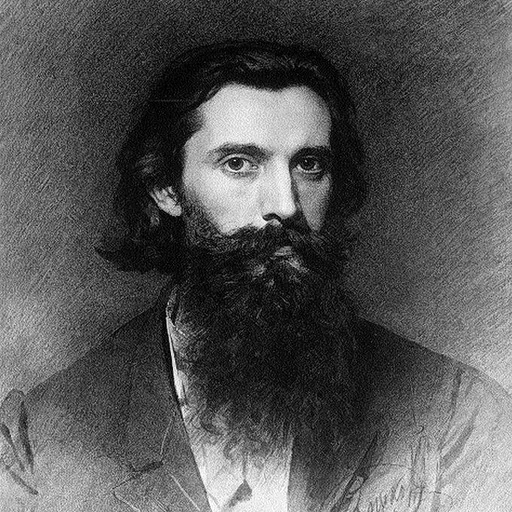
Artist
Nikolai Dmitrievich Dmitriev-Orenburgsky (Russian: Николай Дмитриевич Дмитриев-Оренбургский; 1 November 1838 or 1 April 1837 – 21 April 1898) was a battle and genre painter from the Russian Empire who added to his…

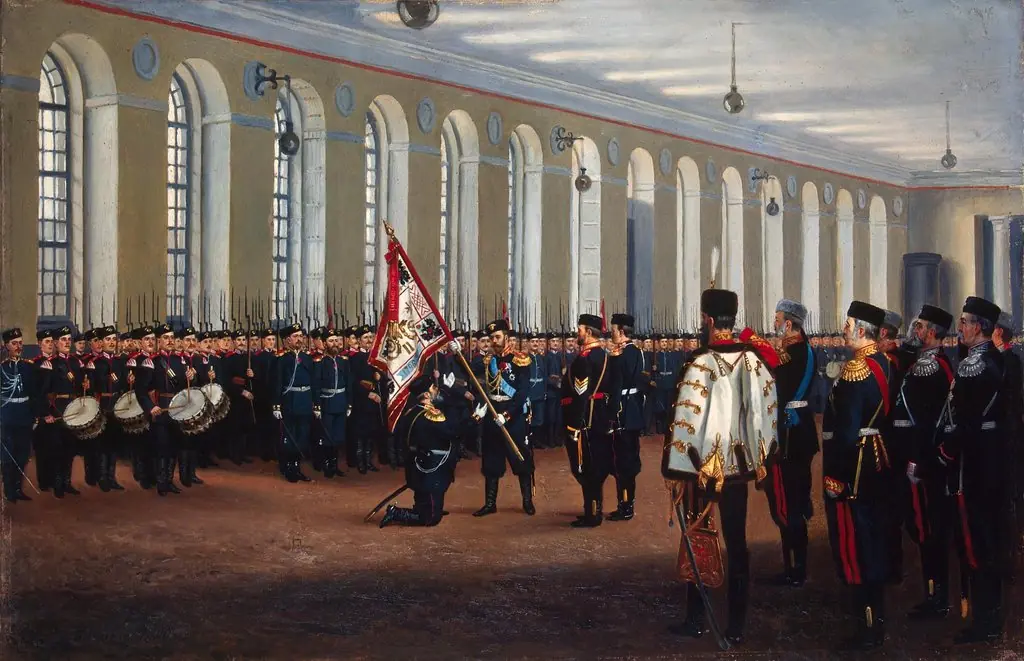 Empreror Nicholas II Presenting the Colour to the 145th Novocherkassk Infantry Regiment
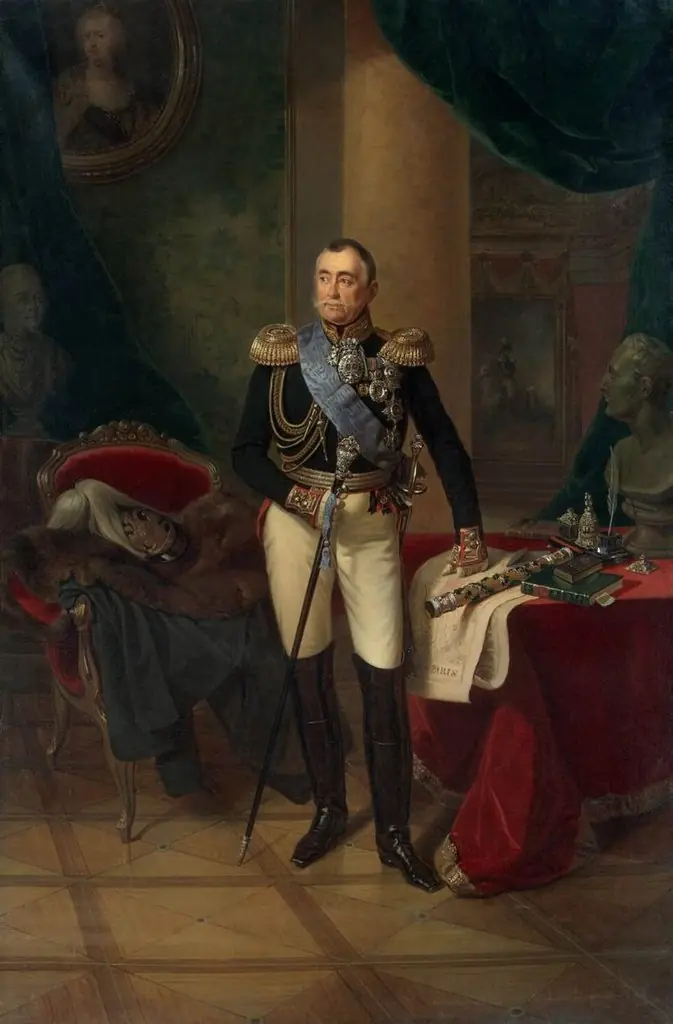 Portrait of Prince Pyotr Volkonsky
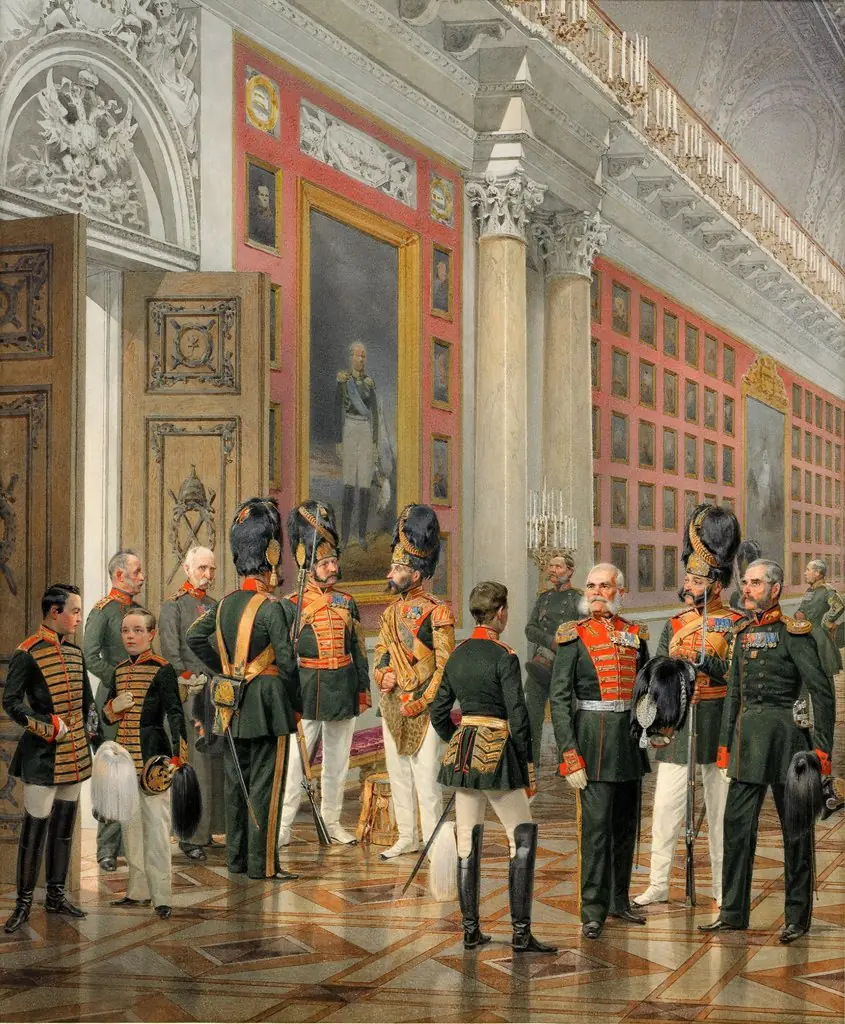 View of the War Gallery of 1812 in the Winter Palace (Company of Court Grenadiers)
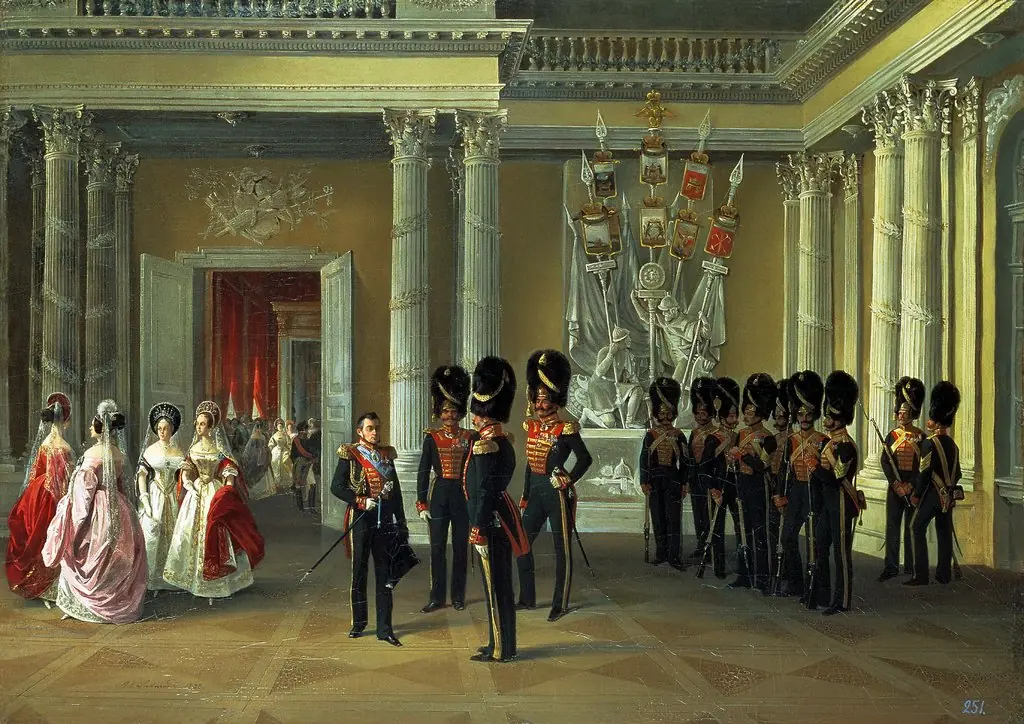 Part of the White (Armorial) Hall in the Winter Palace
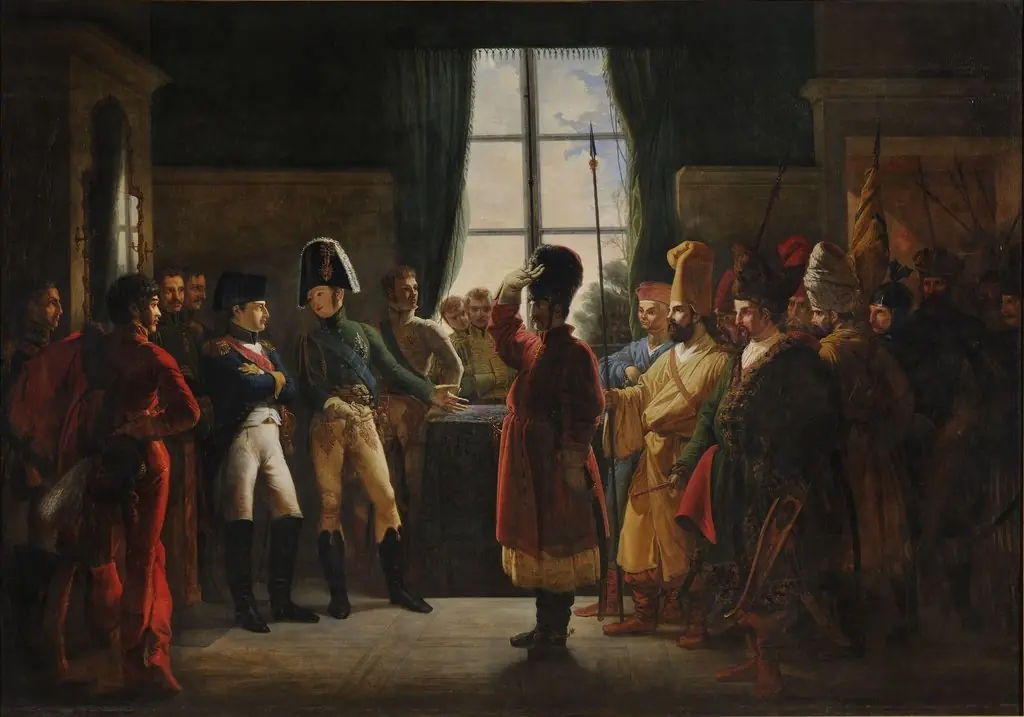 Alexander I presents to Napoleon I the Kalmyks, Cossacks and Baskirs of the Russian army, July 9, 1807
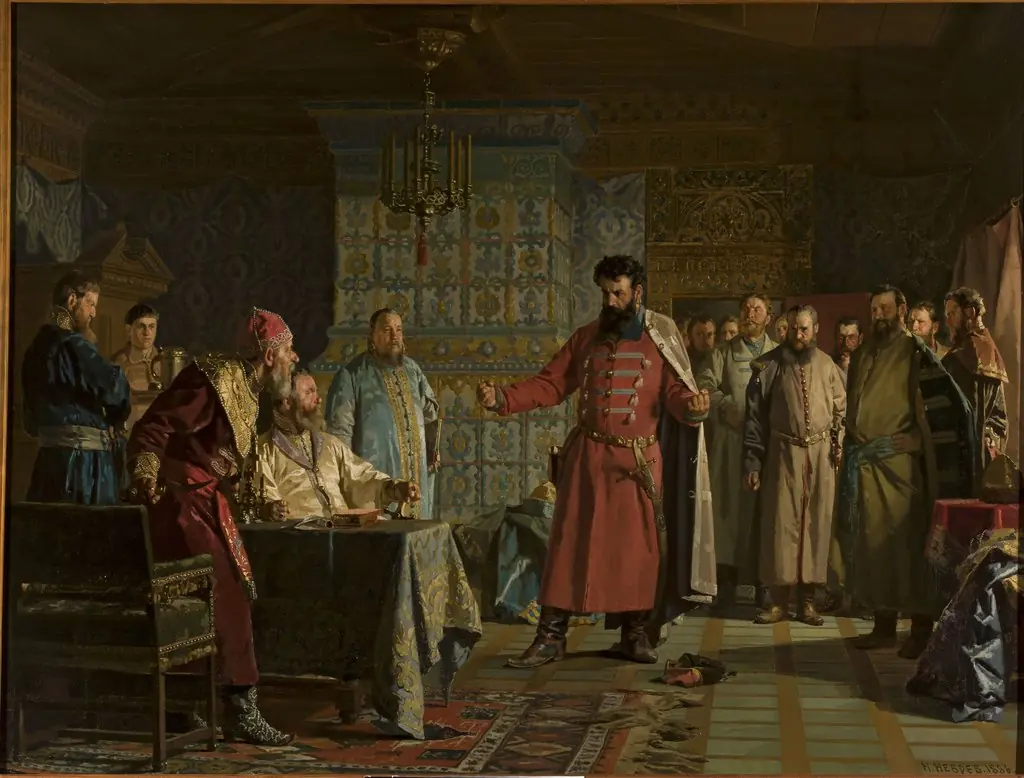 Zakhary Lyapunov's quarrel with the Tsar Vasili Shuysky
 The Church Parade of the Finnish Life Guards Regiment
 Singer of the 4th Rifle Battalion at Tsarskoe Selo
 Portrait of Emperor Nicholas II
 The Congress of Paris