Artwork
Ceiling Pattern, Tomb of Qenamun
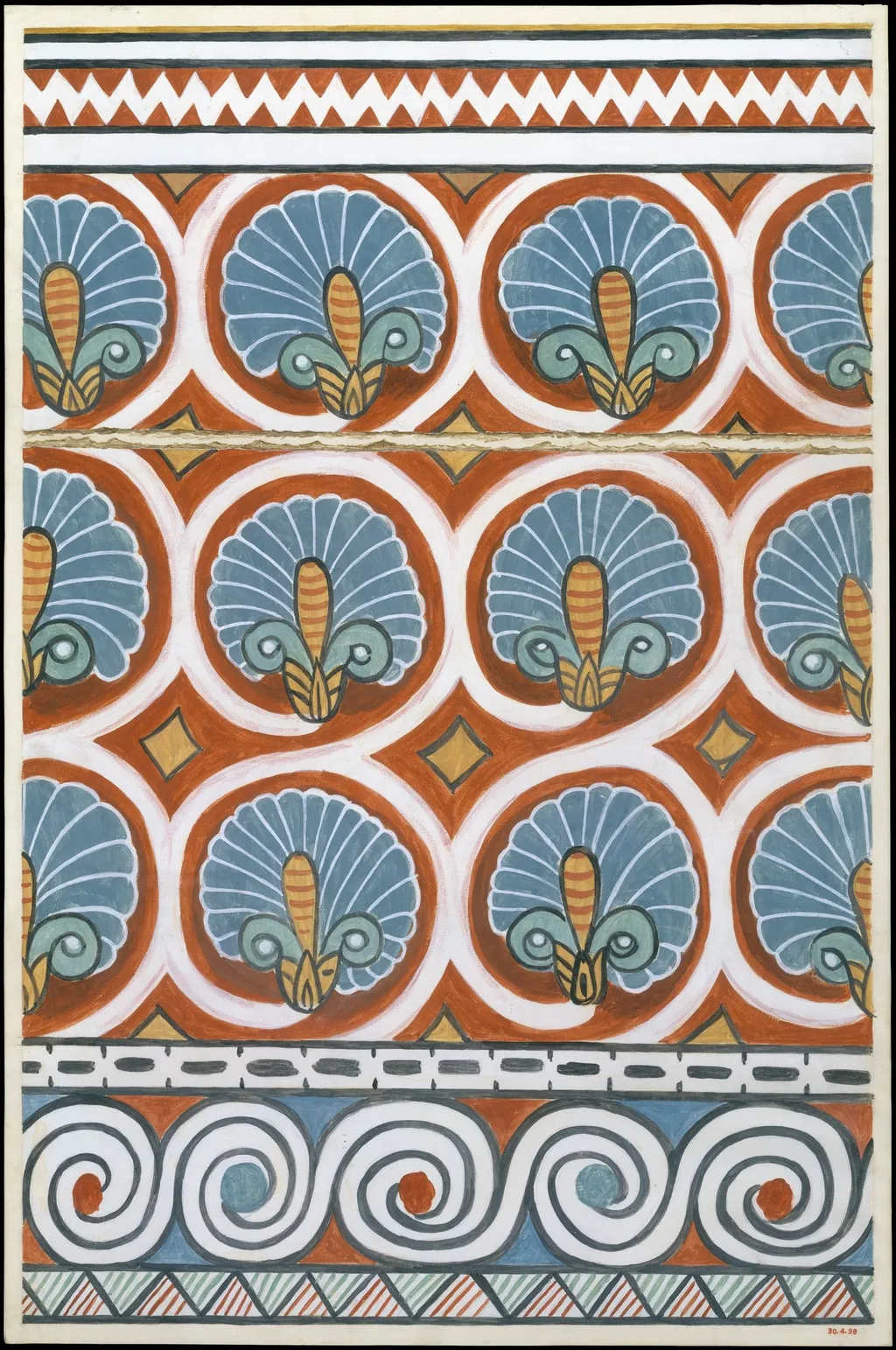
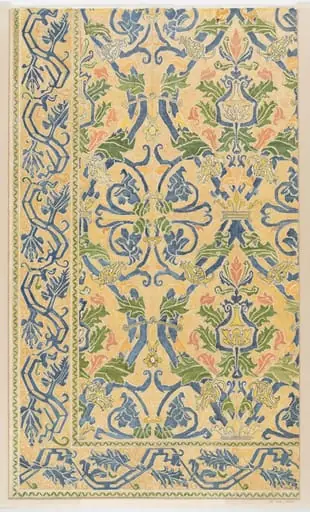
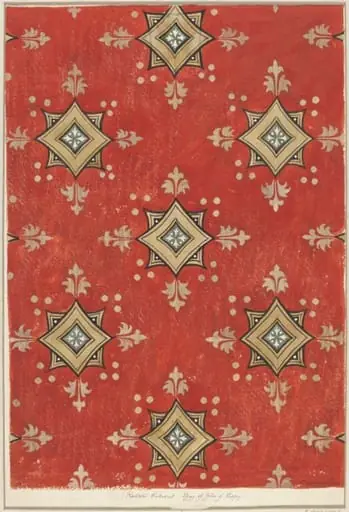
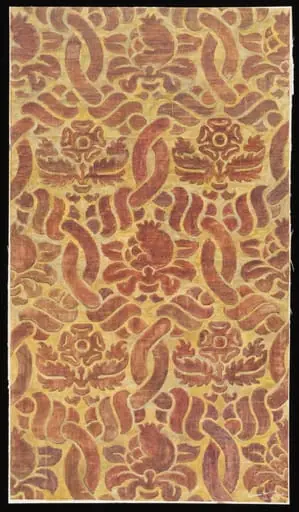
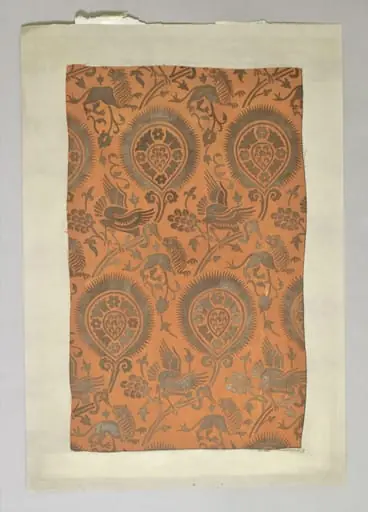
Ceiling Pattern, Tomb of Qenamun is an unspecified painting by Nina M. Davies. It dates from 1490 and is held in the collection of the Metropolitan Museum of Art. Created in 1490 by Nina M.
About this work
Overview
Davies meticulously reproduced the original decorative scheme, preserving details that might otherwise have faded or been lost.
Created in 1490 by Nina M. Davies, this painting is a hand-rendered copy of a ceiling design from the tomb of Qenamun in Thebes. Though dated to the New Kingdom, the work itself is a 20th-century transcription made during fieldwork. Davies meticulously reproduced the original decorative scheme, preserving details that might otherwise have faded or been lost. Her work served as a scholarly record rather than an artistic invention.
Subject & Meaning
The pattern replicates a ceiling motif from the tomb of Qenamun, an official of the 18th Dynasty. It features repeating fan-like forms filled with alternating orange and yellow stripes, interspersed with green leaf tendrils and small diamond motifs. These elements reflect standard Egyptian decorative vocabulary associated with celestial or divine protection, though the specific arrangement is a product of the tomb’s original artisans, not Davies’s imagination.
Technique & Style
Davies rendered the design using watercolor and ink on paper, adhering closely to the original’s color palette and linear precision. The composition is structured in a grid of squares and zigzags, with bold contrasts between red, white, and black background lines. Her technique prioritized accuracy over aesthetic embellishment, capturing the flat, rhythmic quality of ancient Egyptian ornamentation without modern interpretive flourishes.
History & Provenance
Nina Davies produced this work during field expeditions in Egypt alongside her husband, Norman de Garis Davies, between 1900 and 1940. Though often published under his name, her contributions were central to their joint documentation project. The painting entered the collection of The Metropolitan Museum of Art as part of the Davies archive, where it remains a key resource for Egyptological study and conservation.
Context
In the early 20th century, systematic recording of Egyptian tomb art was critical as many sites faced deterioration and looting. The Davieses’ method involved on-site copying, often under difficult conditions, to preserve designs before they vanished. Their work provided baseline data for later scholars, distinguishing between original iconography and later damage or restoration.
Legacy
Nina Davies’s transcriptions remain vital references for Egyptologists, offering insights into the original appearance of tombs now altered by time. Though her role was historically overshadowed, recent scholarship has reaffirmed her technical skill and scholarly rigor. Her work exemplifies the quiet, essential labor behind the preservation of ancient visual culture.
Artist & collection
Artist
The Egyptologists Nina M. Davies (6 January 1881 – 21 April 1965) and Norman de Garis Davies (1865–5 November 1941) were a married couple of illustrators and copyists who worked in the early and mid-twentieth century…

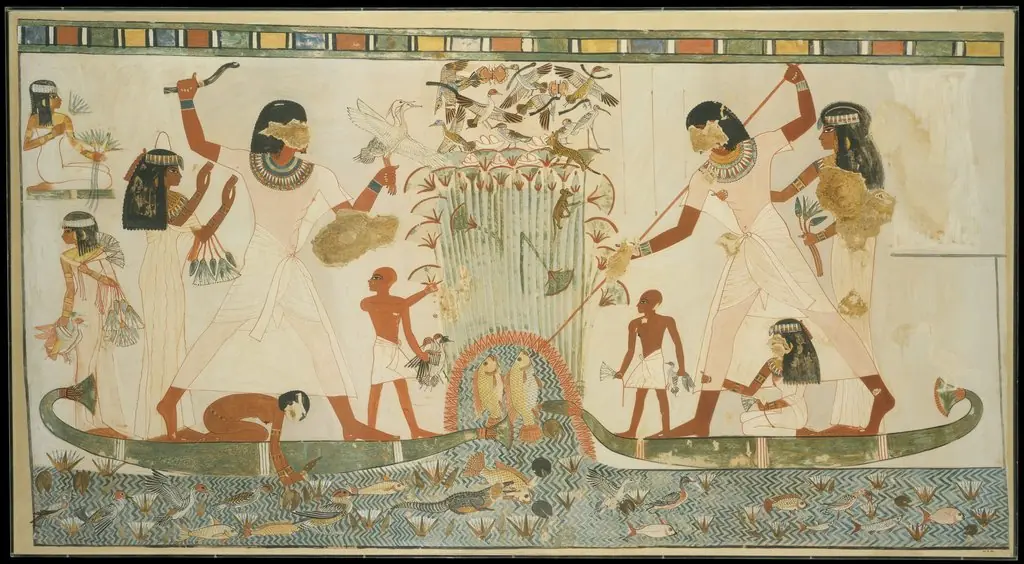 Menna and Family Hunting in the Marshes, Tomb of Menna
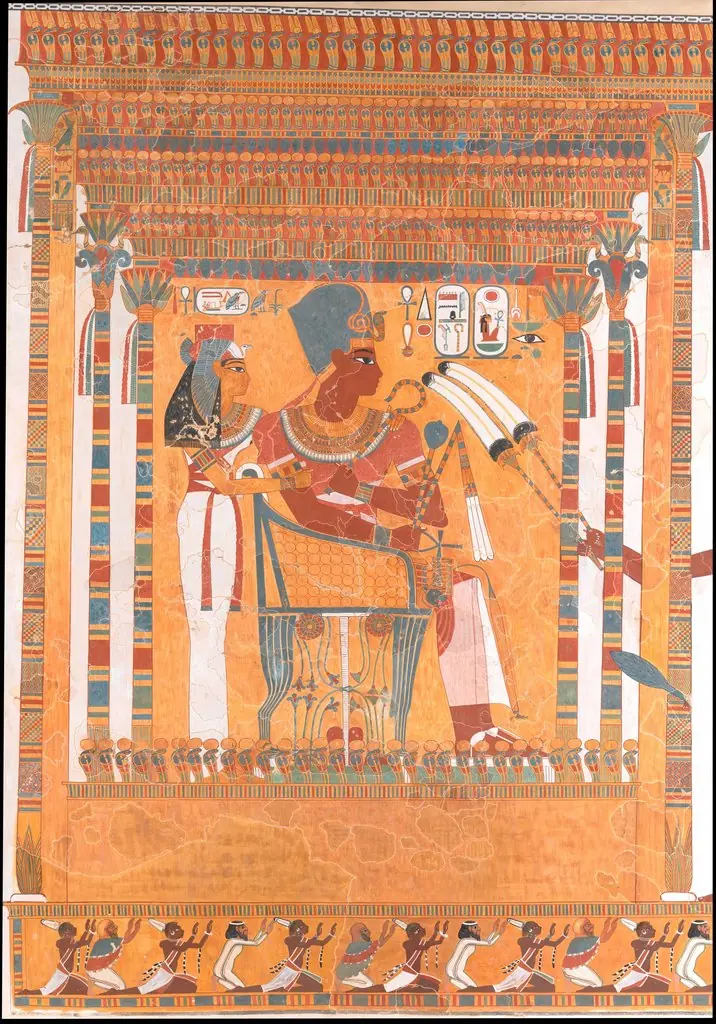 Amenhotep III and his Mother, Mutemwia, in a Kiosk
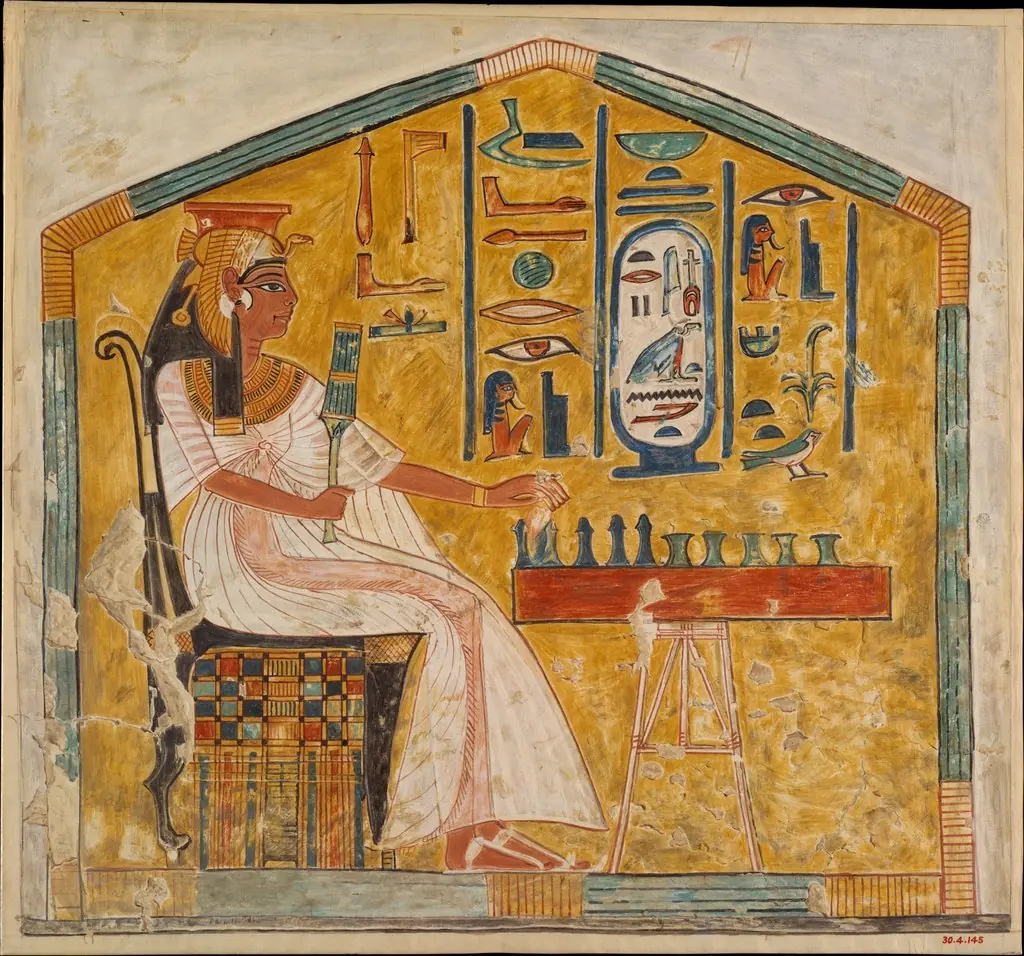 Queen Nefertari Playing Senet
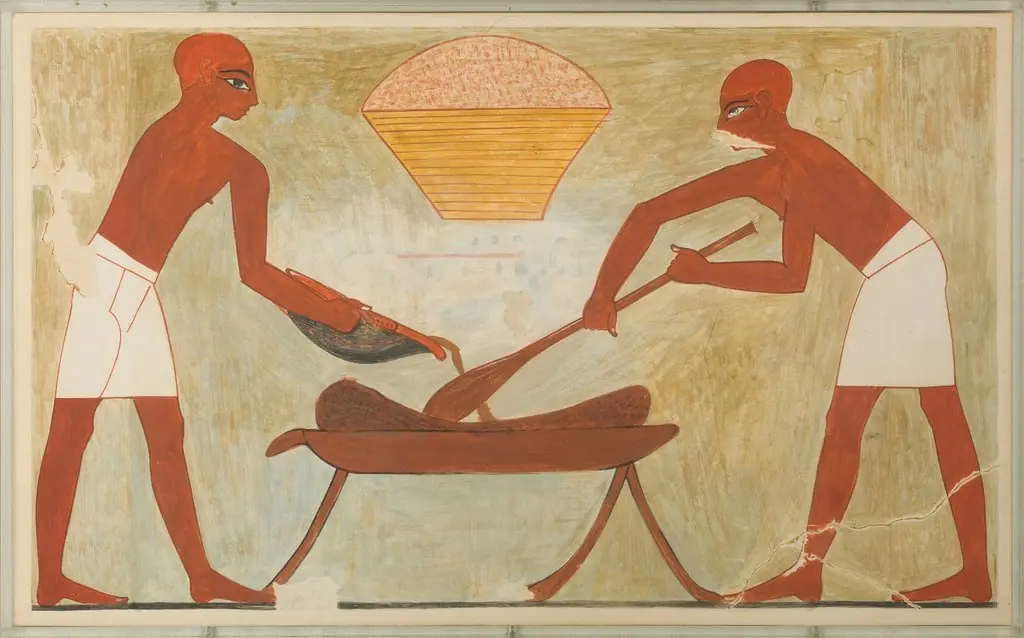 Preparing Dough, Tomb of Rekhmire
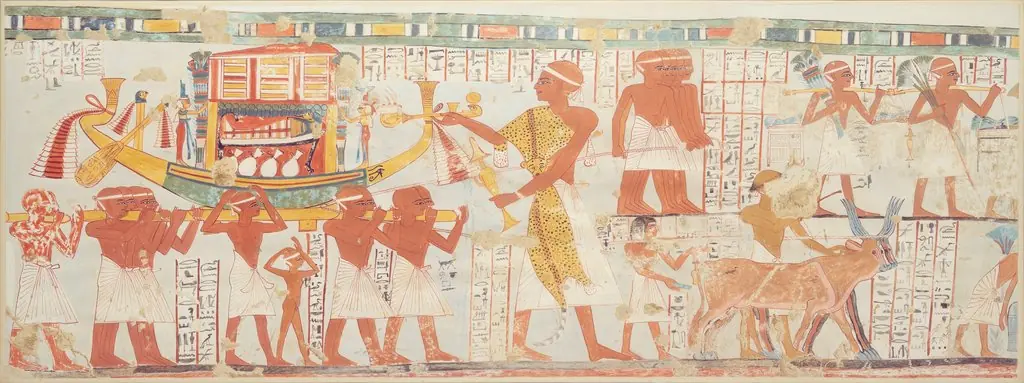 Nakhtamun's Funeral Procession, Tomb of Nakhtamun
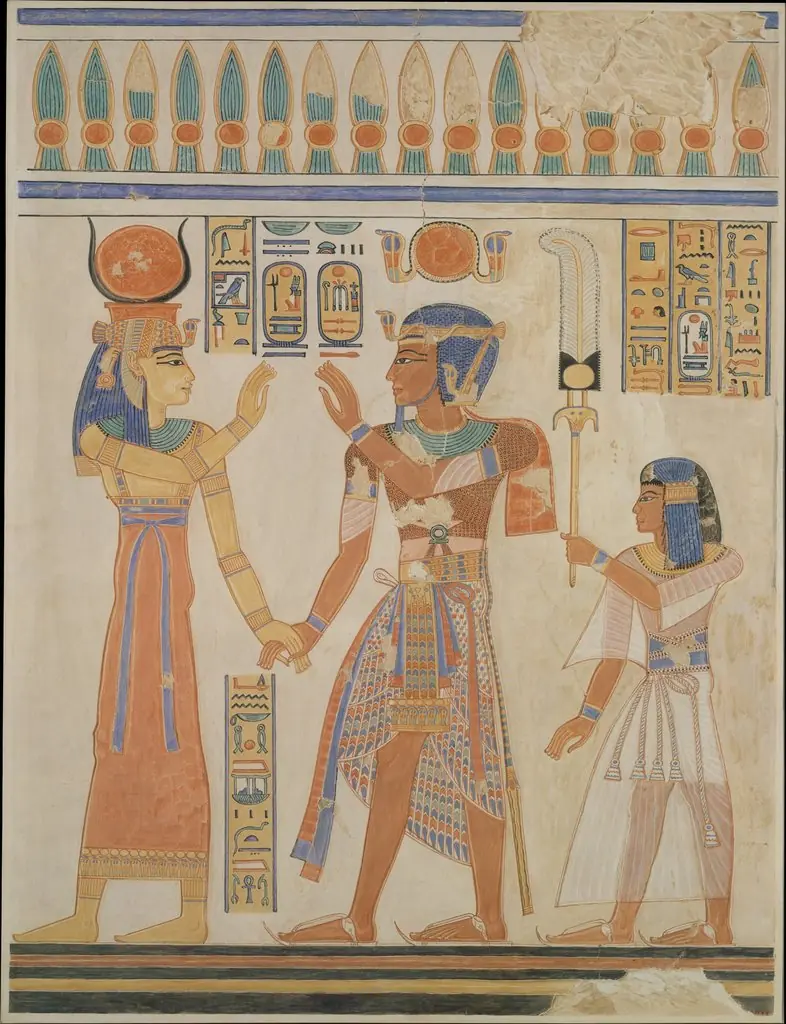 Ramesses III and Prince Amenherkhepeshef before Hathor
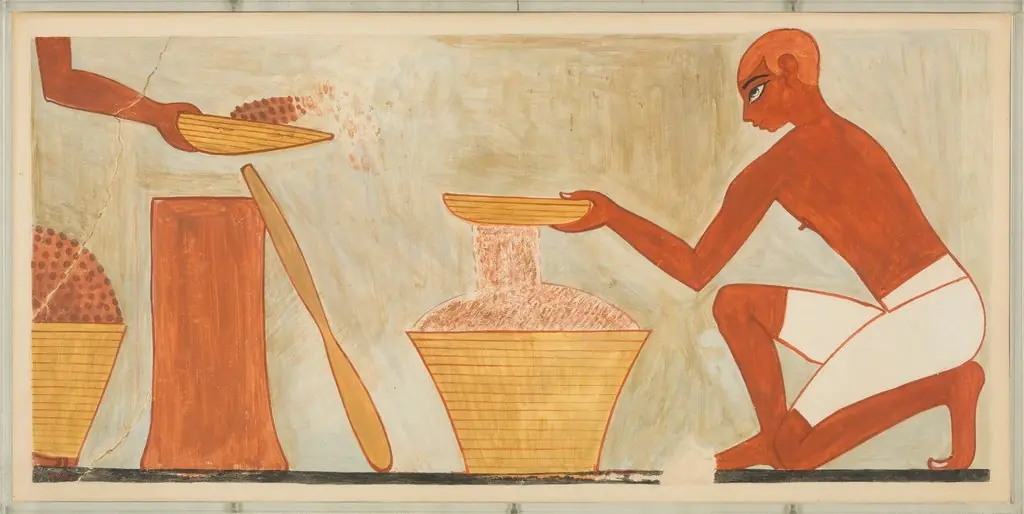 Sifting Meal, Tomb of Rekhmire
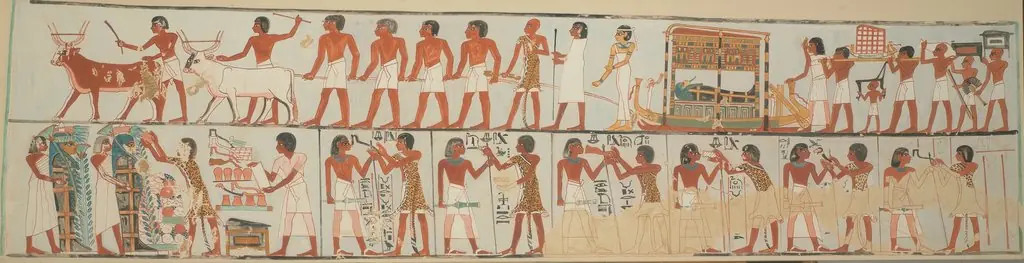 Funeral Procession, Tomb of Pairy