Artwork
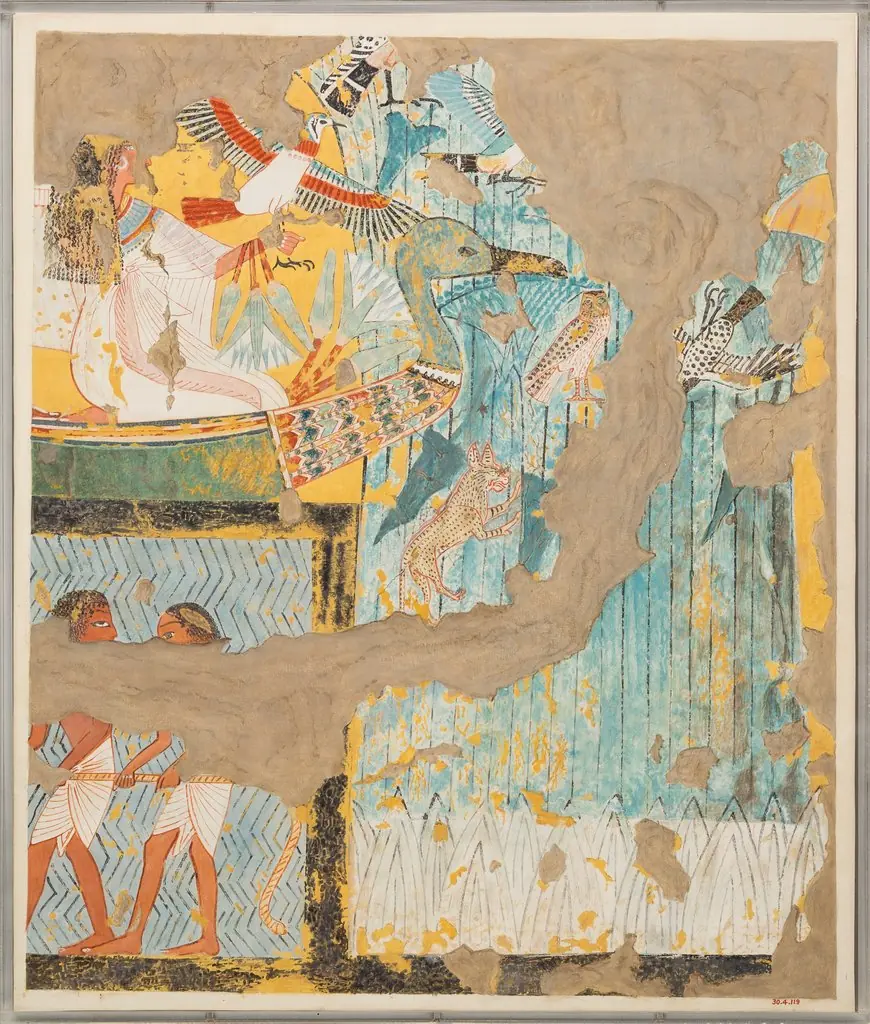
Facsimile painting from the 'Green Room' in the North Palace at Amarna
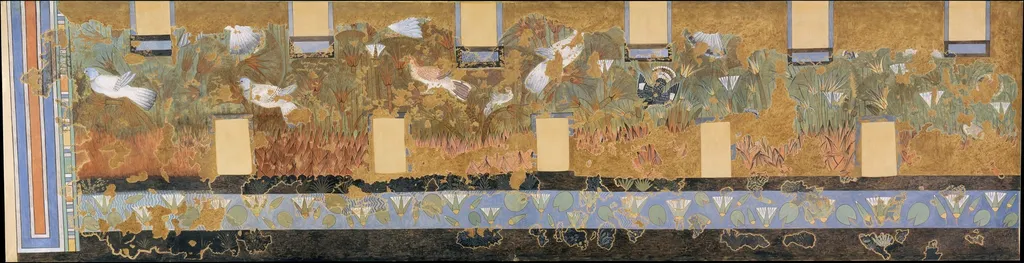
Facsimile painting from the 'Green Room' in the North Palace at Amarna is an unspecified painting by Nina M. Davies. It dates from 1353 and is held in the collection of the Metropolitan Museum of Art. This reproduction, executed by the Egyptologist‑illustrator Nina M.
About this work
Overview
This reproduction, executed by the Egyptologist‑illustrator Nina M. Davies, copies a fragment from the so‑called Green Room of the North Palace at Amarna. The scene presents a tranquil river flanked by reeds and lotus blossoms, under a luminous sky, while a group of vividly coloured birds—white, black and red—move across the composition.
Subject & Meaning
The imagery combines typical Amarna motifs: lotus flowers, symbols of rebirth and purity, and waterbirds, often associated with the Nile’s life‑giving forces. Their placement amid reeds suggests a naturalistic setting intended to evoke the fertility and renewal celebrated in the religious reforms of Akhenaten’s reign.
Technique & Style
Davies rendered the scene using a flat, linear approach that mirrors the original wall painting’s lack of perspective. Warm hues of yellow, green and blue dominate, bounded by a dark margin that frames the composition. The birds are depicted with bold outlines and contrasting plumage, emphasizing their decorative role within the decorative scheme.
History & Provenance
Created in the early to mid‑twentieth century, the facsimile formed part of Nina M. Davies’s systematic documentation of Amarna’s palace murals, a project she pursued alongside her husband, Norman de Garis Davies. Their copies were intended for scholarly publication and for preserving the visual record of fragile wall paintings.
Context
The Green Room belongs to the North Palace, one of the royal complexes at Amarna, the short‑lived capital founded by Pharaoh Akhenaten. Its decorative program reflects the period’s shift toward a more naturalistic representation of flora and fauna, diverging from earlier, more stylised Egyptian conventions.
Legacy
Davies’s reproductions continue to serve as reference material for Egyptologists studying Amarna’s art, especially where the original surfaces have deteriorated. The facsimile also illustrates the early twentieth‑century practice of meticulous hand‑copying as a primary method of archaeological documentation.
Artist & collection
Artist
The Egyptologists Nina M. Davies (6 January 1881 – 21 April 1965) and Norman de Garis Davies (1865–5 November 1941) were a married couple of illustrators and copyists who worked in the early and mid-twentieth century…

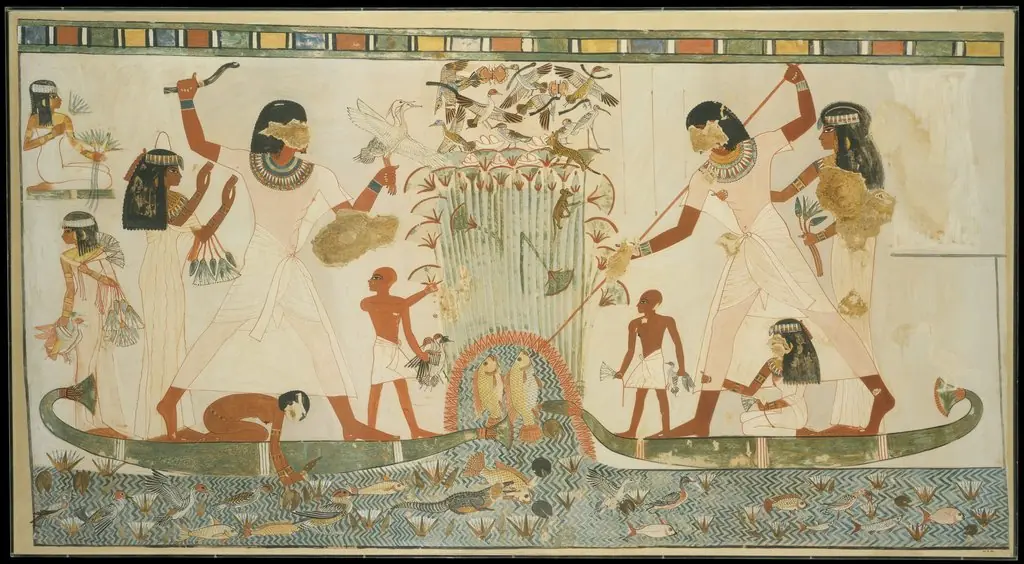 Menna and Family Hunting in the Marshes, Tomb of Menna
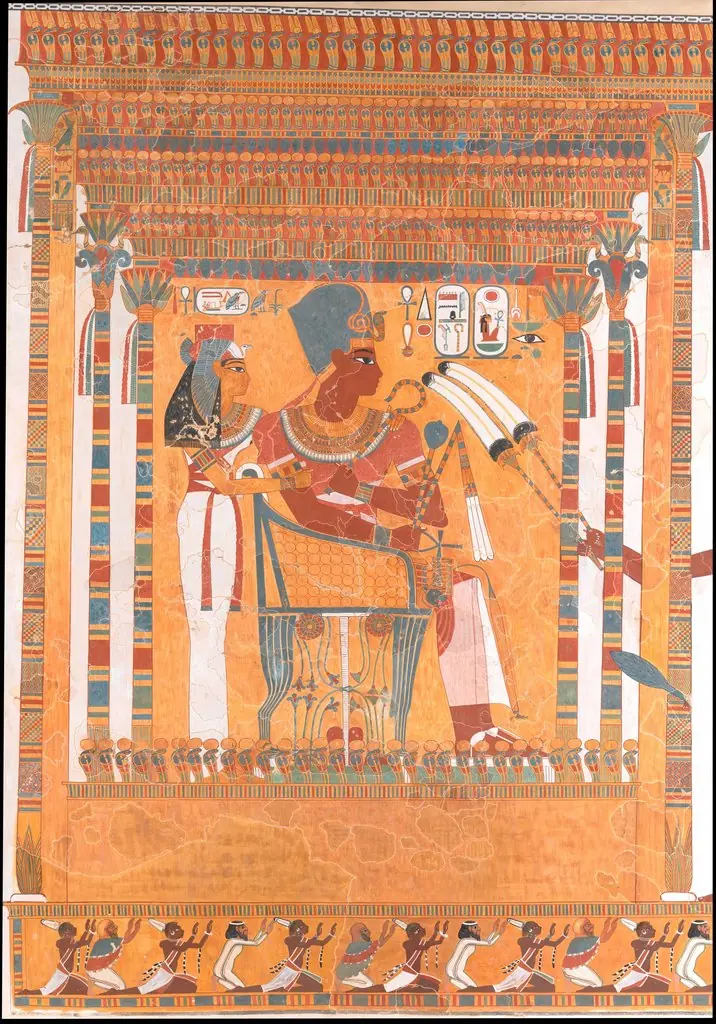 Amenhotep III and his Mother, Mutemwia, in a Kiosk
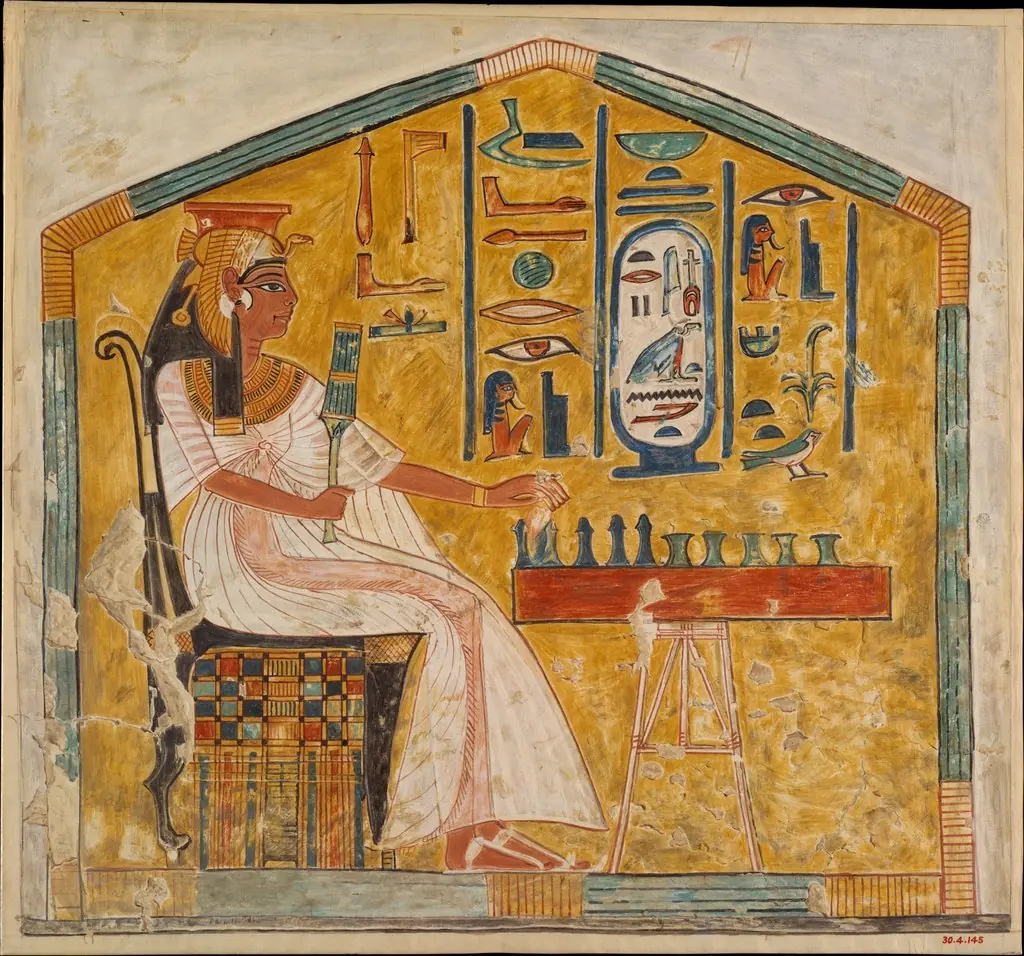 Queen Nefertari Playing Senet
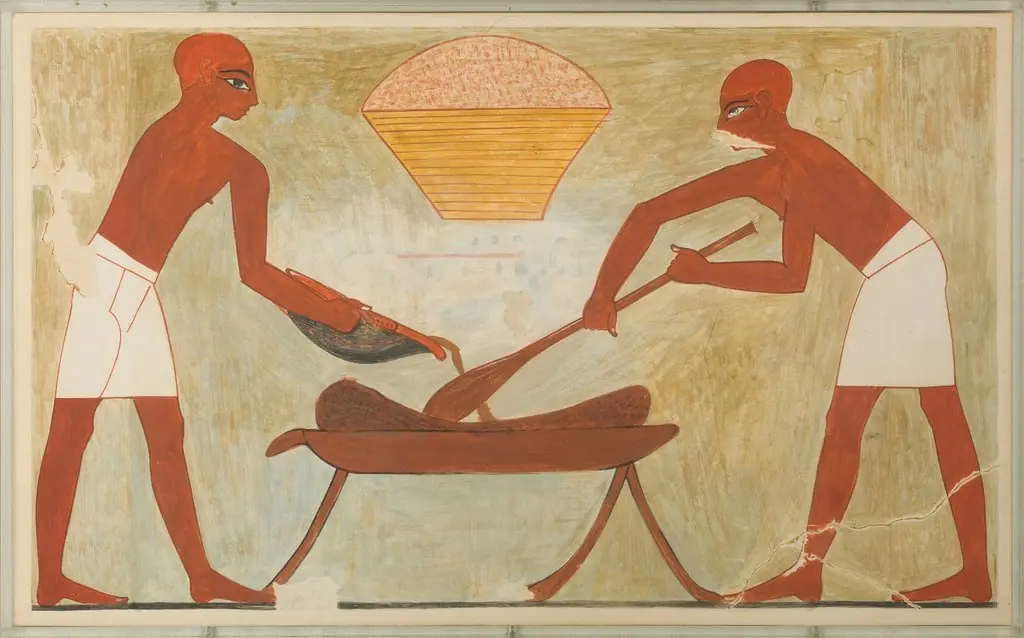 Preparing Dough, Tomb of Rekhmire
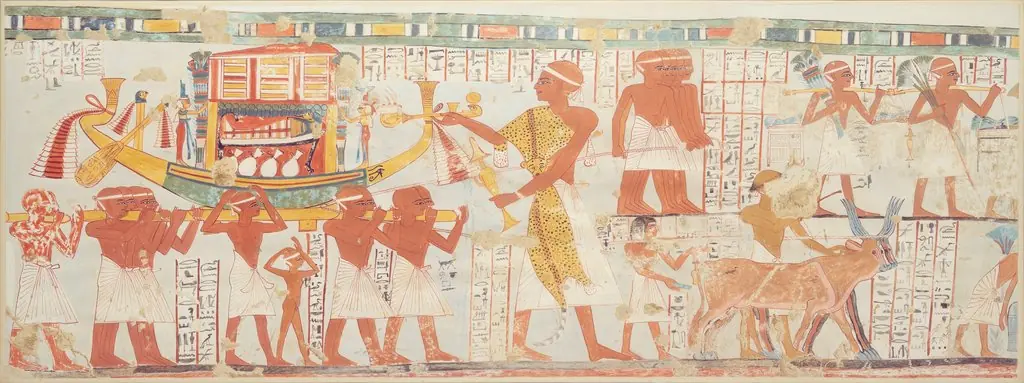 Nakhtamun's Funeral Procession, Tomb of Nakhtamun
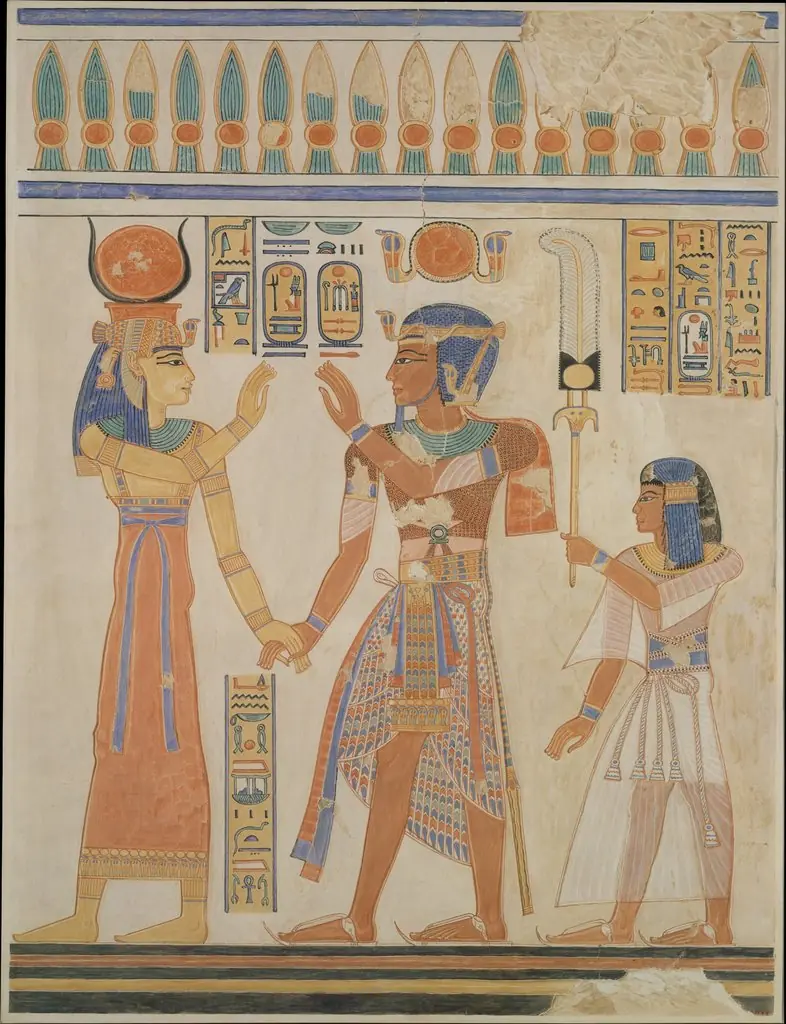 Ramesses III and Prince Amenherkhepeshef before Hathor
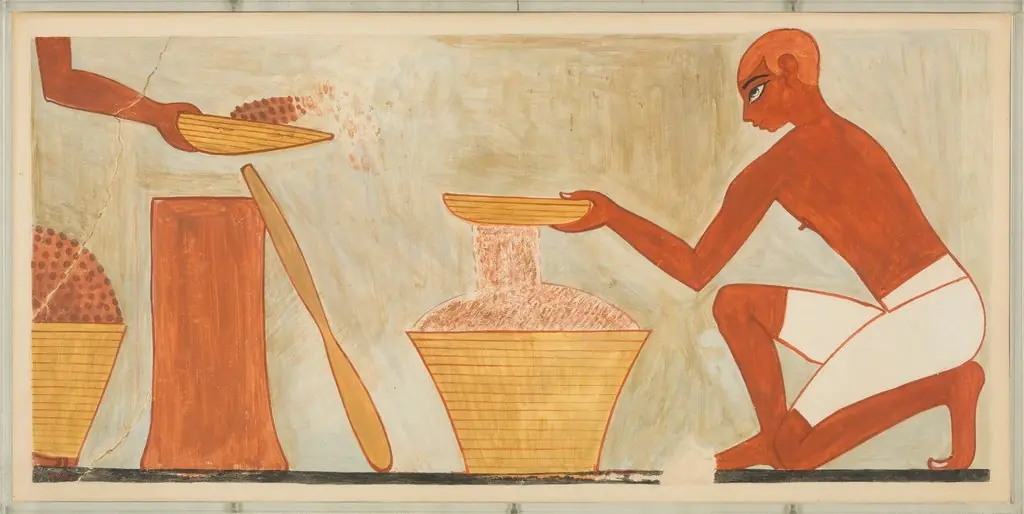 Sifting Meal, Tomb of Rekhmire
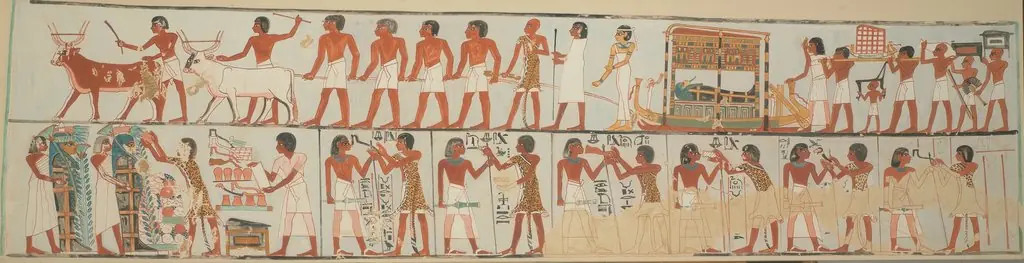 Funeral Procession, Tomb of Pairy