Artwork
Gathering Honey, Tomb of Rekhmire
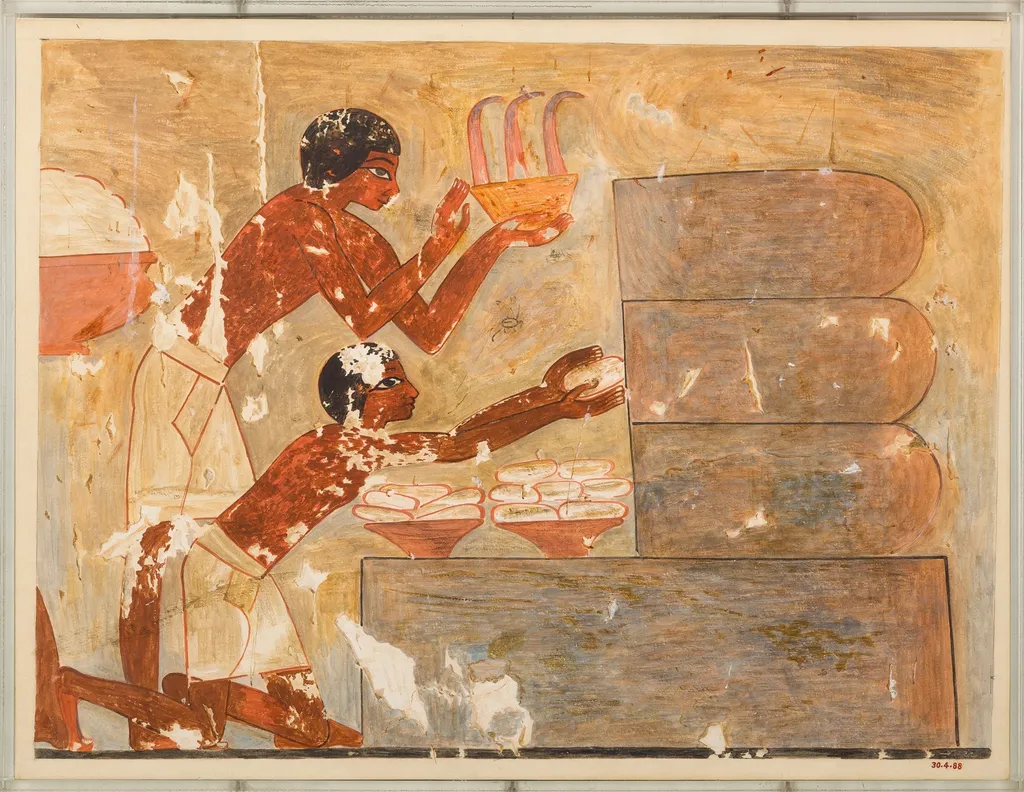
Gathering Honey, Tomb of Rekhmire is an unspecified painting by Nina M. Davies. It dates from 1490 and is held in the collection of the Metropolitan Museum of Art. Nina M.
About this work
Overview
Nina M. Davies, an Egyptologist and illustrator active in the early‑to‑mid‑20th century, produced a copy of a wall scene from the tomb of the official Rekhmire. The drawing, titled *Gathering Honey, Tomb of Rekhmire*, records a domestic activity rendered in the tomb’s original palette of earthy reds, browns, and muted whites, outlined in black.
Subject & Meaning
The composition shows two figures engaged in the collection of honey. A kneeling man holds a bowl beneath a flickering flame, while a second figure reaches toward a tray bearing round containers, suggesting the preparation and storage of the sweet substance.
Technique & Style
Davies employed a careful, flat rendering that mirrors the original Egyptian wall painting’s emphasis on solid color fields and clear outlines. The drawing reproduces the tomb’s characteristic linear precision and limited tonal range, preserving the simplicity of the ancient visual language.
History & Provenance
The work forms part of the extensive collaborative output of Nina and her husband Norman de Garis Davies, who together documented numerous Theban tombs. Their copies, often issued under the collective name N. de Garis Davies, have served as vital records for scholars, especially where the original wall paintings have deteriorated.
Context
Rekhmire was a high‑ranking official during the reign of Pharaoh Thutmose III, and his tomb includes scenes of daily life intended to ensure a prosperous afterlife. The honey‑gathering episode reflects the importance of food production and ritual offerings in elite Egyptian funerary ideology.
Artist & collection
Artist
The Egyptologists Nina M. Davies (6 January 1881 – 21 April 1965) and Norman de Garis Davies (1865–5 November 1941) were a married couple of illustrators and copyists who worked in the early and mid-twentieth century…

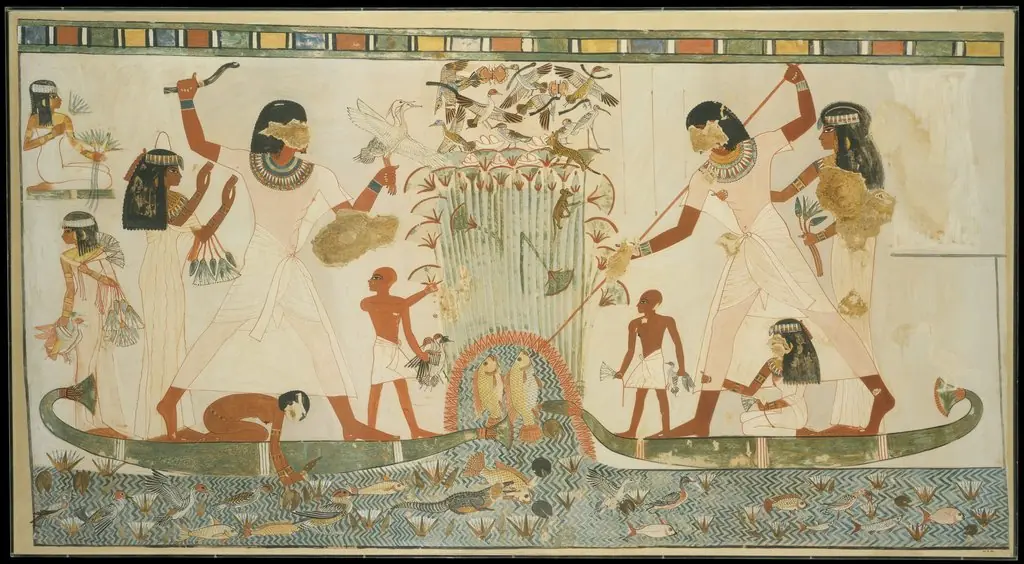 Menna and Family Hunting in the Marshes, Tomb of Menna
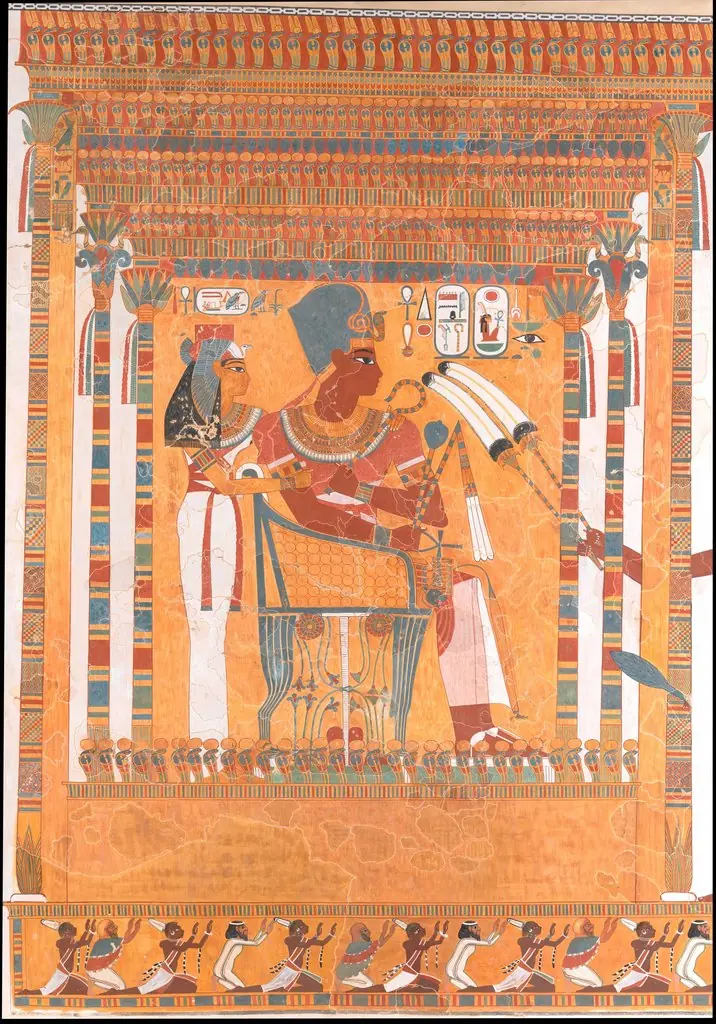 Amenhotep III and his Mother, Mutemwia, in a Kiosk
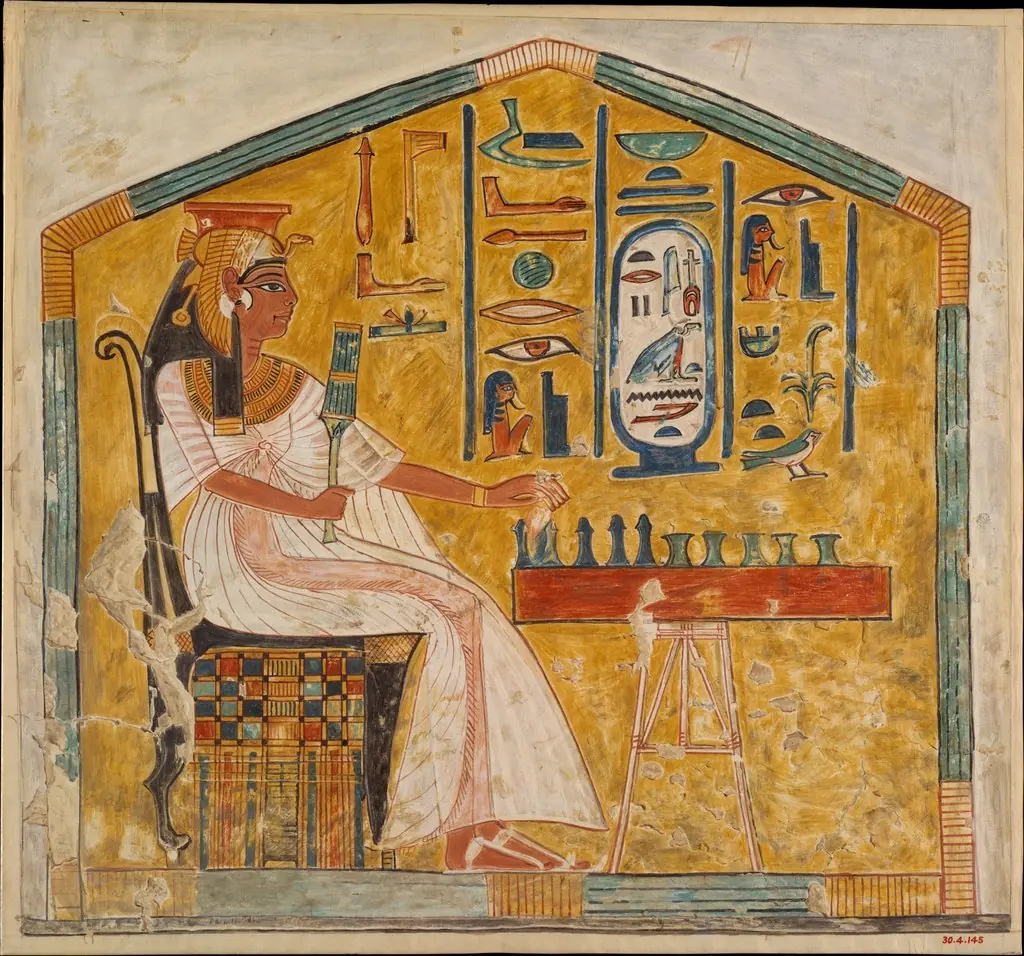 Queen Nefertari Playing Senet
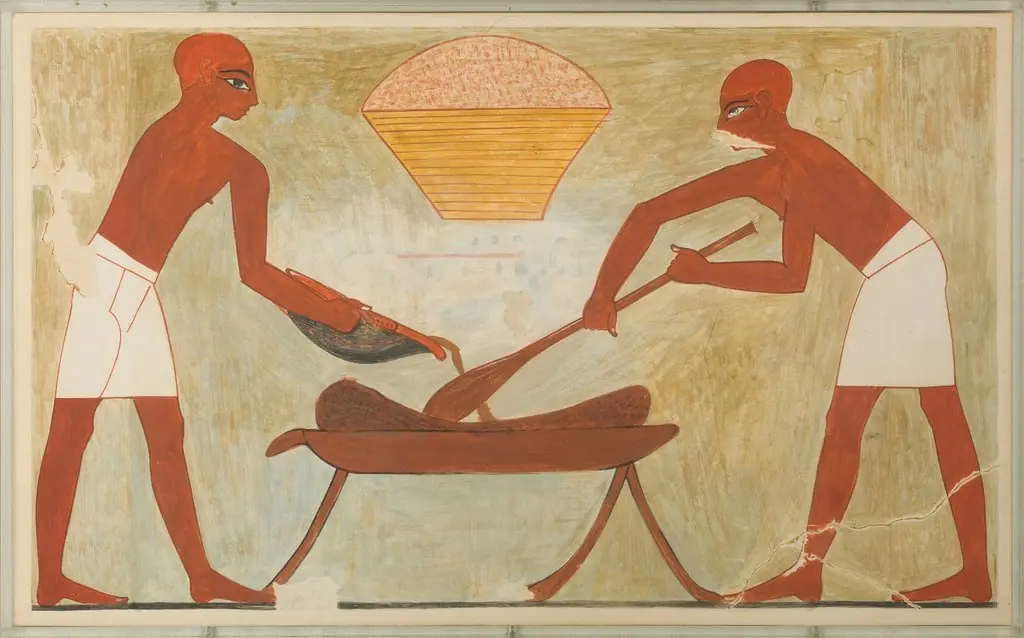 Preparing Dough, Tomb of Rekhmire
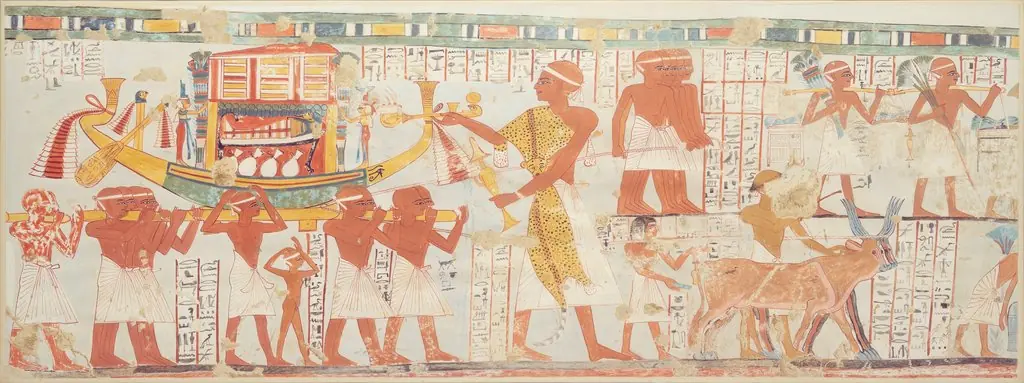 Nakhtamun's Funeral Procession, Tomb of Nakhtamun
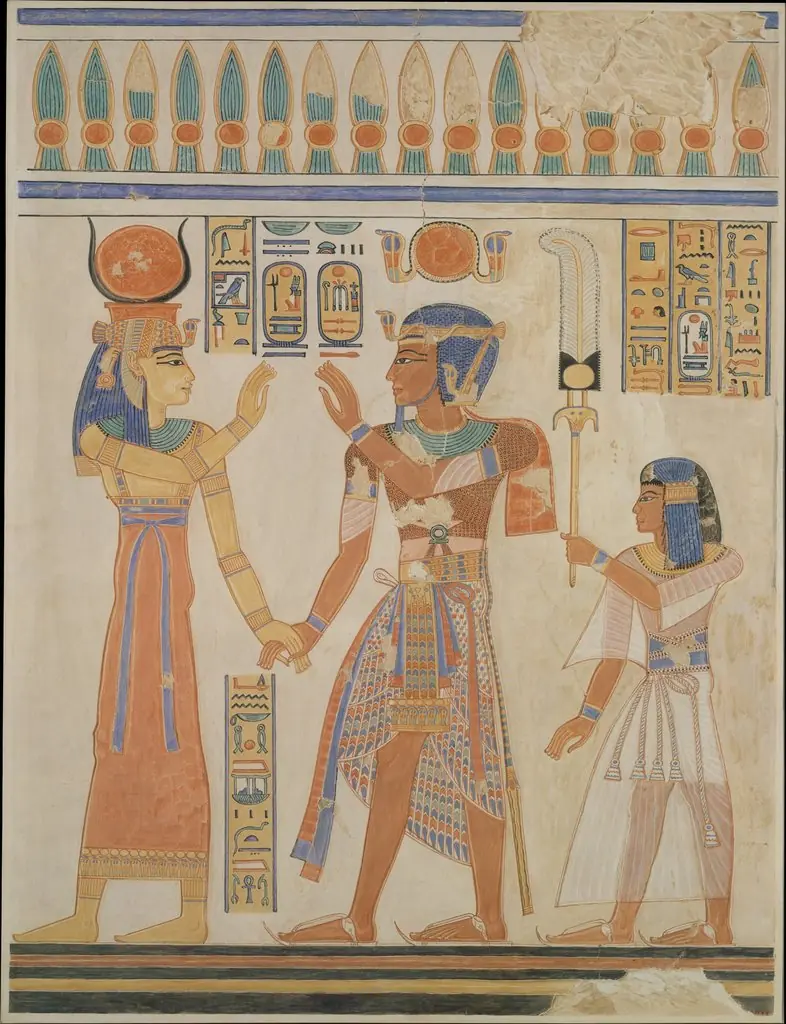 Ramesses III and Prince Amenherkhepeshef before Hathor
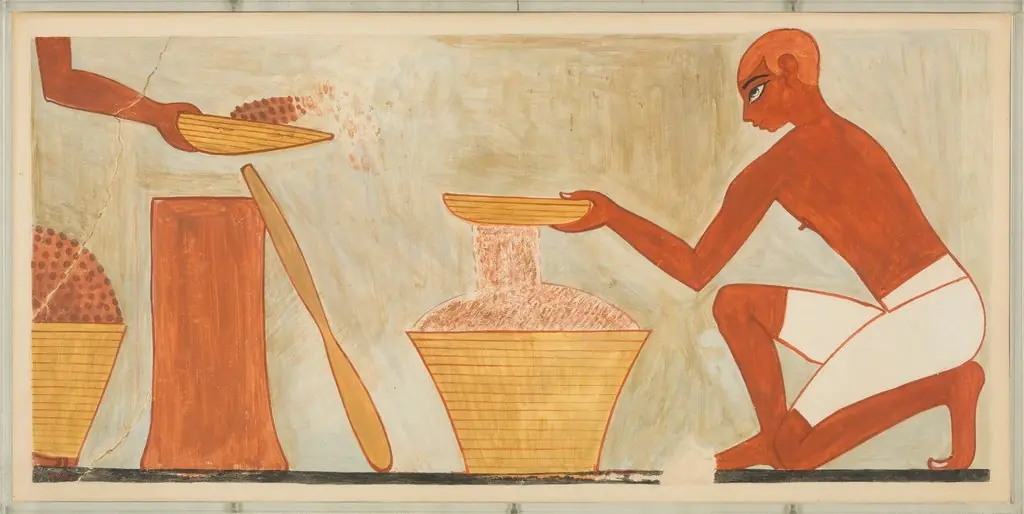 Sifting Meal, Tomb of Rekhmire
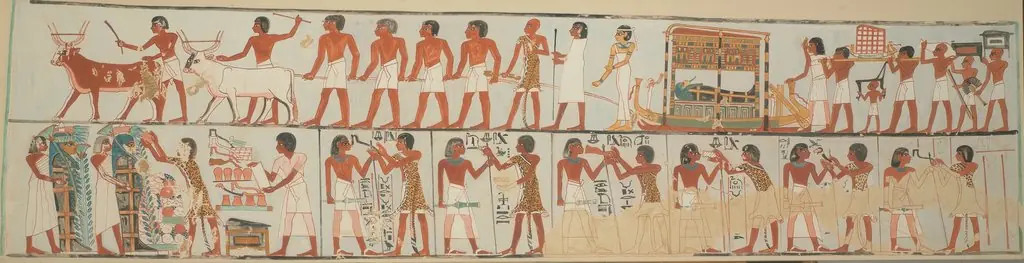 Funeral Procession, Tomb of Pairy
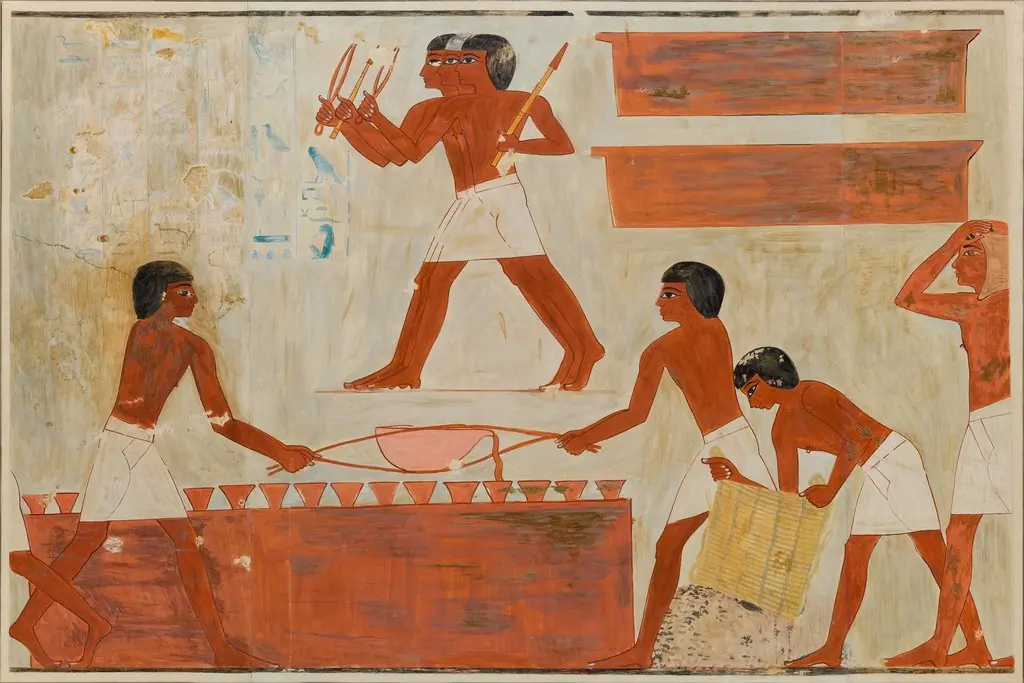 Casting Metal, Tomb of Rekhmire
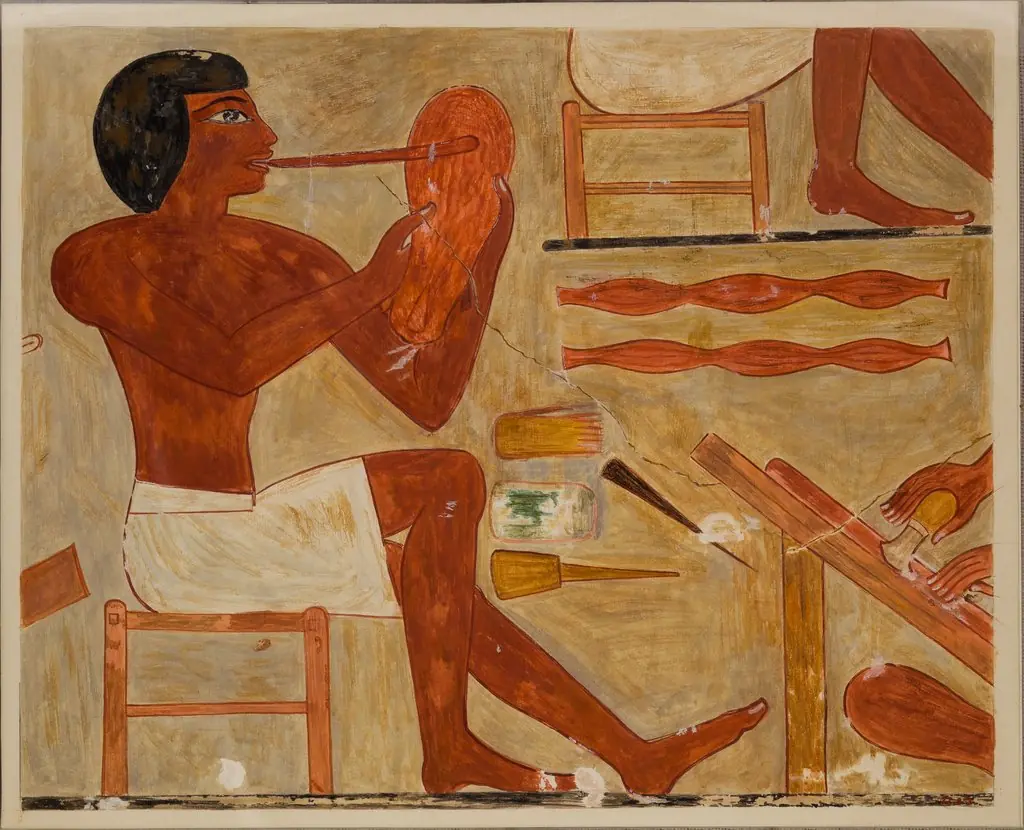 Sandal Maker, Tomb of Rekhmire
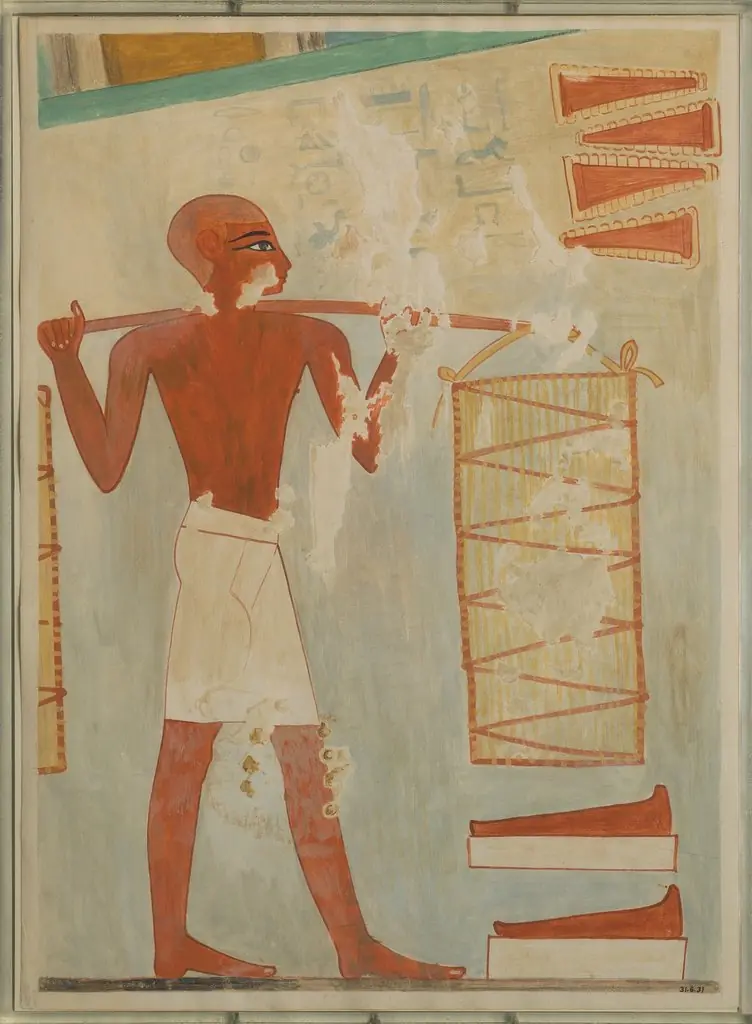 Man Carrying Loaves, Tomb of Rekhmire
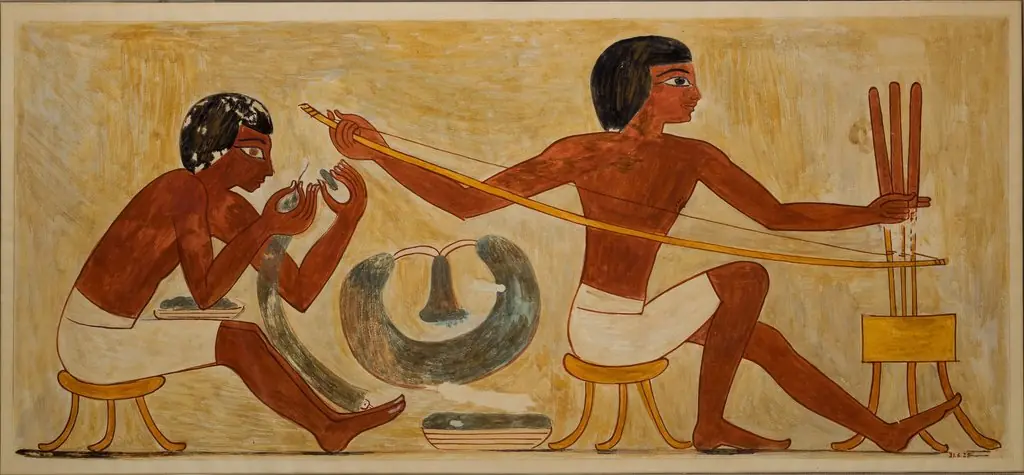 Stringing and Drilling Beads, Tomb of Rekhmire
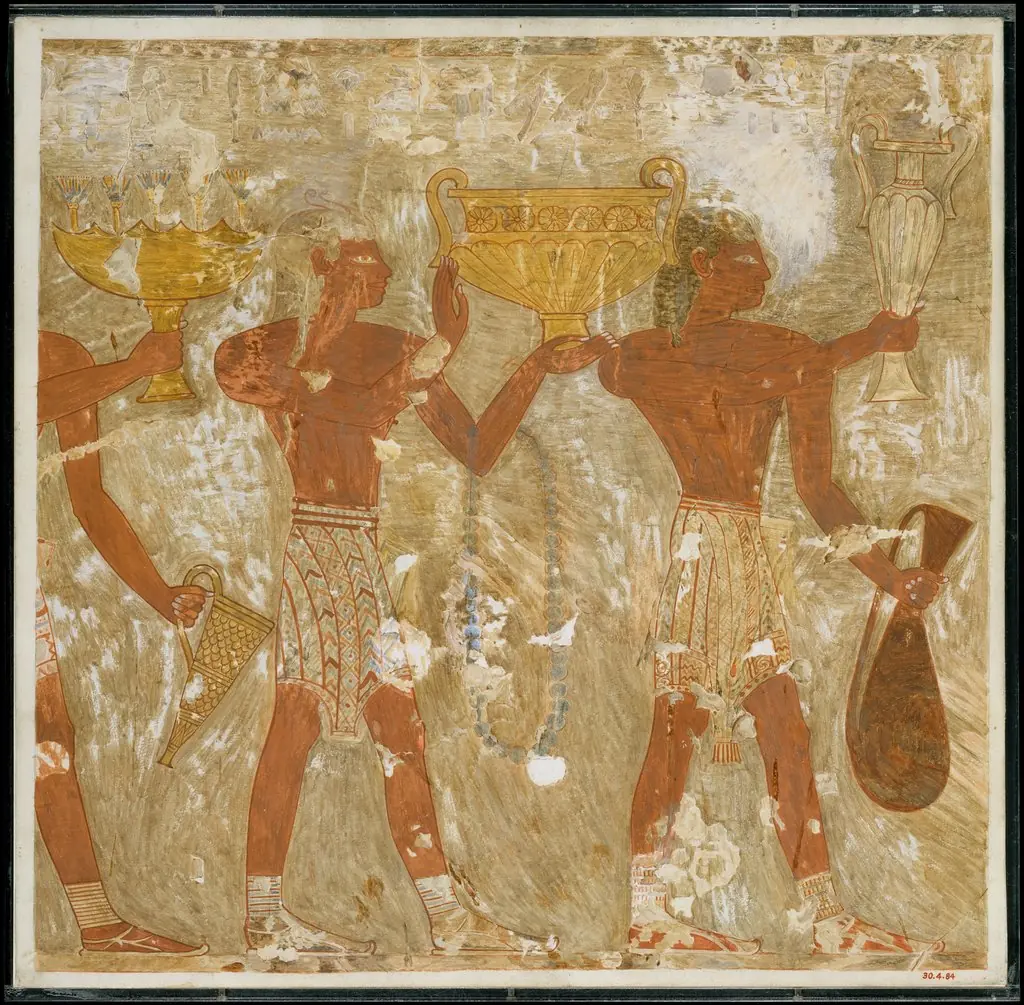 Cretans Bringing Gifts, Tomb of Rekhmire
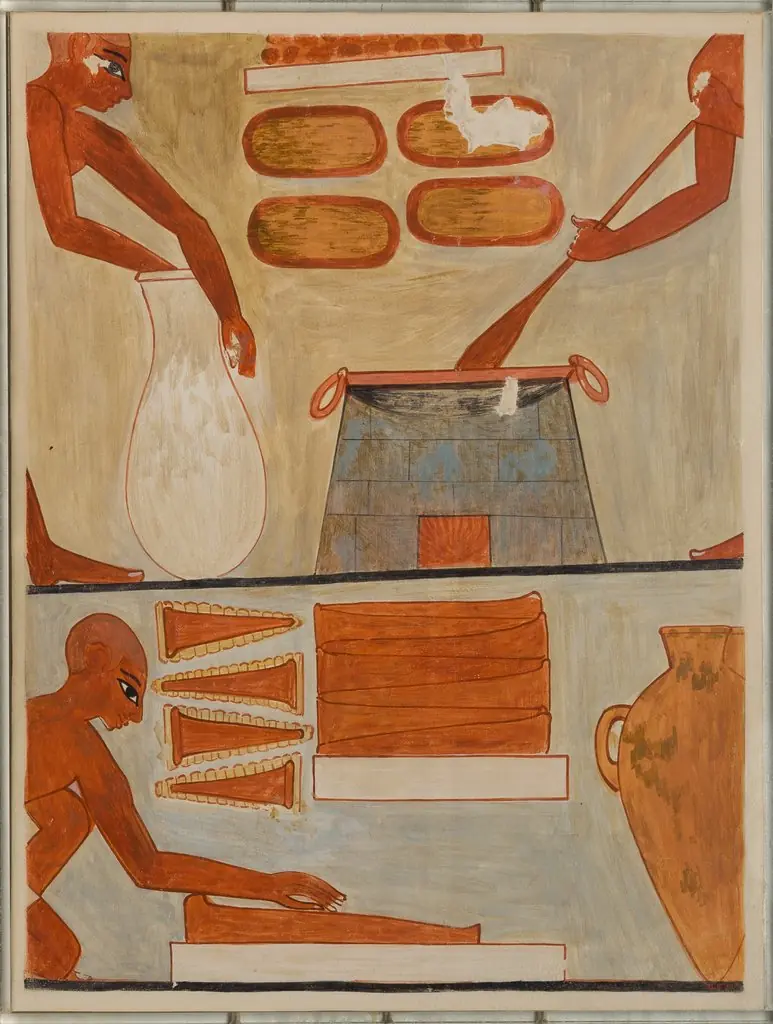 Preparing and Cooking Cakes, Tomb of Rekhmire
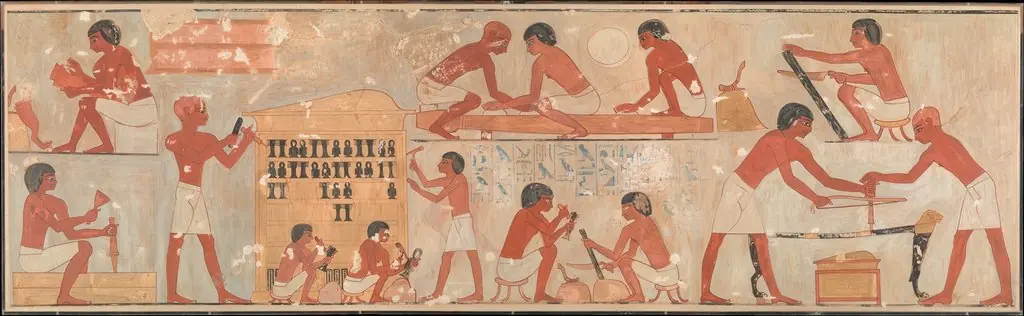 Carpenters at Work, Tomb of Rekhmire
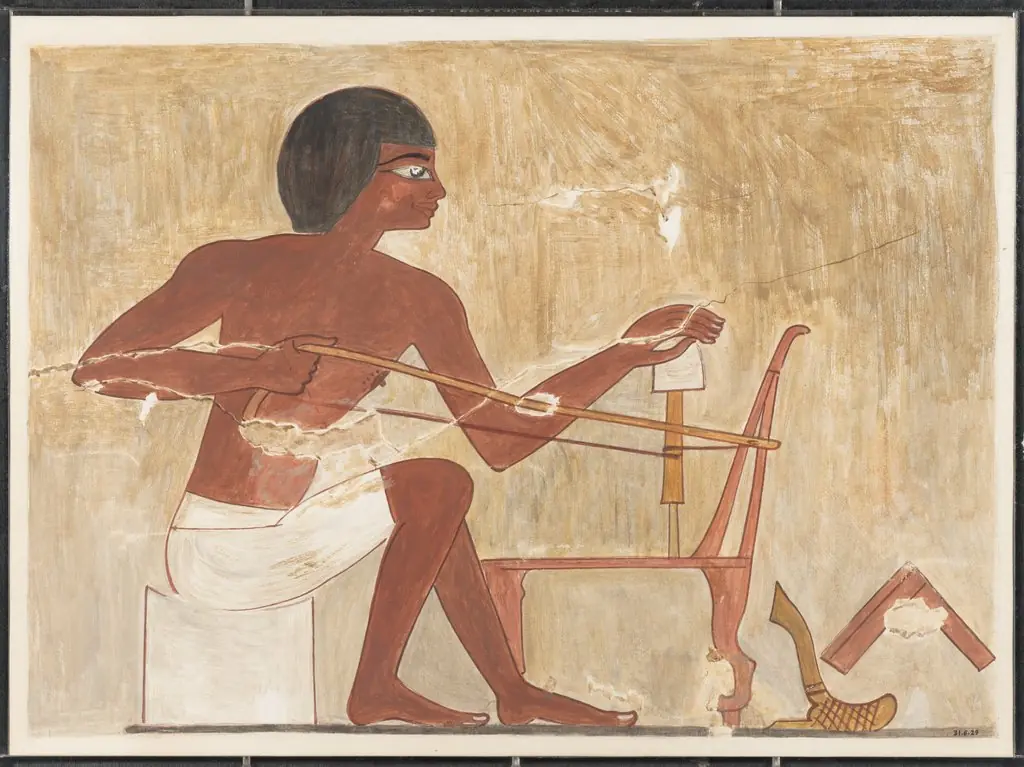 Carpenter Making a Chair, Tomb of Rekhmire
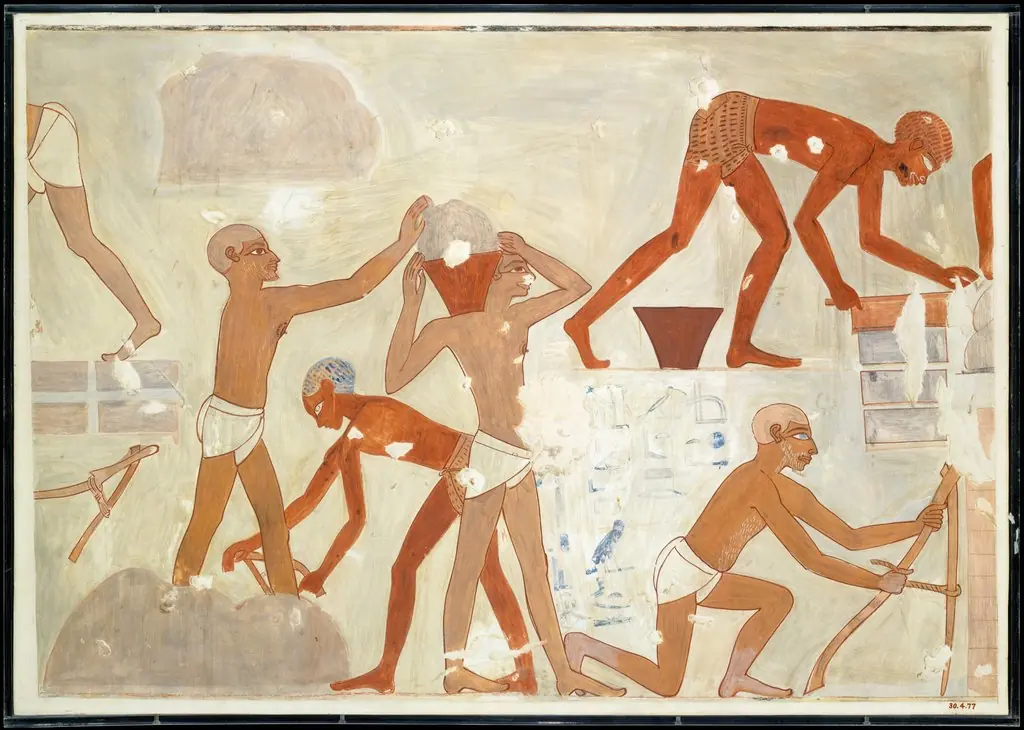 Brickmakers, Tomb of Rekhmire
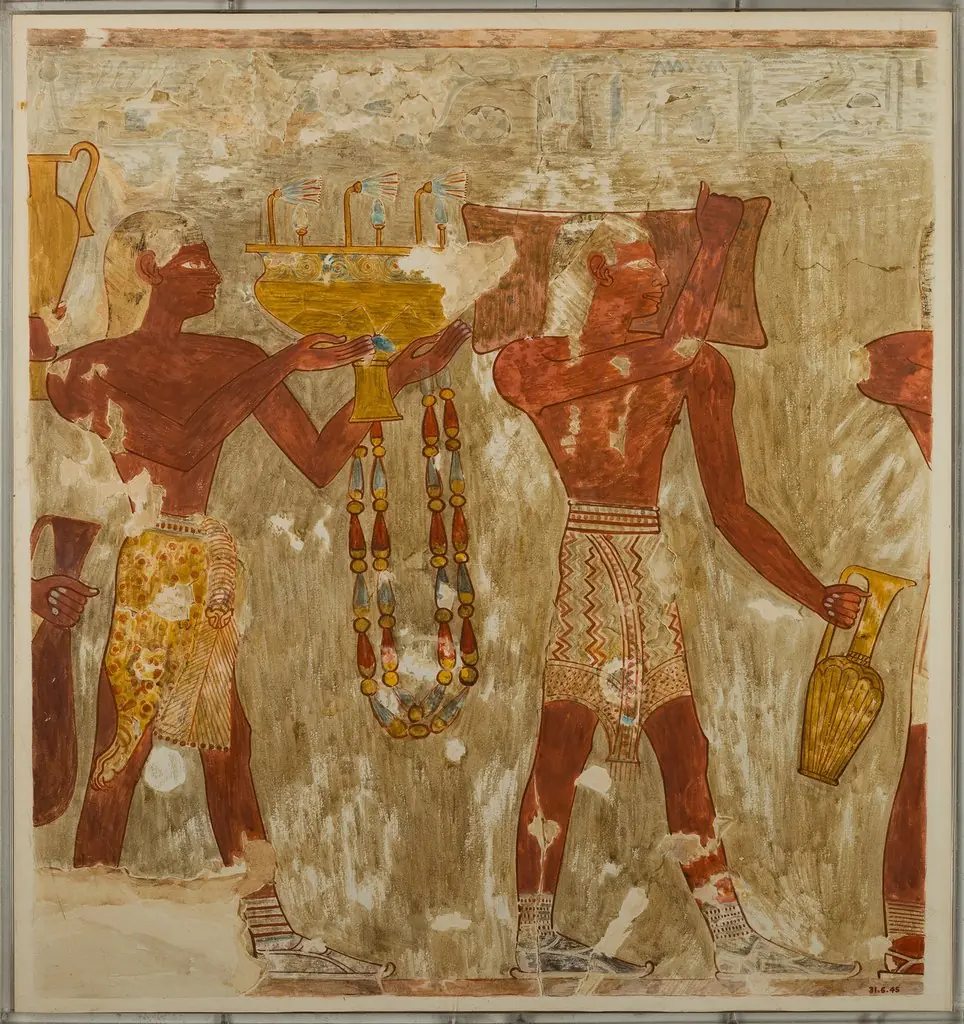 Cretans Bringing Gifts of Metal and Jewelry, Tomb of Rekhmire
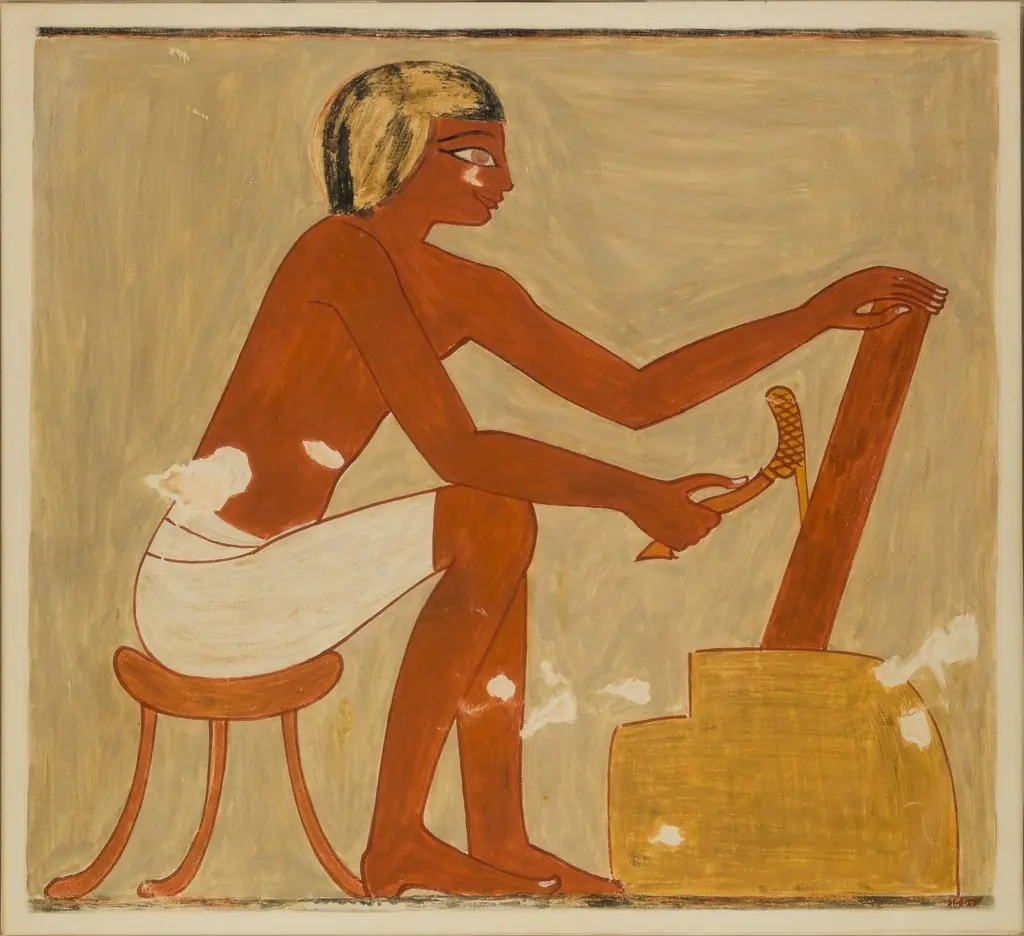 Trimming Wood with an Adze, Tomb of Rekhmire