Artwork
Menna's Daughter Offering to her Parents, Tomb of Menna
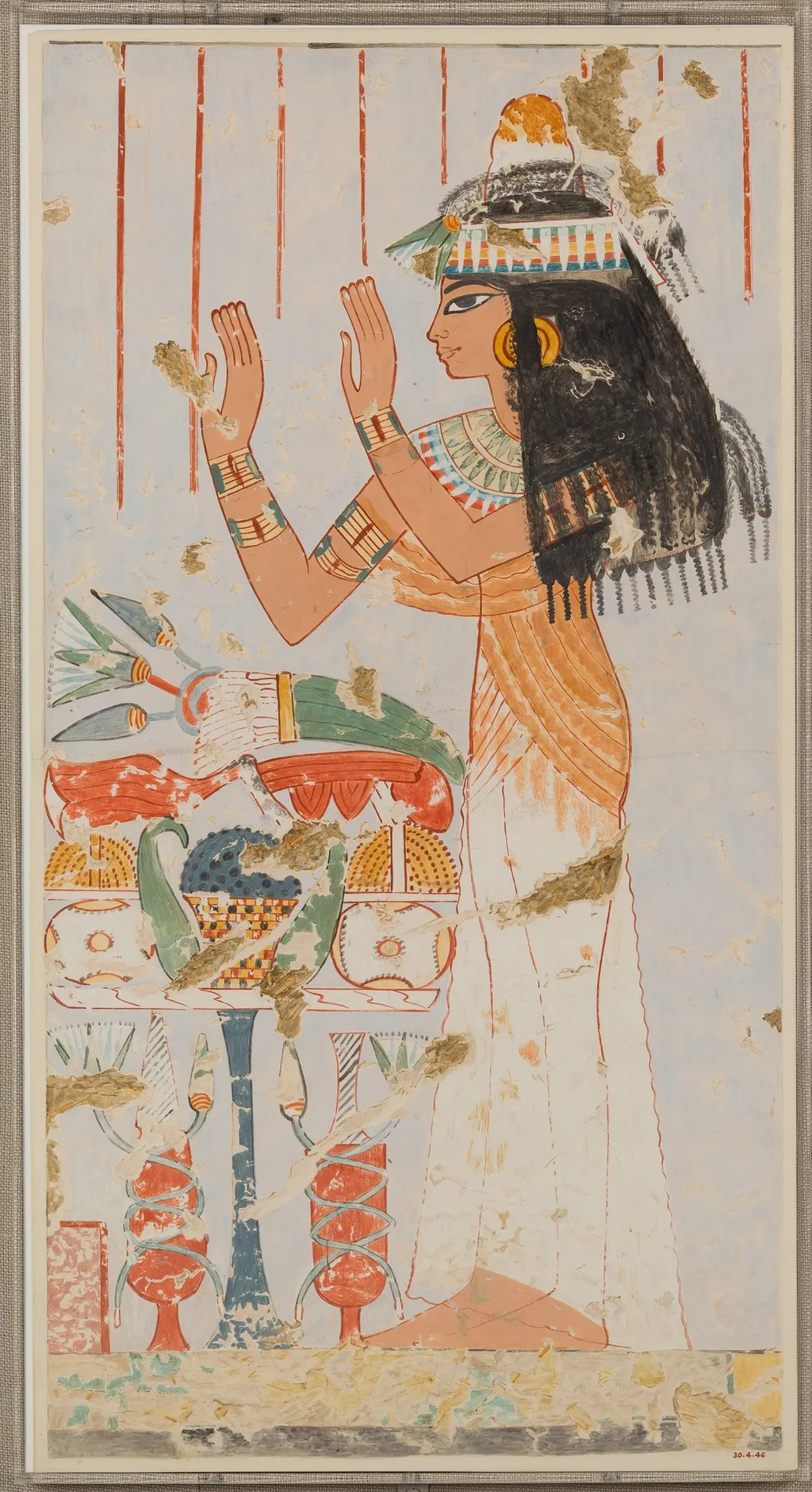
Menna's Daughter Offering to her Parents, Tomb of Menna is an unspecified painting by Nina M. Davies. It dates from 1400 and is held in the collection of the Metropolitan Museum of Art. The wall painting originates from the tomb of Menna, a private burial site dating to the early eighteenth dynasty, around 1400 BCE.
About this work
Overview
Executed as part of the funerary program, the scene portrays a domestic offering ritual, intended to sustain the deceased and his family in the afterlife.
The wall painting originates from the tomb of Menna, a private burial site dating to the early eighteenth dynasty, around 1400 BCE. Executed as part of the funerary program, the scene portrays a domestic offering ritual, intended to sustain the deceased and his family in the afterlife. The composition is rendered in the characteristic flat, linear style of New Kingdom tomb decoration, with a limited palette that has faded over time.
Subject & Meaning
A young woman, identifiable by her feathered headdress and raised arms, presents offerings to a seated elder, presumed to be her parents. The tableau reflects the Egyptian belief that the living must provide sustenance to the dead, ensuring familial continuity beyond death. By depicting a filial act, the image reinforces the social obligations of children toward their ancestors within the mortuary context.
Technique & Style
Painted directly onto limestone plaster, the work employs mineral pigments applied in broad, unmodulated areas of color. Figures are rendered in a profile stance with simplified anatomy, emphasizing symbolic rather than naturalistic representation. The scene includes a low table laden with foodstuffs, bowls, and a miniature shrine, all delineated with fine black lines that define the composition's flat planes.
History & Provenance
The tomb was first recorded in the early twentieth century by British Egyptologists Nina M. Davies and her husband Norman de Garis Davies, who produced detailed copies and scholarly notes. Their documentation, produced during a period of intensive archaeological survey in Upper Egypt, remains a primary source for the tomb’s iconography, as the original painting has suffered considerable pigment loss.
Context
Menna’s tomb belongs to a class of elite private burials that combined religious formulae with personalized family scenes. The offering motif aligns with standard funerary texts, yet the inclusion of a daughter performing the rite highlights the role of women in maintaining household cults. Such depictions illustrate the integration of daily life and ritual within New Kingdom mortuary art.
Artist & collection
Artist
The Egyptologists Nina M. Davies (6 January 1881 – 21 April 1965) and Norman de Garis Davies (1865–5 November 1941) were a married couple of illustrators and copyists who worked in the early and mid-twentieth century…

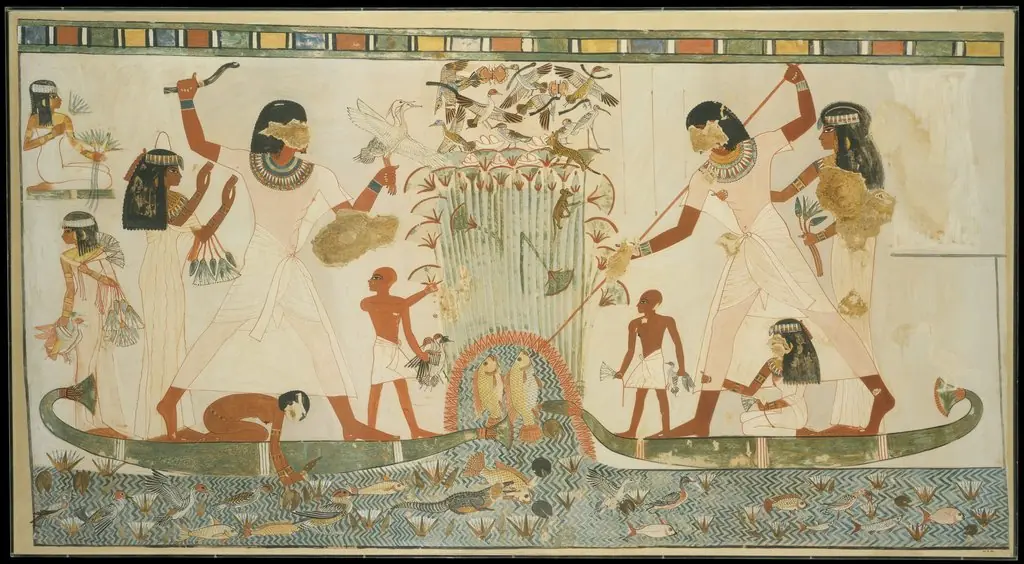 Menna and Family Hunting in the Marshes, Tomb of Menna
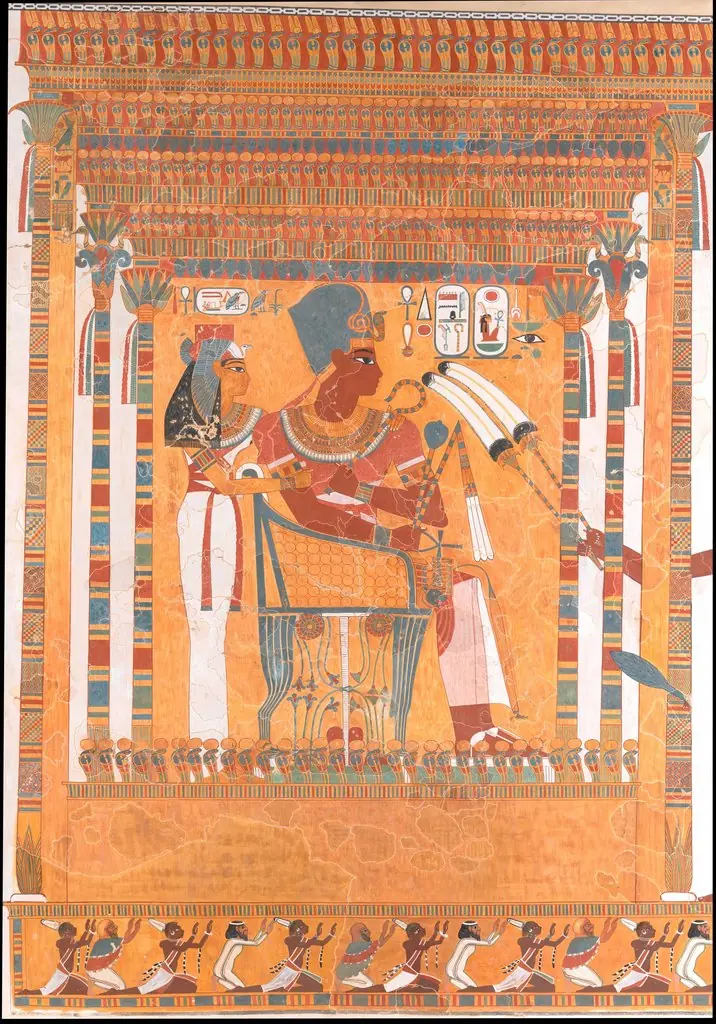 Amenhotep III and his Mother, Mutemwia, in a Kiosk
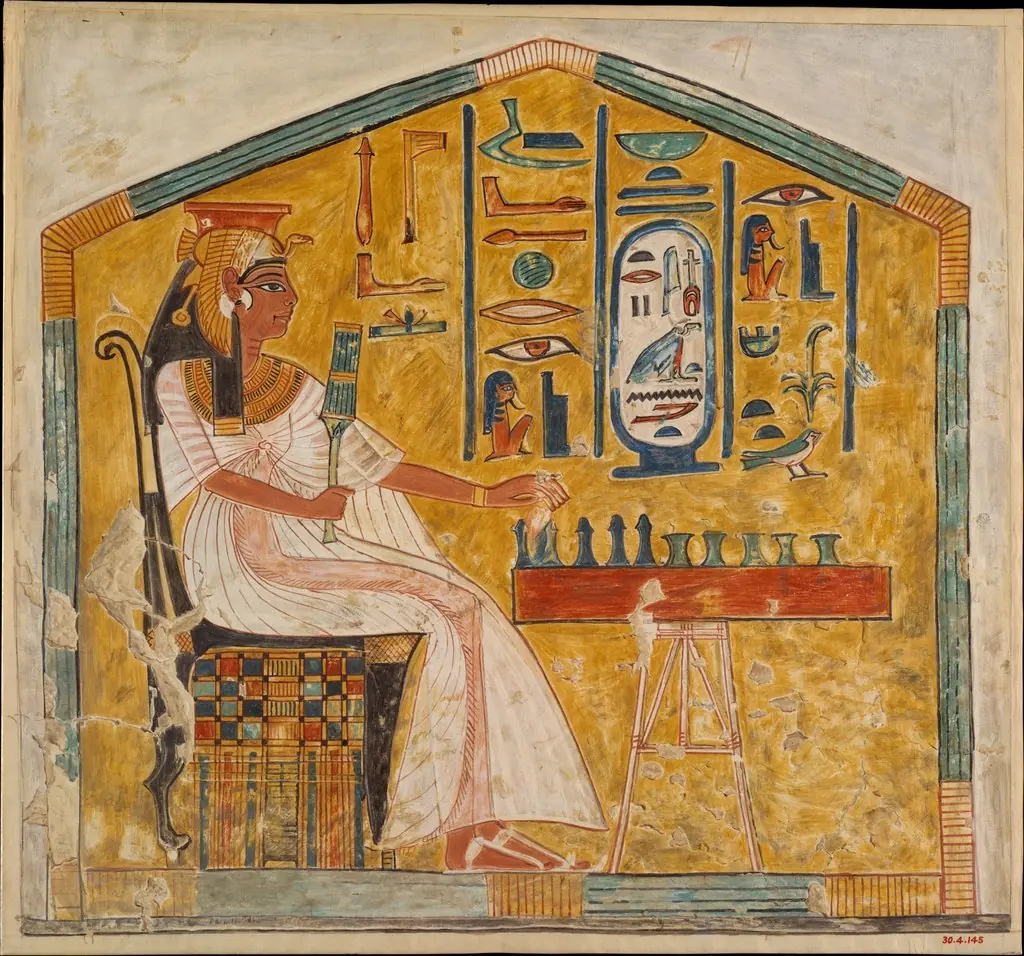 Queen Nefertari Playing Senet
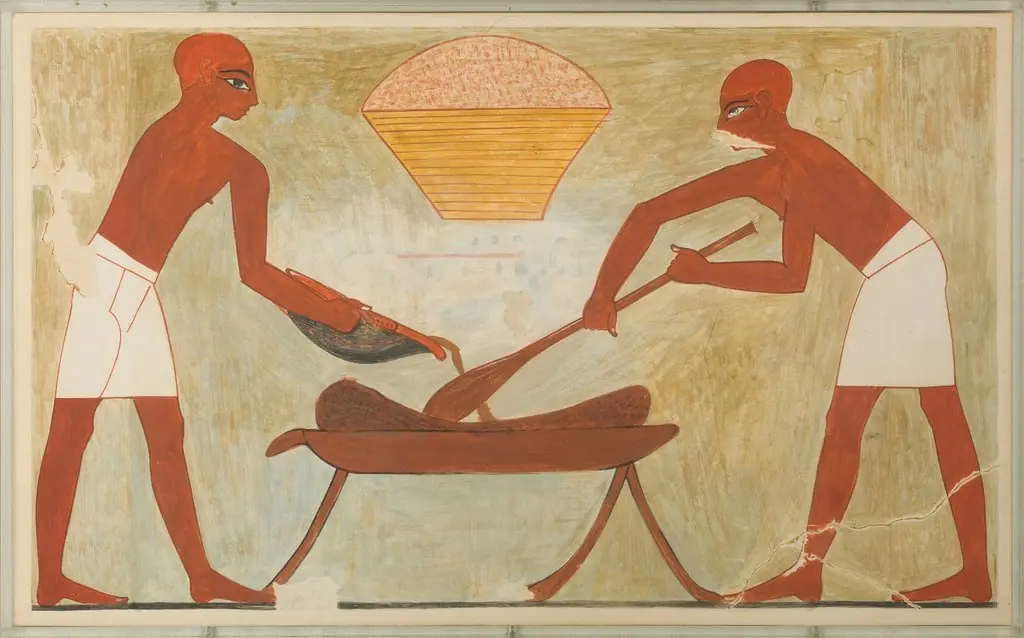 Preparing Dough, Tomb of Rekhmire
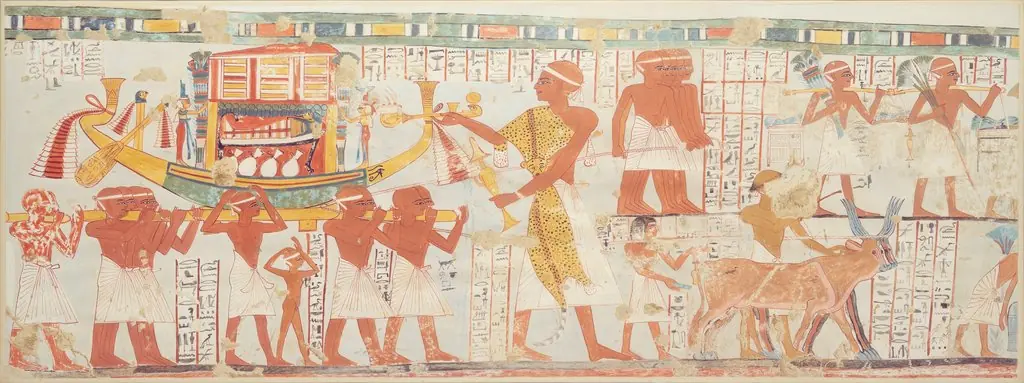 Nakhtamun's Funeral Procession, Tomb of Nakhtamun
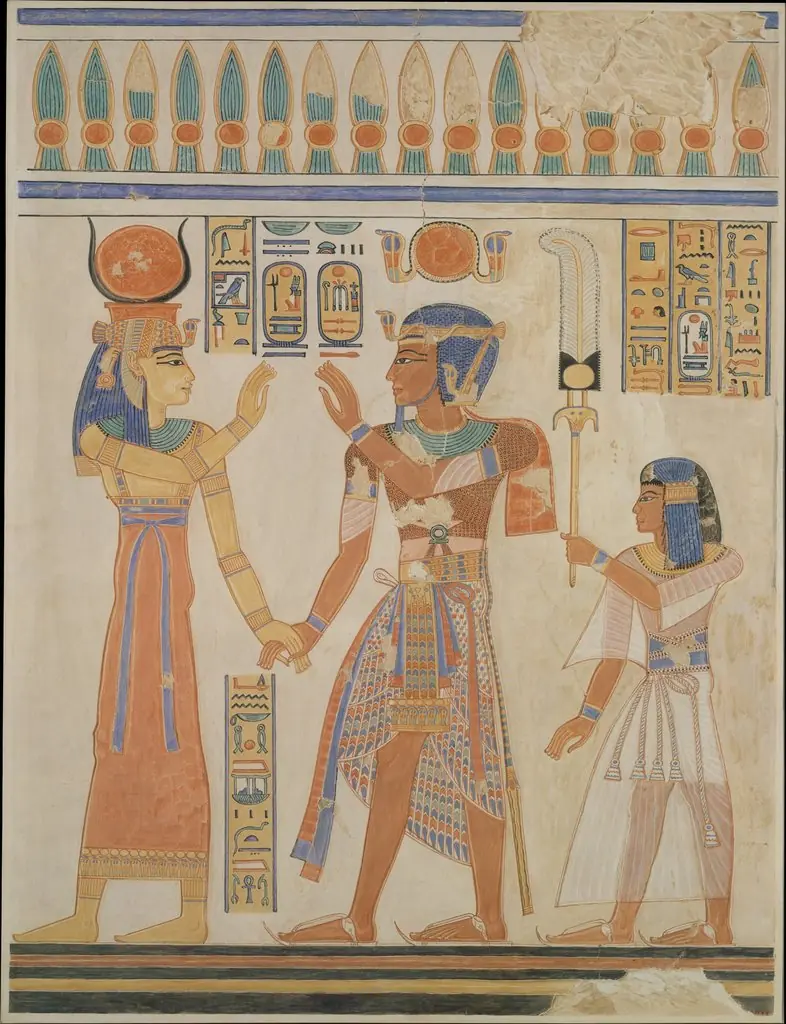 Ramesses III and Prince Amenherkhepeshef before Hathor
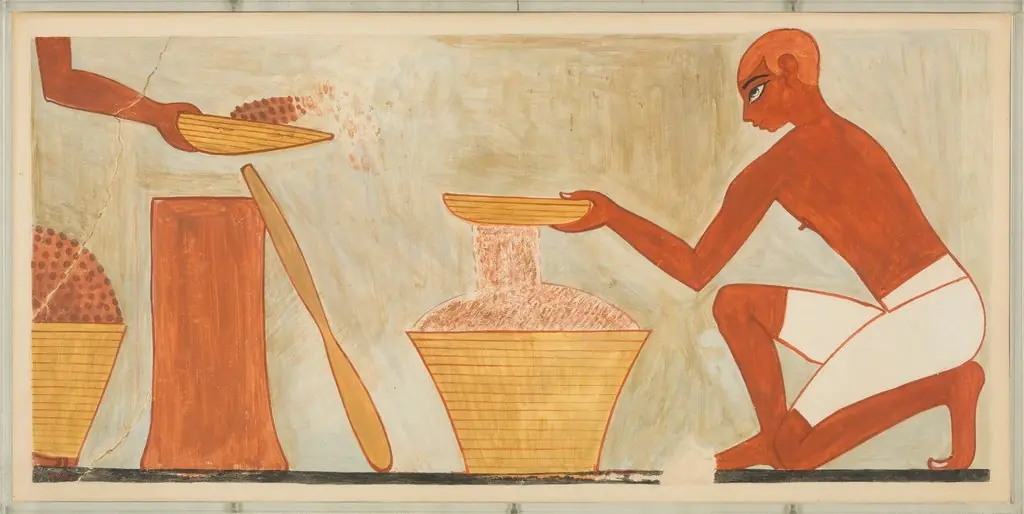 Sifting Meal, Tomb of Rekhmire
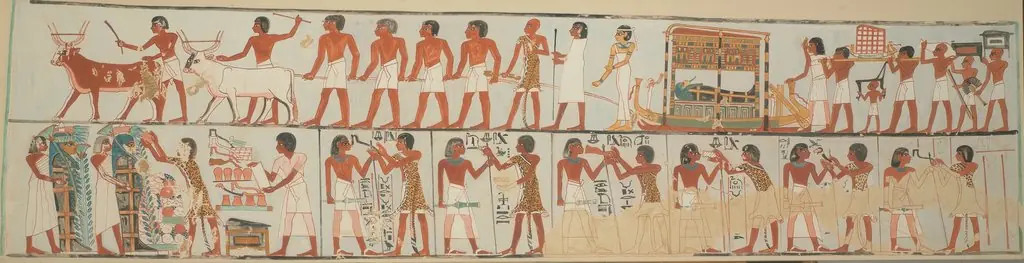 Funeral Procession, Tomb of Pairy