Artwork
Wood and Leather Craftsmen, Tomb of Hapu
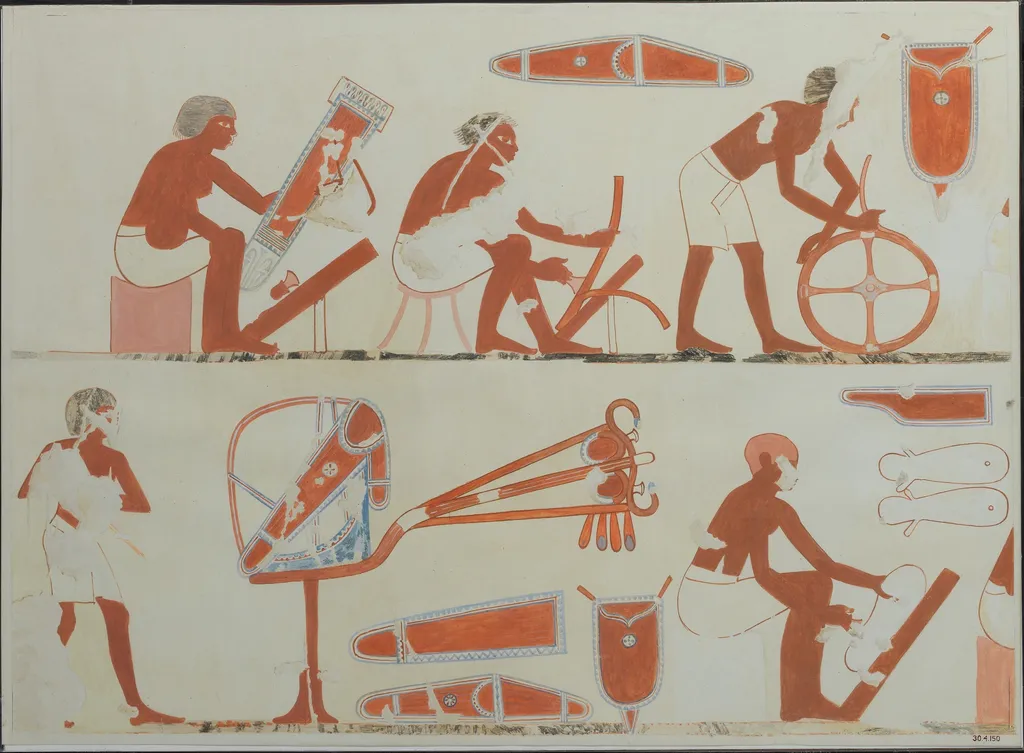
Wood and Leather Craftsmen, Tomb of Hapu is an unspecified painting by the Byzantine icon painting artist Nina M. Davies. It dates from 1400 and is held in the collection of the Metropolitan Museum of Art. Nina M.
About this work
Overview
Davies's painting, "Wood and Leather Craftsmen, Tomb of Hapu," meticulously reproduces a scene from an ancient Egyptian tomb dating to approximately 1400 BCE.
Nina M. Davies's painting, "Wood and Leather Craftsmen, Tomb of Hapu," meticulously reproduces a scene from an ancient Egyptian tomb dating to approximately 1400 BCE. This early to mid-twentieth-century work captures artisans engaged in daily labor, specifically woodworking and leathercraft. It serves as a valuable record of New Kingdom life and artistic conventions, now preserved within the collection of The Metropolitan Museum of Art.
Subject & Meaning
The painting illustrates various stages of ancient Egyptian craftsmanship, featuring individuals dedicated to woodworking and leather production. One artisan bends over a boat hull, while another meticulously shapes a chariot wheel. A third figure is shown working with leather, utilizing simple tools like hammers and awls. The depiction includes details such as a chariot with a tall, curved pole and a cross-emblazoned shield, alongside boats adorned with oars and geometric designs, all conveying focused activity.
Technique & Style
Nina M. Davies rendered this scene with bold red lines defining the figures against a light, unadorned background, characteristic of her copying technique. While documenting ancient Egyptian artistry, her interpretation subtly incorporates elements reminiscent of Byzantine iconography. This stylistic approach allows for clear legibility of the forms and actions, emphasizing the outlines and essential details of the craftsmen and their tools.
History & Provenance
This work is a product of Nina M. Davies's extensive career as an Egyptologist and illustrator. Throughout the early to mid-twentieth century, she collaborated with her husband, Norman de Garis Davies, to systematically document and copy ancient Egyptian wall paintings. Her meticulous reproductions, like this one from the Tomb of Hapu, played a crucial role in preserving visual records of these fragile historical artifacts for scholarly study and public appreciation.
Context
The original scene, located in the Tomb of Hapu, dates to the New Kingdom period around 1400 BCE. Tomb paintings frequently depicted aspects of daily life, including various professions and agricultural activities, intended to ensure the deceased's prosperity in the afterlife. This particular panel offers insight into the skilled labor required for essential crafts like boat building and chariot construction, reflecting the economic and social structures of ancient Egypt.
Artist & collection
Artist
The Egyptologists Nina M. Davies (6 January 1881 – 21 April 1965) and Norman de Garis Davies (1865–5 November 1941) were a married couple of illustrators and copyists who worked in the early and mid-twentieth century…

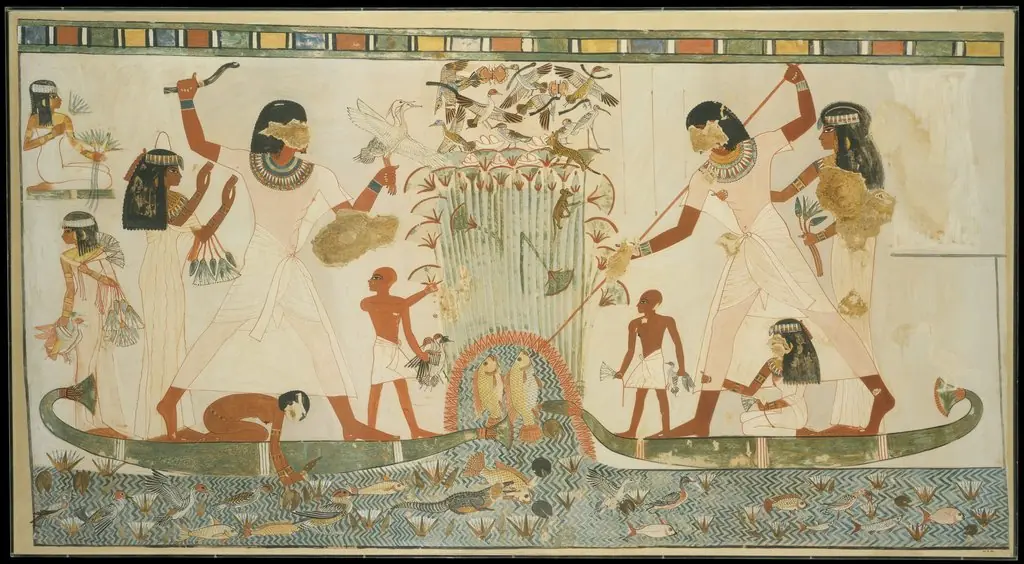 Menna and Family Hunting in the Marshes, Tomb of Menna
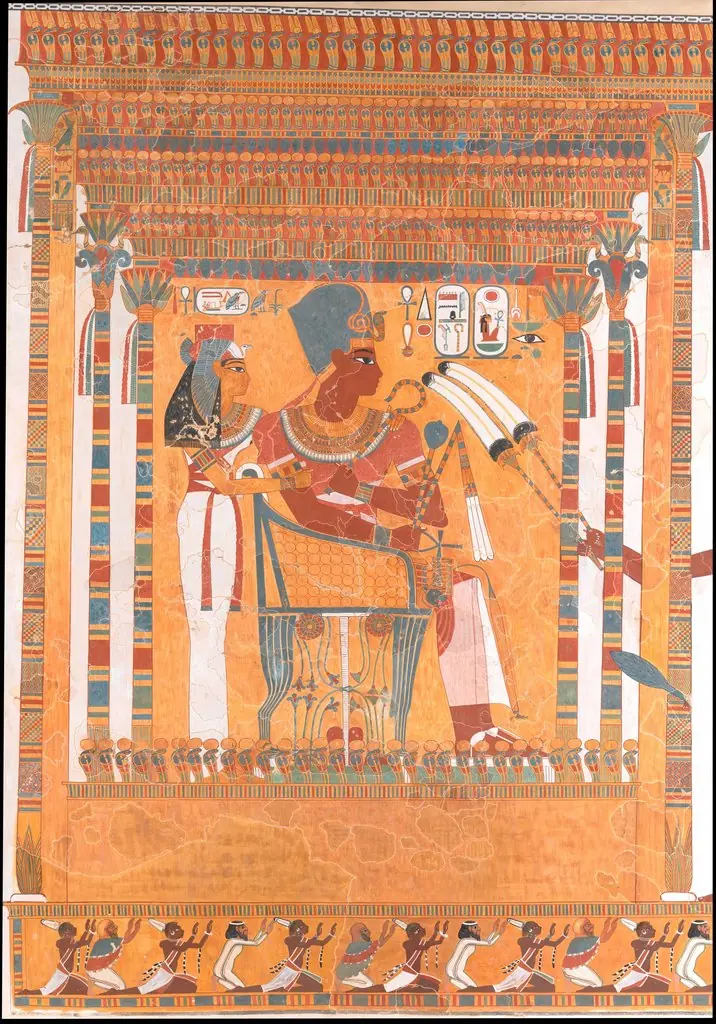 Amenhotep III and his Mother, Mutemwia, in a Kiosk
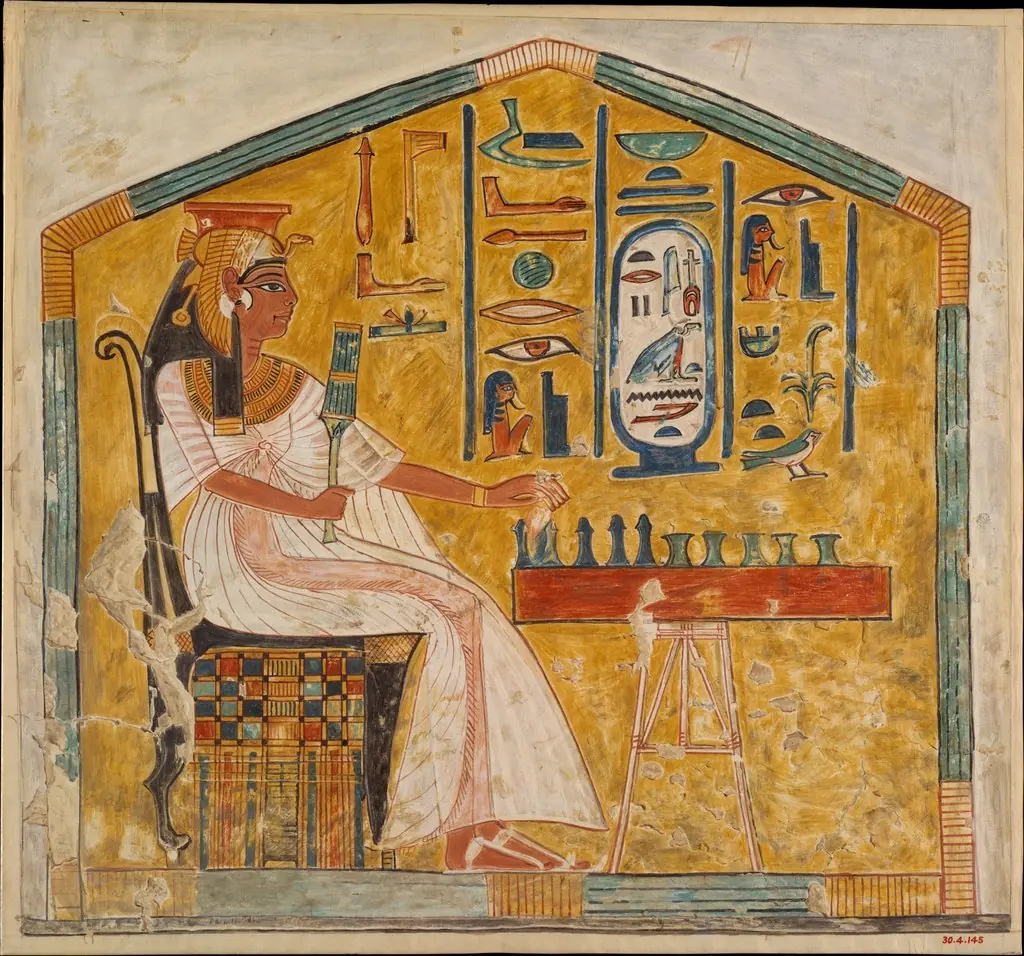 Queen Nefertari Playing Senet
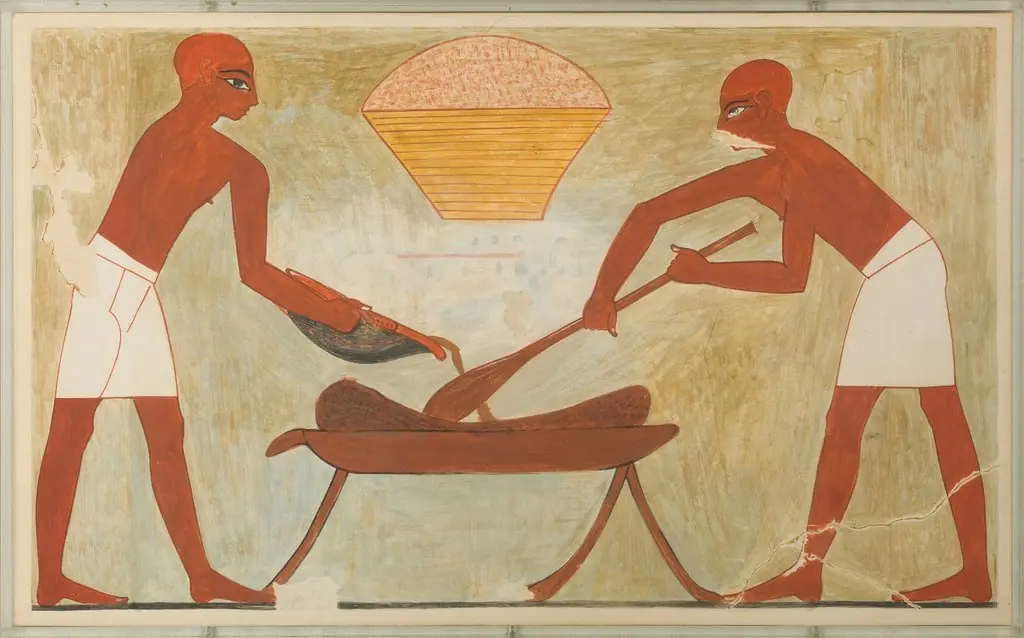 Preparing Dough, Tomb of Rekhmire
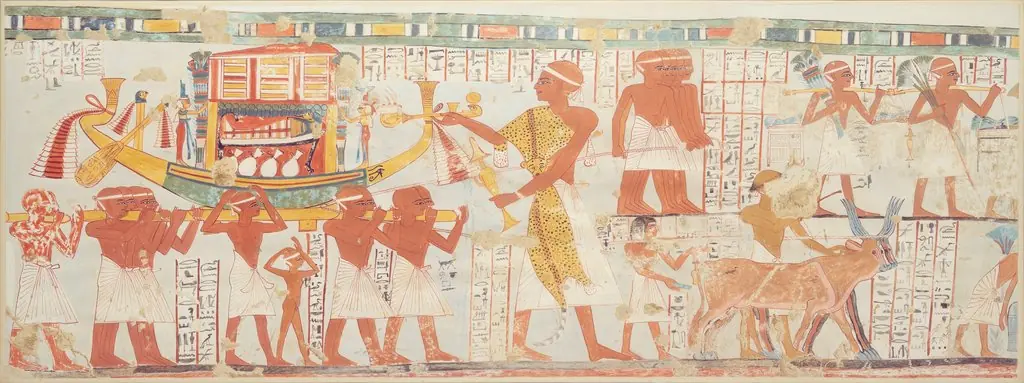 Nakhtamun's Funeral Procession, Tomb of Nakhtamun
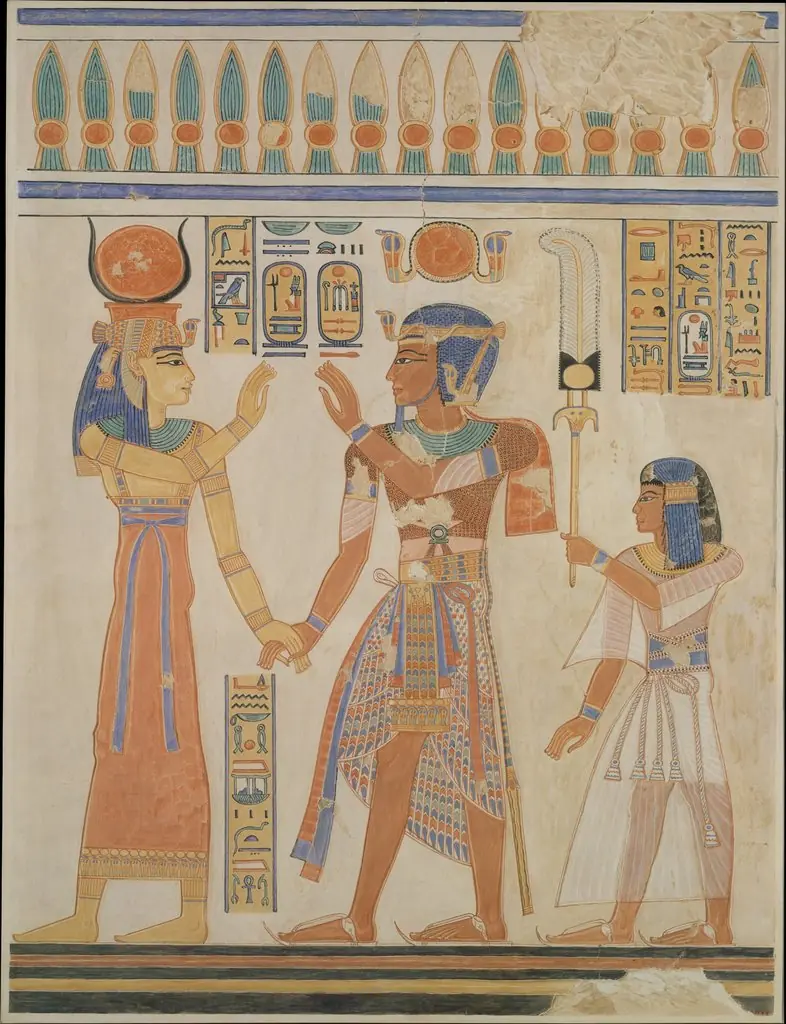 Ramesses III and Prince Amenherkhepeshef before Hathor
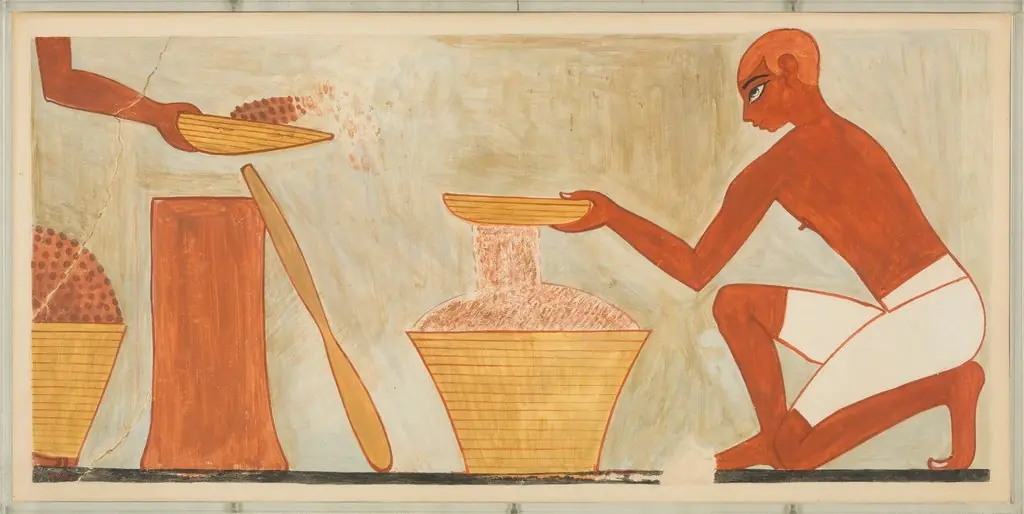 Sifting Meal, Tomb of Rekhmire
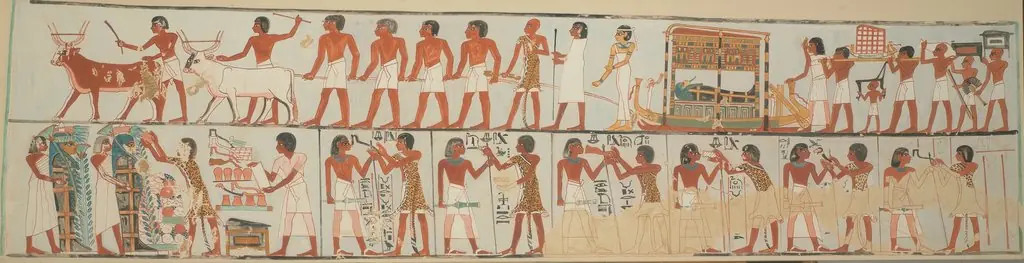 Funeral Procession, Tomb of Pairy
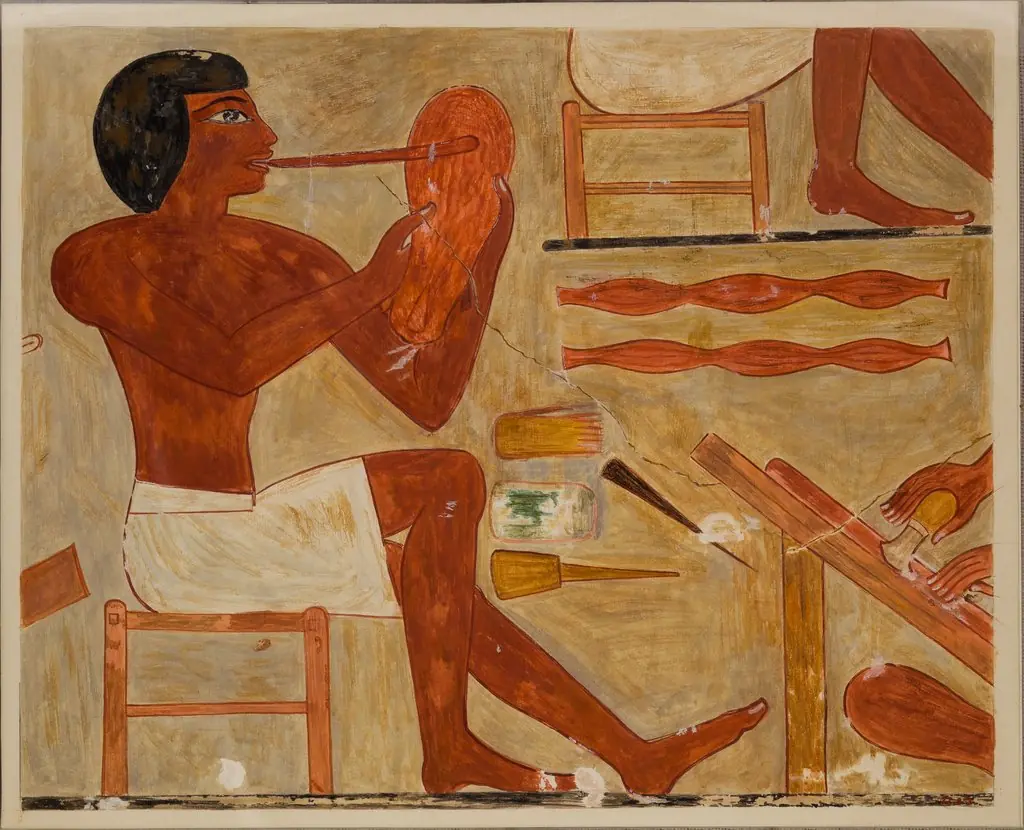 Sandal Maker, Tomb of Rekhmire
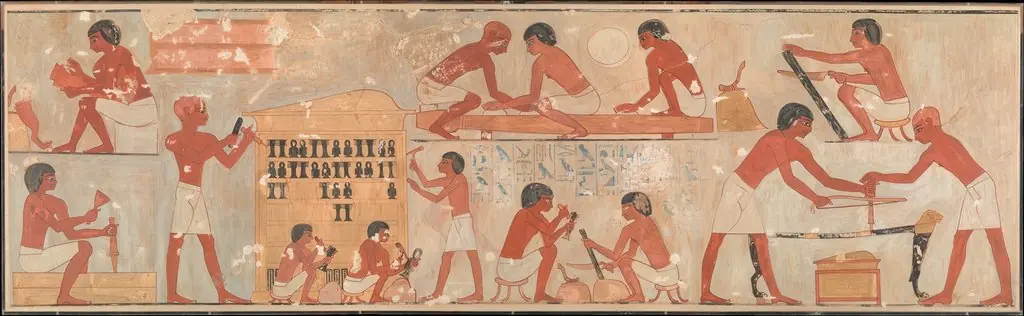 Carpenters at Work, Tomb of Rekhmire
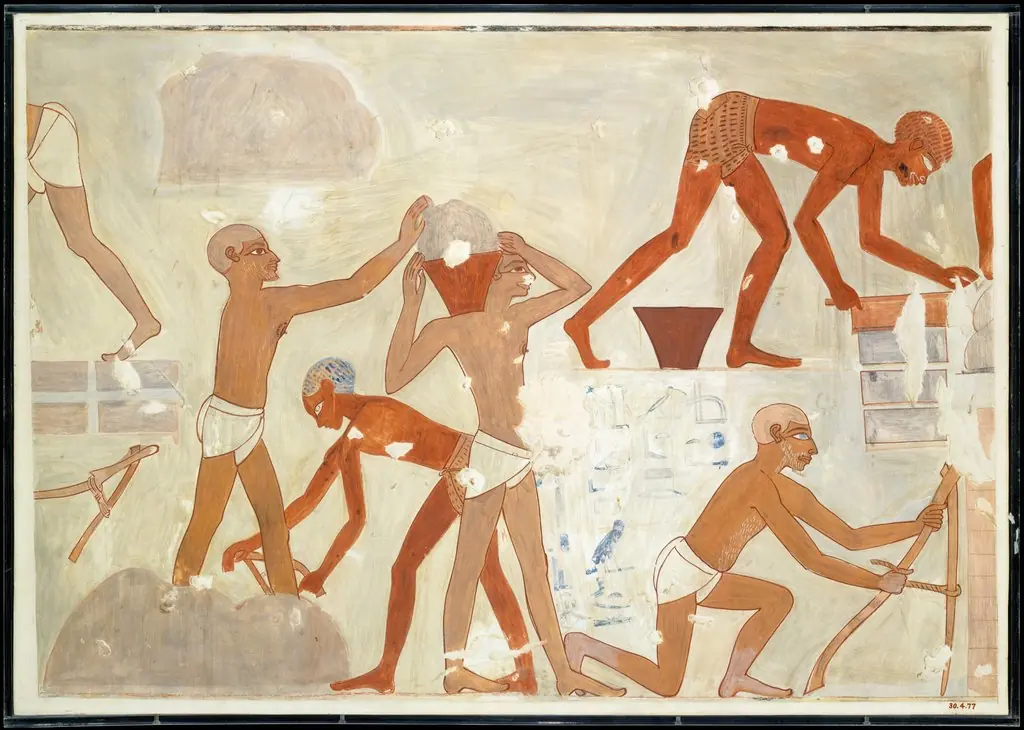 Brickmakers, Tomb of Rekhmire
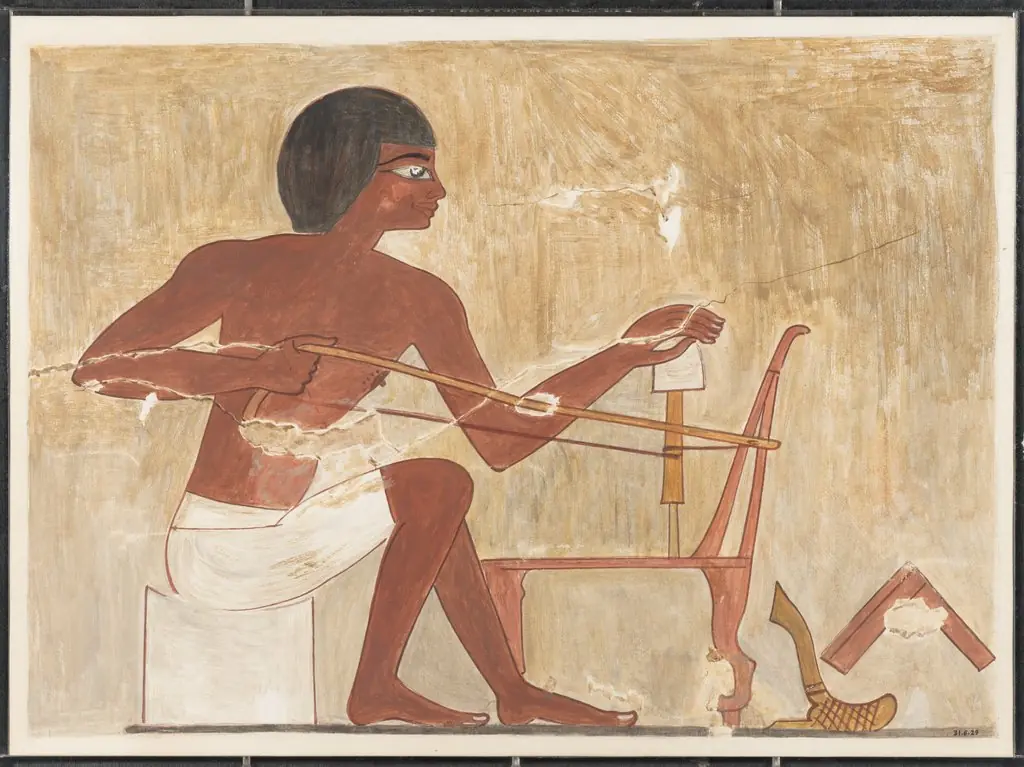 Carpenter Making a Chair, Tomb of Rekhmire
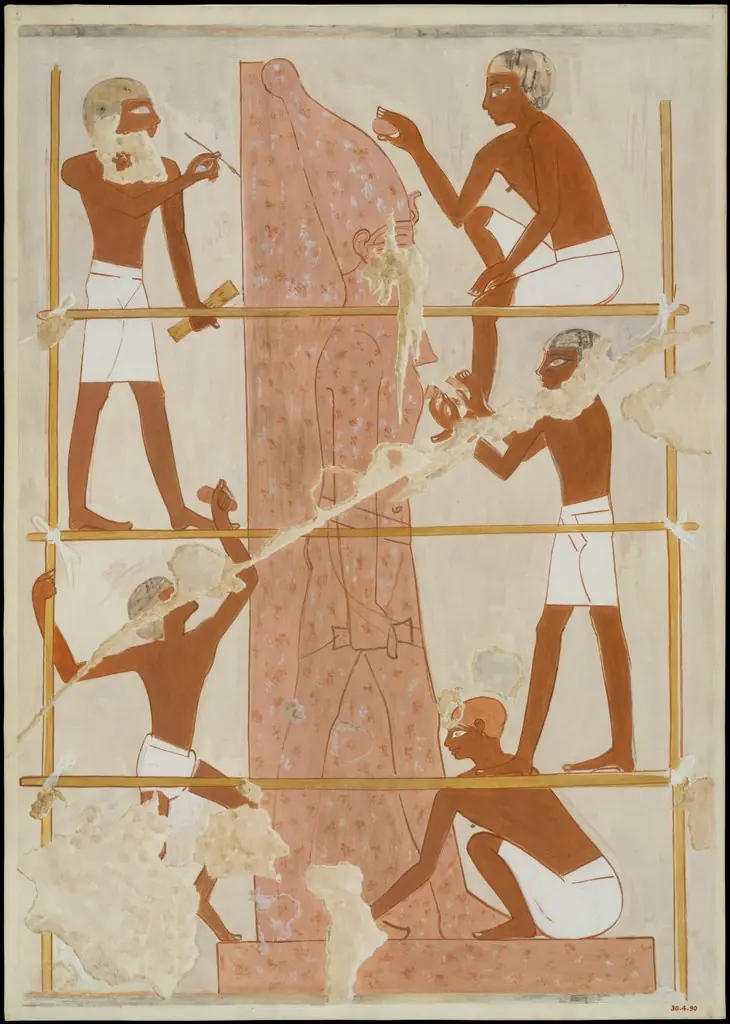 Sculptors at Work, Tomb of Rekhmire
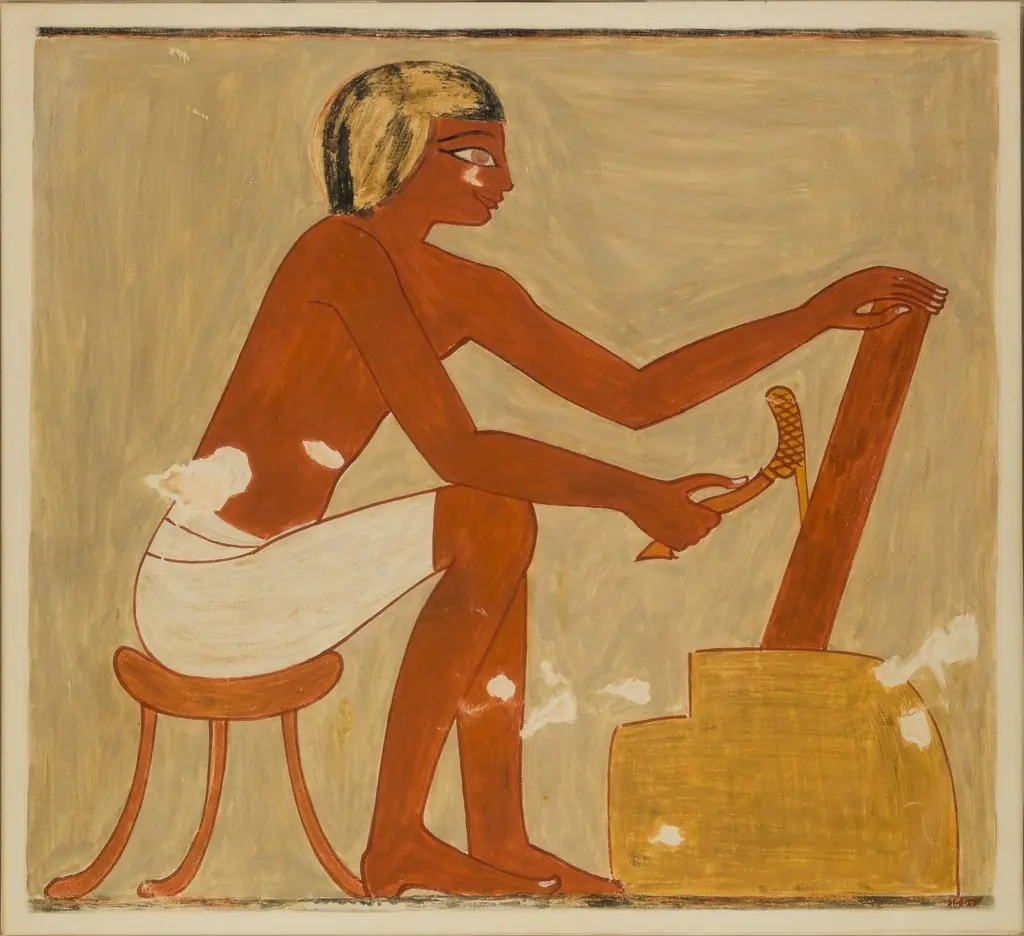 Trimming Wood with an Adze, Tomb of Rekhmire
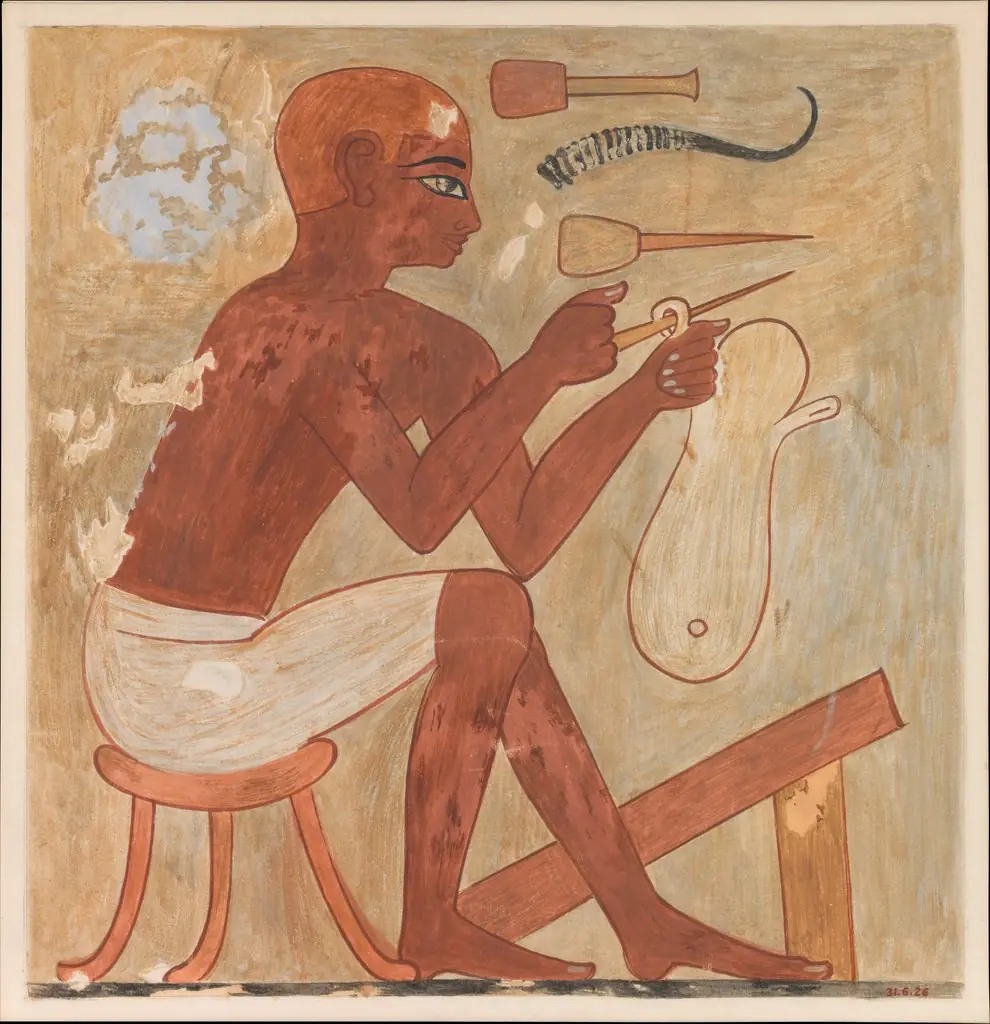 Sandal Maker, Tomb of Rekhmire
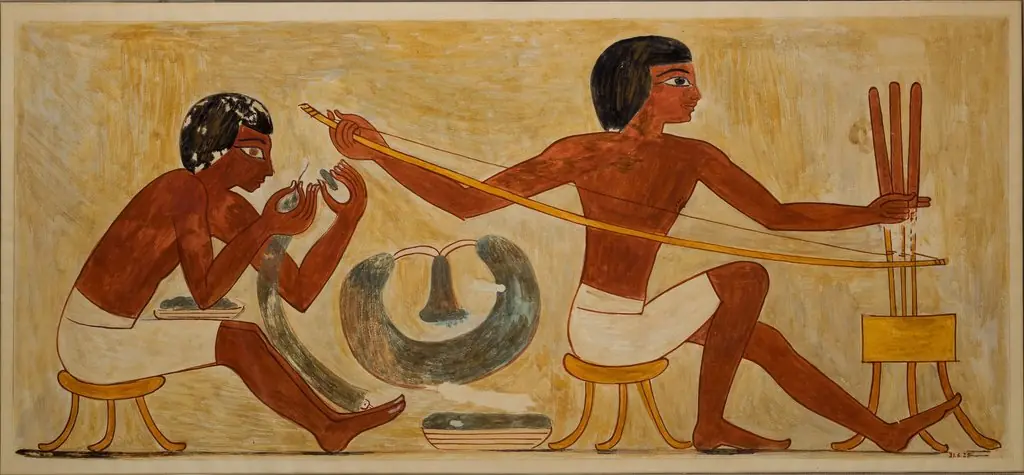 Stringing and Drilling Beads, Tomb of Rekhmire
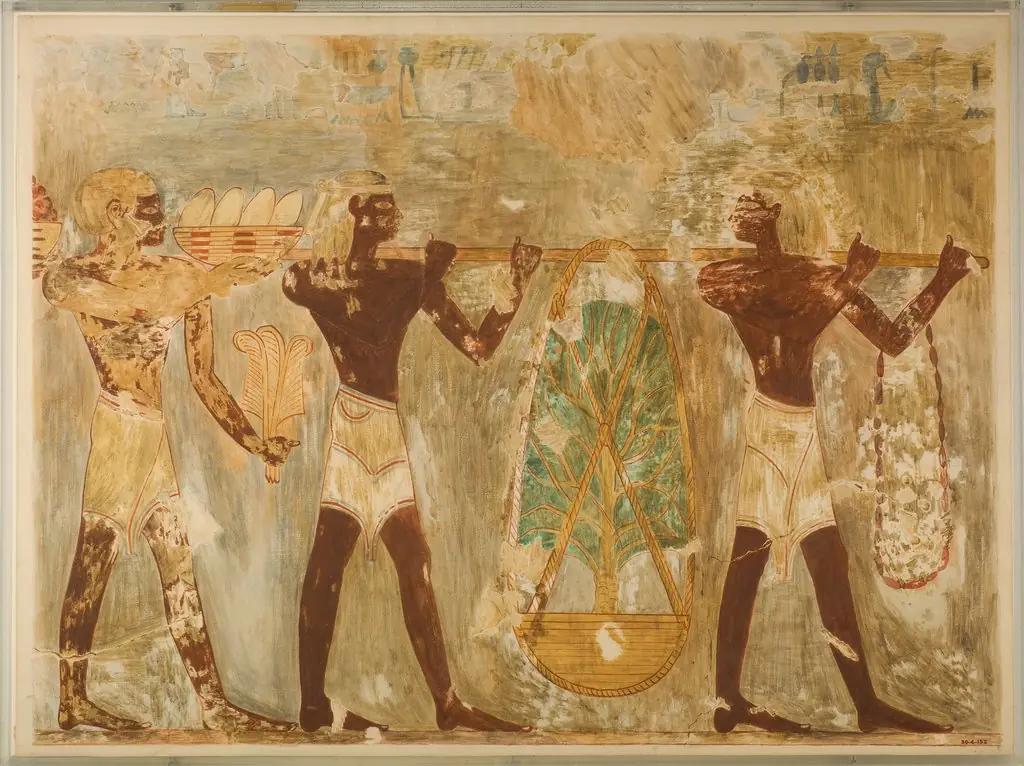 Men from Punt Carrying Gifts, Tomb of Rekhmire