Artwork
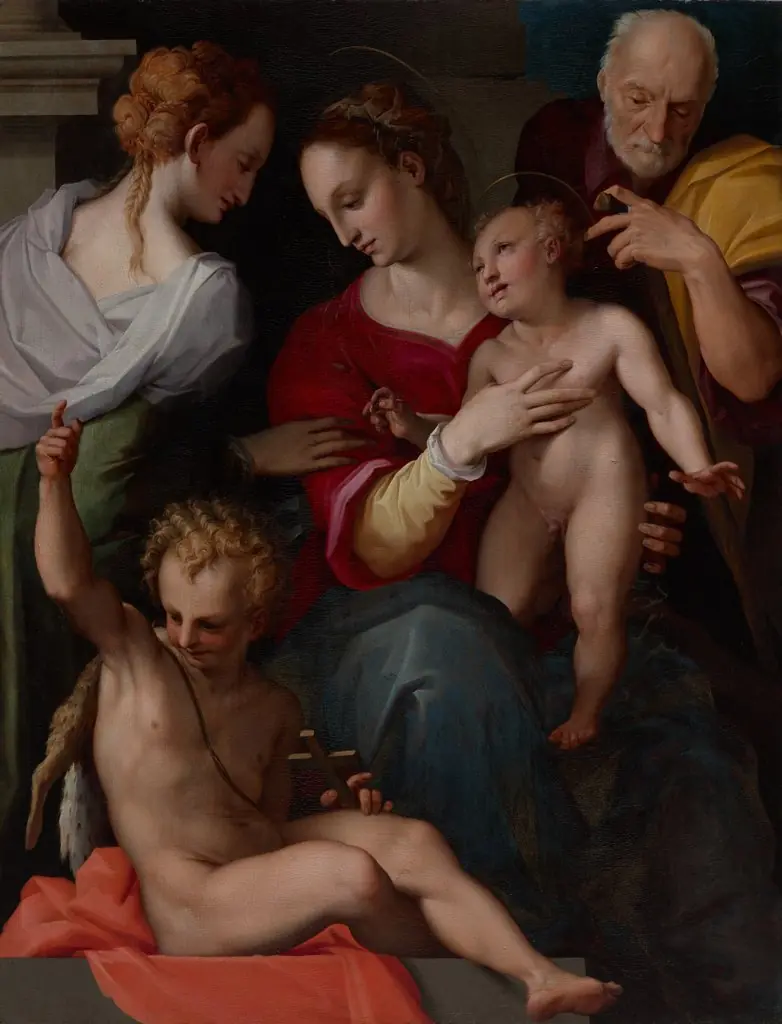
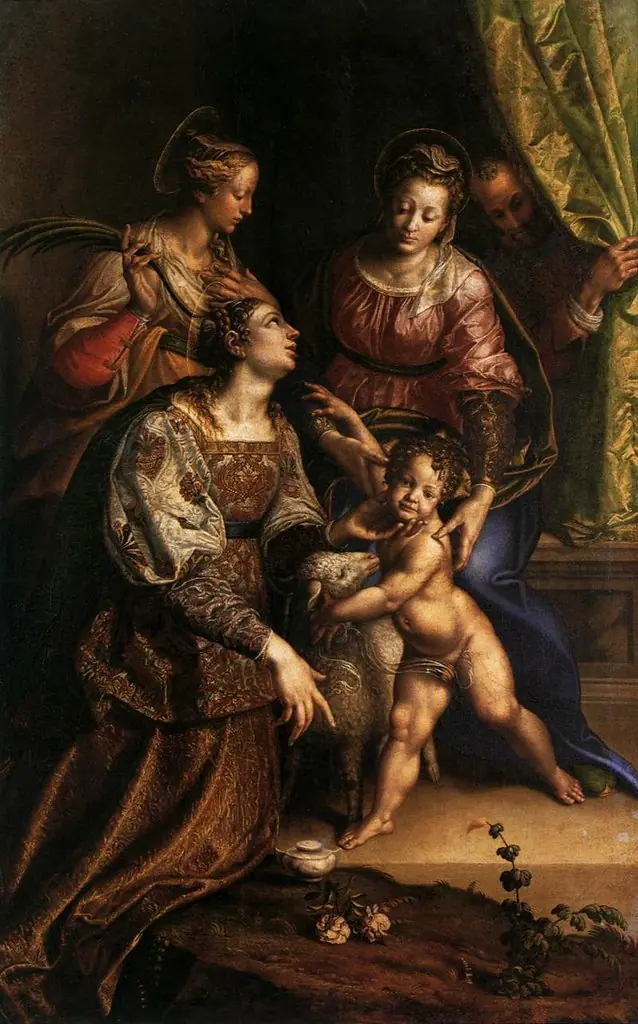
Holy Family with Saints Anne, Catherine of Alexandria, and Mary Magdalene
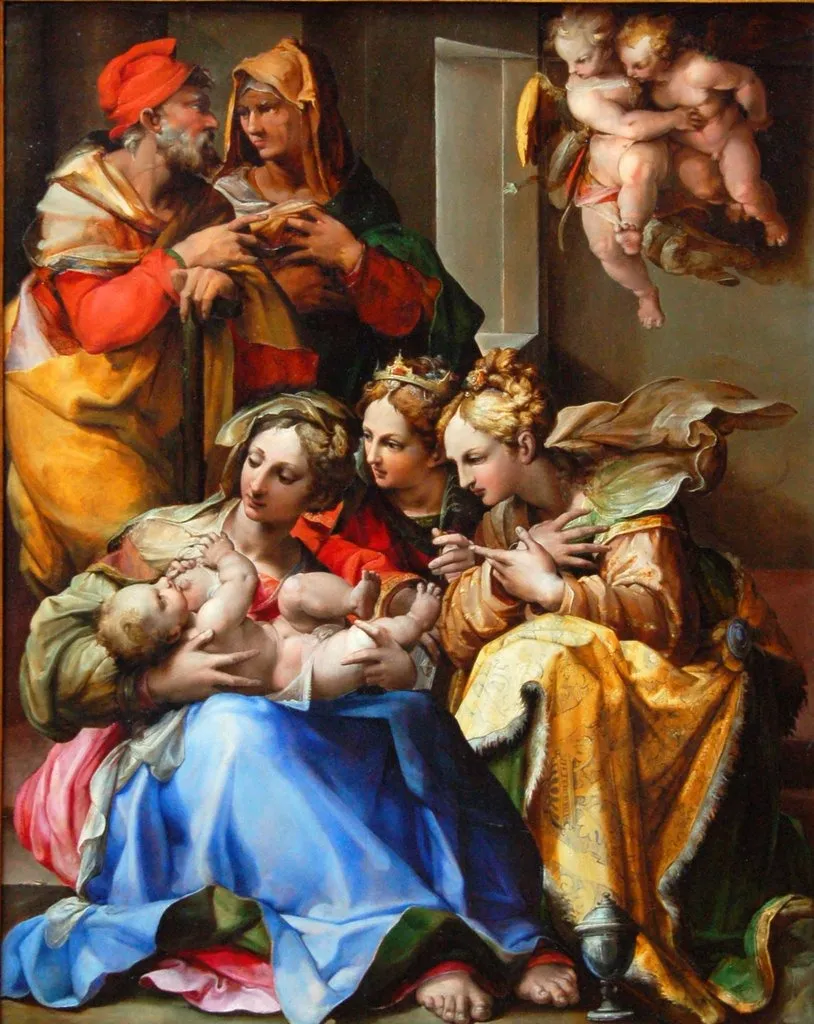
Holy Family with Saints Anne, Catherine of Alexandria, and Mary Magdalene is an oil painting by the Mannerist artist Nosadella. It dates from 1560 and is held in the collection of the J. Paul Getty Museum.
About this work
Overview
Painted in 1560 by Giovanni Francesco Bezzi, known as Nosadella, this oil-on-panel work presents a devotional scene centered on the Holy Family.
Painted in 1560 by Giovanni Francesco Bezzi, known as Nosadella, this oil-on-panel work presents a devotional scene centered on the Holy Family. Active in Bologna during the Mannerist era, Nosadella trained under Pellegrino Tibaldi and specialized in religious subjects. The painting is part of the J. Paul Getty Museum’s collection, where it reflects the regional religious art traditions of mid-16th-century Italy.
Subject & Meaning
The composition groups the Virgin Mary, infant Jesus, Saint Joseph, Saint Anne, Saint Catherine of Alexandria, and Mary Magdalene in a close-knit assembly. Each figure contributes to a narrative of spiritual lineage and devotion: Anne as Mary’s mother, Catherine as a learned martyr, and Magdalene as a penitent witness. The infant Christ, held by Mary, anchors the group, symbolizing divine presence amid human reverence.
Technique & Style
Nosadella employs oil paint to render rich, saturated hues against a dark, undefined background, heightening the figures’ luminosity. Elongated proportions and dynamic poses reflect Mannerist tendencies, while the figures’ gestures and glances create a subtle rhythm of interaction. The lighting is directional but not naturalistic, emphasizing emotional intensity over spatial realism.
History & Provenance
The painting was completed in Bologna during Nosadella’s mature period, likely for private devotion or a local religious institution. It entered the J. Paul Getty Museum’s collection in the late 20th century, following documented ownership in European private holdings. Its survival through centuries reflects its enduring value as a devotional object and example of Bolognese Mannerism.
Context
In mid-16th-century Bologna, religious imagery remained central to artistic production amid Counter-Reformation pressures. Nosadella’s work aligns with local trends favoring complex groupings of saints and intimate sacred moments. Unlike grand altarpieces, this painting suggests a domestic or contemplative setting, suited to personal prayer and familial piety.
Legacy
Though Nosadella’s output was modest and largely confined to northern Italy, this painting exemplifies the quiet sophistication of regional Mannerism. It preserves a distinctive local interpretation of sacred themes, distinct from the more celebrated Florentine or Roman styles. Today, it serves as a reference for understanding the diversity of Italian religious painting beyond major artistic centers.
Artist & collection
Artist
Nosadella, full name Giovanni Francesco Bezzi, (active c. 1549–1571) was an Italian painter and draftsman, active during the Mannerist period, mainly in Bologna. He appears to have traveled to Rome. He was a pupil of…